Kirjojen hintavertailu. Mukana 11 342 296 kirjaa ja 12 kauppaa.

Kirjahaku

Etsi kirjoja tekijän nimen, kirjan nimen tai ISBN:n perusteella.

7 kirjaa tekijältä Dimitris Plantzos

Hellenistic Engraved Gems

Hellenistic Engraved Gems

Dimitris Plantzos

Clarendon Press
1999
sidottu
Engraved gems were used by the Greeks as seals and amulets, but were primarily valued as ornaments. Their iconography was drawn from a wide range of motifs and standard devices current in other art forms. In the Hellenistic period gem cutters remained faithful to the classical tradition, but were able to develop new subjects and styles. Portraits, especially of royalty, became the commonest subject in glyptic after Alexander, a practice that continued through the Roman period and was still popular with patrons and artists of the Renaissance and even later. This volume follows the development of gem engraving from Alexander's conquest of the East to the Augustan period. Hellenistic gems are studied in their archaeological and historical context: evidence on their use, significance, and value; questions of technique and style; and problems of chronology and distribution. Special sections have been devoted to patronage of gem-engravers and the relationship of gem-cutting with other miniaturist arts and coinage.
The Art of Painting in Ancient Greece

The Art of Painting in Ancient Greece

Dimitris Plantzos

Lockwood Press
2018
nidottu
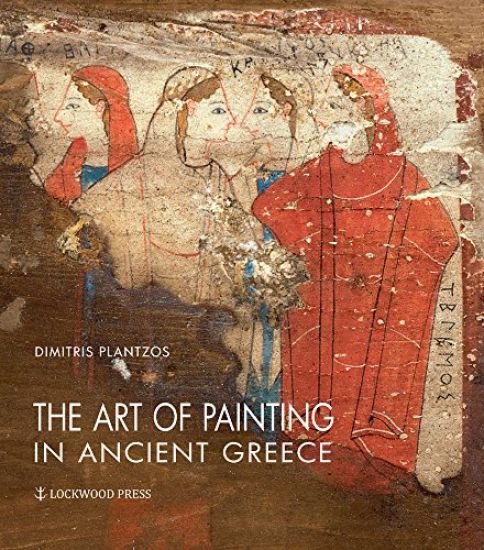
This new and richly illustrated overview of Greek painting combines a fresh scholarly approach to visual arts with the most complete survey to date of the painted monuments of classical antiquity. The Art of Painting in Ancient Greece covers a wide chronological and geographical span, from the Bronze Age murals of Knossos, Santorini and Mycenae to the opulent villas of the Roman Empire, from Anatolia and Egypt in the East to Campania and Etruria in the West. Surveying the techniques, materials, and works produced, as well as ancient literary accounts, the book engages in five main lines of inquiry: Why did the Greeks cover the walls of their sanctuaries, agoras, palaces, homes, and even their tombs with painted images? What topics, real or imaginary, did they choose to depict? How were those images created? What were the techniques employed and the materials used? Who painted those images? And how does the spectacular phenomenon of Greek monumental painting compare with other branches of Greek art, from mosaics and vase painting to sculpture?
The Story of Lemnos (Greek lang.)

The Story of Lemnos (Greek lang.)

Dimitris Plantzos

Kapon Editions
2022
nidottu
In The Story of Lemnos Dimitris Plantzos has written the long history of the relatively unknown and, until recently, somewhat ignored Aegean island of Lemnos. The story is a fascinating narrative, a true chronicle of the place and its people. The book is illustrated throughout in colour. Readers will find detailed information about the society, economy, political life, art, and the intellectual output of the island over time, from the first nomadic settlements during the late Palaeolithic period (ca. 10,500 BC) up to today. There are extensive references to the prehistoric cities of Poliochni and Myrina, to the important sites of Koukonisi, Hephaestia and Kaveirion during the Archaic and Classical periods (7th-4th centuries BC), Lemnos of the Hellenistic and Roman eras, Lemnos as a Byzantine, Venetian, and Ottoman possession, and of course the life of the island and its inhabitants from the liberation of 1912-13 onwards. Finally, we get to read about Lemnos of today: places of historical importance, archaeological sites and museums, also locations of natural beauty, geological monuments and places of ecological interest, beaches and traditional settlements. The author also covers the intangible and gastronomic heritage of Lemnos, and also the music and dance tradition that is alive to this day. Language of text: Greek
The Story of Lemnos

The Story of Lemnos

Dimitris Plantzos

Kapon Editions
2022
nidottu
In The Story of Lemnos Dimitris Plantzos has written the long history of the relatively unknown and, until recently, somewhat ignored Aegean island of Lemnos. The story is a fascinating narrative, a true chronicle of the place and its people. The book is illustrated throughout in colour. Readers will find detailed information about the society, economy, political life, art, and the intellectual output of the island over time, from the first nomadic settlements during the late Palaeolithic period (ca. 10,500 BC) up to today. There are extensive references to the prehistoric cities of Poliochni and Myrina, to the important sites of Koukonisi, Hephaestia and Kaveirion during the Archaic and Classical periods (7th-4th centuries BC), Lemnos of the Hellenistic and Roman eras, Lemnos as a Byzantine, Venetian, and Ottoman possession, and of course the life of the island and its inhabitants from the liberation of 1912-13 onwards. Finally, we get to read about Lemnos of today: places of historical importance, archaeological sites and museums, also locations of natural beauty, geological monuments and places of ecological interest, beaches and traditional settlements. The author also covers the intangible and gastronomic heritage of Lemnos, and also the music and dance tradition that is alive to this day.
Greek Art and Archaeology c. 1200-30 BC

Greek Art and Archaeology c. 1200-30 BC

Dimitris Plantzos

Kapon Editions
2016
nidottu
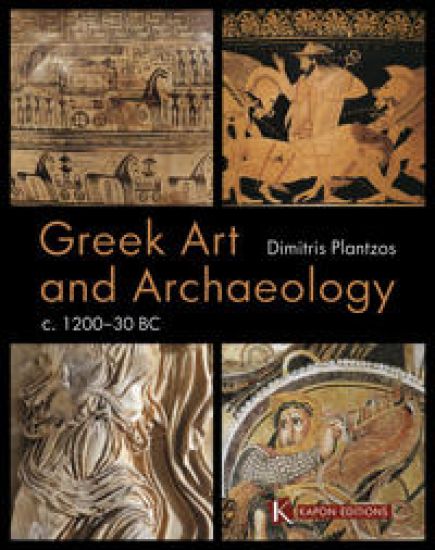
This luxuriously illustrated book surveys Greek archaeology from the collapse of the Mycenaean palaces to the subordination of the last Hellenistic kingdoms to Rome. Its aim is to study Greek art through the material record, and against its cultural and social backdrop. It takes the reader on a tour of ancient Greece along the most important period in its history, the 1st millennium BC. Architecture, city planning, sculpture, painting, pottery, metallurgy, jewellery, and numismatics are some of the areas covered. With concise, systematic coverage of the main categories of classical monuments, the book caters for the non-specialist looking for the essential in ancient Greece, students of Greek archaeology and art, as well as anyone interested in Greek art and culture. The text is divided into accessible, user-friendly sections including case studies, terminology, charts, maps, a timeline and full index. This is the first English language edition of the original Greek edition and was thoroughly revised and expanded by Dimitris Plantzos before translation by the British archaeologist Nicola Wardle. 592 colour illustrations.
The Art of Painting in Ancient Greece (Greek language edition)
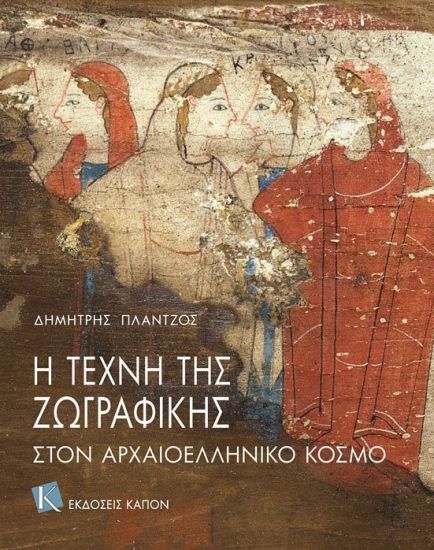
This innovative look at ancient Greek painting combines a standard comprehensive survey of the material record – wall paintings, painted panels, or slabs – with an in-depth exploration of the ways in which the people of Ancient Greece appreciated this demanding art. Plantzos looks at techniques, styles, themes and masters as well as their admirers, clients, and critics. At the same time, he discusses recent breakthroughs in archaeology, cultural studies, and art history. The book is unique in its reflections of new, multidisciplinary approaches to the material record which it combines with a more traditional, art-historical exploration; it draws on a wide range of ancient authorities – from Plato and Xenophon to Cicero, Pliny, Lucian, and Philostratus.The book covers painting in Bronze-Age Greece (Cyclades, Crete, Santorini, Mycenaean Greece); painting of the Archaic, the Classical, and the Hellenistic periods, and ends with a study of Graeco-Roman painting in the 2nd-3rd c. AD.Dimitris Plantzos is the author of Greek Art and Archaeology, 1200-30 BC (Kapon Editions, 2016) also available from UEP.
The Art of Painting in Ancient Greece (English language edition)
This innovative look at ancient Greek painting combines the most complete survey to date of the painted monuments of classical antiquity with an in-depth exploration of the ways in which the people of Ancient Greece appreciated this demanding art. Plantzos looks at techniques, styles, themes and masters as well as their admirers, clients, and critics. At the same time, he discusses recent breakthroughs in archaeology, cultural studies, and art history. The book is unique in its reflections of new, multidisciplinary approaches to the material record which it combines with a more traditional, art-historical exploration; it draws on a wide range of ancient authorities – from Plato and Xenophon to Cicero, Pliny, Lucian, and Philostratus. The book covers painting in Bronze-Age Greece (Cyclades, Crete, Santorini, Mycenaean Greece); painting of the Archaic, the Classical, and the Hellenistic periods, and ends with a study of Graeco-Roman painting in the 2nd-3rd c. AD. Dimitris Plantzos is the author of Greek Art and Archaeology, 1200-30 BC (Kapon Editions, 2016).