Kirjojen hintavertailu. Mukana 11 342 296 kirjaa ja 12 kauppaa.

Kirjahaku

Etsi kirjoja tekijän nimen, kirjan nimen tai ISBN:n perusteella.

2 kirjaa tekijältä Dimitris Rizopoulos

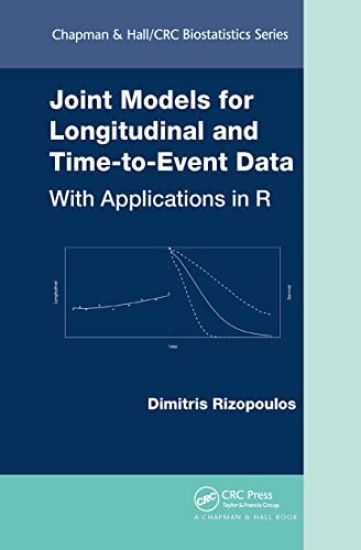
Joint Models for Longitudinal and Time-to-Event Data

Joint Models for Longitudinal and Time-to-Event Data

Dimitris Rizopoulos

TAYLOR FRANCIS LTD
2023
nidottu
In longitudinal studies it is often of interest to investigate how a marker that is repeatedly measured in time is associated with a time to an event of interest, e.g., prostate cancer studies where longitudinal PSA level measurements are collected in conjunction with the time-to-recurrence. Joint Models for Longitudinal and Time-to-Event Data: With Applications in R provides a full treatment of random effects joint models for longitudinal and time-to-event outcomes that can be utilized to analyze such data. The content is primarily explanatory, focusing on applications of joint modeling, but sufficient mathematical details are provided to facilitate understanding of the key features of these models. All illustrations put forward can be implemented in the R programming language via the freely available package JM written by the author.All the R code used in the book is available at:http://jmr.r-forge.r-project.org/
Joint Models for Longitudinal and Time-to-Event Data

Joint Models for Longitudinal and Time-to-Event Data

Dimitris Rizopoulos

Chapman Hall/CRC
2012
sidottu
In longitudinal studies it is often of interest to investigate how a marker that is repeatedly measured in time is associated with a time to an event of interest, e.g., prostate cancer studies where longitudinal PSA level measurements are collected in conjunction with the time-to-recurrence. Joint Models for Longitudinal and Time-to-Event Data: With Applications in R provides a full treatment of random effects joint models for longitudinal and time-to-event outcomes that can be utilized to analyze such data. The content is primarily explanatory, focusing on applications of joint modeling, but sufficient mathematical details are provided to facilitate understanding of the key features of these models. All illustrations put forward can be implemented in the R programming language via the freely available package JM written by the author. All the R code used in the book is available at:http://jmr.r-forge.r-project.org/