Kirjojen hintavertailu. Mukana 11 717 486 kirjaa ja 12 kauppaa.

Kirjahaku

Etsi kirjoja tekijän nimen, kirjan nimen tai ISBN:n perusteella.

12 kirjaa tekijältä Dimitris Vardoulakis

The Doppelganger

The Doppelganger

Dimitris Vardoulakis

Fordham University Press
2010
sidottu
The Doppelgänger or Double presents literature as the "double" of philosophy. There are historical reasons for this. The genesis of the Doppelgänger is literature's response to the philosophical focus on subjectivity. The Doppelgänger was coined by the German author Jean Paul in 1796 as a critique of Idealism's assertion of subjective autonomy, individuality and human agency. This critique prefigures post-War extrapolations of the subject as decentred. From this perspective, the Doppelgänger has a "family resemblance" to current conceptualizations of subjectivity. It becomes the emblematic subject of modernity. This is the first significant study on the Doppelgänger's influence on philosophical thought. The Doppelgänger emerges as a hidden and unexplored element both in conceptions of subjectivity and in philosophy's relation to literature. Vardoulakis demonstrates this by employing the Doppelgänger to read literature philosophically and to read philosophy as literature. The Doppelgänger then appears instrumental in the self-conception of both literature and philosophy.
The Doppelganger

The Doppelganger

Dimitris Vardoulakis

Fordham University Press
2010
pokkari
The Doppelgänger or Double presents literature as the "double" of philosophy. There are historical reasons for this. The genesis of the Doppelgänger is literature's response to the philosophical focus on subjectivity. The Doppelgänger was coined by the German author Jean Paul in 1796 as a critique of Idealism's assertion of subjective autonomy, individuality and human agency. This critique prefigures post-War extrapolations of the subject as decentred. From this perspective, the Doppelgänger has a "family resemblance" to current conceptualizations of subjectivity. It becomes the emblematic subject of modernity. This is the first significant study on the Doppelgänger's influence on philosophical thought. The Doppelgänger emerges as a hidden and unexplored element both in conceptions of subjectivity and in philosophy's relation to literature. Vardoulakis demonstrates this by employing the Doppelgänger to read literature philosophically and to read philosophy as literature. The Doppelgänger then appears instrumental in the self-conception of both literature and philosophy.
Sovereignty and Its Other

Sovereignty and Its Other

Dimitris Vardoulakis

Fordham University Press
2013
sidottu
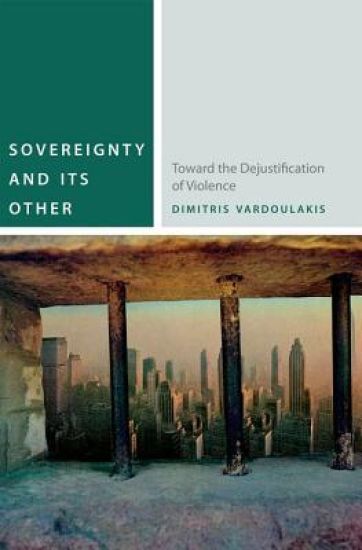
In this new book, Dimitris Vardoulakis asks how it is possible to think of a politics that is not commensurate with sovereignty. For such a politics, he argues, sovereignty is defined not in terms of the exception but as the different ways in which violence is justified. Vardoulakis shows how it is possible to deconstruct the various justifications of violence. Such dejustifications can take place only by presupposing an other to sovereignty, which Vardoulakis identifies with radical democracy. In doing so, Sovereignty and Its Other puts forward both a novel critique of sovereignty and an original philosophical theory of democratic practice.
Sovereignty and Its Other

Sovereignty and Its Other

Dimitris Vardoulakis

Fordham University Press
2013
pokkari
In this new book, Dimitris Vardoulakis asks how it is possible to think of a politics that is not commensurate with sovereignty. For such a politics, he argues, sovereignty is defined not in terms of the exception but as the different ways in which violence is justified. Vardoulakis shows how it is possible to deconstruct the various justifications of violence. Such dejustifications can take place only by presupposing an other to sovereignty, which Vardoulakis identifies with radical democracy. In doing so, Sovereignty and Its Other puts forward both a novel critique of sovereignty and an original philosophical theory of democratic practice.
Stasis Before the State

Stasis Before the State

Dimitris Vardoulakis

FORDHAM UNIVERSITY PRESS
2017
sidottu
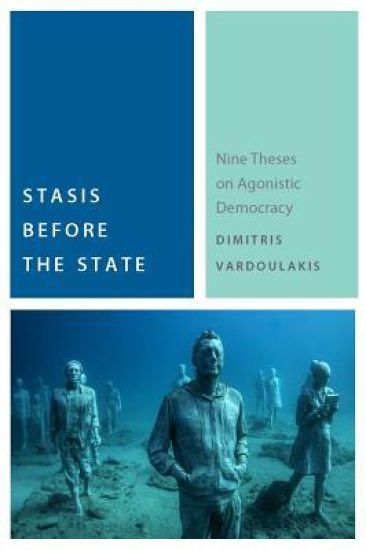
This book critiques the relation between sovereignty and democracy. Across nine theses, Vardoulakis argues that sovereignty asserts its power by establishing exclusions: the sovereign excluding other citizens from power and excludes refugees and immigrants from citizenship. Within this structure, to resist sovereignty is to reproduce the logic of exclusion characteristic of sovereignty. In contrast to this "ruse of sovereignty," Vardoulakis proposes an alternative model for political change. He argues that democracy can be understood as the structure of power that does not rely on exclusions and whose relation to sovereignty is marked not by exclusion but of incessant agonism. The term stasis, which refers both to the state and to revolution against it, offers a tension that helps to show how the democratic imperative is presupposed by the logic of sovereignty, and how agonism is more primary than exclusion. In elaborating this ancient but only recently recovered concept of stasis, Vardoulakis illustrates the radical potential of democracy to move beyond the logic of exclusion and the ruse of sovereignty.
Stasis Before the State

Stasis Before the State

Dimitris Vardoulakis

Fordham University Press
2017
pokkari
This book critiques the relation between sovereignty and democracy. Across nine theses, Vardoulakis argues that sovereignty asserts its power by establishing exclusions: the sovereign excluding other citizens from power and excludes refugees and immigrants from citizenship. Within this structure, to resist sovereignty is to reproduce the logic of exclusion characteristic of sovereignty. In contrast to this "ruse of sovereignty," Vardoulakis proposes an alternative model for political change. He argues that democracy can be understood as the structure of power that does not rely on exclusions and whose relation to sovereignty is marked not by exclusion but of incessant agonism. The term stasis, which refers both to the state and to revolution against it, offers a tension that helps to show how the democratic imperative is presupposed by the logic of sovereignty, and how agonism is more primary than exclusion. In elaborating this ancient but only recently recovered concept of stasis, Vardoulakis illustrates the radical potential of democracy to move beyond the logic of exclusion and the ruse of sovereignty.
The Agonistic Condition

The Agonistic Condition

Dimitris Vardoulakis

EDINBURGH UNIVERSITY PRESS
2025
sidottu
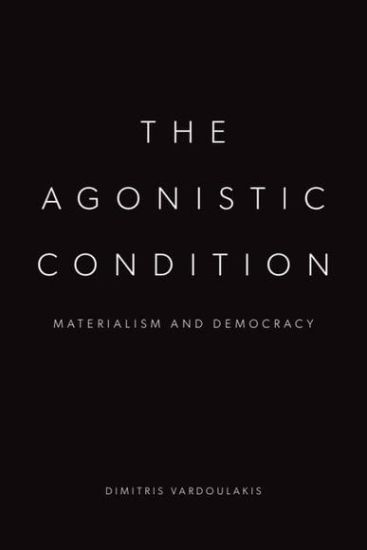
Political theory influenced by philosophy examines the political as the sphere of human interaction that is distinct from politics, the sphere of political institutions and parties. The political is usually described in conflictual terms, such as Marx's class struggle, Heidegger's polemos, Ranciere's dissensus, or the discourse of agonistic democracy.This book challenges the premise of such constructions of agonism, namely, that the political is essentially distinct from means and ends calculations. He argues that this premise is derived from the critique of instrumental reason, which assumes that utilitarianism is correct that instrumental ends are measurable. This forgets an ancient tradition that describes phronesis as the primary ethical and political virtue because it calculates the good, which is however impossible to measure with any certainty.The Agonistic Condition shows that a new consideration of phronesis can help political philosophy and theory to develop more robust conceptions of power that better describe the world we live in.
Freedom from the Free Will

Freedom from the Free Will

Dimitris Vardoulakis

State University of New York Press
2016
sidottu
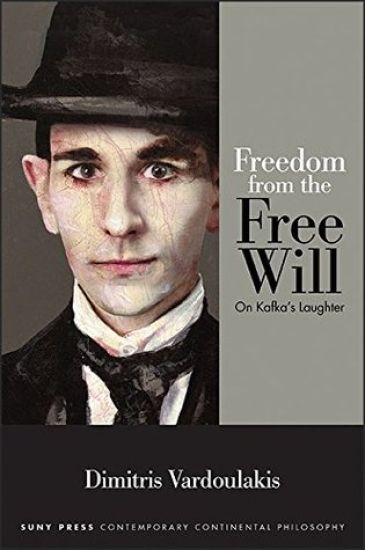
Brings Kafka's fiction into conversation with philosophy and political theory.Many of Kafka's narratives place their heroes in situations of confinement. Gregor Samsa is locked in his room in the Metamorphosis, and the land surveyor in The Castle is stuck in the village unable either to leave or to gain access to the castle. Dimitris Vardoulakis argues that Kafka constructs these plots of confinement in order to laugh at his heroes' futile attempts to express their will. In this way, Kafka emerges as a critic of the free will and as a proponent of a different kind of freedom: one focused within the confines of one's experience and mediated by one's circumstances. Vardoulakis contends that his sense of humor is the key to understanding Kafka as a political thinker. Laughter, in this account, is the tool used to deconstruct power. By placing Kafka in dialogue with philosophy and political theory, Vardoulakis shows that Kafka can give us invaluable insights into how to be free-and how to laugh.
Spinoza, the Epicurean

Spinoza, the Epicurean

Dimitris Vardoulakis

Edinburgh University Press
2020
sidottu
Through a radical new reading of the 'Theological Political Treatise', Dimitris Vardoulakis argues that the major source of Spinoza's materialism is the Epicurean tradition that re-emerges in modernity when manuscripts by Epicurus and Lucretius are rediscovered. This reconsideration of Spinoza's political project, set within a historical context, lays the ground for an alternative genealogy of materialism. Central to this new reading of Spinoza are the theory of practical judgment (understood as the calculation of utility) and its implications for a theory of democracy that is resolutely positioned against authority.
Spinoza, the Epicurean

Spinoza, the Epicurean

Dimitris Vardoulakis

EDINBURGH UNIVERSITY PRESS
2022
nidottu
Through a radical new reading of the Theological Political Treatise, Dimitris Vardoulakis argues that the Epicurean influence on Spinoza has profound implications for his conception of politics and ontology. This reconsideration of Spinoza's political project, set within a historical context, lays the ground for an alternative genealogy of materialism.Vardoulakis shows that the major source of Spinoza's materialism is the Epicurean tradition that re-emerges in modernity when manuscripts by Epicurus and Lucretius are rediscovered. Central to this new reading of Spinoza are the theory of practical judgment, understood as the calculation of utility, and its implications for a theory of democracy that is resolutely positioned against authority.
The Ruse of Techne

The Ruse of Techne

Dimitris Vardoulakis

FORDHAM UNIVERSITY PRESS
2024
sidottu
The Ruse of Techne offers a reappraisal of Heidegger's entire work by focusing on the forms of activity he regards as separate from instrumentality. Non-instrumental activities like authenticity, poetry, and thinking—in short, the ineffectual—are critical for Heidegger as they offer the only path to the truth of being throughout his work. By unearthing the source of the conception of non-instrumental action in Heidegger's reading of Aristotle, Vardoulakis elaborates how it forms part of Heidegger's response to an old problem, namely, how to account for difference after positing a single and unified being that is not amenable to change. He further demonstrates that an action without ends and effects leads to an ethics and politics rife with difficulties and contradictions that only become starker when compared to other responses to the same problem that we find in the philosophical tradition and which rely on instrumentality. Heidegger's conception of an action without ends or effect forgets the role of instrumentality in the tradition that posits a single, unified being. And yet, the ineffectual has had a profound influence in how continental philosophy determines the ethical and the political since World War II. The critique of the ineffectual in Heidegger is thus effectively a critique of the conception of praxis in continental philosophy. Vardoulakis proposes that it is urgent to undo the forgetting of instrumentality if we are to conceive of a democratic politics and an ethics fit to respond to the challenges of high capitalism.
The Ruse of Techne

The Ruse of Techne

Dimitris Vardoulakis

FORDHAM UNIVERSITY PRESS
2024
pokkari
The Ruse of Techne offers a reappraisal of Heidegger's entire work by focusing on the forms of activity he regards as separate from instrumentality. Non-instrumental activities like authenticity, poetry, and thinking—in short, the ineffectual—are critical for Heidegger as they offer the only path to the truth of being throughout his work. By unearthing the source of the conception of non-instrumental action in Heidegger's reading of Aristotle, Vardoulakis elaborates how it forms part of Heidegger's response to an old problem, namely, how to account for difference after positing a single and unified being that is not amenable to change. He further demonstrates that an action without ends and effects leads to an ethics and politics rife with difficulties and contradictions that only become starker when compared to other responses to the same problem that we find in the philosophical tradition and which rely on instrumentality. Heidegger's conception of an action without ends or effect forgets the role of instrumentality in the tradition that posits a single, unified being. And yet, the ineffectual has had a profound influence in how continental philosophy determines the ethical and the political since World War II. The critique of the ineffectual in Heidegger is thus effectively a critique of the conception of praxis in continental philosophy. Vardoulakis proposes that it is urgent to undo the forgetting of instrumentality if we are to conceive of a democratic politics and an ethics fit to respond to the challenges of high capitalism.