Kirjojen hintavertailu. Mukana 11 678 731 kirjaa ja 12 kauppaa.

Kirjahaku

Etsi kirjoja tekijän nimen, kirjan nimen tai ISBN:n perusteella.

11 kirjaa tekijältä Dmitri Nikulin

Neoplatonism in Late Antiquity

Neoplatonism in Late Antiquity

Dmitri Nikulin

Oxford University Press Inc
2019
sidottu
This book is a philosophical study of two major thinkers who span the period of late antiquity. While Plotinus stands at the beginning of its philosophical tradition, setting the themes for debate and establishing strategies of argument and interpretation, Proclus falls closer to its end, developing a grand synthesis of late ancient thought. The book discusses many central topics of philosophy and science in Plotinus and Proclus, such as the one and the many, number and being, the individuation and constitution of the soul, imagination and cognition, the constitution of number and geometrical objects, indivisibility and continuity, intelligible and bodily matter, and evil. It shows that late ancient philosophy did not simply embrace and borrow from the major philosophical traditions of earlier antiquity--Platonism, Aristotelianism, Stoicism--by providing marginal comments on widely-known philosophical texts. Rather, Neoplatonism offered a set of highly original and innovative insights into the nature of being and thought, which can be distinguished in much subsequent philosophical thought, up until modernity.
Non-Being in Ancient Thought

Non-Being in Ancient Thought

Dmitri Nikulin

OXFORD UNIVERSITY PRESS INC
2025
sidottu
Being has been at the forefront of philosophical debate from its very beginnings, whereas non-being has been considered derivative of being and an obstacle for thought. Dmitri Nikulin argues that without non-being, being can neither be nor thought. Non-Being in Ancient Thought provides a critical, historical, and systematic reconstruction of the concept of non-being in ancient philosophy, from Pre-Socratic thought to Neoplatonism, in the works of Parmenides, Democritus, Plato, Diogenes, Aristotle, Plotinus, and Simplicius. Most contemporary studies of ontology in antiquity are dedicated to being in its philosophical and philological meaning and significance and yet, non-being is a central topic for every ancient philosopher. Therefore, rethinking the role of non-being is essential, since it can lead to the reconsideration of the concept of being and a different account of being and existence. A careful analysis of the relevant texts demonstrates that ancient thinkers stress the centrality of non-being for the understanding of being. Yet because non-being is not, and thus cannot be thought as an existing object, it requires special philosophical apparatus and apophatic language for its investigation and expression. This approach constitutes the other kind of ontology, which has faded in modern times and yet remains philosophically significant. Non-Being in Ancient Thought provides a historical and systematic reconstruction of the concept of non-being in ancient philosophy from the Pre-Socratics to the Neoplatonists, with reference to the works of Parmenides, Democritus, Plato, Diogenes, Aristotle, Plotinus, and Simplicius.
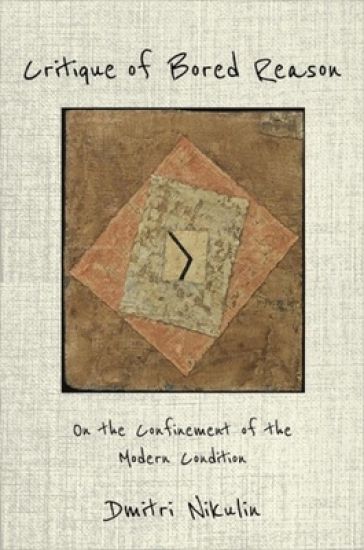
Critique of Bored Reason

Critique of Bored Reason

Dmitri Nikulin

Columbia University Press
2022
sidottu
Most of the core concepts of the Western philosophical tradition originate in antiquity. Yet boredom is strikingly absent from classical thought. In this philosophical study, Dmitri Nikulin explores the concept’s genealogy to argue that boredom is the mark of modernity.Nikulin contends that boredom is a specifically modern phenomenon. He provides a critical reconstruction of the concept of the modern subject as universal, rational, autonomous, and self-sufficient. Understanding itself in this way, this subject is at once the protagonist, playwright, director, and spectator of the staged drama of human existence. It is therefore inevitably monological, lonely, and alone, and can neither escape its own presence nor get rid of it. In other words, it is bored—and this boredom is the fundamental expression and symptom of the modern condition.Considering such thinkers as Descartes, Pascal, Kant, Kierkegaard, Kracauer, Heidegger, and Benjamin, Critique of Bored Reason places boredom on center stage in the philosophical critique of modernity. Nikulin also considers the alternative to the notion of the autonomous subject in the—nonbored and nonboring—dialogic and comic subject capable of shared existence with others.
Critique of Bored Reason

Critique of Bored Reason

Dmitri Nikulin

Columbia University Press
2022
pokkari
Most of the core concepts of the Western philosophical tradition originate in antiquity. Yet boredom is strikingly absent from classical thought. In this philosophical study, Dmitri Nikulin explores the concept’s genealogy to argue that boredom is the mark of modernity.Nikulin contends that boredom is a specifically modern phenomenon. He provides a critical reconstruction of the concept of the modern subject as universal, rational, autonomous, and self-sufficient. Understanding itself in this way, this subject is at once the protagonist, playwright, director, and spectator of the staged drama of human existence. It is therefore inevitably monological, lonely, and alone, and can neither escape its own presence nor get rid of it. In other words, it is bored—and this boredom is the fundamental expression and symptom of the modern condition.Considering such thinkers as Descartes, Pascal, Kant, Kierkegaard, Kracauer, Heidegger, and Benjamin, Critique of Bored Reason places boredom on center stage in the philosophical critique of modernity. Nikulin also considers the alternative to the notion of the autonomous subject in the—nonbored and nonboring—dialogic and comic subject capable of shared existence with others.
On Dialogue

On Dialogue

Dmitri Nikulin

Lexington Books
2005
sidottu
Drawing from the works of Plato and more contemporary philosophers such as Bakhtin, Buber, Taylor, and Gadamer, On Dialogue explores the necessity of dialogue to being. Author Dmitri Nikulin argues that dialogue is not just a form of communication, but it is the very conditio humana. Nikulin provides a systematic account of dialogue and its role in philosophy, literature, and oral discourse. Exploring the notion of human unfinalizability in dialogical communication, which does not always come to a consensus but is always carried on further in order to express one's self as one's personal other, On Dialogue argues that the human is a dialogical being in perpetual conversation with the other. By offering clues a better understanding of the being, Nikulin's work makes a significant contribution not only to the field of philosophy, but also to the study of anthropology and ontology.
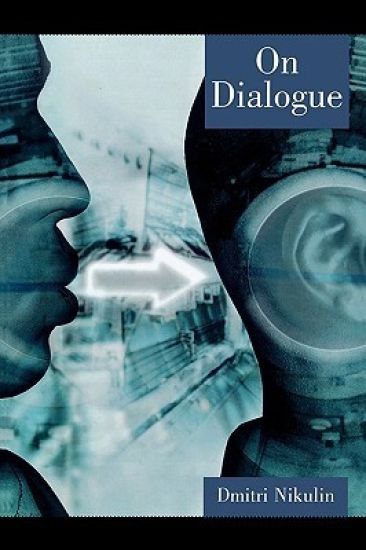
On Dialogue

On Dialogue

Dmitri Nikulin

Lexington Books
2005
nidottu
Drawing from the works of Plato and more contemporary philosophers such as Bakhtin, Buber, Taylor, and Gadamer, On Dialogue explores the necessity of dialogue to being. Author Dmitri Nikulin argues that dialogue is not just a form of communication, but it is the very conditio humana. Nikulin provides a systematic account of dialogue and its role in philosophy, literature, and oral discourse. Exploring the notion of human unfinalizability in dialogical communication, which does not always come to a consensus but is always carried on further in order to express one's self as one's personal other, On Dialogue argues that the human is a dialogical being in perpetual conversation with the other. By offering clues a better understanding of the being, Nikulin's work makes a significant contribution not only to the field of philosophy, but also to the study of anthropology and ontology.
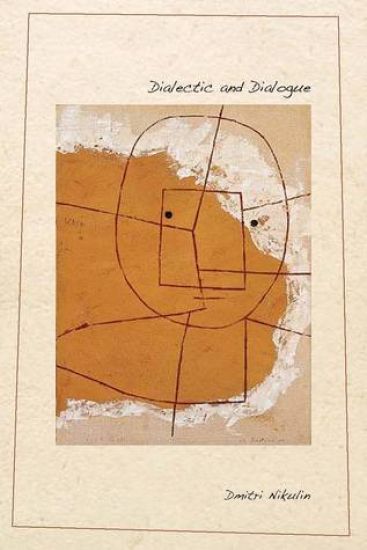
Dialectic and Dialogue

Dialectic and Dialogue

Dmitri Nikulin

Stanford University Press
2010
sidottu
This book considers the emergence of dialectic out of the spirit of dialogue and traces the relation between the two. It moves from Plato, for whom dialectic is necessary to destroy incorrect theses and attain thinkable being, to Cusanus, to modern philosophers—Descartes, Kant, Hegel, Schleiermacher and Gadamer, for whom dialectic becomes the driving force behind the constitution of a rational philosophical system. Conceived as a logical enterprise, dialectic strives to liberate itself from dialogue, which it views as merely accidental and even disruptive of thought, in order to become a systematic or scientific method. The Cartesian autonomous and universal yet utterly monological and lonely subject requires dialectic alone to reason correctly, yet dialogue, despite its unfinalizable and interruptive nature, is what constitutes the human condition.
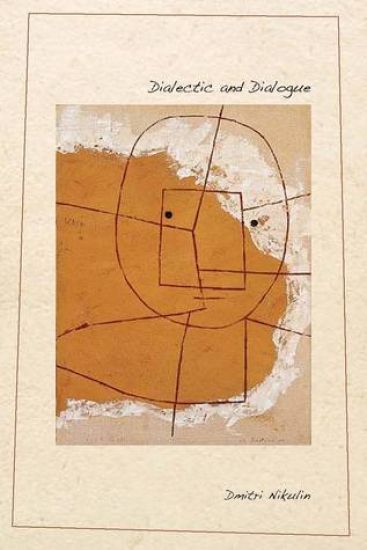
Dialectic and Dialogue

Dialectic and Dialogue

Dmitri Nikulin

Stanford University Press
2010
pokkari
This book considers the emergence of dialectic out of the spirit of dialogue and traces the relation between the two. It moves from Plato, for whom dialectic is necessary to destroy incorrect theses and attain thinkable being, to Cusanus, to modern philosophers—Descartes, Kant, Hegel, Schleiermacher and Gadamer, for whom dialectic becomes the driving force behind the constitution of a rational philosophical system. Conceived as a logical enterprise, dialectic strives to liberate itself from dialogue, which it views as merely accidental and even disruptive of thought, in order to become a systematic or scientific method. The Cartesian autonomous and universal yet utterly monological and lonely subject requires dialectic alone to reason correctly, yet dialogue, despite its unfinalizable and interruptive nature, is what constitutes the human condition.
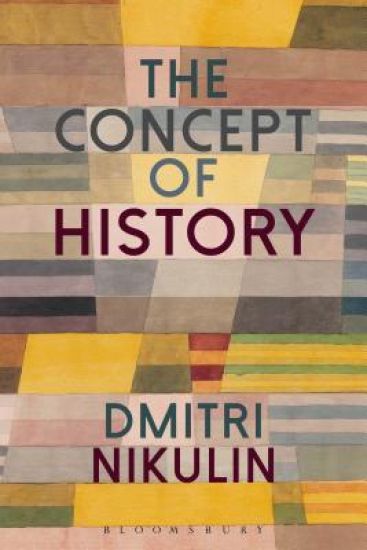
The Concept of History

The Concept of History

Dmitri Nikulin

Bloomsbury Academic
2017
nidottu
The Concept of History reflects on the presuppositions behind the contemporary understanding of history that often remain implicit and not spelled out. It is a critique of the modern understanding of history that presents it as universal and teleological, progressively moving forward to an end. Although few contemporary philosophers and historians maintain the view that there is strict universality and teleology in history, the remnants of these positions still affect our understanding of history. But if history is not universal and singular, evolving toward an objective universal end, it should be possible to admit of multiple histories, some of which we appropriate as our own. An another important aspect of this book is that if provides an account of history that is itself both historical and rooted in attempts to narrate and explain history from its inception in antiquity. The book seeks to establish features or constituents of history that might be found in any historical account and might themselves be considered historical invariants in history.
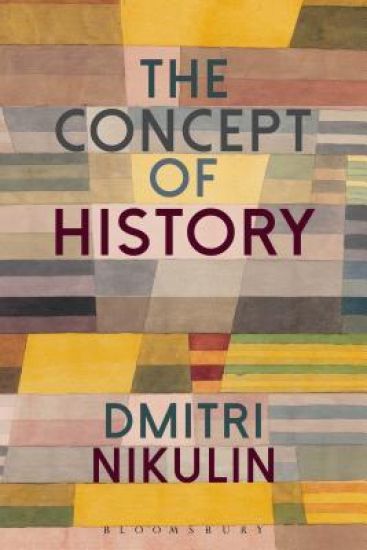
The Concept of History

The Concept of History

Dmitri Nikulin

Bloomsbury Academic
2017
sidottu
The Concept of History reflects on the presuppositions behind the contemporary understanding of history that often remain implicit and not spelled out. It is a critique of the modern understanding of history that presents it as universal and teleological, progressively moving forward to an end. Although few contemporary philosophers and historians maintain the view that there is strict universality and teleology in history, the remnants of these positions still affect our understanding of history. But if history is not universal and singular, evolving toward an objective universal end, it should be possible to admit of multiple histories, some of which we appropriate as our own. An another important aspect of this book is that if provides an account of history that is itself both historical and rooted in attempts to narrate and explain history from its inception in antiquity. The book seeks to establish features or constituents of history that might be found in any historical account and might themselves be considered historical invariants in history.
Facets of Modernity

Facets of Modernity

Dmitri Nikulin

Rowman Littlefield International
2021
sidottu
What does it mean to be human in modernity? This book examines being human, in its theoretical, practical, and productive aspects, not in abstraction from historical, social, and political settings, but rather as set in concrete historical and material circumstances. Through the analysis and close reading of a number of texts of the modern thinkers, which include those of Nietzsche, Dostoevsky, Tolstoy, Kracauer, Heidegger, Benjamin, Hans Jonas and Agnes Heller, it demonstrates that the complexity and variety of the human experience is grounded in the modern subjectivity, which establishes itself as universal, rational, autonomous, and necessary. Such a subjectivity is characterised as self-legislating or establishing the universal moral law and is further defined by historicity, or the interpretation of its actions as conditioned by the previous and current social and political circumstances. The book then shows that the multiple facets of modernity make the experience of being human fascinating, complicated and ultimately unique.