Kirjojen hintavertailu. Mukana 12 016 292 kirjaa ja 12 kauppaa.

Kirjahaku

Etsi kirjoja tekijän nimen, kirjan nimen tai ISBN:n perusteella.

4 kirjaa tekijältä Dmitry Degtev

Hitler's Collapse in the East

Hitler's Collapse in the East

Dmitry Degtev

PEN SWORD BOOKS LTD
2025
sidottu
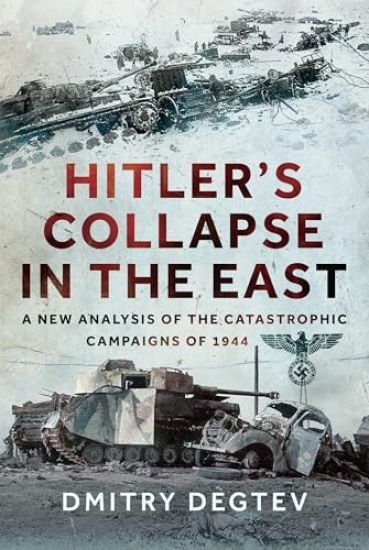
When 1944 began, the Third Reich’s position on the Eastern Front still seemed promising. Despite a series of major defeats at Kursk, Smolensk and on the Dnieper, the Germans still held vast swathes of Russian territory. Hitler declared that the conquered space would allow him to keep the Red Army away from the borders of Germany for a long time. However, such optimism was soon to be swept away. In January, the Soviets launched a powerful offensive in the northern sector, and then they repeatedly attacked the Germans in Ukraine, Crimea, Belarus, and the Baltic States. Then, on 22 June 1944, Stalin unleashed Operation Bagration, a massive offensive from which the German forces would never recover. Hitler’s answer was to prohibit his generals from any retreat. This made operations easier for the Russians and led to the German divisions being encircled and trapped in pockets, most of which had to be supplied by air. Endless crisis situations forced the Wehrmacht to transfer its divisions from one sector of the front to another. Then the weakened sections of the defence collapsed, provoking more and more catastrophic defeats. The disaster that the German army experienced was on a scale never seen before in warfare. More than 70 percent of the divisions engaged were defeated, destroyed or captured. In nine months, the front had stretched from 500 miles to over 1,000 miles. But all these victories came at a price. The Red Army experienced several severe crises of its own, sustaining heavy losses. The Soviet command also committed strategic blunders. It overestimated its forces and reduced its effectiveness by dispersing its resources too widely. It also suffered from the constant interference of Stalin which often meant the real objectives of the campaign were lost and the Red Army was drawn into senseless costly battles. These events, and the participation of Soviet troops in them, are analyzed in detail in this truly ground-breaking book.
Battle of Stalingrad

Battle of Stalingrad

Dmitry Degtev

PEN SWORD BOOKS LTD
2024
sidottu
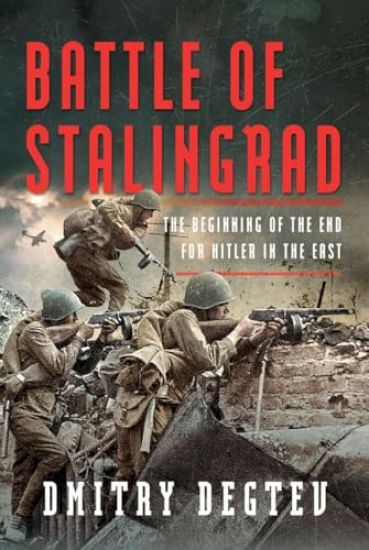
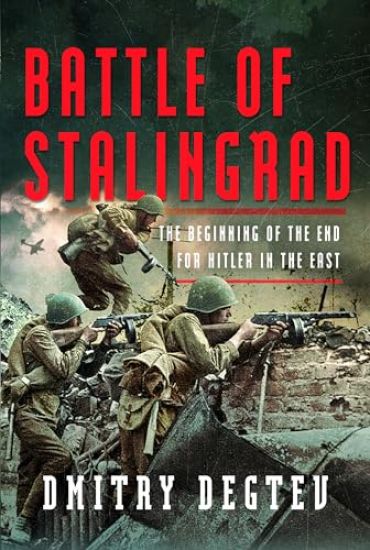
The Battle of Stalingrad was the bloodiest battle of the Second World War. An estimated 2 million individuals, military as well as civilian, became casualties in a savage struggle which lasted for more than five months. Stalingrad’s strategic position on the River Volga in southern Russia meant that whoever controlled the city controlled access to the oil fields of the Caucasus. Without that oil, the Germans were ultimately destined to fail on all fronts. The Battle of Stalingrad was, therefore, arguably, the most important conflict of the entire war. Yet, the author argues that both Hitler and Stalin lost sight of the real objectives of the campaign, with the capture of Stalingrad becoming seen as the end in itself. Stalingrad was not specified as a particular objective of the Germans in the original plan of Operation _Blau_. But when the defenders of Stalingrad unexpectedly stood in the way of the Germans, it became the focal point of the German effort. Hitler and his generals were naively sure that after the capture of Stalingrad, victory in the war was a certainty. Stalin and his generals thought that since the Wehrmacht stubbornly fought over the city’s ruins, regardless of the losses it suffered, it meant that the Germans knew more about its importance than they did, and so were determined to hold it at all costs. In fact, the strategic importance of Stalingrad was greatly exaggerated. The scale of the German operation to seize the Caucasus was immense, with an operation stretching for 1,500,00 kilometres (approximately equal to the distance between Berlin and Moscow). This involved laying routes for tank and infantry divisions through areas of virtual desert where there was an almost complete absence of railways and highways. No consideration was given to the needs of troops in fuel, ammunition, food or even water. At the same time, the unrealistic plan to capture the Caucasus did not provide any alternative options in case the main operation failed, which it was doomed to do. As for the Soviets, frightened and broken by the military disasters near Kerch and Kharkov, when entire armies were captured, Stalin authorized the retreat of the Red Army to the Volga, which turned into a stampede. But then the Soviet leader abruptly changed his mind and issued the famous order ‘Not a step back!’ While historians state that this order inspired the Soviet troops to resist and strengthened discipline, it in fact led to an increase in the number of defectors and collaborators. This ground-breaking study of the Battle of Stalingrad is a highly graphic chronicle of the fighting, shown from two sides, written by a Russian historian using much material previously unpublished in the West. It details the efforts of all branches of the armed forces; tanks, artillery, infantry, aviation and, for the first time, the important contribution of the Russian river flotilla.
The U-2 Over the Soviet Union

The U-2 Over the Soviet Union

Dmitry Degtev

PEN SWORD BOOKS LTD
2025
sidottu
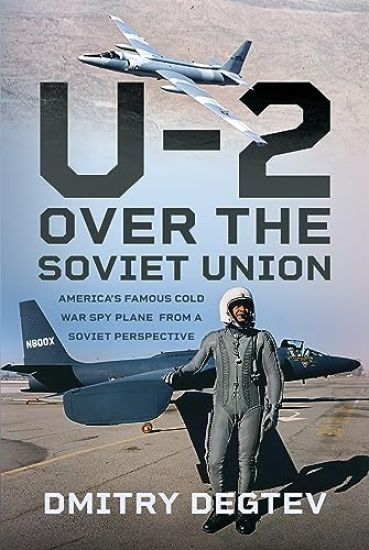
On 1 May 1960, a traditional military parade was held in Moscow. What stood it out from the previous ones, however, was the number of missiles, and in particular the ground-to-air anti-aircraft variants, that were present. There was perhaps nothing surprising in this dominance of missiles, for Nikita Khrushchev had already declared that the so-called Rocket Troops were to be the ‘main branch of the armed forces’. Not for nothing had the Politburo allocated huge sums of money and the best scientific minds to the on-going development of these weapons and units. In fact, there was no fly-past over the Red Square in 1960 as Khrushchev considered aircraft to be a ‘dying species’. From then on, it was being stated, military aviation would be assigned little more than an auxiliary role in the defence of the Soviet Bloc. Khrushchev’s assessment of the future of aircraft was seemingly confirmed by an incident that occurred more than 1,000km to the east of Moscow. For what the spectators and participants of the grand ‘rocket’ parade did not know was, that in one of the key events of the Cold War, an American high altitude reconnaissance Lockheed U-2 jet had, barely hours before, been shot down over the Urals by one of the types of missiles that were passing before them. Based on documents held in the CIA’s archives, declassified documents released by the Russian Ministry of Defence, and the memoirs of participants in the events in question, this book explores the true story of the preparation, implementation, and consequences of the U-2 reconnaissance flights over the Soviet Union, Eastern Europe and Cuba between 1956 and 1962. For the first time, the author reveals the military plans that were activated in the Eastern Bloc to combat the U-2 missions, and how the Soviets tried unsuccessfully to create a fighter-interceptor to operate in the stratosphere. This book also reveals which secret locations and objects were photographed by the U-2, including those which remained unidentified, and investigates where the secret centre of the Russian atomic project was actually located and whether the U-2 was able to find it. What was the true reliability and value of the information received from America’s U-2 operations? The reader will discover which objects were confiscated from Francis Gary Powers, the pilot of the U-2 brought down, following his capture, and why was he had been issued with women’s jewelry and watches before his fateful flight? The Soviet view of the incursions by Powers and his fellow U-2 pilots is laid bare – revealing just why the Powers’ name is as widely known in Russia as that of the cosmonaut Yuri Gagarin.
Battle of Stalingrad

Battle of Stalingrad

Dmitry Degtev

PEN SWORD BOOKS LTD
2026
nidottu
The Battle of Stalingrad was the bloodiest battle of the Second World War. An estimated 2 million individuals, military as well as civilian, became casualties in a savage struggle which lasted for more than five months. Stalingrad’s strategic position on the River Volga in southern Russia meant that whoever controlled the city controlled access to the oil fields of the Caucasus. Without that oil, the Germans were ultimately destined to fail on all fronts. The Battle of Stalingrad was, therefore, arguably, the most important conflict of the entire war. Yet, the author argues that both Hitler and Stalin lost sight of the real objectives of the campaign, with the capture of Stalingrad becoming seen as the end in itself. Stalingrad was not specified as a particular objective of the Germans in the original plan of Operation Blau. But when the defenders of Stalingrad unexpectedly stood in the way of the Germans, it became the focal point of the German effort. Hitler and his generals were naively sure that after the capture of Stalingrad, victory in the war was a certainty. Stalin and his generals thought that since the Wehrmacht stubbornly fought over the city’s ruins, regardless of the losses it suffered, it meant that the Germans knew more about its importance than they did, and so were determined to hold it at all costs. The scale of the German operation to seize the Caucasus was immense, with an operation stretching for 1,500,00 kilometres (approximately equal to the distance between Berlin and Moscow). This involved laying routes for tank and infantry divisions through areas of virtual desert where there was an almost complete absence of railways and highways. No consideration was given to the needs of troops in fuel, ammunition, food or even water. At the same time, the unrealistic plan to capture the Caucasus did not provide any alternative options in case the main operation failed, which it was doomed to do. As for the Soviets, frightened and broken by the military disasters near Kerch and Kharkov, when entire armies were captured, Stalin authorized the retreat of the Red Army to the Volga, which turned into a chaotic escape. But then the Soviet leader abruptly changed his mind and issued the famous order ‘Not a step back!’ This ground-breaking study of the Battle of Stalingrad is a highly graphic chronicle of the fighting, shown from two sides, written by a Russian historian using much material previously unpublished in the West. It details the efforts of all branches of the armed forces; tanks, artillery, infantry, aviation and, for the first time, the important contribution of the Russian river flotilla.