Kirjojen hintavertailu. Mukana 12 016 292 kirjaa ja 12 kauppaa.

Kirjahaku

Etsi kirjoja tekijän nimen, kirjan nimen tai ISBN:n perusteella.

11 kirjaa tekijältä Dmitry Shlapentokh

The French Revolution in Russian Intellectual Life

The French Revolution in Russian Intellectual Life

Dmitry Shlapentokh

Praeger Publishers Inc
1996
sidottu
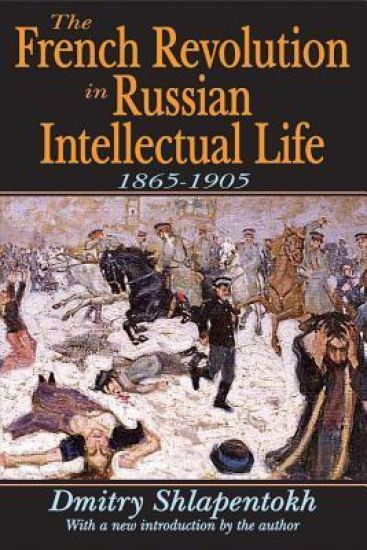
The interest of Russian intellectuals in the French Revolution demonstrates that some Russian thinkers of the 19th century had begun to question the concept of Russia's uniqueness. Yet most of them came to believe that the French Revolution (which they tended to equate with the Western experience) was irrelevant not only to Russia but to the rest of the world as well. They saw, perhaps correctly, that the Western experience, with the French Revolution as its symbol, was foreign to Russian destiny. Most of the Russian intellectuals of that time had rightly foreseen Russia, and to some degree the rest of the world's future, as following an authoritarian/totalitarian model of development.
The Proto-totalitarian State

The Proto-totalitarian State

Dmitry Shlapentokh

Transaction Publishers
2006
sidottu
Totalitarian rule is commonly thought to derive from spe- cific ideologies that justify the complete control by the state of social, cultural, and political institutions. The major goal of this volume is to demonstrate that in some cases brutal forms of state control have been the only way to maintain basic social order.Dmitry Shlapentokh seeks to show that totalitarian or semi-totalitarian regimes have their roots in a fear of disorder that may overtake both rulers and the society at large. Although ideology has played an important role in many totalitarian regimes, it has not always been the chief reason for repression. In many cases, the desire to establish order led to internal terror and intrusiveness in all aspects of human life.Shlapentokh seeks the roots of this phenomenon in France in the fourteenth to sixteenth centuries, when asocial processes in the wake of the Hundred Years War led to the emergence of a brutal absolutist state whose features and policies bore a striking resemblance to totalitarian regimes in the Soviet Union and China. State punishment and control allowed for relentless drive to "normalize" society with the state actively engaged in the regulation of social life. There were attempts to regulate the economy and instances of social engineering, attempts to populate emerging colonial empires with exiles and produce "new men and women" through reeducation. This increased harshness in dealing with the populace, in fact, the emergence of a new sort of bondage, was combined with a twisted form of humanitarianism and the creation of a rudimentary safety net. Some of these elements can be found in the democratic societies of the modern West, although in their aggregation these attributes are essential features of totalitarian regimes of the modem era.
The Proto-totalitarian State

The Proto-totalitarian State

Dmitry Shlapentokh

Routledge
2017
nidottu
Totalitarian rule is commonly thought to derive from spe- cific ideologies that justify the complete control by the state of social, cultural, and political institutions. The major goal of this volume is to demonstrate that in some cases brutal forms of state control have been the only way to maintain basic social order.Dmitry Shlapentokh seeks to show that totalitarian or semi-totalitarian regimes have their roots in a fear of disorder that may overtake both rulers and the society at large. Although ideology has played an important role in many totalitarian regimes, it has not always been the chief reason for repression. In many cases, the desire to establish order led to internal terror and intrusiveness in all aspects of human life.Shlapentokh seeks the roots of this phenomenon in France in the fourteenth to sixteenth centuries, when asocial processes in the wake of the Hundred Years War led to the emergence of a brutal absolutist state whose features and policies bore a striking resemblance to totalitarian regimes in the Soviet Union and China. State punishment and control allowed for relentless drive to "normalize" society with the state actively engaged in the regulation of social life. There were attempts to regulate the economy and instances of social engineering, attempts to populate emerging colonial empires with exiles and produce "new men and women" through reeducation. This increased harshness in dealing with the populace, in fact, the emergence of a new sort of bondage, was combined with a twisted form of humanitarianism and the creation of a rudimentary safety net. Some of these elements can be found in the democratic societies of the modern West, although in their aggregation these attributes are essential features of totalitarian regimes of the modem era.
The French Revolution and the Russian Anti-Democratic Tradition
The political uncertainty following the collapse of the Soviet Union and the rejection of the revolutionary model has brought Russian political thought full circle as democratic forces contend with authoritarian nationalism. This volume is essential to understanding the antidemocratic tradition in Russia and the persistent danger of totalitarianism.
Ideological Seduction and Intellectuals in Putin's Russia

Ideological Seduction and Intellectuals in Putin's Russia

Dmitry Shlapentokh

Springer Nature Switzerland AG
2020
sidottu
This book examines the interplay between key rulers and intellectuals in creating and sustaining popular discourses that often help keep rulers in power. By focusing in particular on the relationship between Putin and Dugin during the early Putin regime, the author zooms in on the questionable honesty in Putin's interest in Dugin's philosophy, and the instrumentality of that philosophy for strategic regime building. Arguing that ideology is largely supported by political philosophies that gain popular traction, the book questions the extent to which rulers are likely to stay faithful to their stated ideologies. Providing on-the-ground insight into Putin's rule, this book appeals to researchers and policymakers studying Post-Soviet Politics.
Ideological Seduction and Intellectuals in Putin's Russia

Ideological Seduction and Intellectuals in Putin's Russia

Dmitry Shlapentokh

Springer Nature Switzerland AG
2021
nidottu
This book examines the interplay between key rulers and intellectuals in creating and sustaining popular discourses that often help keep rulers in power. By focusing in particular on the relationship between Putin and Dugin during the early Putin regime, the author zooms in on the questionable honesty in Putin's interest in Dugin's philosophy, and the instrumentality of that philosophy for strategic regime building. Arguing that ideology is largely supported by political philosophies that gain popular traction, the book questions the extent to which rulers are likely to stay faithful to their stated ideologies. Providing on-the-ground insight into Putin's rule, this book appeals to researchers and policymakers studying Post-Soviet Politics.
The Mongol Conquests in the Novels of Vasily Yan: An Intellectual Biography
Vasily Yan (Vassily Grigoryevich Yanchevetsky, 1874-1954) was a writer of historical novels whose popularity survives the test of time. He was widely read throughout the Soviet era and continues to be popular in the post-Soviet era. This book is not just a biographical sketch of an important Russian/Soviet writer basically unknown to the Western public. The focus on Yan and his work also demonstrates the role of ideology in a totalitarian society. Shlapentokh shows that ideology and cultural and intellectual life in totalitarian regimes are more complex than is often assumed. Intellectuals often engaged in stressful, but--in its literary outcome--captivating "cat and mouse" games with censors, the powerful, and the government.