Kirjojen hintavertailu. Mukana 11 244 527 kirjaa ja 12 kauppaa.

Kirjahaku

Etsi kirjoja tekijän nimen, kirjan nimen tai ISBN:n perusteella.

11 kirjaa tekijältä Dominic Head

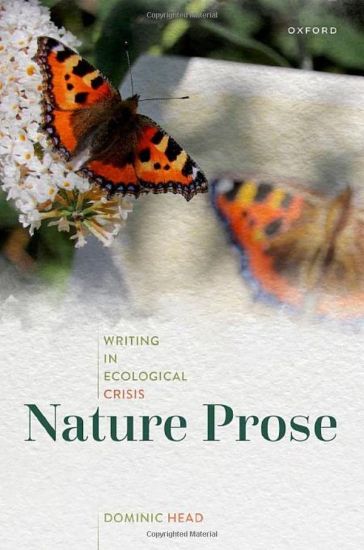
Nature Prose

Nature Prose

Dominic Head

Oxford University Press
2022
sidottu
Nature Prose seeks to explain the popularity and appeal of contemporary writing about nature. This book intervenes in key areas of contemporary debate about literature and the environment and explores the enduring appeal of writing about nature during an ecological crisis. Using a range of international examples, with a focus on late twentieth- and early twenty-first-century writing from Britain and the US, Dominic Head argues that nature writing contains formal effects which encapsulate our current ecological dilemma and offer a fresh resource for critical thinking. The environmental crisis has injected a fresh urgency into nature writing, along with a new piquancy for those readers seeking solace in the nonhuman, or for those looking to change their habits in the face of ecological catastrophe. However, behind this apparently strong match between the aims of nature writers and the desires of their readers, there is also a shared mood of radical uncertainty and insecurity. The treatment and construction of 'nature' in contemporary imaginative prose reveals some significant paradoxes beneath its dominant moods, moods which are usually earnest, sometimes celebratory, sometimes prophetic or cautionary. It is in these paradoxical moments that the contemporary ecological crisis is formally encoded, in a progressive development of ecological consciousness from the late 1950s onwards. Nature prose, fiction and nonfiction, is now contemporaneous with a defining time of crisis, while also being formally fashioned by that context. This is a mode of writing that emerges in a world in crisis, but which is also, in some ways, in crisis itself. With chapters on remoteness, exclusivity, abundance, and rarity, this book marks a turning point in how literary criticism engages with nature writing.
The Modernist Short Story

The Modernist Short Story

Dominic Head

Cambridge University Press
2009
pokkari
The modernist period saw a revolution in fictional practice, most famously in the work of novelists such as Joyce and Woolf. Dominic Head shows that the short story, with its particular stress on literary artifice, was a central site for modernist innovation. Working against a conventional approach and towards a more rigourous and sophisticated theory of the genre, using a framework drawn from Althusser and Bakhtin, he examines the short story's range of formal effects, such as the disunifying function of ellipsis and ambiguity. Separate chapters on Joyce, Woolf and Katherine Mansfield highlight their strategies of formal dissonance, involving a conflict of voices within the narrative. Finally, Dominic Head's challenging conclusion takes the implications of his study into the age of postmodernism.
Nadine Gordimer

Nadine Gordimer

Dominic Head

Cambridge University Press
1994
pokkari
The award to Nadine Gordimer of the Nobel Prize for Literature in 1991 was an affirmation of her distinctive contribution to twentieth-century fiction and to the creation of a literature that challenges apartheid. In this study, which may be used as an introduction as well as by those already familiar with Gordimer’s work, Dominic Head discusses each of her novels in detail, paying close attention to the texts both as a reflection of events and situations in the real world, and as evidence of her constant rethinking of her craft. Head shows how Gordimer’s concerns, apparent in her earliest novels, are developed through increasing stress on the politics of textuality; and he pursues the implications of this development to consider how Gordimer’s later work contributes to postmodernist fiction, and to a recentering of political engagement in an era of uncertainty.
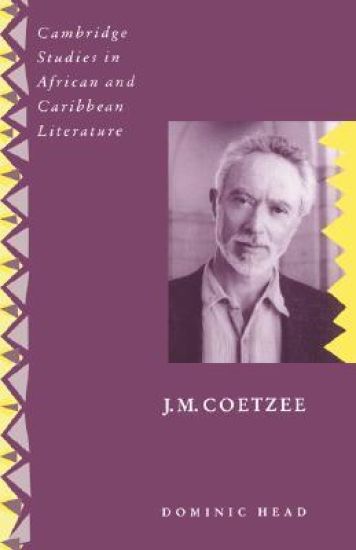
J. M. Coetzee

J. M. Coetzee

Dominic Head

Cambridge University Press
1998
sidottu
The importance of J. M. Coetzee in the development of twentieth-century fiction is now widely recognised. His work addresses some of the key critical issues of our time: the relationship between postmodernism and postcolonialism, the role of history in the novel, and, repeatedly, the question of how the author can combine an ethical and political consciousness with a commitment to the novel as a work of fiction. In this study, which may be used as an introduction and by those already familiar with Coetzee’s work, Dominic Head assesses Coetzee’s position as a white South African writer engaged with the legacy of colonialism. Through close readings of all the novels, Head shows how Coetzee inhabits a transitional site between Europe and Africa, and it is from this position that his more general concerns emerge. Coetzee’s engagement with the problems facing the postcolonial writer, Head argues, is always enriched by his awareness of a wider literary tradition.
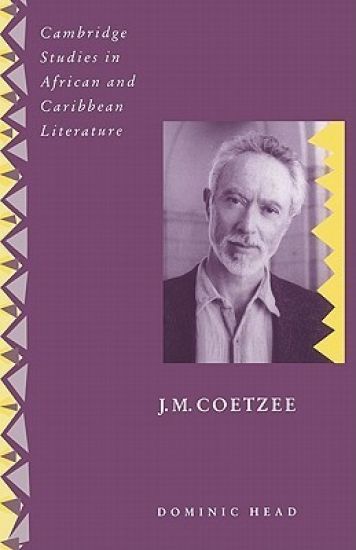
J. M. Coetzee

J. M. Coetzee

Dominic Head

Cambridge University Press
2010
pokkari
The importance of J. M. Coetzee in the development of twentieth-century fiction is widely recognised. His work addresses some of the key issues of the late twentieth and early twenty-first centuries: the relationship between postmodernism and postcolonialism, the role of history in the novel, and the question of how the author can combine an ethical and political consciousness with a commitment to the novel as a work of fiction. In this study, written in 1998, Dominic Head assesses Coetzee's position as a white South African writer engaged with the legacy of colonialism. Through close readings of all the novels, Head shows how Coetzee inhabits a transitional site between Europe and Africa, and it is from this position that his more general concerns emerge. Coetzee's engagement with the problems facing the postcolonial writer, Head argues, is always enriched by his awareness of a wider literary tradition.
The Cambridge Introduction to Modern British Fiction, 1950–2000
In this introduction to post-war fiction in Britain, Dominic Head shows how the novel yields a special insight into the important areas of social and cultural history in the second half of the twentieth century. Head’s study is the most exhaustive survey of post-war British fiction available. It includes chapters on the state and the novel, class and social change, gender and sexual identity, national identity and multiculturalism. Throughout Head places novels in their social and historical context. He highlights the emergence and prominence of particular genres and links these developments to the wider cultural context. He also provides provocative readings of important individual novelists, particularly those who remain staple reference points in the study of the subject. Accessible, wide-ranging and designed specifically for use on courses, this is the most current introduction to the subject available. An invaluable resource for students and teachers alike.
The Cambridge Introduction to J. M. Coetzee

The Cambridge Introduction to J. M. Coetzee

Dominic Head

Cambridge University Press
2009
pokkari
The South African novelist and Nobel Laureate J. M. Coetzee is widely studied around the world and attracts considerable critical attention. With the publication of Disgrace Coetzee began to enjoy popular as well as critical acclaim, but his work can be as challenging as it is impressive. This book is addressed to students and readers of Coetzee: it is an up-to-date survey of the writer's fiction and context, written accessibly for those new to his work. All of the fiction is discussed, and the brooding presence of the political situation in South Africa, during the first part of his career, is given serious attention in a comprehensive account of the author's main influences. The revealing strand of confessional writing in the latter half of Coetzee's career is given full consideration. This Introduction will help new readers understand and appreciate one of the most important and challenging authors in contemporary literature.
Ian Mcewan

Ian Mcewan

Dominic Head

Manchester University Press
2007
nidottu
In this survey Ian McEwan emerges as one of those rare writers whose works have received both popular and critical acclaim. His novels grace the bestseller lists, and he is well regarded by critics, both as a stylist and as a serious thinker about the function and capacities of narrative fiction.McEwan’s novels treat issues that are central to our times: politics, and the promotion of vested interests; male violence and the problem of gender relations; science and the limits of rationality; nature and ecology; love and innocence; and the quest for an ethical worldview. Yet he is also an economical stylist: McEwan’s readers are called upon to attend, not just to the grand themes, but also to the precision of his spare writing.Although McEwan’s later works are more overtly political, more humane, and more ostentatiously literary than the early work, Dominic Head uncovers the continuity as well as the sense of evolution through the oeuvre. Head makes the case for McEwan’s prominence - pre-eminence, even - in the canon of contemporary British novelists.
Modernity and the English Rural Novel

Modernity and the English Rural Novel

Dominic Head

Cambridge University Press
2017
sidottu
This book examines the persistence of the rural tradition in the English novel into the twentieth century. In the shadow of metropolitan literary culture, rural writing can seem to strive for a fantasy version of England with no compelling social or historical relevance. Dominic Head argues that the apparent disconnection is, in itself, a response to modernity rather than a refusal to engage with it, and that the important writers in this tradition have had a significant bearing on the trajectory of English cultural life through the twentieth century. At the heart of the discussion is the English rural regional novel of the 1920s and 1930s, which reveals significant points of overlap with mainstream literary culture and the legacies of modernism. Rural writers refashioned the conventions of the tradition and the effects of literary nostalgia, to produce the swansong of a fading genre with resonances that are still relevant today.
The State of the Novel

The State of the Novel

Dominic Head

Wiley-Blackwell (an imprint of John Wiley Sons Ltd)
2008
nidottu
Part of the Blackwell Manifestos series, The State of the Novel offers a lively, yet rigorous investigation into the state and future of the contemporary British novel written by an expert in the field. Evaluates the state of the ‘serious literary’ novel and novel criticismProminent treatment is paid to the ‘internationalization’ of the novel in EnglishOffers a manifesto on contemporary fiction from an expert in this field; Dominic Head is best known for his Cambridge Introduction to Modern British Fiction 1950-2000Establishes the shared interests of contemporary theorists of the novel, cultural commentators, and novel consumersAn ideal supplementary text for students and faculty interested in the novel and contemporary fiction
The State of the Novel

The State of the Novel

Dominic Head

Wiley-Blackwell (an imprint of John Wiley Sons Ltd)
2008
sidottu
Part of the Blackwell Manifestos series, The State of the Novel offers a lively, yet rigorous investigation into the state and future of the contemporary British novel written by an expert in the field. Evaluates the state of the ‘serious literary’ novel and novel criticismProminent treatment is paid to the ‘internationalization’ of the novel in EnglishOffers a manifesto on contemporary fiction from an expert in this field; Dominic Head is best known for his Cambridge Introduction to Modern British Fiction 1950-2000Establishes the shared interests of contemporary theorists of the novel, cultural commentators, and novel consumersAn ideal supplementary text for students and faculty interested in the novel and contemporary fiction