Kirjojen hintavertailu. Mukana 11 699 587 kirjaa ja 12 kauppaa.

Kirjahaku

Etsi kirjoja tekijän nimen, kirjan nimen tai ISBN:n perusteella.

5 kirjaa tekijältä Don Higginbotham

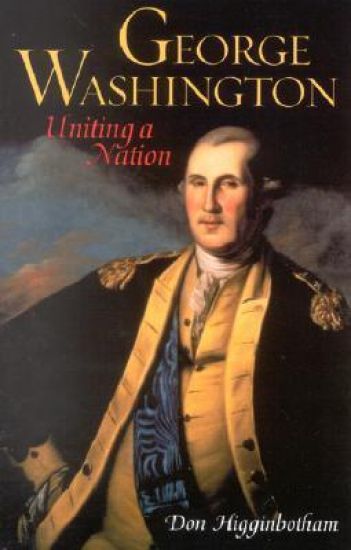
George Washington

George Washington

Don Higginbotham

Rowman Littlefield Publishers
2004
nidottu
In 1776, thirteen colonies declared their independence from Britain. Although they came together to fight a war, the colonies were far from a unified nation. In George Washington: Uniting a Nation, Don Higginbotham argues that Washington's greatest contribution to American life was creating a sense of American unity. In clear and concise prose, Higginbotham shows that as Revolutionary War commander, proponent of the Constitution, and president, George Washington focused on building national identity and erecting institutions to cement the fledgling nation. The first book on Washington to examine exclusively his role in state formation, George Washington is essential reading for scholars, students, and everyone interested in America's first, and most formative, president.
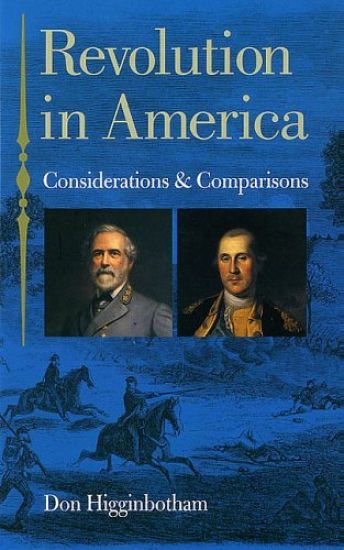
Revolution in America

Revolution in America

Don Higginbotham

University of Virginia Press
2005
sidottu
Our nation has produced comparatively few statesmen since the eighteenth century - only Abraham Lincoln and Franklin Roosevelt seem to clearly qualify - whereas the American Revolution elevated several of its key players to a status of the first political order. Even the shortest list must include Franklin, Hamilton, and the first four presidents. The opening essays in Don Higginbotham's new collection look at the epochal achievements of the Revolutionary era through the perspectives of war, leadership, and state formation. Higginbotham examines how the blend of key personages influenced the creation of a federal system and led to the establishment of a new kind of militia and of West Point, a military academy distinctly different from its counterparts in Europe. The collection also provides a fascinating view into the character of George Washington through an essay examining his relationships with women. The concluding essays turn to the post-Revolutionary era to examine how the North and South, despite profound and persistent bonds, began to grow apart. Higginbotham traces the deepening sectional crisis within the context of the election of Lincoln, and he ends his book with the approach of a second revolution - that of the Confederacy. All of the essays demonstrate Higginbotham's belief that history is not shaped simply by vast, impersonal forces but that, on the contrary, significant and lasting change is to a large extent brought about by the interaction and decisions of individuals. Our unique and remarkable history is a reflection of remarkable people.
Revolution in America

Revolution in America

Don Higginbotham

University of Virginia Press
2005
nidottu
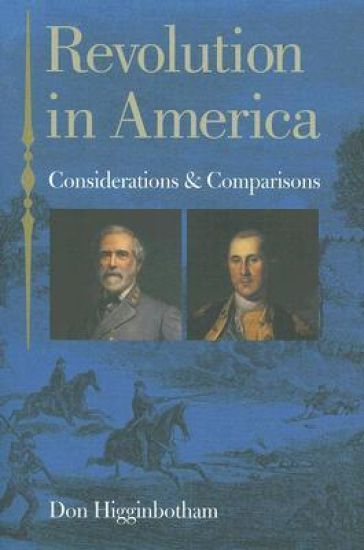
Our nation has produced comparatively few statesmen since the eighteenth century - only Abraham Lincoln and Franklin Roosevelt seem to clearly qualify - whereas the American Revolution elevated several of its key players to a status of the first political order. Even the shortest list must include Franklin, Hamilton, and the first four presidents. The opening essays in Don Higginbotham's new collection look at the epochal achievements of the Revolutionary era through the perspectives of war, leadership, and state formation. Higginbotham examines how the blend of key personages influenced the creation of a federal system and led to the establishment of a new kind of militia and of West Point, a military academy distinctly different from its counterparts in Europe. The collection also provides a fascinating view into the character of George Washington through an essay examining his relationships with women. The concluding essays turn to the post-Revolutionary era to examine how the North and South, despite profound and persistent bonds, began to grow apart. Higginbotham traces the deepening sectional crisis within the context of the election of Lincoln, and he ends his book with the approach of a second revolution - that of the Confederacy. All of the essays demonstrate Higginbotham's belief that history is not shaped simply by vast, impersonal forces but that, on the contrary, significant and lasting change is to a large extent brought about by the interaction and decisions of individuals. Our unique and remarkable history is a reflection of remarkable people.
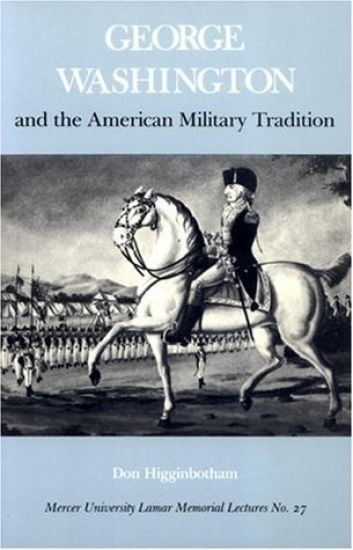
George Washington and the American Military Tradition

George Washington and the American Military Tradition

Don Higginbotham

University of Georgia Press
2004
pokkari
In George Washington and the American Military Tradition, Don Higginbotham investigates the interplay of militiaman and professional soldier, of soldier and legislator, that shaped George Washington’s military career and ultimately fostered the victory that brought independence to our nation. Higginbotham then explores the legacy of Washington’s success, revealing that the crucial blending of civil and military concerns characteristic of the Revolution has been variously regarded and only seldom repeated by later generations of American soldiers.Washington’s training, between 1753 and 1755, included frontier command in the Virginia militia, adjunct service to the British regulars during the French and Indian War, and increasing civil service in the Virginia House of Burgesses and Continental Congress. The result of this combination of pursuits was Washington’s concern for the citizen behind the soldier, his appreciation of both frontier tactics and professional discipline, and his sensitivity to political conflict and consensus in thirteen colonies in forming a new, united nation. When, in 1775, Washington accepted command of the Continental Army from the Continental Congress, he possessed political and military experience that enabled him, by 1783, to translate the Declaration of Independence into victory over the British.Yet, Higginbotham notes, the legacy of Washington’s success has sometimes been overlooked by generals concerned with professional training and a permanent military establishment, and therefore apt to revere foreign heros such as Jomini, Napoleon, and Bismarck more than Washington. Other leaders, most notably the World War II chief of staff, George Marshall, have recognized and implemented Washington’s unique understanding of civil and military coordination. In times almost wholly dominated by a military agenda, Washington’s and Marshall’s steady subordination of soldier to citizen, of strategy to legislation, recalls the careful consensus of thirteen colonies in 1776.