Kirjojen hintavertailu. Mukana 11 244 527 kirjaa ja 12 kauppaa.

Kirjahaku

Etsi kirjoja tekijän nimen, kirjan nimen tai ISBN:n perusteella.

25 kirjaa tekijältä Donald Davidson

The Essential Davidson

The Essential Davidson

Donald Davidson

Oxford University Press
2006
sidottu
The Essential Davidson compiles the most celebrated papers of one of the twentieth century's greatest philosophers. It distils Donald Davidson's seminal contributions to our understanding of ourselves, from three decades of essays, into one thematically organized collection. A new, specially written introduction by Ernie Lepore and Kirk Ludwig, two of the world's leading authorities on his work, offers a guide through the ideas and arguments, shows how they interconnect, and reveals the systematic coherence of Davidson's worldview. Davidson's philosophical program is organized around two connected projects. The first is that of understanding the nature of human agency. The second is that of understanding the nature and function of language, and its relation to the world. Accordingly, the first part of the book presents Davidson's investigation of reasons, causes, and intentions, which revolutionized the philosophy of action. This leads to his notable doctrine of anomalous monism, the view that all mental events are physical events, but that the mental cannot be reduced to the physical. The second part of the book presents the famous essays in which Davidson set out his highly original and influential philosophy of language, which founds the theory of meaning on the theory of truth. These fifteen classic essays will be invaluable for anyone interested in the study of mind and language. Fascinating though they are individually, it is only when drawn together that there emerges a compelling picture of man as a rational linguistic animal whose thoughts, though not reducible to the material, are part of the fabric of the world, and whose knowledge of his own mind, the minds of others, and the world around him is as fundamental to his nature as the power of thought and speech itself.
The Essential Davidson

The Essential Davidson

Donald Davidson

Oxford University Press
2006
nidottu
The Essential Davidson compiles the most celebrated papers of one of the twentieth century's greatest philosophers. It distils Donald Davidson's seminal contributions to our understanding of ourselves, from three decades of essays, into one thematically organized collection. A new, specially written introduction by Ernie Lepore and Kirk Ludwig, two of the world's leading authorities on his work, offers a guide through the ideas and arguments, shows how they interconnect, and reveals the systematic coherence of Davidson's worldview. Davidson's philosophical program is organized around two connected projects. The first is that of understanding the nature of human agency. The second is that of understanding the nature and function of language, and its relation to the world. Accordingly, the first part of the book presents Davidson's investigation of reasons, causes, and intentions, which revolutionized the philosophy of action. This leads to his notable doctrine of anomalous monism, the view that all mental events are physical events, but that the mental cannot be reduced to the physical. The second part of the book presents the famous essays in which Davidson set out his highly original and influential philosophy of language, which founds the theory of meaning on the theory of truth. These fifteen classic essays will be invaluable for anyone interested in the study of mind and language. Fascinating though they are individually, it is only when drawn together that there emerges a compelling picture of man as a rational linguistic animal whose thoughts, though not reducible to the material, are part of the fabric of the world, and whose knowledge of his own mind, the minds of others, and the world around him is as fundamental to his nature as the power of thought and speech itself.
Subjective, Intersubjective, Objective

Subjective, Intersubjective, Objective

Donald Davidson

Clarendon Press
2001
sidottu
A third volume of philosophical writings by Donald Davidson, whose influence on philosophy since the 1960s has been deep and broad. Davidson's first two collections were published by OUP in the early 1980s, His ideas have continued to flow, and here he presents a selection of his best work on knowledge, mind, and language from the 1980s and 90s.
Subjective, Intersubjective, Objective

Subjective, Intersubjective, Objective

Donald Davidson

Clarendon Press
2001
nidottu
Subjective, Intersubjective, Objective is the long-awaited third volume of philosophical writings by Donald Davidson, whose influence on philosophy since the 1960s has been deep and broad. His first two collections, published by OUP in the early 1980s, are recognized as contemporary classics. Now Davidson presents a selection of his work on knowledge, mind, and language from the 1980s and the 1990s. We all have knowledge of our own minds, knowledge of the contents of other minds, and knowledge of the shared environment. Davidson examines the nature and status of each of these three sorts of knowledge, and the connections and differences among them. Along the way he has illuminating things to say about truth, human rationality, and the relations among language, thought, and the world. This new volume offers a rich and rewarding feast for anyone interested in philosophy today, and is essential reading for anyone working on its central topics.
Problems of Rationality

Problems of Rationality

Donald Davidson

Clarendon Press
2004
sidottu
Problems of Rationality is the eagerly awaited fourth volume of Donald Davidson's philosophical writings. From the 1960s until his death in August 2003 Davidson was perhaps the most influential figure in English-language philosophy, and his work has had a profound effect upon the discipline. His unified theory of the interpretation of thought, meaning, and action holds that rationality is a necessary condition for both mind and interpretation. Davidson here develops this theory to illuminate value judgements and how we understand them; to investigate what the conditions are for attributing mental states to an object or creature; and to grapple with the problems presented by thoughts and actions which seem to be irrational. Anyone working on knowledge, mind, and language will find these essays essential reading.
Problems of Rationality

Problems of Rationality

Donald Davidson

Clarendon Press
2004
nidottu
Problems of Rationality is the eagerly awaited fourth volume of Donald Davidson's philosophical writings. From the 1960s until his death in August 2003 Davidson was perhaps the most influential figure in English-language philosophy, and his work has had a profound effect upon the discipline. His unified theory of the interpretation of thought, meaning, and action holds that rationality is a necessary condition for both mind and interpretation. Davidson here develops this theory to illuminate value judgements and how we understand them; to investigate what the conditions are for attributing mental states to an object or creature; and to grapple with the problems presented by thoughts and actions which seem to be irrational. Anyone working on knowledge, mind, and language will find these essays essential reading.
Truth, Language, and History

Truth, Language, and History

Donald Davidson

Clarendon Press
2005
sidottu
Truth, Language, and History is the much-anticipated final volume of Donald Davidson's philosophical writings. In four groups of essays, Davidson continues to explore the themes that occupied him for more than fifty years: the relations between language and the world; speaker intention and linguistic meaning; language and mind; mind and body; mind and world; mind and other minds. He asks: what is the role of the concept of truth in these explorations? And, can a scientific world view make room for human thought without reducing it to something material and mechanistic? Including a new introduction by his widow, Marcia Cavell, this volume completes Donald Davidson's colossal intellectual legacy.
Truth, Language, and History

Truth, Language, and History

Donald Davidson

Clarendon Press
2005
nidottu
Truth, Language, and History is the much-anticipated final volume of Donald Davidson's philosophical writings. In the four groups of essays that comprise it, Davidson continues to explore the themes that occupied him for more than fifty years: the relations between language and the world; speaker intention and linguistic meaning; language and mind; mind and body; mind and world; mind and other minds. He asks: what is the role of the concept of truth in these explorations? And, can a scientific world view make room for human thought without reducing it to something material and mechanistic? Davidson's underlying picture, which can be seen in many of these essays, is that we are acquainted directly with the world, not indirectly via some intermediary such as sense-data, representations, or language itself; that thought emerges in the first place through interpersonal communication in a shared material world, and continues to develop as we engage each other in dialogue; and that language depends on communication, not vice versa. This is the triangulating situation - two creatures communicating about a common world - about which Davidson has written elsewhere. As for the mind-body relation: our ontology need posit nothing more that material objects and events; but as explainers we require two mutually irreducible vocabularies: mind and body. In the last six essays Davidson finds interconnections between his own views and those of some of the major philosophers of the past. Including a new introduction by his widow, Marcia Cavell, this volume completes Donald Davidson's colossal intellectual legacy.
The Structure of Truth

The Structure of Truth

Donald Davidson

Oxford University Press
2020
sidottu
Donald Davidson was one of the most famous and influential philosophers of the twentieth century. The Structure of Truth presents his 1970 Locke Lectures in print for the first time. They comprise an invaluable historical document which illuminates how Davidson was thinking about the theory of meaning, the role of a truth theory therein, the ontological commitments of a truth theory, the notion of logical form, and so on, at a pivotal moment in the development of his thought. Unlike Davidson's previously published work, the lectures are written so as to be presented to an audience as a fully organized and coherent exposition of his program in the philosophy of language. Had they been widely available in the years following 1970, the reception of Davidson's work might have been very different. Given the systematic nature of their presentation of Davidson's semantic program, these lectures will be of interest to anyone working in the philosophy of language.
Essays on Actions and Events

Essays on Actions and Events

Donald Davidson

Clarendon Press
2001
nidottu
This investigation of the nature of human action argues for an ontology which includes events along with persons and other objects. Among the topics discussed are: freedom to act; weakness of the will; the logical form of talk about actions, intentions, and causality; and decision theory.
Inquiries into Truth and Interpretation

Inquiries into Truth and Interpretation

Donald Davidson

Clarendon Press
2001
nidottu
The central question which these essays address is what it is for words to mean what they do. Among the topics covered are the relation between theories of truth and theories of meaning, translation, quotation, belief, radical interpretation, reference, metaphor, and communication.
Plato's Philebus (RLE: Plato)

Plato's Philebus (RLE: Plato)

Donald Davidson

Routledge
2012
sidottu
The Philebus is hard to reconcile with standard interpretations of Plato’s philosophy and in this pioneering work Donald Davidson, seeks to take the Philebus at face value and to reassess Plato’s late philosophy in the light of the results. The author maintains that the approach to ethics in the Philebus represents a considerable return to the methodology of the earlier dialogues. He emphasizes Plato’s reversion to the Socratic elenchus and connects it with the startling reappearance of Socrates as the leading voice in the Philebus.
Truth and Predication

Truth and Predication

Donald Davidson

The Belknap Press
2008
nidottu
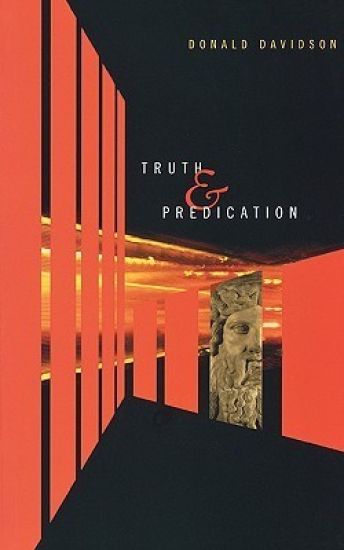
This brief book takes readers to the very heart of what it is that philosophy can do well. Completed shortly before Donald Davidson's death at 85, Truth and Predication brings full circle a journey moving from the insights of Plato and Aristotle to the problems of contemporary philosophy. In particular, Davidson, countering many of his contemporaries, argues that the concept of truth is not ambiguous, and that we need an effective theory of truth in order to live well.Davidson begins by harking back to an early interest in the classics, and an even earlier engagement with the workings of grammar; in the pleasures of diagramming sentences in grade school, he locates his first glimpse into the mechanics of how we conduct the most important activities in our life--such as declaring love, asking directions, issuing orders, and telling stories. Davidson connects these essential questions with the most basic and yet hard to understand mysteries of language use--how we connect noun to verb. This is a problem that Plato and Aristotle wrestled with, and Davidson draws on their thinking to show how an understanding of linguistic behavior is critical to the formulating of a workable concept of truth. Anchored in classical philosophy, Truth and Predication nonetheless makes telling use of the work of a great number of modern philosophers from Tarski and Dewey to Quine and Rorty. Representing the very best of Western thought, it reopens the most difficult and pressing of ancient philosophical problems, and reveals them to be very much of our day.
Still Rebels, Still Yankees and Other Essays

Still Rebels, Still Yankees and Other Essays

Donald Davidson

Louisiana State University Press
1999
nidottu
A decade and more has passed since the first publication of Still Rebels, Still Yankees. During that time the book has become recognized as a classic affirmation of the necessity of tradition in conserving cultural order.Donald Davidson, a major figure in the Agrarian Movement, summed up the intent of the work this way:""The general theme that binds the essays- no matter what their specific subjects- is the conflict between tradition and anti-tradition that characterizes modern society, with tradition viewed as the living continuum that makes society and civilization possible and anti-tradition as the disintegrative principle that destroys society and civilization in the name of science and progress. The South, which has suffered most in its devoted defense of tradition, naturally offers me examples for consideration; but this is not a book about the South as such. It is as near as I can come, in essay form, to defining what I would conceive to be the true American position.""In a brilliant and graceful style, Davidson pursues his theme in a rich variety of subjects: poetry, myth, and folklore; and in the complex rivalries between nation and region, the free citizen and the Leviathan state, the values of religion and the facts of science.Order, sanity, and fullness of life are cornerstones of the tradition against which he appraises writers like Hardy and John Gould Fletcher, the historiography of Toynbee, and the social reporting of W. J. Cash.
Two Roads to Wisdom?

Two Roads to Wisdom?

Donald Davidson

Open Court Publishing Co ,U.S.
2001
pokkari
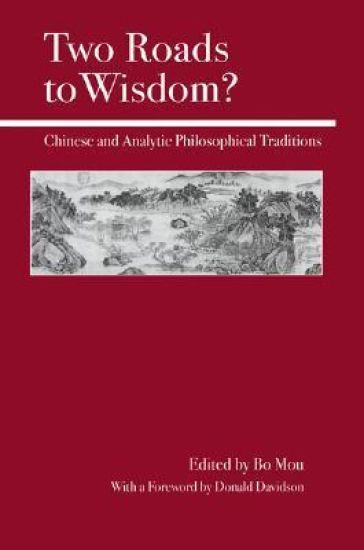
This collection of essays by experts in the field investigates the issue of philosophical methodology through a comparative approach; promotes dialogue and understanding among different traditions; and shows the many ways in which Chinese and Western analytic philosophy complement rather than contradict each other.
Poems, 1922-1961

Poems, 1922-1961

Donald Davidson

University of Minnesota Press
1966
nidottu
Poems, 1922-1961 was first published in 1966.This volume contains a collection of the most important work of Donald Davidson, one of America's greatest contemporary poets. The selection range from the time of his association with the Fugitive group of Southern writers during the 1920's to his most recently published book of poems, The Long Street (1961). The Tall Men, first published in 1927, is included here in its revised version of 1938. Among the other early poems are selections from An Outland Piper (1924) and from Lee in the Mountains and Other Poems (1938).The critic Louis D. Rubin, Jr. calls this "the life work of a master poet." He comments: "These poems don't date; they represent no outmoded school or clique . . . and the new poems have a simplicity about them that does not hide so much as it enhances their rich imaginativeness and wealth of imagery. These are the poems of a man of great sensitivity and an exciting imagination and command of the language."
Southern Writers in the Modern World

Southern Writers in the Modern World

Donald Davidson

University of Georgia Press
2010
pokkari
One of the most important of the Southern magazines in the 1920s was The Fugitive, a magazine of verse and brief commentaries on literature in general. Among its contributors were John Crowe Ransom, Allen Tate, Robert Penn Warren, Donald Davidson, and Merrill Moore. Publication began in April 1922 and ended in December 1925. Soon thereafter, the “Fugitive” writers and some others became profoundly concerned with the materialism of American life and its effect upon the South. The group became known as “Agrarians.” Their thinking and discussion culminated in a symposium, I’ll Take My Stand, published in 1930.In his first two lectures Davidson describes the underlying nature and aims of the Fugitive and Agrarian movements. He brings to the discussion his intimate and thorough knowledge of Southern life and letters. The third lecture deals with the place of the writer in the modern university, posing the questions of whether the writer needs the university and whether the university needs or wants the writer.
Regionalism and Nationalism in the United States

Regionalism and Nationalism in the United States

Donald Davidson

Transaction Publishers
1990
nidottu
A quarter of a century before Lyndon B. Johnson popularized the slogan "The Great Society," Donald Davidson wrote his critique of Leviathan, the omnipotent nation-state, in terms that only recently have come to be appreciated. "Leviathan is the idea of the Great Society, organized under a single, complex, but strong and highly centralized national government, motivated ultimately by men's desire for economic welfare of a specific kind rather than their desire for personal liberty. " Originally published as The Attack on Leviathan, this eloquent volume is an attack on state centralism and an affirmation of regional identity.Davidson's work is a special sort of intellectual as well as social history. It reveals an extraordinary mastery of the literature on regionalism in the United States, with special emphasis on the work on Rupert Vance and Howard Odum in the social sciences. Davidson looks at regionalism in arts, literature, and education. He favors agriculture over industrialization, and "the hinterland" over cities, examining along the way varying historical memories, the dilemma of Southern liberals, and the choice of expedience or principles. His book is a forceful and commanding challenge to those who would push for central authority at the sacrifice of individual and regional identity. Davidson concludes with a devastating critique of nationalism leading to a supra-nationalism. Ultimately, the heterogeneity of human desires comes up against the uniformity of world systems and world states. Davidson offers instead a broad world of intellectual history and commentary in which individualism allies itself with communities as a means for stemming the tide of collectivism and its base in a world state. For Davidson, Leviathan, the monstrous state, is a devourer, not a savior. As several peoples rise to strike down their own Leviathans, this courageous book may be better understood now than it was in 1938.Donald Davidson was part of that movement in American letters known as the Southern Agrarians. He was a poet, critic, historian, and political analyst. He spent most of his life at Vanderbilt University, and was himself born in central Tennessee. He is best known as the author of The Tall Men (1927) and a collection of essays, Still Rebels, Still Yankees (1957).