Kirjojen hintavertailu. Mukana 11 358 325 kirjaa ja 12 kauppaa.

Kirjahaku

Etsi kirjoja tekijän nimen, kirjan nimen tai ISBN:n perusteella.

4 kirjaa tekijältä Donald L. Donham

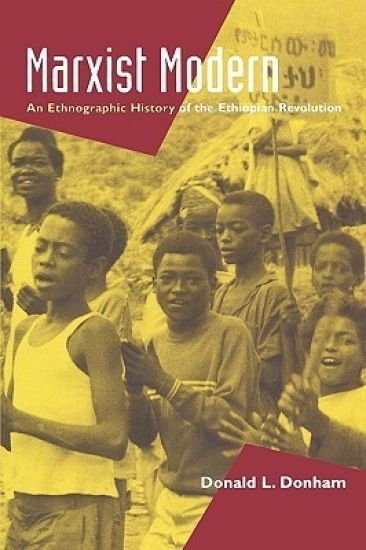
Marxist Modern

Marxist Modern

Donald L. Donham

University of California Press
1999
pokkari
"Donham's beautifully written book makes a singular contribution to the emerging literature on global modernities. Donham creatively and seamlessly weaves together an array of textual fragments that enliven and enhance his ethnographic accounts, and together produce a fascinating book and a very good read." --Charles Piot, Duke University
The Erotics of History

The Erotics of History

Donald L. Donham

University of California Press
2018
pokkari
At publication date, a free ebook version of this title will be available through Luminos, University of California Press's Open Access publishing program. Visit www.luminosoa.org to learn more. The Erotics of History challenges long-standing notions of sexuality as stable and context-free--as something that individuals discover about themselves. Rather, Donald L. Donham argues that historical circumstance, local social pressure, and the cultural construction of much beyond sex condition the erotic. Donham makes this argument in relation to the centuries-old conversation on the fetish, applied to a highly unusual neighborhood in Atlantic Africa. There, local men, soon to be married to local women, are involved in long-term sexual relationships with European men. On the African side, these couplings are motivated by the pleasures of cosmopolitan connection and foreign commodities. On the other side, Europeans tend to fetishize Africans' race, while a few search to become slaves in master/ slave relationships. At its most wide ranging, The Erotics of History attempts to show that it is history, both personal and collective, in reversals and reenactments, that finally produces sexual excitement.
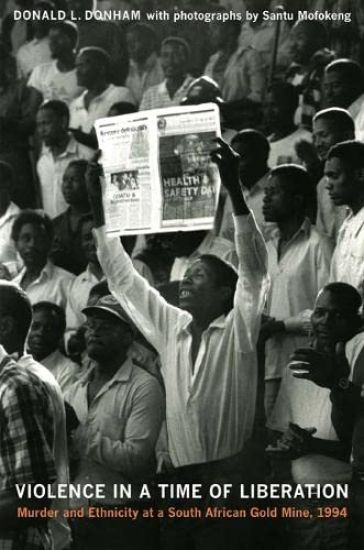
Violence in a Time of Liberation

Violence in a Time of Liberation

Donald L. Donham

Duke University Press
2011
sidottu
How can we account for the apparent increase in ethnic violence across the globe? Donald L. Donham develops a methodology for understanding violence that shows why this question needs to be recast. He examines an incident that occurred at a South African gold mine at the moment of the 1994 elections that brought apartheid to a close. Black workers ganged up on the Zulus among them, killing two and injuring many more. While nearly everyone came to characterize the conflict as “ethnic,” Donham argues that heightened ethnic identity was more an outcome of the violence than its cause. Based on his careful reconstruction of events, he contends that the violence was not motivated by hatred of an ethnic other. It emerged, rather, in ironic ways, as capitalist managers gave up apartheid tactics and as black union activists took up strategies that departed from their stated values. National liberation, as it actually occurred, was gritty, contradictory, and incomplete. Given unusual access to the mine, Donham comes to this conclusion based on participant observation, review of extensive records, and interviews conducted over the course of a decade. Violence in a Time of Liberation is a kind of murder mystery that reveals not only who did it but also the ways that narratives of violence, taken up by various media, create ethnic violence after the fact.
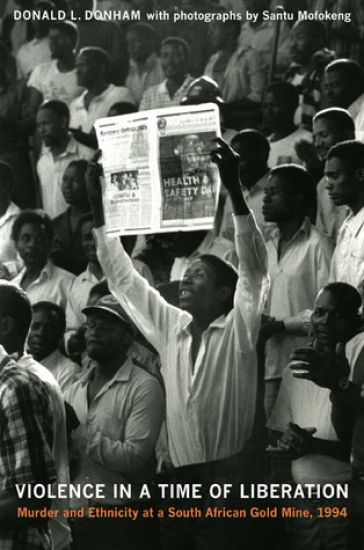
Violence in a Time of Liberation

Violence in a Time of Liberation

Donald L. Donham

Duke University Press
2011
pokkari
How can we account for the apparent increase in ethnic violence across the globe? Donald L. Donham develops a methodology for understanding violence that shows why this question needs to be recast. He examines an incident that occurred at a South African gold mine at the moment of the 1994 elections that brought apartheid to a close. Black workers ganged up on the Zulus among them, killing two and injuring many more. While nearly everyone came to characterize the conflict as “ethnic,” Donham argues that heightened ethnic identity was more an outcome of the violence than its cause. Based on his careful reconstruction of events, he contends that the violence was not motivated by hatred of an ethnic other. It emerged, rather, in ironic ways, as capitalist managers gave up apartheid tactics and as black union activists took up strategies that departed from their stated values. National liberation, as it actually occurred, was gritty, contradictory, and incomplete. Given unusual access to the mine, Donham comes to this conclusion based on participant observation, review of extensive records, and interviews conducted over the course of a decade. Violence in a Time of Liberation is a kind of murder mystery that reveals not only who did it but also the ways that narratives of violence, taken up by various media, create ethnic violence after the fact.