Kirjojen hintavertailu. Mukana 11 627 363 kirjaa ja 12 kauppaa.

Kirjahaku

Etsi kirjoja tekijän nimen, kirjan nimen tai ISBN:n perusteella.

10 kirjaa tekijältä Donald N. Levine

Wax and Gold – Tradition and Innovation in Ethiopian Culture

Wax and Gold – Tradition and Innovation in Ethiopian Culture

Donald N. Levine

University of Chicago Press
2014
nidottu
In Abyssinian poetry, the "wax" is the obvious meaning, the "gold" is the hidden meaning. In Wax and Gold, Donald N. Levine explores mid-to-late-twentieth-century Ethiopian society on the same two levels, using modern sociology and psychology to seek answers to the following questions: What is the nature of the traditional culture of the dominant ethnic group, the Amhara, and what are its enduring values? What aspects of modern culture interest this society and by what means has it sought to institutionalize them? How has tradition both facilitated and hampered Ethiopian efforts to modernize? Enriched by the use of Ethiopian literature and by Levine's deep knowledge of and affection for the society of which he writes, Wax and Gold is both a scholarly and a personal work.
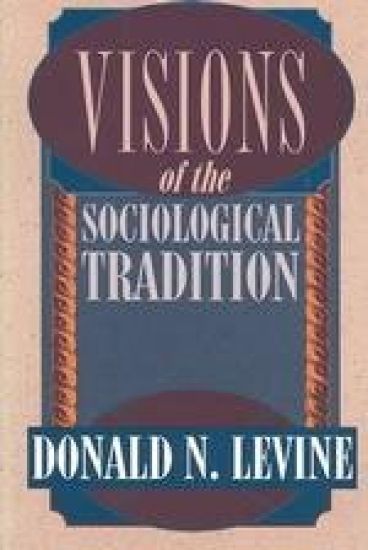
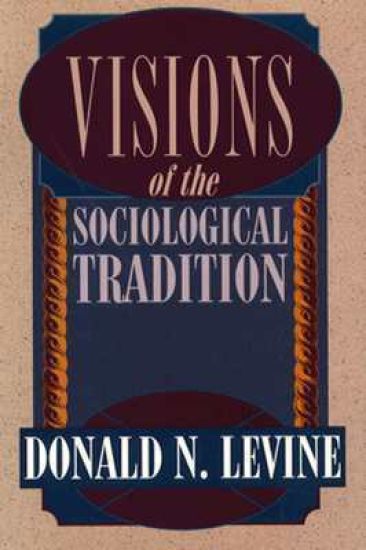
Visions of the Sociological Tradition

Visions of the Sociological Tradition

Donald N. Levine

University of Chicago Press
1995
sidottu
In this work, Don Levine moves from the origins of systematic knowledge in ancient Greece to the present day in order to present an account that is at once a history of the social science enterprise and an introduction to the cornerstone works of Western social thought. "Visions" has three meanings, each of which corresponds to a part of the book. In Part 1, Levine presents the ways previous sociologists have rendered accounts of their discipline, as a series of narratives - or "life stories" - that build upon each other, generation to generation, a succession of efforts to envisage a coherent past for the sake of a purposive present. In Part 2, the heart of the book, Levine offers his own narrative, reconnecting centuries of voices into a dialogue among the varied strands of the sociological tradition: Hellenic, British, French, German, Marxian, Italian and American. Here, he tracks the formation of the sociological imagination through a series of conversations across generations. From classic philosophy to pragmatism, Aristotle to W.I. Thomas, Levine maps the web of visionary statements - confrontations and oppositions - from which social science has grown. Throughout each stage, Levine demonstrates how social knowledge has grown in response to three recurring questions: How shall we live? What makes humans moral creatures? How do we understand the world? He anchors the creation of social knowledge to ethical foundations, and shows how differences in those foundations disposed the shapers of modern social science - among them, Marshall and Spencer, Comte and Durkheim, Simmel and Weber, Marx and Mosca, Dewey and Park - to proceed in vastly different ways. In Part 3, Levine offers a vision of the contemporary scene, setting the crisis of fragmentation in social sciences against the fragmentation of experience and community. By reconstructing the history of social thought as a series of fundamentally moral engagements with common themes, he suggests new uses for sociology's intellectual resources: not only as insight about the nature of modernity, but also as a model of mutually respectful communication in an increasingly fractious world.
Visions of the Sociological Tradition

Visions of the Sociological Tradition

Donald N. Levine

University of Chicago Press
1995
nidottu
In this work, Don Levine moves from the origins of systematic knowledge in ancient Greece to the present day in order to present an account that is at once a history of the social science enterprise and an introduction to the cornerstone works of Western social thought. "Visions" has three meanings, each of which corresponds to a part of the book. In Part 1, Levine presents the ways previous sociologists have rendered accounts of their discipline, as a series of narratives - or "life stories" - that build upon each other, generation to generation, a succession of efforts to envisage a coherent past for the sake of a purposive present. In Part 2, the heart of the book, Levine offers his own narrative, reconnecting centuries of voices into a dialogue among the varied strands of the sociological tradition: Hellenic, British, French, German, Marxian, Italian and American. Here, he tracks the formation of the sociological imagination through a series of conversations across generations. From classic philosophy to pragmatism, Aristotle to W.I. Thomas, Levine maps the web of visionary statements - confrontations and oppositions - from which social science has grown. Throughout each stage, Levine demonstrates how social knowledge has grown in response to three recurring questions: How shall we live? What makes humans moral creatures? How do we understand the world? He anchors the creation of social knowledge to ethical foundations, and shows how differences in those foundations disposed the shapers of modern social science - among them, Marshall and Spencer, Comte and Durkheim, Simmel and Weber, Marx and Mosca, Dewey and Park - to proceed in vastly different ways. In Part 3, Levine offers a vision of the contemporary scene, setting the crisis of fragmentation in social sciences against the fragmentation of experience and community. By reconstructing the history of social thought as a series of fundamentally moral engagements with common themes, he suggests new uses for sociology's intellectual resources: not only as insight about the nature of modernity, but also as a model of mutually respectful communication in an increasingly fractious world.
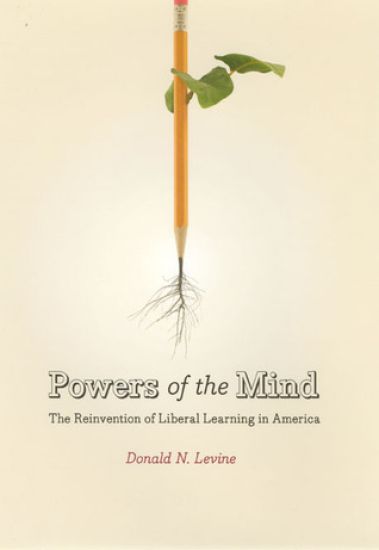
Powers of the Mind

Powers of the Mind

Donald N. Levine

University of Chicago Press
2006
sidottu
It is one thing to lament the financial pressures put on universities, quite another to face up to the poverty of resources for thinking about what universities should do when they purport to offer a liberal education. In Powers of the Mind, former University of Chicago dean Donald N. Levine enriches those resources by proposing fresh ways to think about liberal learning with ideas more suited to our times. He does so by defining basic values of modernity and then considering curricular principles pertinent to them. The principles he favors are powers of the mind—disciplines understood as fields of study defined not by subject matter but by their embodiment of distinct intellectual capacities. To illustrate, Levine draws on his own lifetime of teaching and educational leadership, while providing a marvelous summary of exemplary educational thinkers at the University of Chicago who continue to inspire. Out of this vital tradition, Powers of the Mind constructs a paradigm for liberal arts today, inclusive of all perspectives and applicable to all settings in the modern world.
Powers of the Mind

Powers of the Mind

Donald N. Levine

University of Chicago Press
2007
nidottu
In "Powers of the Mind", former University of Chicago dean Donald N. Levine considers the liberal education that our universities purport to offer, finds it lacking, and in response proposes fresh and invigorating ways to think about liberal learning that are more suited to our times. Levine begins by defining basic values of modernity and then considering pertinent curricular principles. The principles he favors are powers of the mind - disciplines understood as fields of study defined less by their subject matter than by the distinct intellectual capacities they embody. To illustrate, Levine draws on his own lifetime of teaching and educational leadership, while providing a marvelous summary of exemplary educational thinkers at the University of Chicago who continue to inspire. Out of this vital tradition, "Powers of the Mind" constructs a paradigm for liberal arts today, inclusive of all perspectives and applicable to all settings in the modern world.
The Flight from Ambiguity

The Flight from Ambiguity

Donald N. Levine

University of Chicago Press
1988
nidottu
The essays turn about a single theme, the loss of the capacity to deal constructively with ambiguity in the modern era. Levine offers a head-on critique of the modern compulsion to flee ambiguity. He centers his analysis on the question of what responses social scientists should adopt in the face of the inexorably ambiguous character of all natural languages. In the course of his argument, Levine presents a fresh reading of works by the classic figures of modern European and American social theory—Durkheim, Freud, Simmel and Weber, and Park, Parsons, and Merton.
Dialogical Social Theory

Dialogical Social Theory

Donald N. Levine

CRC Press Inc
2018
nidottu
In his final work, Donald N. Levine, one of the great late-twentieth-century sociological theorists, brings together diverse social thinkers. Simmel, Weber, Durkheim, Parsons, and Merton are set into a dialogue with philosophers such as Hobbes, Smith, Montesquieu, Comte, Kant, and Hegel and pragmatists such as Peirce, James, Dewey, and McKeon to describe and analyze dialogical social theory. This volume is one of Levine’s most important contributions to social theory and a worthy summation of his life’s work.Levine demonstrates that approaching social theory with a cooperative, peaceful dialogue is a superior tactic in theorizing about society. He illustrates the advantages of the dialogical model with case studies drawn from the French Philosophes, the Russian Intelligentsia, Freudian psychology, Ushiba’s aikido, and Levine’s own ethnographic work in Ethiopia. Incorporating themes that run through his lifetime’s work, such as conflict resolution, ambiguity, and varying forms of social knowledge, Levine suggests that while dialogue is an important basis for sociological theorizing, it still vies with more combative forms of discourse that lend themselves to controversy rather than cooperation, often giving theory a sense of standing still as the world moves forward.The book was nearly finished when Levine died in April 2015, but it has been brought to thoughtful and thought-provoking completion by his friend and colleague Howard G. Schneiderman. This volume will be of great interest to students and teachers of social theory and philosophy.
Social Theory as a Vocation

Social Theory as a Vocation

Donald N. Levine

Routledge
2017
nidottu
In this unprecedented collection, Donald N. Levine rejuvenates the field of social theory in the face of lagging institutional support. The work canvasses the universe of types of theory work in sociology and offers probing examples from his array of scholarly investigations.Social Theory as a Vocation throws fresh light on the texts of classic authors (Comte, Durkheim, Simmel, Weber, Park, Parsons, and Merton). Ranging widely, its substantive chapters deal with the sociology of strangers and the somatic dimensions of social conflict; the social functions of ambiguity and the use of metaphors in science; contemporary dilemmas of Ethiopian society; logical tensions in the ideas of freedom and reason; and the meaning of nationhood in our global era. The book includes Levine's transformative analysis of the field of Ethiopian studies, and his acclaimed interpretation of the discontents of modernity. It makes the bold move to merge philosophically informed analyses with empirical work.Finally, Levine focuses on what he views as the contemporary crisis of liberal education, and offers suggestions for ways to stimulate new efforts in teaching and learning to do social theory. This book is an integral contribution to social science collections and should be read by all interested in the future of the social sciences.
Social Theory as a Vocation

Social Theory as a Vocation

Donald N. Levine

AldineTransaction
2014
sidottu
In this unprecedented collection, Donald N. Levine rejuvenates the field of social theory in the face of lagging institutional support. The work canvasses the universe of types of theory work in sociology and offers probing examples from his array of scholarly investigations.Social Theory as a Vocation throws fresh light on the texts of classic authors (Comte, Durkheim, Simmel, Weber, Park, Parsons, and Merton). Ranging widely, its substantive chapters deal with the sociology of strangers and the somatic dimensions of social conflict; the social functions of ambiguity and the use of metaphors in science; contemporary dilemmas of Ethiopian society; logical tensions in the ideas of freedom and reason; and the meaning of nationhood in our global era. The book includes Levine's transformative analysis of the field of Ethiopian studies, and his acclaimed interpretation of the discontents of modernity. It makes the bold move to merge philosophically informed analyses with empirical work.Finally, Levine focuses on what he views as the contemporary crisis of liberal education, and offers suggestions for ways to stimulate new efforts in teaching and learning to do social theory. This book is an integral contribution to social science collections and should be read by all interested in the future of the social sciences.
Dialogical Social Theory

Dialogical Social Theory

Donald N. Levine

AldineTransaction
2018
sidottu
In his final work, Donald N. Levine, one of the great late-twentieth-century sociological theorists, brings together diverse social thinkers. Simmel, Weber, Durkheim, Parsons, and Merton are set into a dialogue with philosophers such as Hobbes, Smith, Montesquieu, Comte, Kant, and Hegel and pragmatists such as Peirce, James, Dewey, and McKeon to describe and analyze dialogical social theory. This volume is one of Levine’s most important contributions to social theory and a worthy summation of his life’s work.Levine demonstrates that approaching social theory with a cooperative, peaceful dialogue is a superior tactic in theorizing about society. He illustrates the advantages of the dialogical model with case studies drawn from the French Philosophes, the Russian Intelligentsia, Freudian psychology, Ushiba’s aikido, and Levine’s own ethnographic work in Ethiopia. Incorporating themes that run through his lifetime’s work, such as conflict resolution, ambiguity, and varying forms of social knowledge, Levine suggests that while dialogue is an important basis for sociological theorizing, it still vies with more combative forms of discourse that lend themselves to controversy rather than cooperation, often giving theory a sense of standing still as the world moves forward.The book was nearly finished when Levine died in April 2015, but it has been brought to thoughtful and thought-provoking completion by his friend and colleague Howard G. Schneiderman. This volume will be of great interest to students and teachers of social theory and philosophy.