Kirjojen hintavertailu. Mukana 11 627 670 kirjaa ja 12 kauppaa.

Kirjahaku

Etsi kirjoja tekijän nimen, kirjan nimen tai ISBN:n perusteella.

15 kirjaa tekijältä Donald Pizer

American Naturalism and the Jews

American Naturalism and the Jews

Donald Pizer

University of Illinois Press
2008
sidottu
American Naturalism and the Jews examines the unabashed anti-Semitism of five notable American naturalist novelists otherwise known for their progressive social values. Hamlin Garland, Frank Norris, and Theodore Dreiser all pushed for social improvements for the poor and oppressed, while Edith Wharton and Willa Cather both advanced the public status of women. But they all also expressed strong prejudices against the Jewish race and faith throughout their fiction, essays, letters, and other writings, producing a contradiction in American literary history that has stymied scholars and, until now, gone largely unexamined. In this breakthrough study, Donald Pizer confronts this disconcerting strain of anti-Semitism pervading American letters and culture, illustrating how easily prejudice can coexist with even the most progressive ideals.Pizer shows how these writers' racist impulses represented more than just personal biases, but resonated with larger social and ideological movements within American culture. Anti-Semitic sentiment motivated such various movements as the western farmers' populist revolt and the East Coast patricians' revulsion against immigration, both of which Pizer discusses here. This antagonism toward Jews and other non-Anglo-Saxon ethnicities intersected not only with these authors' social reform agendas but also with their literary method of representing the overpowering forces of heredity, social or natural environment, and savage instinct.
Writer in Motion

Writer in Motion

Donald Pizer

AMS Press
2013
sidottu
Stephen Crane’s career was so brief—lasting only from 1893 through 1899—and his fiction so vibrant and complex that scholars have tended to hunt for a single thematic or stylistic key to his work. In the thirteen essays collected here, Donald Pizer draws on decades of his own work on Crane to argue instead that Crane’s fiction demonstrates a fundamental instability—that Crane was, above all, a writer in motion—and that the nature and quality of any one of his works can best be understood by viewing it in relation to Crane’s own shifting and developing ideas. The essays collected here constitute in to a significant and coherent reading both of Crane’s persistent preoccupation's during his short career and of his changing perspective on these preoccupation's. The volume can thus be profitably considered both as a collection of perceptive readings bearing on specific areas of interest in Crane studies and, in wider focus, as a contribution to an understanding of Crane’s mind and art as a whole.
American Expatriate Writing and the Paris Moment

American Expatriate Writing and the Paris Moment

Donald Pizer

Louisiana State University Press
1997
nidottu
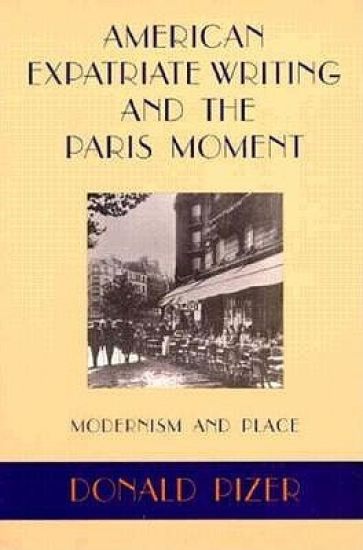
Montparnasse and its café life, the shabby working-class area of the place de la Contrescarpe and the Pantheon, the small restaurants and cafés along the Seine, and the Right Bank world of the well-to-do . . . for American writers self-exiled to Paris during the 1920s and 1930s, the French capital represented what their homeland could not: a milieu that, through the freedom of thought and action it permitted and the richness of life it offered, nurtured the full expression of the creative imagination. How these expatriates interpreted and gave modernist shape to the myth of ""the Paris moment"" in their writing is the altogether fresh focus of Donald Pizer's study of seven of their major works.Pizer elucidates a striking difference between the genres of expatriate autobiography and fiction, and arranges his discussion accordingly. He first examines Ernest Hemingway's A Moveable Feast, Gertrude Stein's The Autobiography of Alice B. Toklas, and The Diary of Anaïs Nin, 1931-1934, all of which depict the emergence and triumph of the creative imagination within the Paris context. He then turns to Hemingway's The Sun Also Rises, John Dos Passos' Nineteen-Nineteen, and F. Scott Fitzgerald's Tender Is the Night, which dramatize the tragic potential in seeking a richness and intensity of creative expression within the city's setting. Henry Miller's Tropic of Cancer, a relatively late example of American expatriate writing, constitutes a synthesis of the two tendencies, Pizer shows.Through careful readings of the texts, Pizer identifies both the common threads in the expatriates' response to the Paris moment and the distinctive expression each work gives to their shared experience. Most important, he addresses the neglected question of how the portrayal of the Paris scene helps shape a specific work's themes and form. He traces such experimental devices as fragmented or cubistic narrative forms, the dramatic representation of consciousness, and sexual explicitness, and explores the powerful and evocative tropes of mobility and feeding.As Pizer demonstrates, Paris between the two world wars was for the American expatriates more than a geographical entity. It was a state of mind, an experience, that engendered the formal expression of a personal aesthetic. The engaging and significant interplay between artist, place, and innovative self-reflexive forms composes, Pizer maintains, the most distinctive contribution of expatriate writing to the literary movement called high modernism.
The Theory and Practice of American Literary Naturalism

The Theory and Practice of American Literary Naturalism

Donald Pizer

Southern Illinois University Press
1993
sidottu
In his first book devoted exclusively to naturalism, Donald Pizer brings together thirteen essays and four reviews written over a thirty-year period that in their entirety constitute a full-scale interpretation of the basic character and historical shape of naturalism in America.The essays fall into three groups. Some deal with the full range of American naturalism, from the 1590s to the late twentieth century, and some are confined either to the 1890s or to the twentieth century. In addition to the essays, an introduction in which Pizer recounts the development of his interest in American naturalism, reviews of recent studies of naturalism, and a selected bibliography contribute to an understanding of Pizer's interpretation of the movement.One of the recurrent themes in the essays is that the interpretation of American naturalism has been hindered by the common view that the movement is characterized by a commitment to Emile Zola's deterministic beliefs and that naturalistic novels are thus inevitably crude and simplistic both in theme and method. Rather than accept this notion, Pizer insists that naturalistic novels be read closely not for their success or failure in rendering obvious deterministic beliefs but rather for what actually does occur within the dynamic play of theme and form within the work.Adopting this method, Pizer finds that naturalistic fiction often reveals a complex and suggestive mix of older humanistic faiths and more recent doubts about human volition, and that it renders this vital thematic ambivalence in increasingly sophisticated forms as the movement matures. In addition, Pizer demonstrates that American naturalism cannot be viewed monolithically as a school with a common body of belief and value. Rather, each generation of American naturalists, as well as major figures within each generation, has responded to threads within the naturalistic impulse in strikingly distinctive ways. And it is indeed this absence of a rigid doctrinal core and the openness of the movement to individual variation that are responsible for the remarkable vitality and longevity of the movement.Because the essays have their origin in efforts to describe the general characteristics of American naturalism rather than in a desire to cover the field fully, some authors and works are discussed several times (though from different angles) and some referred to only briefly or notat all. But the essays as a collection are complete in the sense that they comprise an interpretation of American naturalism both in its various phases and as a whole. Those authors whose works receive substantial discussion include Stephen Crane, Frank Norris, Theodore Dreiser, Edith Wharton, James T. Farrell, Norman Mailer, Joyce Carol Oates, and William Kennedy. Of special interest is Pizer's essay on Ironweed, which appears here for the first time.
The Editing of American Literature, 1890-1930
Since the 1960s, Donald Pizer has been writing about late-19th-century American literature, with an emphasis on the major fiction of Theodore Dreiser and Stephen Crane. Most academics whose interests lie primarily in the preparation of scholarly editions are attracted to the paradoxical mix of adherence to a rigorous process and an opportunity for speculative thinking that is distinctive to this branch of literary studies. And they often find appealing the notion that the end product of their labors is a book that, unlike much criticism, is sure to be used by others and to have a long lifespan. However, Pizer came to textual discussion from a different direction than most editors of scholarly editions, who seldom wrote criticism about the authors and works they were engaged in editing. Consequently, Pizer was drawn into the “text wars” of scholarly editions and during the last three decades of the 20th century he produced a number of essays tackling this sometimes contentious subject. The Editing of American Literature, 1890-1930 collects Donald Pizer’s essays and reviews that examine the issues associated with providing authoritative scholarly editions of major turn-of-the-century American authors. Divided into four sections—general essays on editing; essays and reviews on the editing of Theodore Dreiser; essays and reviews on the editing of Stephen Crane; and essays on the interplay of textual theory and critical interpretation in works by Crane and John Dos Passos—the volume expresses a distinctive position in the text wars that dominated the editing scene of the 1970-2000 period. This collection of essays will be of interest to textual editors of any persuasion as well as literary critics and scholars with a special interest in late 19th- and early 20th-century American literature.
The Novels of Theodore Dreiser

The Novels of Theodore Dreiser

Donald Pizer

University of Minnesota Press
1976
nidottu
The Novels of Theodore Dreiser was first published in 1976. Minnesota Archive Editions uses digital technology to make long-unavailable books once again accessible, and are published unaltered from the original University of Minnesota Press editions.Relying heavily on the manuscripts and letters in the Dreiser Collection of the University of Pennsylvania Library, Professor Pizer seeks to establish the facts of the sources and composition of each of Dreiser's eight novels and to study the themes and form of the completed works. In this study he relates what can be discovered about the factual reality of a novel to its imaginative reality. His interpretation of the novels avoids the suggestion that there is a single overriding theme or direction in Dreiser's work and emphasizes that Dreiser deserves examination primarily on the basis of the individuality and worth of each of his novels. A separate chapter is devoted to each of the novels: Sister Carrie, Jennie Gerhardt, The "Genius," The Financier, The Titan, An American Tragedy, The Bulwark, and The Stoic.
"The Game as It Is Played"

"The Game as It Is Played"

Donald Pizer

Peter Lang Publishing Inc
2013
sidottu
The Game as It Is Played comprises the best of Donald Pizer’s essays on Theodore Dreiser. Pizer, one of Dreiser’s principal critics over the past forty years, is especially concerned in establishing the distinctive nature and quality of Dreiser’s naturalism in many of these essays. From one of Dreiser’s earliest short stories to his acknowledged masterpiece, An American Tragedy, Pizer demonstrates that in Dreiser’s hands naturalism is not the blunt instrument it is usually assumed to be but rather a powerful tool for the rendering of a complex view of the human condition. In addition, the essays explore several of the more controversial areas of Dreiser scholarship, including his late conversion to communism, his anti-Semitism, and the text of Sister Carrie.
Toward a Modernist Style: John Dos Passos

Toward a Modernist Style: John Dos Passos

Donald Pizer

Bloomsbury Academic USA
2013
nidottu
A new appraisal of Dos Passos's work and life, Toward a Modernist Style describes both the central currents in his early work, and his full participation in literary modernism, culminating in his U.S.A. trilogy, as well as the relationship of these currents to those of an especially vibrant period in American expression. Donald Pizer charts the evolution of Dos Passos's artistic sensibility from its largely conventional expression at the start of the 1920s to the radical formal experimentation of U.S.A. at its close. He places this development in Dos Passos's writing in the context of contemporary ideas about art and society. Pizer also looks at the important roles that Dos Passos's expatriation and his relationship with Ernest Hemingway played in his work as well as his efforts as a painter and their relationship to his literary art. Toward a Modernist Style is both an incisive guide to a major American modernist as well as an exploration of the wider currents that created literary modernism in the early twentieth century.
Toward a Modernist Style: John Dos Passos

Toward a Modernist Style: John Dos Passos

Donald Pizer

Bloomsbury Academic USA
2013
sidottu
A new appraisal of Dos Passos's work and life, Toward a Modernist Style describes both the central currents in his early work, and his full participation in literary modernism, culminating in his U.S.A. trilogy, as well as the relationship of these currents to those of an especially vibrant period in American expression. Donald Pizer charts the evolution of Dos Passos's artistic sensibility from its largely conventional expression at the start of the 1920s to the radical formal experimentation of U.S.A. at its close. He places this development in Dos Passos's writing in the context of contemporary ideas about art and society. Pizer also looks at the important roles that Dos Passos's expatriation and his relationship with Ernest Hemingway played in his work as well as his efforts as a painter and their relationship to his literary art. Toward a Modernist Style is both an incisive guide to a major American modernist as well as an exploration of the wider currents that created literary modernism in the early twentieth century.
The Significant Hamlin Garland

The Significant Hamlin Garland

Donald Pizer

Anthem Press
2014
sidottu
‘The Significant Hamlin Garland’ collects the best of Donald Pizer’s essays dealing with Garland’s early work and activities in an effort to re-establish the importance of this formative stage in his career. The essays in the first part of the book are devoted to Garland’s radical economic and artistic beliefs and activities, while those in the second half concentrate on his most permanent work of the period: ‘Main-Travelled Roads’, his novel ‘Rose of Dutcher’s Coolly’, and his autobiography ‘A Son of the Middle Border’.
Frank Norris and American Naturalism

Frank Norris and American Naturalism

Donald Pizer

Anthem Press
2018
sidottu
Frank Norris is a seminal figure in the history of American literary naturalism despite the brevity of his career. Frank Norris and American Naturalism brings together in one volume Donald Pizer’s lifelong exploration of the naturalist’s work, ranging from his 1955 discussion of point of view in The Octopus to his 2010 essay on the thematic unity of that novel. The essays in Frank Norris and American Naturalism as a whole seek to demonstrate both the coherence of Norris’s thought and his contribution toward the establishment of a specific form of naturalism in America. The collection’s principal focus is Norris’s most enduring works, the novels McTeague and The Octopus, though his other fiction and literary criticism are also discussed.
American Literary Naturalism

American Literary Naturalism

Donald Pizer

Anthem Press
2020
sidottu
The book collects Pizer’s late career essays on various writers and subjects related to American naturalism. Of these, two seek to describe the movement as a whole, six are on specific writers or works (with an emphasis on Theodore Dreiser), and two reprint informative interviews by Pizer on the subject. The essays reflect Pizer’s mature engagement of the subject he has spent a lifetime exploring.
Theodore Dreiser Recalled

Theodore Dreiser Recalled

Donald Pizer

Clemson University Digital Press
2021
nidottu
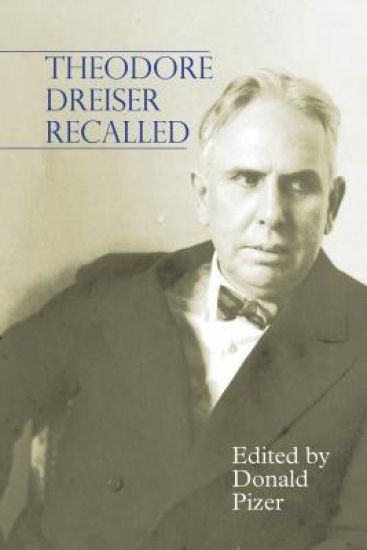
Theodore Dreiser (1871–1946) has long been recognized as a pivotal figure in twentieth-century American literary and cultural history. His fiction played (and still plays) a major role in the vigorous debate over the relationship of art to social reality and political purpose, and his complex and compelling personality has always attracted much attention. From about 1912–15 to his death he was often considered the greatest American writer of the period. Theodore Dreiser Recalled collects for the first time commentary on this literary giant by those of his own time who knew him well. The book includes seventy-six recollections by friends, lovers, and literary associates, ranging in time of publication from 1912 to 1995. Presented with both expert and general readers in mind, the book not only clarifies and extends our knowledge of many aspects of Dreiser’s life and career but also makes excellent reading. In their various ways—from H. L. Mencken’s acerbic accounts of their friendship to one of Edgar Lee Masters’s most powerful poems to Kirah Markham’s bittersweet memories of their affair and to Esther McCoy’s compelling narrative of Dreiser’s death—the recollections demonstrate Dreiser’s ability to move others to recall him not only in full detail but with panache.
Theodore Dreiser Recalled

Theodore Dreiser Recalled

Donald Pizer

Clemson University Digital Press
2017
sidottu
This book brings together for the first time, and in one convenient volume, published and unpublished memoirs about the American novelist Theodore Dreiser. The recollections of Dreiser's contemporaries bring to the fore the writer's politics, personal life, and literary reception. Donald Pizer is one of the world's leading scholars of Dreiser and of naturalism.