Kirjojen hintavertailu. Mukana 11 717 486 kirjaa ja 12 kauppaa.

Kirjahaku

Etsi kirjoja tekijän nimen, kirjan nimen tai ISBN:n perusteella.

10 kirjaa tekijältä Donald R. Stabile

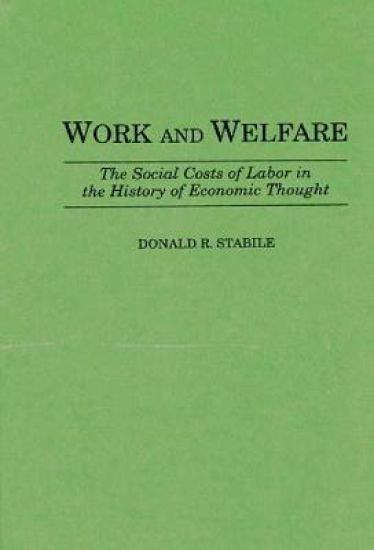
Work and Welfare

Work and Welfare

Donald R. Stabile

Praeger Publishers Inc
1996
sidottu
This interesting work presents a unique perspective on the history of economic thought by showing that classical economists from Adam Smith to Alfred Marshall had sympathy for workers - for example, the theory of the subsistence wage echoed the theological call for a just wage that existed in the middle ages. It also describes how these thinkers promoted either a set of social obligations or a form of social insurance to assist workers. These economic thinkers of the past argued that a subsistence standard of living was important to maintain and improve workers' efficiency and to raise healthy families. The notion that these writers had an undeveloped theory of social costs that they applied to labor should appeal to economists and others concerned with the plight of workers as the modern economy restructures itself.
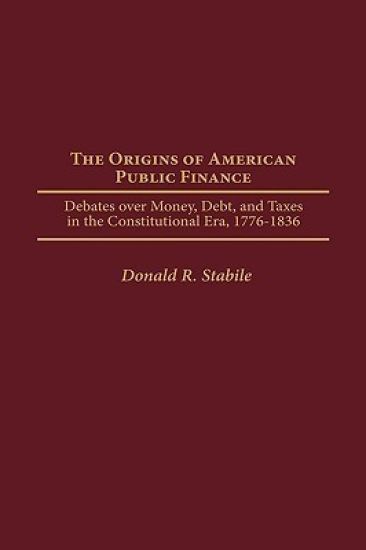
The Origins of American Public Finance

The Origins of American Public Finance

Donald R. Stabile

Praeger Publishers Inc
1998
sidottu
An examination of an early version of the debate over money, debt, and taxes sheds light on current debates regarding public finance, a balanced budget, and paying off the public debt. Stabile shows that while special interest lobbying during the constitutional convention produced tax loopholes as part of the Constitution, determined leaders were able to get a reluctant population used to paying taxes and were capable of putting together plans of public finance that attained their goals. Such historical evidence challenges the view that political leaders are incapable of passing the unpopular taxes needed to balance the federal government's budget and pay off the public debt. Taking a political economy approach that describes how political leaders took economic ideas and made them work, this book combines intellectual history with economic history. Previous books on public finance history have focused on economic issues regarding taxes. Exploring the intellectual history of the debates over money, debt, and taxes as the three potential forms of public finance, Stabile provides insight into the constitutional debate alive at the end of the 20th century.
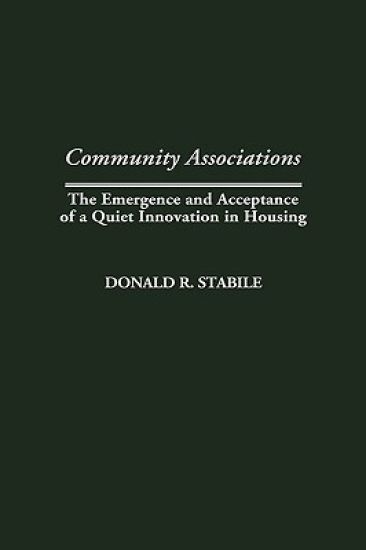
Community Associations

Community Associations

Donald R. Stabile

Praeger Publishers Inc
2000
sidottu
Throughout history human beings have formed communities spontaneously with residences constructed haphazardly. Today a new type of community is emerging—one planned from the start regarding housing location, style, and governance. These Community Associations (CAs) have increased in number from 500 in 1960 to 205,000 in 1998. This book explores the issues surrounding this housing innovation and provides a history of community associations and their membership organization, the Community Associations Institute (CAI). The book explores the process of trial and error in the design of CAs and how the CAI was set up to help them work. It opens with a consideration of the economics of land, housing, and community associations; explores the social, intellectual, legal background for CAs; and surveys their development in the United States. After considering the FHA's role, the book focuses on the development of the CAI .
Activist Unionism

Activist Unionism

Donald R. Stabile

M.E. Sharpe
1993
sidottu
First Published in 1994. Sol Barkin was never an elected official in the trade union movement, but for twenty-six years, from 1937 until he retired in 1963. His role also saw him serve on government advisory bodies, originate public policy in the Organization for Economic Cooperation and Development, lead the Industrial Relations Research Association, and teach in an American university.
Activist Unionism

Activist Unionism

Donald R. Stabile

M.E. Sharpe
1993
nidottu
First Published in 1994. Sol Barkin was never an elected official in the trade union movement, but for twenty-six years, from 1937 until he retired in 1963. His role also saw him serve on government advisory bodies, originate public policy in the Organization for Economic Cooperation and Development, lead the Industrial Relations Research Association, and teach in an American university.
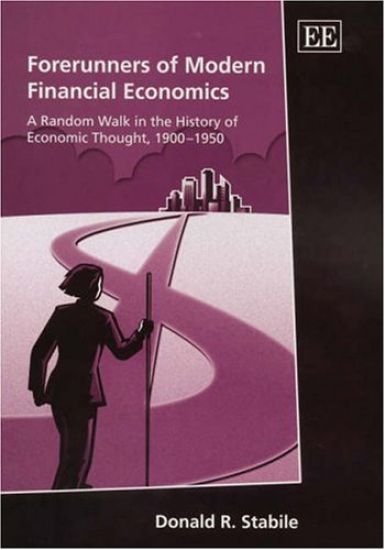
Forerunners of Modern Financial Economics

Forerunners of Modern Financial Economics

Donald R. Stabile

Edward Elgar Publishing Ltd
2005
sidottu
The economists who began using statistics to analyze financial markets in the 1950s have been credited with revolutionizing the scholarship of investing and with inaugurating modern financial economics. By examining the work of economists who used statistics to analyze financial markets before 1950, Donald Stabile provides evidence about the forerunners of modern financial economics.In studying these predecessors, this innovative book reveals that, starting around 1900, there were economists in the United States who believed that changes in stock prices could be treated as a random variable to be analyzed with statistical methods, and who used early versions of the efficient markets theory to justify their belief. Although they did not call themselves Bayesians, the author explores how they adhered to a philosophy consistent with Bayesian statistics. An epilogue considers the linkages between the forerunners of modern finance, its innovators and modern successors.An original work in the history of economic thought, Forerunners of Modern Financial Economics will be of great interest to both economists and historians interested in the development of statistical finance and economic thought, as well as to statisticians, financial analysts, and advanced undergraduate and graduate students studying financial economics.
Economics, Competition and Academia

Economics, Competition and Academia

Donald R. Stabile

Edward Elgar Publishing Ltd
2007
sidottu
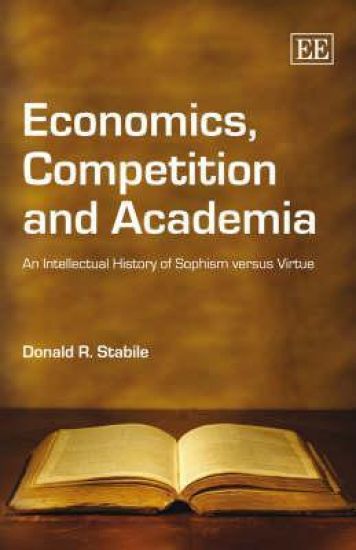
Donald Stabile places current concerns over the commercialization of academia in a historical context by describing the long-standing question of the extent to which market economics can and should be applied to higher education. The debate between Plato and Aristotle on one side and sophists on the other provides a foundation for the modern debate of endowment versus tuition models. The author tackles the intellectual discourse over the mission of higher education and the effect markets and competition might have on it. The discussion encompasses the ideas on higher education of leading economic thinkers such as Adam Smith, Jeremy Benthan, John Stuart Mill, Alfred Marshall, Thorstein Veblen and John K. Galbraith and identifies them as supporters of either sophism or virtue. Included, too, are the thoughts of educators and policymakers influenced by free market ideas, such as Benjamin Rush, Francis Wayland and Charles W. Eliot, as well as those opposed to them. In addition, the author explores the development of collegiate business schools in the US and how they were justified on the basis of virtue. The book concludes with a section on for-profit colleges and their relationship to sophism.This fascinating study of the centuries-old intellectual debate over the mission of academia will appeal to all those involved with higher education. Historians of economic thought will find the influence of economic ideas on this debate of great interest.
The Living Wage

The Living Wage

Donald R. Stabile

Edward Elgar Publishing Ltd
2008
sidottu
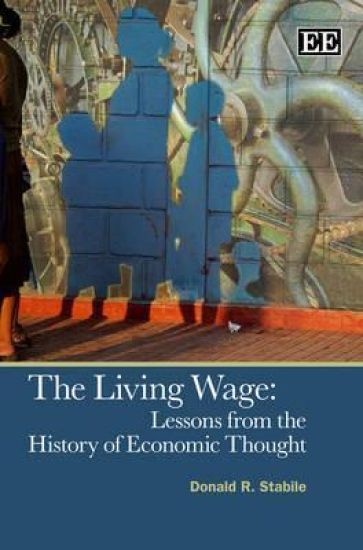
For the last decade a movement for providing workers with a living wage has been growing in the US. This book describes how great thinkers in the history of economic thought viewed the living wage and highlights how the ideas of the early economists such as Adam Smith and John Stuart Mill support the idea of a living wage and contrast with the ideas of more recent free-market economists who do not. The lessons we can learn from the contrasting ideas of both the early and recent economists will help us to think more clearly about the issues surrounding whether, how and why workers should be paid a living wage.The book reviews the history of economic ideas related to the idea of the living wage. It presents a debate between two ideologies, the moral economy and the market economy, as captured by the need to sustain the workforce, enhance its capability and avoid the externality effects of low wages. It is unique in that it applies these concepts exclusively to labor. The book also breaks new ground by presenting Adam Smith as a moral economist who anticipated many of the arguments set forth by modern day advocates of the living wage. It shows how successive economic thinkers added to Smith's arguments for a living (subsistence) wage or found fault with those arguments. Throughout the book Donald Stabile draws out the lessons that this history of the economic thought about adequate wages has for the modern living wage movement.Economists interested in the history of economic thought and labor issues will find this book a compelling read, as will academics and community groups advocating for a living wage.
Macroeconomic Policy and a Living Wage

Macroeconomic Policy and a Living Wage

Donald R. Stabile

Springer Nature Switzerland AG
2018
sidottu
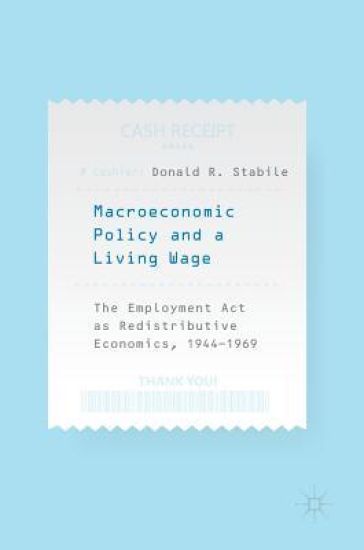
This book offers a new interpretation of the Employment Act of 1946. It argues that in addition to Keynesian economics, the idea of a living wage was also part of the background leading up to the Employment Act. The Act mandated that the president prepare an Economic Report on the state of the economy and how to improve it, and the idea of a living wage was an essential issue in those Economic Reports for over two decades. The author argues that macroeconomic policy in the USA consisted of a dual approach of using a living wage to increase consumption with higher wages, and fiscal policy to create jobs and higher levels of consumption, therefore forming a hybrid system of redistributive economics. An important read for scholars of economic history, this book explores Roosevelt’s role in the debates over the Employment Act in the 1940s, and underlines how Truman’s Fair Deal, Kennedy’s New Frontier and Johnson’s Great Society all had the ultimate goal of a living wage, despite their variations of its definition and name.
Macroeconomic Policy and a Living Wage

Macroeconomic Policy and a Living Wage

Donald R. Stabile

Springer Nature Switzerland AG
2019
nidottu
This book offers a new interpretation of the Employment Act of 1946. It argues that in addition to Keynesian economics, the idea of a living wage was also part of the background leading up to the Employment Act. The Act mandated that the president prepare an Economic Report on the state of the economy and how to improve it, and the idea of a living wage was an essential issue in those Economic Reports for over two decades. The author argues that macroeconomic policy in the USA consisted of a dual approach of using a living wage to increase consumption with higher wages, and fiscal policy to create jobs and higher levels of consumption, therefore forming a hybrid system of redistributive economics. An important read for scholars of economic history, this book explores Roosevelt’s role in the debates over the Employment Act in the 1940s, and underlines how Truman’s Fair Deal, Kennedy’s New Frontier and Johnson’s Great Society all had the ultimate goal of a living wage, despite their variations of its definition and name.