Kirjojen hintavertailu. Mukana 12 459 402 kirjaa ja 12 kauppaa.

Kirjahaku

Etsi kirjoja tekijän nimen, kirjan nimen tai ISBN:n perusteella.

7 kirjaa tekijältä Donald R. Wehrs

Islam, Ethics, Revolt

Islam, Ethics, Revolt

Donald R. Wehrs

Lexington Books
2008
sidottu
This book analyzes how Francophone narratives written from the 1950s to the 1990s explore the struggle to craft decolonized forms of Islamic identity within sub-Saharan and North African societies. Considering major narratives by Camara Laye, Cheikh Hamidou Kane, Mariama Bâ, Assia Djebar, Rachid Boudjedra, Yambo Ouologuem, and Amadou Kourouma, Donald Wehrs highlights not only the writers' often sharply divergent attitudes toward Islam and varying assessments of possible relations between Islamic selfhood neither uncritical of Western modernity nor unreflectively hostile toward it. In articulating their conceptions of Islamic identity and ethical subjectivity, all of these writers set up a dialogue with the ethical implications of novelistic discourse. The inescapable ethics of affective appeals generated by lived experience are intrinsic to these works, as they are to all novels. When such appeals are put into dialogue with the teachings of Islam, they tend, on the one hand, to privilege its iconoclasm, to make common cause with the self-critical tenor of Islam, its suspicion of the "idol-making" propensity of elites, socio-political orders, and human beings generally. On the other hand, Islam requires novelistic discourse to distinguish ethics from enjoyment, ethical selfhood from unchecked and thus self-deifying and irresponsible autonomy. The privileging of prophetic discourse in Islamic novels illuminates the ethics of novelistic discourse while at the same time forcing it to question such Western idols as freedom as its own justification and material comfort as the central good of social, political life. By pursuing each narrative's engagement with Islam as a form of piety rooted in ethical revolt against egoism and idolatry, the study challenges Western academic postcolonial criticism to hear the evocation of Islamic ethical discourse within fictions addressing the trauma of decolonization in Muslim socio-political contexts.
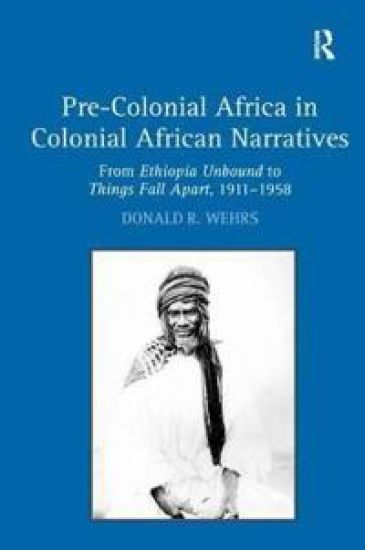
Pre-Colonial Africa in Colonial African Narratives

Pre-Colonial Africa in Colonial African Narratives

Donald R. Wehrs

Ashgate Publishing Limited
2008
sidottu
In his study of the origins of political reflection in twentieth-century African fiction, Donald Wehrs examines a neglected but important body of African texts written in colonial (English and French) and indigenous (Hausa and Yoruba) languages. He explores pioneering narrative representations of pre-colonial African history and society in seven texts: Casely Hayford's Ethiopia Unbound (1911), Alhaji Sir Abubaker Tafawa Balewa's Shaihu Umar (1934), Paul Hazoumé's Doguicimi (1938), D.O. Fagunwa's Forest of a Thousand Daemons (1938), Amos Tutuola's The Palm-Wine Drinkard (1952) and My Life in the Bush of Ghosts (1954), and Chinua Achebe's Things Fall Apart (1958). Wehrs highlights the role of pre-colonial political economies and articulations of state power on colonial-era considerations of ethical and political issues, and is attentive to the gendered implications of texts and authorial choices. By positioning Things Fall Apart as the culmination of a tradition, rather than as its inaugural work, he also reconfigures how we think of African fiction. His book supplements recent work on the importance of indigenous contexts and discourses in situating colonial-era narratives and will inspire fresh methodological strategies for studying the continent from a multiplicity of perspectives.
Ethical Sense and Literary Significance

Ethical Sense and Literary Significance

Donald R. Wehrs

TAYLOR FRANCIS LTD
2023
nidottu
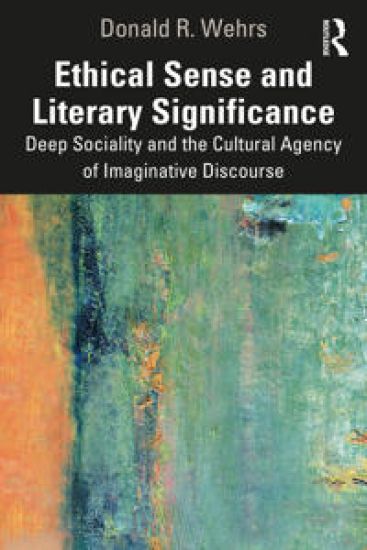
This study blends together ethical philosophy, neurocognitive-evolutionary studies, and literary theory to explore how imaginative discourse addresses a distinctively human deep sociality, and by doing so helps shape cultural and literary history. Deep sociality, arising from an improbable evolutionary history, both entwines and leaves non-reconciled what is felt to be significant for us and what ethical sense seems to call us to acknowledge as significant, independent of ourselves.Ethical Sense and Literary Significance connects literary and cultural history without reducing the literary to a mere expression of something else. It argues that affective differences between non-egocentric and egocentric registers of significance are integral to the bioculturally evolved deep sociality that verbal art addresses—often in unsettling and socially critical ways. Much imaginative discourse, in early societies as well as recent ones, brings ethical sense and literary significance together in ways that reveal their intricate but non-harmonized internal entwinement. Drawing on contemporary scholarship in the humanities and sciences, Donald R. Wehrs explores the implications of interdisciplinary approaches to topics central to a wide range of fields beyond literary studies, including neuroscience, anthropology, phenomenological philosophy, comparative history, and social psychology.
Ethical Sense and Literary Significance

Ethical Sense and Literary Significance

Donald R. Wehrs

TAYLOR FRANCIS LTD
2023
sidottu
This study blends together ethical philosophy, neurocognitive-evolutionary studies, and literary theory to explore how imaginative discourse addresses a distinctively human deep sociality, and by doing so helps shape cultural and literary history. Deep sociality, arising from an improbable evolutionary history, both entwines and leaves non-reconciled what is felt to be significant for us and what ethical sense seems to call us to acknowledge as significant, independent of ourselves.Ethical Sense and Literary Significance connects literary and cultural history without reducing the literary to a mere expression of something else. It argues that affective differences between non-egocentric and egocentric registers of significance are integral to the bioculturally evolved deep sociality that verbal art addresses—often in unsettling and socially critical ways. Much imaginative discourse, in early societies as well as recent ones, brings ethical sense and literary significance together in ways that reveal their intricate but non-harmonized internal entwinement. Drawing on contemporary scholarship in the humanities and sciences, Donald R. Wehrs explores the implications of interdisciplinary approaches to topics central to a wide range of fields beyond literary studies, including neuroscience, anthropology, phenomenological philosophy, comparative history, and social psychology.
Ethics and Literary Worldmaking

Ethics and Literary Worldmaking

Donald R. Wehrs

TAYLOR FRANCIS LTD
2026
nidottu
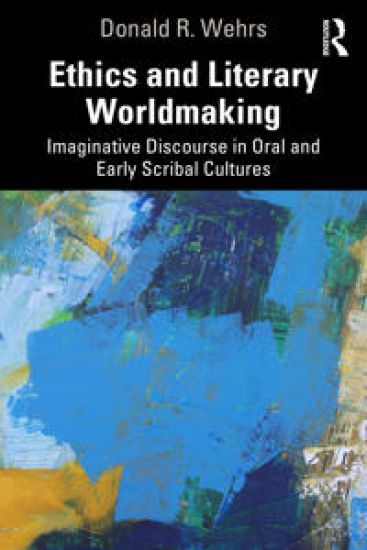
Considering poetry, narrative, and performances from diverse oral societies and the earliest scribal cultures, Ethics and Literary Worldmaking traces ways that both oral and written genres participate in communal shaping and reshaping of affectivity, sociality, deliberation, and evaluation. The study views delineation and revision of shared imagined “worlds” as itself an evolutionary adaptive activity, one through which humans, like other species, adjust behavior and modify their environments to enhance their flourishing. Donald R. Wehrs argues that discursive heritages of oral societies from Africa, Australia, Asia, and the Americas not only delineate diverse ontologies but also seek to negotiate tensions between individual desires and communal interests, and disjunctions between what seems socially or prudentially optimal and what is felt to be right or just. The earliest scribal traditions, Sumerian and Akkadian poetry, draw on patterns of ethically charged worldmaking resembling those featured prominently in heterogeneous surviving oral traditions. Imaginative discourse, whether oral or written, returns incessantly to questioning egocentric and ethnocentric norms and self-privileging assumptions in ways that hierarchical, authoritarian societies cannot completely contain or co-opt. ?Ethics and Literary Worldmaking establishes unexpected contexts for addressing literary theory and history relevant to humanities scholarship generally, particularly for those working on ethics and/or science and literature, literary theory, literary history, cognitive literary studies, or comparative studies, but also for teachers of world literature.
Ethics and Literary Worldmaking

Ethics and Literary Worldmaking

Donald R. Wehrs

TAYLOR FRANCIS LTD
2026
sidottu
Considering poetry, narrative, and performances from diverse oral societies and the earliest scribal cultures, Ethics and Literary Worldmaking traces ways that both oral and written genres participate in communal shaping and reshaping of affectivity, sociality, deliberation, and evaluation. The study views delineation and revision of shared imagined “worlds” as itself an evolutionary adaptive activity, one through which humans, like other species, adjust behavior and modify their environments to enhance their flourishing. Donald R. Wehrs argues that discursive heritages of oral societies from Africa, Australia, Asia, and the Americas not only delineate diverse ontologies but also seek to negotiate tensions between individual desires and communal interests, and disjunctions between what seems socially or prudentially optimal and what is felt to be right or just. The earliest scribal traditions, Sumerian and Akkadian poetry, draw on patterns of ethically charged worldmaking resembling those featured prominently in heterogeneous surviving oral traditions. Imaginative discourse, whether oral or written, returns incessantly to questioning egocentric and ethnocentric norms and self-privileging assumptions in ways that hierarchical, authoritarian societies cannot completely contain or co-opt. ?Ethics and Literary Worldmaking establishes unexpected contexts for addressing literary theory and history relevant to humanities scholarship generally, particularly for those working on ethics and/or science and literature, literary theory, literary history, cognitive literary studies, or comparative studies, but also for teachers of world literature.
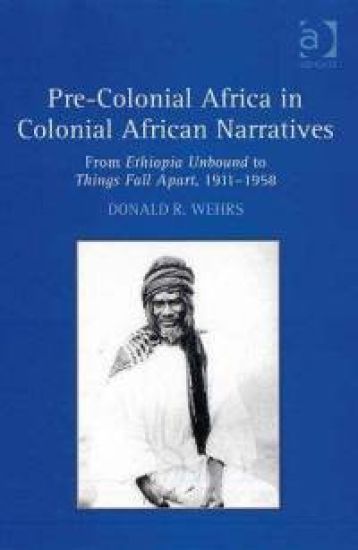
Pre-Colonial Africa in Colonial African Narratives
In his study of the origins of political reflection in twentieth-century African fiction, Donald Wehrs examines a neglected but important body of African texts written in colonial (English and French) and indigenous (Hausa and Yoruba) languages. He explores pioneering narrative representations of pre-colonial African history and society in seven texts: Casely Hayford's Ethiopia Unbound (1911), Alhaji Sir Abubaker Tafawa Balewa's Shaihu Umar (1934), Paul Hazoumé's Doguicimi (1938), D.O. Fagunwa's Forest of a Thousand Daemons (1938), Amos Tutuola's The Palm-Wine Drinkard (1952) and My Life in the Bush of Ghosts (1954), and Chinua Achebe's Things Fall Apart (1958). Wehrs highlights the role of pre-colonial political economies and articulations of state power on colonial-era considerations of ethical and political issues, and is attentive to the gendered implications of texts and authorial choices. By positioning Things Fall Apart as the culmination of a tradition, rather than as its inaugural work, he also reconfigures how we think of African fiction. His book supplements recent work on the importance of indigenous contexts and discourses in situating colonial-era narratives and will inspire fresh methodological strategies for studying the continent from a multiplicity of perspectives.