Kirjojen hintavertailu. Mukana 12 390 323 kirjaa ja 12 kauppaa.

Kirjahaku

Etsi kirjoja tekijän nimen, kirjan nimen tai ISBN:n perusteella.

20 kirjaa tekijältä Donald Richie

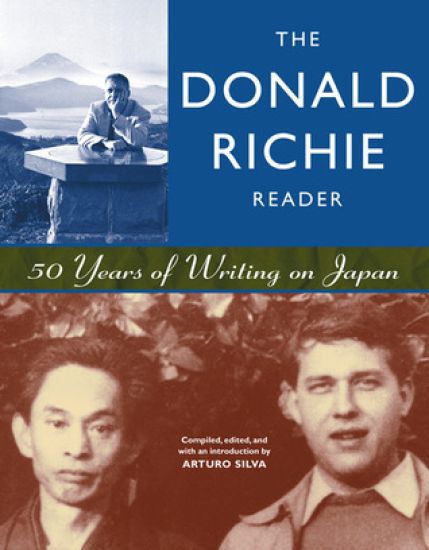
The Donald Richie Reader

The Donald Richie Reader

Donald Richie

Stone Bridge Press
2001
pokkari
No one has written more, or more artfully, about Japan and Japanese culture than Donald Richie. Richie moved to Tokyo just after World War II. And he is still there, still writing. This book is the first compilation of the best of Richie's writings on Japan, with excerpts from his critical work on film (Richie helped introduce Japanese film to the West in the late 1950s) and his unpublished private journal, plus fiction, Zen musings, and masterful essays on culture, travel, people, and style. With a critical introduction and full bibliography. Donald Richie's many books include The Films of Akira Kurosawa, The Japanese Tattoo, and the PBS favorite The Inland Sea. Vienna resident Arturo Silva lived in Japan for 18 years. "To read [The Donald Richie Reader and The Japan Journals] is like diving for pearls. Dip into any part of them and you will surely find treasures about the cinema, literature, traveling, writing. The passages are evocative, erotic, playful, and often profound." - Japanese Language and Literature
Ozu

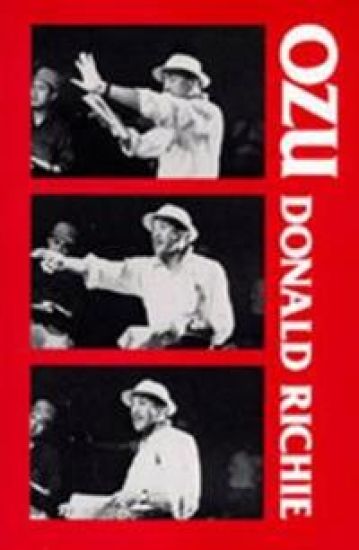
Ozu

Donald Richie

University of California Press
1977
pokkari
"Substantially the book that devotees of the director have been waiting for: a full-length critical work about Ozu's life, career and working methods, buttressed with reproductions of pages from his notebooks and shooting scripts, numerous quotes from co-workers and Japanese critics, a great many stills and an unusually detailed filmography." (Sight and Sound). Yasujiro Ozu, the man whom his kinsmen consider the most Japanese for all film directors, had but one major subject, the Japanese family, and but one major theme, its dissolution. The Japanese family in dissolution figures in every one of his fifty-three films. In his later pictures, the whole world exists in one family, the characters are family members rather than members of a society, and the ends of the earth seem no more distant than the outside of the house.
The Films of Akira Kurosawa, Third Edition, Expanded and Updated

The Films of Akira Kurosawa, Third Edition, Expanded and Updated

Donald Richie

University of California Press
1999
pokkari
In an epilogue provided for his incomparable study of Akira Kurosawa (1910-1998), Donald Richie reflects on Kurosawa's life work of thirty feature films and describes his last, unfinished project, a film set in the Edo period to be called The Ocean Was Watching. Kurosawa remains unchallenged as one of the century's greatest film directors. Through his long and distinguished career he managed, like very few others in the teeth of a huge and relentless industry, to elevate each of his films to a distinctive level of art. His Rashomon--one of the best-remembered and most talked-of films in any language--was a revelation when it appeared in 1950 and did much to bring Japanese cinema to the world's attention. Kurosawa's films display an extraordinary breadth and an astonishing strength, from the philosophic and sexual complexity of Rashomon to the moral dedication of Ikiru, from the naked violence of Seven Samurai to the savage comedy of Yojimbo, from the terror-filled feudalism of Throne of Blood to the piercing wit of Sanjuro.
Japanese Portraits

Japanese Portraits

Donald Richie

Tuttle Publishing
2018
nidottu
From the private musings of author Donald Richie, comes this extensive collection of brief written portraits which capture the personalities of 54 different Japanese people some famous, some notorious, and some unknown. Japanese Portraits, first written in 1987, presents one author's vision of Japanese culture and Japanese etiquette through precise, intimate profiles of both the ordinary and extraordinary people that make up the diverse nation. This collection of individual vignettes is perhaps the first book about the Japanese to view them entirely unhindered by the various theories about them, and about culture in Japan as a whole depicting them as complicated, simple, inscrutable, and understandable, like anyone else, yet still unique. In these fifty-four pieces you'll meet some household names Mishima, Kawabata, Mifune, Kurosawa and little-known neighborhood figures: the would-be geisha, the ex-boxer turned gangster, the scheming bar madame and the old man dying alone. And there are dozens of others, individuals who have in common, besides their Japanese nationality, the fact that they knew the author, and that fortunately for us he knew them. These highly personal reminiscences form one of the most original and deeply felt books on culture in Japan ever to appear.
A Lateral View

A Lateral View

Donald Richie

New Holland Publishers Ltd
1998
pokkari
A revealing look at contemporary Japanese culture. This masterfully written collection of short essays by the acknowledged Western expert on Japanese culture and film spans thirty years and ranges broadly over subjects as diverse as the Noh theater, fashion, television, Tokyo Disneyland, language, the kiss, and, of course, film. Donald Richie's twenty-eight essays present cross-sections of Japan's enormous creative accomplishments during the nation's rise to economic and cultural power.
The Inland Sea

The Inland Sea

Donald Richie

Stone Bridge Press
2015
pokkari
"An elegiac prose celebration ...a classic in its genre."-Publishers Weekly In this acclaimed travel memoir, Donald Richie paints a memorable portrait of the island-studded Inland Sea. His existential ruminations on food, culture, and love and his brilliant descriptions of life and landscape are a window into an Old Japan that has now nearly vanished. Included are the twenty black and white photographs by Yoichi Midorikawa that accompanied the original 1971 edition. Donald Richie (1924-2013) was an internationally recognized expert on Japanese culture and film. Yoichi Midorikawa (1915-2001) was one of Japan's foremost nature photographers.
Viewing Film

Viewing Film

Donald Richie

I.B. Tauris
2019
nidottu
Donald Richie was the first and most influential champion of Japanese cinema for American audiences. In his thoughtful and unpretentious writing style, he introduced a generation to the Golden Age films of masters like Akira Kurosawa and Yasujiro Ozu. An expatriate in Japan from the age of 23, he published over forty books and dozens of essays spanning art criticism, historical fiction and travelogues like the canonical The Inland Sea. Viewing Film is a landmark publication: the first collection of Richie's writings on cinema from beyond Japan. Spanning ten countries and twenty years, the films discussed here reveal that Richie's analytical gifts were not constrained by cultural or geographical boundaries. This book is a declaration of love for the cinema, intended for any reader interested in world film history, the art of criticism or the life and work of Donald Richie.
The Image Factory

The Image Factory

Donald Richie

Reaktion Books
2003
nidottu
The Japanese have seized upon fads and fashion as an arm of enterprise to a much greater extent than anywhere else in the world. Donald Richie's book is both an investigation into fads, fashions and style and an appreciation of their inherent meanings.
Japan

Japan

Donald Richie

Whereabouts Press
2006
pokkari
This collection guides the reader through the complexity that is Japan. Although frequently misunderstood as a homogenous nation, Japan is a land of tremendous linguistic, geographical and cultural diversity. Hino Keizo leads the reader through Tokyo's mazes in "Jacob's Tokyo Ladder". Nakagami Kenji explores the ghostly, mythology-laden backwoods of Kumano. Atoda Takashi takes us to Kyoto to follow the mystery of a pair of shoes and discover the death of a stranger. The stories, like the country and the people, are beautiful and compelling. Let these literary masters be your guide - from the beauty of northern Honshu through the hustle and bustle of Tokyo, to the many temples in Kyoto, through Osaka and the coastline of the Sea of Japan, and down to southern Kyushu - to a Japan that only the finest stories can reveal.
A Tractate on Japanese Aesthetics

A Tractate on Japanese Aesthetics

Donald Richie

Stone Bridge Press
2007
pokkari
This provocative book is a tractate-a treatise-on beauty in Japanese art, written in the manner of a zuihitsu, a free-ranging assortment of ideas that "follow the brush" wherever it leads. Donald Richie looks at how perceptual values in Japan were drawn from raw nature and then modified by elegant expressions of class and taste. He explains aesthetic concepts like wabi, sabi, aware, and yugen, and ponders their relevance in art and cinema today. Donald Richie is the foremost explorer of Japanese culture in English, and this work is the culmination of sixty years of observing and writing from his home in Tokyo.
Viewed Sideways

Viewed Sideways

Donald Richie

Stone Bridge Press
2011
pokkari
"An indispensable guide to Japanese cinema and culture." --Library Journal "Viewed any which way, Japan through the eyes of Donald Richie is an interesting and rewarding place to read about. This is...yet another reminder that he is a master of the short essay and a thought-provoking guide to his subject." --Jeff Kingston, The Japan Times This definitive new collection of essays by the writer Time calls "the dean of arts critics in Japan" ranges from Kyogen drama to the sex shows of Shinjuku, from film and Buddhism to Butoh and retro rock 'n' roll, from wasei eigo (Japanese/English) to mizushobai, the fine art of pleasing. Spanning some fifty years, these thirty-seven essays--most never anthologized before--offer cross-sections of Japan's enormous cultural power. They reflect the unique perspective of a man attempting to understand his adopted home. The writings of Donald Richie--film critic, reviewer, novelist, and essayist--have influenced generations of Japan observers around the world.
Tokyo Megacity

Tokyo Megacity

Donald Richie

Tuttle Publishing
2020
sidottu
This photographic Tokyo travel guide explores the dynamic Japanese culture, art and architecture that make Tokyo a unique, world-class city.It has been said that "every city has its high points, but Tokyo is all exclamation points!" The largest and most populous city in the world, Tokyo is best experienced in-person. The next best way? Through Tokyo Megacity--a visual and descriptive exploration of a city that combines old with new and traditional with trendy, like no other city in the world.This extraordinary book explores Tokyo through more than 250 revealing photographs by well-known photographer Ben Simmons and over 30 essays by famed author Donald Richie. Their love of the city, sense of its history, and the deep respect and pure joy felt in being here, shine through on every page. Simmons and Richie show us how modern Tokyo evolved from a patchwork of villages that still exist today as distinct neighborhoods and districts to the modern, trendsetting metropolis renowned the world over--that combine to make Tokyo a unique and special place.Tokyo Megacity presents the districts of the city in the order that they originally developed, starting with the Imperial Palace, sliding down to the "Low City" along the Sumida River, soaring back up to the "Mid-City," and finally, climbing the hills to the newer districts of the "High City." The combination of Ben Simmons' photographs and Donald Richie's text capture the tremendous diversity, vitality and sheer livability of Tokyo.This new edition is updated with recent photos, up-to-date revisions and new sections on the Tsukiji Fish Market and Tokyo Skytree.
Hundred Years of Japanese Film, A: A Concise History, with a Selective Guide to DVDs and Videos
The authoritative guide to Japanese film, completely revised and updated. Now available in paperback for the first time, A Hundred Years of Japanese Film by Donald Richie, the foremost Western expert on Japanese film, gives us an incisive, detailed, and fully illustrated history of the country's cinema. Called the dean of Japan's arts critics' by Time magazine, Richie takes us from the inception of Japanese cinema at the end of the nineteenth century, through the achievements of Kurosawa, Mizoguchi, and Ozu, then on to the notable works of contemporary'
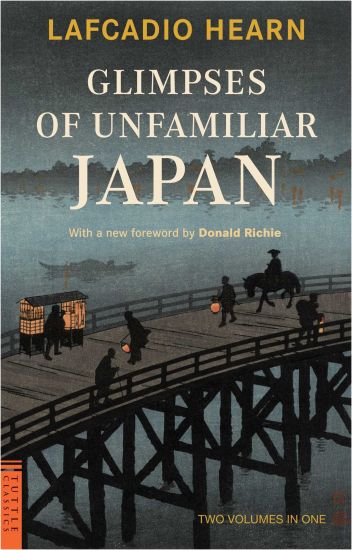
Glimpses of Unfamiliar Japan

Glimpses of Unfamiliar Japan

Lafcadio Hearn; Donald Richie

Tuttle Publishing
2016
nidottu
Glimpses of Unfamiliar Japan is a complete, two-volume set of one of the most outstanding books on 19th century Japanese history and culture.Though Lafcadio Hearn went on to write a dozen more books on Japan, this collection of first impressions remains his most popular. Among the reasons is that here, more than anywhere else, the author most vividly captured a place that so affected him that he stayed for the rest of his life. The modern reader can still, through these pages, experience that "first charm of Japan, intangible and volatile as a perfume." Glimpses of Unfamiliar Japan combines two volumes of a work that first appeared in 1894. In the pages of this book are the customs, the superstitions, the charming scenery, the revelations of Japanese character, and all the other elements that Lafcadio Hearn found so bewitching. Here, for example, are essays on such subjects as the Japanese garden, the household shrine, the festivals, and the bewildering Japanese smile—all aspects of Japanese life that have endured in spite of the changes that have taken place during the modernization of Japan. The Japanese character and the Japanese tradition are still fundamentally the same as Hearn found them to be, and for this reason, his writing is still extremely revealing to modern readers. This edition also contains a new foreword by noted writer and examiner of Japanese culture Donnie Richie that puts Lafcadio Hearn and his classic works into perspective for readers just discovering Hearn's writing for the first time.
A Critical Handbook of Japanese Film Directors

A Critical Handbook of Japanese Film Directors

Alexander Jacoby; Donald Richie

Stone Bridge Press
2008
pokkari
This important work fills the need for a reasonably priced yet comprehensive volume on major directors in the history of Japanese film. With clear insight and without academic jargon, Jacoby examines the works of over 150 filmmakers to uncover what makes their films worth watching. Included are artistic profiles of everyone from Yutaka Abe to Isao Yukisada, including masters like Kinji Fukasaku, Juzo Itami, Akira Kurosawa, Takashi Miike, Kenji Mizoguchi, Yasujiro Ozu, and Yoji Yamada. Each entry includes a critical summary and filmography, making this book an essential reference and guide. UK-based Alexander Jacoby is a writer and researcher on Japanese film.
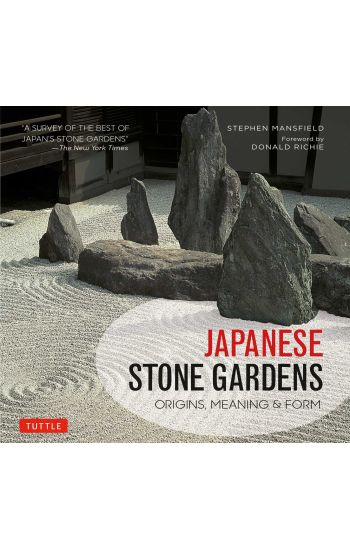
Japanese Stone Gardens

Japanese Stone Gardens

Stephen Mansfield; Donald Richie

Tuttle Publishing
2017
sidottu
"This survey of the best of Japan's stone gardens may send you into the sort of fugue state in which you wake up to find yourself floating through the airport, boarding pass in hand." —New York TimesJapanese Stone Gardens provides a comprehensive introduction to the powerful mystique and dynamism of the Japanese stone garden—from their earliest use as props in animistic rituals, to their appropriation by Zen monks and priests to create settings conducive to contemplation and finally to their contemporary uses and meaning. With insightful text and abundant imagery, this book reveals the hidden order of stone gardens and in the process heightens the enthusiast's appreciation of them.The Japanese stone garden is an art form recognized around the globe. These meditative gardens provide tranquil settings, where visitors can shed the burdens and stresses of modern existence, satisfy an age-old yearning for solitude and repose, and experience the restorative power of art and nature. For this reason, the value of the Japanese stone garden today is arguably even greater than when many of them were created. Fifteen gardens are featured in this book: some well known, such as the famous temple gardens of Kyoto, others less so, among them gardens spread through the south of Honshu Island and the southern islands of Shikoku and Kyushu and in faraway Okinawa.
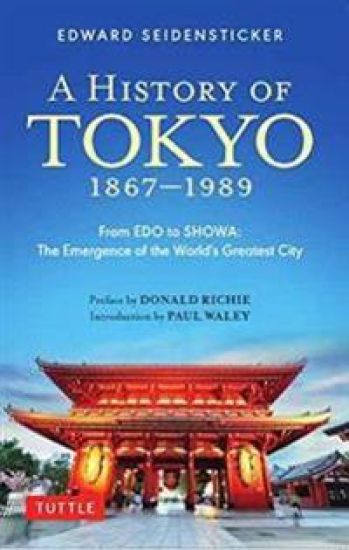
A History of Tokyo 1867-1989

A History of Tokyo 1867-1989

Edward Seidensticker; Donald Richie

Tuttle Publishing
2019
nidottu
This is a freaking great book and I highly recommend it... if you are passionate about the history of 'the world's greatest city,' this book is something you must have in your collection. JapanThis.com. Edward Seidensticker's A History of Tokyo 1867-1989 tells the fascinating story of Tokyo's transformation from the Shogun's capital in an isolated Japan to the largest and the most modern city in the world. With the same scholarship and sparkling style that won him admiration as the foremost translator of great works of Japanese literature, Seidensticker offers the reader his brilliant vision of an entire society suddenly wrenched from an ancient feudal past into the modern world in a few short decades, and the enormous stresses and strains that this brought with it. Originally published as two volumes, Seidensticker's masterful work is now available in a handy, single paperback volume. Whether you're a history buff or Tokyo-bound traveller looking to learn more, this insightful book offers a fascinating look at how the Tokyo that we know came to be. This edition contains an introduction by Donald Richie, the acknowledged expert on Japanese culture who was a close personal friend of the author, and a preface by geographer Paul Waley that puts the book into perspective for modern readers.
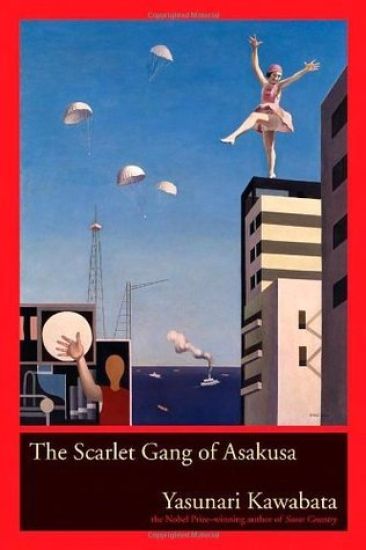
The Scarlet Gang Of Asakusa

The Scarlet Gang Of Asakusa

Yasunari Kawabata; Alisa Freedman; Donald Richie

University of California Press
2005
pokkari
In the 1920s, Asakusa was to Tokyo what Montmartre had been to 1890s Paris and Times Square was to be to 1940s New York. Available in English for the first time, The Scarlet Gang of Asakusa, by Nobel Prize winner Yasunari Kawabata, captures the decadent allure of this entertainment district, where beggars and teenage prostitutes mixed with revue dancers and famous authors. Originally serialized in a Tokyo daily newspaper in 1929 and 1930, this vibrant novel uses unorthodox, kinetic literary techniques to reflect the raw energy of Asakusa, seen through the eyes of a wandering narrator and the cast of mostly female juvenile delinquents who show him their way of life. Markedly different from Kawabata's later work, The Scarlet Gang of Asakusa shows this important writer in a new light. The annotated edition of this little-known literary gem includes the original illustrations by Ota Saburo. The annotations illuminate Tokyo society and Japanese literature, bringing this fascinating piece of Japanese modernism at last to a wide audience.
The Japanese Film

The Japanese Film

Joseph L. Anderson; Donald Richie

Princeton University Press
1983
pokkari
Tracing the development of the Japanese cinema from 1896 (when the first Kinetoscope was imported) through the golden ages of film in Japan up to today, this work reveals the once flourishing film industry and the continuing unique art of the Japanese film. Now back in print with updated sections, major revaluations, a comprehensive international bibliography, and an exceptional collection of 168 stills ranging over eight decades, this book remains the unchallenged reference for all who seek a broad understanding of the aesthetic, historical, and economic elements of motion pictures from Japan.