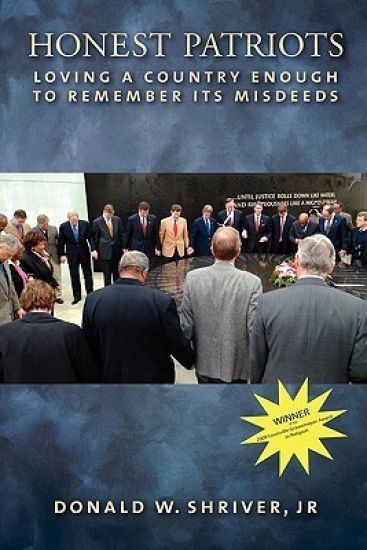
In Honest Patriots, renowned public theologian and ethicist Donald W. Shriver, Jr. argues that we must acknowledge and repent of the morally negative events in our nation's past. The failure to do so skews the relations of many Americans to one another, breeds ongoing hostility, and damages the health of our society. events in American history is essential to the health of our Yet our civic identity today largely rests on denials, forgetfulness, and inattention to the memories of neighbors whose ancestors suffered great injustices at the hands of some dominant majority. Shriver contends that repentance for these injustices must find a place in our political culture. Such repentance must be carefully and deliberately cultivated through the accurate teaching of history, by means of public symbols that embody both positive and negative memory, and through public leadership to this end. events skews the relations of many Americans to one another Religious people and religious organizations have an important role to play in this process. Historically, the Christian tradition has concentrated on the personal dimensions of forgiveness and repentance to the near-total neglect of their collective aspects. Recently, however, the idea of collective moral responsibility has gained new and public visibility. Official apologies for past collective injustice have multiplied, along with calls for reparations. anyone's ancestors, says Shriver, is to be blind to the Shriver looks in detail at the examples of Germany and South Africa, and their pioneering efforts to foster and express collective repentance. He then turns to the historic wrongs perpetrated against African Americans and Native Americans and to recent efforts by American citizens and governmental bodies to seek public justice by remembering public injustice. The call for collective repentance presents many challenges: What can it mean to morally master a past whose victims are dead and whose sufferings cannot be alleviated? What are the measures that lend substance to language and action expressing repentance? What symbolic and tangible acts produce credible turns away from past wrongs? What are the dynamics-psychological, social, and political-whereby we can safely consign an evil to the past? How can public life witness to corporate crimes of the past in such a way that descendents of victims can be confident that they will never be repeated? In his provocative answers to these questions Shriver creates a compelling new vision of the collective repentance and apology that must precede real progress in relations between the races in this country.