Kirjojen hintavertailu. Mukana 11 244 527 kirjaa ja 12 kauppaa.

Kirjahaku

Etsi kirjoja tekijän nimen, kirjan nimen tai ISBN:n perusteella.

12 kirjaa tekijältä Donald Wright

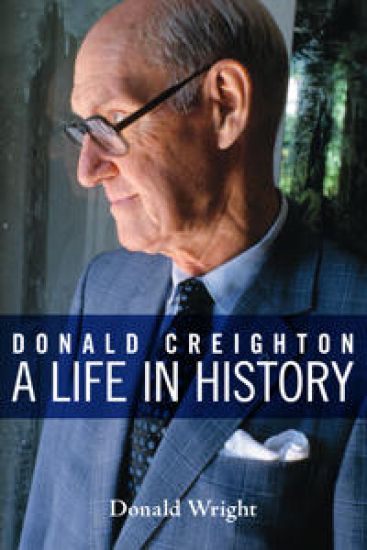
Donald Creighton

Donald Creighton

Donald Wright

University of Toronto Press
2015
pokkari
A member of the same intellectual generation as Harold Innis, Northrop Frye, and George Grant, Donald Creighton (1902–1979) was English Canada’s first great historian. The author of eleven books, including The Commercial Empire of the St. Lawrence and a two-volume biography of John A. Macdonald, Creighton wrote history as if it “had happened,” he said, “the day before yesterday.” And as a public intellectual, he advised the prime minister of Canada, the premier of Ontario, and – at least on one occasion – the British government. Yet he was, as Donald Wright shows, also profoundly out of step with his times. As the nation was re-imagined along bilingual and later multicultural lines in the 1960s and 1970s, Creighton defended a British definition of Canada at the same time as he began to fear that he would be remembered only “as a pessimist, a bigot, and a violent Tory partisan.” Through his virtuoso research into Creighton’s own voluminous papers, Wright paints a sensitive portrait of a brilliant but difficult man. Ultimately, Donald Creighton captures the twentieth-century transformation of English Canada through the life and times of one of its leading intellectuals.

Donald Creighton

Donald Creighton

Donald Wright

University of Toronto Press
2015
sidottu
A member of the same intellectual generation as Harold Innis, Northrop Frye, and George Grant, Donald Creighton (1902–1979) was English Canada’s first great historian. The author of eleven books, including The Commercial Empire of the St. Lawrence and a two-volume biography of John A. Macdonald, Creighton wrote history as if it “had happened,” he said, “the day before yesterday.” And as a public intellectual, he advised the prime minister of Canada, the premier of Ontario, and – at least on one occasion – the British government. Yet he was, as Donald Wright shows, also profoundly out of step with his times. As the nation was re-imagined along bilingual and later multicultural lines in the 1960s and 1970s, Creighton defended a British definition of Canada at the same time as he began to fear that he would be remembered only “as a pessimist, a bigot, and a violent Tory partisan.” Through his virtuoso research into Creighton’s own voluminous papers, Wright paints a sensitive portrait of a brilliant but difficult man. Ultimately, Donald Creighton captures the twentieth-century transformation of English Canada through the life and times of one of its leading intellectuals.

Canada

Canada

Donald Wright

Oxford University Press
2020
nidottu
Canada is not one nation, but three: English Canada, Quebec, and First Nations. Yet as a country Canada is very successful, in part because it maintains national diversity through bilingualism, multiculturalism, and federalism. Alongside this contemporary openness Canada also has its own history to contend with; with a legacy of broken treaties and residential schools for its Indigenous peoples, making reconciliation between Canada and First Nations an ongoing journey, not a destination. Drawing on history, politics, and literature, this Very Short Introduction starts at the end of the last ice age, when the melting of the ice sheets opened the northern half of North America to Indigenous peoples, and covers up to today's anthropogenic climate change, and Canada's climate politics. Donald Wright emphasizes Canada's complexity and diversity as well as its different identities and its commitment to rights, and explores its historical relationship to Great Britain, and its ongoing relationship with the United States. Finally, he examines Canada's northern realities and its northern identities. ABOUT THE SERIES: The Very Short Introductions series from Oxford University Press contains hundreds of titles in almost every subject area. These pocket-sized books are the perfect way to get ahead in a new subject quickly. Our expert authors combine facts, analysis, perspective, new ideas, and enthusiasm to make interesting and challenging topics highly readable.
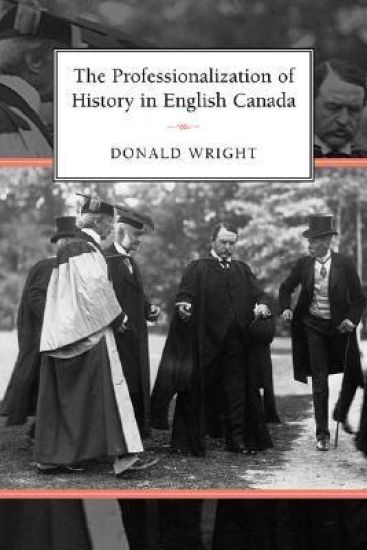
The Professionalization of History in English Canada

The Professionalization of History in English Canada

Donald Wright

University of Toronto Press
2005
sidottu
The study of history in Canada has a history of its own, and its development as an academic discipline is a multifaceted one. The Professionalization of History in English Canada charts the transition of the study of history from a leisurely pastime to that of a full-blown academic career for university-trained scholars - from the mid-nineteenth to the late twentieth century. Donald Wright argues that professionalization was not, in fact, a benign process, nor was it inevitable. It was deliberate. Within two generations, historians saw the creation of a professional association - the Canadian Historical Association - and rise of an academic journal - the Canadian Historical Review. Professionalization was also gendered. In an effort to raise the status of the profession and protect the academic labour market for men, male historians made a concerted effort to exclude women from the academy. History's professionalization is best understood as a transition from one way of organizing intellectual life to another. What came before professionalization was not necessarily inferior, but rather, a different perspective of history. As well, Wright argues convincingly that professionalization inadvertently led to a popular inverse: the amateur historian, whose work is often more widely received and appreciated by the general public.
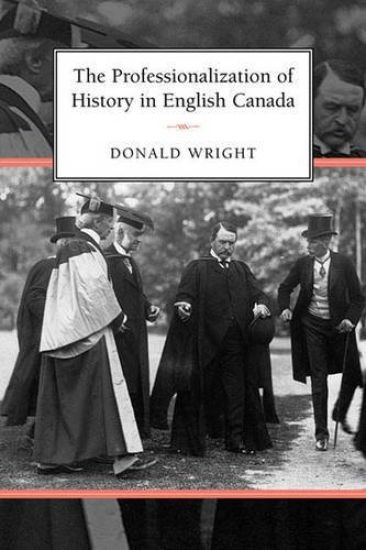
The Professionalization of History in English Canada

The Professionalization of History in English Canada

Donald Wright

University of Toronto Press
2015
pokkari
The study of history in Canada has a history of its own, and its development as an academic discipline is a multifaceted one. The Professionalization of History in English Canada charts the transition of the study of history from a leisurely pastime to that of a full-blown academic career for university-trained scholars - from the mid-nineteenth to the late twentieth century. Donald Wright argues that professionalization was not, in fact, a benign process, nor was it inevitable. It was deliberate. Within two generations, historians saw the creation of a professional association - the Canadian Historical Association - and rise of an academic journal - the Canadian Historical Review. Professionalization was also gendered. In an effort to raise the status of the profession and protect the academic labour market for men, male historians made a concerted effort to exclude women from the academy. History's professionalization is best understood as a transition from one way of organizing intellectual life to another. What came before professionalization was not necessarily inferior, but rather, a different perspective of history. As well, Wright argues convincingly that professionalization inadvertently led to a popular inverse: the amateur historian, whose work is often more widely received and appreciated by the general public.