Kirjojen hintavertailu. Mukana 11 244 527 kirjaa ja 12 kauppaa.

Kirjahaku

Etsi kirjoja tekijän nimen, kirjan nimen tai ISBN:n perusteella.

2 kirjaa tekijältä Doris Penka

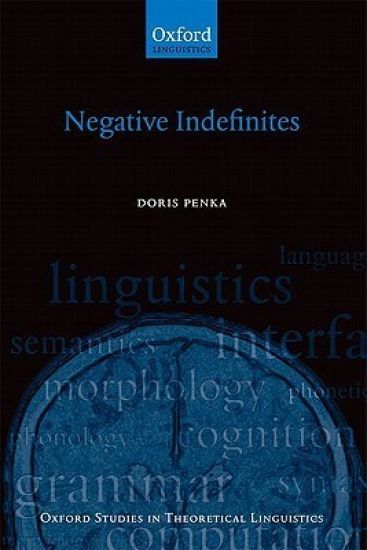
Negative Indefinites

Negative Indefinites

Doris Penka

Oxford University Press
2010
sidottu
In this book, Doris Penka delivers a cross-linguistic, unified analysis of the semantics and syntax of negative indefinites, as in the expressions nobody, nothing, no (as determiner), never and nowhere and their counterparts in other languages. While it is standard to assume that negative indefinites behave like negative quantifiers, the author argues that these expressions are not inherently negative and are only licensed by a covert negation. In an analysis motivated by three phenomena found in the structure and semantics of negative indefinites in different languages - namely negative concord (in which multiple occurrences of negative constituents express a single negation), split readings (in which negative and indefinite parts take scope independently of each other), and the limited distribution of negative indefinites in Scandinavian languages - Doris Penka considers data from a wide range of languages and reviews the most recent literature on the semantics and syntax of negative indefinites. Her book will interest all linguists working on negation in particular and the syntax-semantics interface more generally.

Negative Indefinites

Negative Indefinites

Doris Penka

Oxford University Press
2010
nidottu
In this book, Doris Penka delivers a cross-linguistic, unified analysis of the semantics and syntax of negative indefinites, as in the expressions nobody, nothing, no (as determiner), never and nowhere and their counterparts in other languages. While it is standard to assume that negative indefinites behave like negative quantifiers, the author argues that these expressions are not inherently negative and are only licensed by a covert negation. In an analysis motivated by three phenomena found in the structure and semantics of negative indefinites in different languages - namely negative concord (in which multiple occurrences of negative constituents express a single negation), split readings (in which negative and indefinite parts take scope independently of each other), and the limited distribution of negative indefinites in Scandinavian languages - Doris Penka considers data from a wide range of languages and reviews the most recent literature on the semantics and syntax of negative indefinites. Her book will interest all linguists working on negation in particular and the syntax-semantics interface more generally.