Kirjojen hintavertailu. Mukana 11 244 527 kirjaa ja 12 kauppaa.

Kirjahaku

Etsi kirjoja tekijän nimen, kirjan nimen tai ISBN:n perusteella.

2 kirjaa tekijältä Doris Witt

Black Hunger

Black Hunger

Doris Witt

Oxford University Press Inc
1999
sidottu
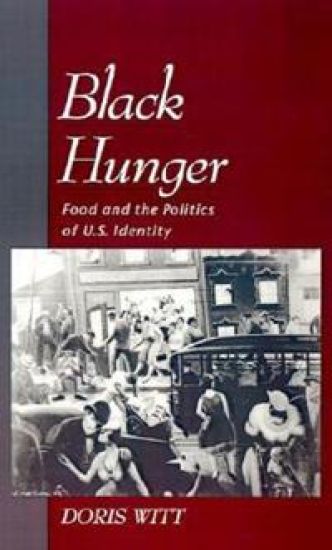
The creation of the Aunt Jemima trademark from an 1889 vaudeville performance of a play called "The Emigrant" helped codify a pervasive connection between African American women and food. In Black Hunger, Doris Witt demonstrates how this connection has operated as a central structuring dynamic of twentieth-century US psychic, cultural, sociopolitical, and economic life. Taking as her focus the tumultuous era of the late 1960s and early 1970s, when soul food emerged as a pivotal emblem of white radical chic and black bourgeois authenticity, Witt explores how this interracial celebration of previously stigmatized foods such as chitterlings and watermelon was linked to the contemporaneous vilification of black women as slave mothers. By positioning African American women at the nexus of debates over domestic servants, black culinary history, and white female body politics, Black Hunger demonstrates why the ongoing narrative of white fascination with blackness demands increased attention to the internal dynamics of sexuality, gender, class, and religion in African American culture. Witt draws on recent work in social history and cultural studies to argue for food as an interpretive paradigm which can challenge the privileging of music in scholarship on African American culture, destabilize constrictive disciplinary boundaries in the academy, and enhance our understanding of how individual and collective identities are established.

Black Hunger

Black Hunger

Doris Witt

University of Minnesota Press
2004
nidottu
Explores the complex relationship between food and African American history In 1889, the owners of a pancake mix witnessed the vaudeville performance of a white man in blackface and drag playing a character called Aunt Jemima. This character went on to become one of the most pervasive stereotypes of black women in the United States, embodying not only the pancakes she was appropriated to market but also post–Civil War race and gender hierarchies-including the subordination of African American women as servants and white fantasies of the nurturing mammy.Using the history of Aunt Jemima as a springboard for exploring the relationship between food and African Americans, Black Hunger focuses on debates over soul food since the 1960s to illuminate a complex web of political, economic, religious, sexual, and racial tensions between whites and blacks and within the black community itself. Celebrated by many African Americans as a sacramental emblem of slavery and protest, soul food was simultaneously rejected by others as a manifestation of middle-class black “slumming.”Highlighting the importance of food for men as well as women, Doris Witt traces the promotion of soul food by New York Times food writer Craig Claiborne and its prohibition by Nation of Islam leader Elijah Muhammad and comedian-turned-diet guru Dick Gregory. A discussion of cookbook author Vertamae Grosvenor, who distanced herself from the myth of plantation mammy by reimagining soul food as "vibration cooking," sets the stage for Witt's concluding argument that the bodies and appetites of African American women should be viewed as central to contemporary conversations about eating disorders and reproductive rights.Witt draws on vaudeville, literature, film, visual art, and cookbooks to explore how food has been used both to perpetuate and to challenge racial stereotypes. Raising her fist in a Black Power salute, wielding her spatula like a sword, Aunt Jemima steps off the pancake box in a righteous fury.