Kirjojen hintavertailu. Mukana 11 244 527 kirjaa ja 12 kauppaa.

Kirjahaku

Etsi kirjoja tekijän nimen, kirjan nimen tai ISBN:n perusteella.

14 kirjaa tekijältä Dorothy Rowe

Dorothy Rowe's Guide to Life

Dorothy Rowe's Guide to Life

Dorothy Rowe

Harpercollins Publishers
1996
pokkari
This is a distillation of Dorothy Rowe's insights on the main sticking points of life: identity and self-esteem, fear of death, depression, coping with other people, power, guilt and coming to terms with getting older.
Successful Self

Successful Self

Dorothy Rowe

HARPERCOLLINS PUBLISHERS
1996
pokkari
The author's research and therapy is concerned with questions of how we create meaning and communicate with each other. She is also author of "Depression: the Way Out of Your Prison", "Living with the Bomb: Can We Live Without Enemies?" and "Beyond Fear".
Breaking the Bonds

Breaking the Bonds

Dorothy Rowe

HARPERCOLLINS PUBLISHERS
1996
nidottu
As well as discussing the meaning of depression, examining why it is hard to effect change, and describing the journey towards freedom from depression, the author also looks at other interpretations of depression, and at the way drugs are often wrongfully used. By the author of "Successful Self".
Beyond Fear

Beyond Fear

Dorothy Rowe

HARPERCOLLINS PUBLISHERS
2007
nidottu
Dorothy Rowe shows us how to have the courage to acknowledge and face our fears – only through courage can we find a sustaining happiness. ‘Beyond Fear’, first published in 1987, has changed the lives of thousands of people. In this edition, the renowned psychologist Dorothy Rowe examines the changes in the psychiatric system since 1987 in the context of showing how most of our suffering comes from our greatest fear, that of being annihilated as a person, when we shall disappear like a puff of smoke in the wind, never to have existed. We feel this fear whenever others humiliate or belittle us, or whenever we discover a serious discrepancy between what we thought our life was and what it actually is. The greater our fear, the more desperate our defence against it, the most desperate of defences being what psychiatrists call mental disorders. Yet, by knowing ourselves we can go beyond our fear and face life with courage.
Why We Lie

Why We Lie

Dorothy Rowe

HARPERCOLLINS PUBLISHERS
2011
nidottu
Why do we lie? Because we are frightened of being humiliated, being treated like an object, being rejected, losing control of things, and, most of all, we are frightened of uncertainty. Often we get our lies in before any of these things can happen. We lie to maintain our vanity. We lie when we call our fantasies the truth. Lying is much easier than searching for the truth and accepting it, no matter how inconvenient it is. We lie to others, and, even worse, we lie to ourselves. In both private and public life, we damage ourselves with our lies, and we damage other people. Lies destroy mutual trust, and fragment our sense of who we are. Lies have played a major part in climate change and the global economic crisis. Fearing to change how they live, many people prefer to continue lying rather than acknowledge that we are facing a very uncertain but undoubtedly unpleasant future unless we learn how to prefer the truths of the real world in which we live rather than the comforting lies that ultimately betray us. We are capable of changing, but will we choose to do this?
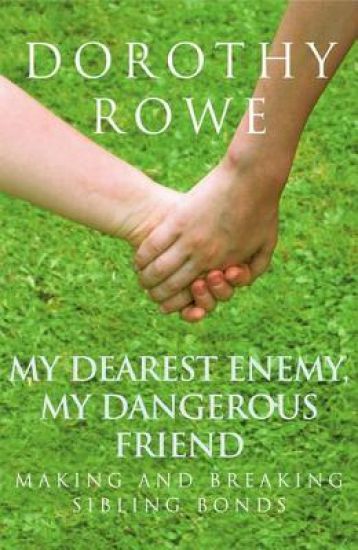
My Dearest Enemy, My Dangerous Friend
Stories about siblings abound in literature, drama, comedy, biography, and history. We rarely talk about our own siblings without emotion, whether with love and gratitude, or exasperation, bitterness, anger and hate. Nevertheless, the subject of what it is to be and to have a sibling is one that has been ignored by psychiatrists, psychologists and therapists.In My Dearest Enemy, My Dangerous Friend, Dorothy Rowe presents a radically new way of thinking about siblings that unites the many apparently contradictory aspects of these complex relationships. This helps us to recognise the various experiences involved in sibling relationships as a result of the fundamental drive for survival and validation, enabling us to reach a deeper understanding of our siblings and ourselves.If you have a sibling, or you are bringing up siblings, or, as an only child, you want to know what you’re missing, this is the book for you.
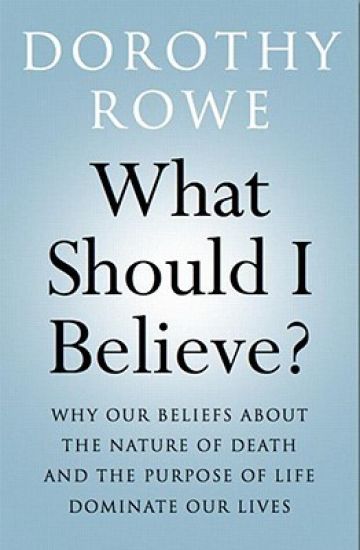
What Should I Believe?

What Should I Believe?

Dorothy Rowe

Routledge
2008
nidottu
Suddenly, in the twenty-first century, religion has become a political power. It affects us all, whether we’re religious or not. If we’re not in danger of being blown up by a suicide bomber we’ve got leaders to whom God speaks, ordering them to start a war. We’re beset by people who demand that we give ourselves to Jesus while they smugly assure us of their own superiority and inherent goodness. We’re surrounded by those who noisily reject science while making full use of the benefits science brings; by the ‘spiritual’ ones; the ones who believe in magic; and there’s the militant atheists berating us all for our stupidity. We wouldn’t object to what people believed if only they’d keep it to themselves. We want to make up our own minds about what we believe, but it’s difficult to do this. Everyone has to face the dilemma that we all die but no one knows for certain what death actually is. Is it the end of our identity or a doorway to another life? Whichever we choose, our choice is a fantasy that determines the purpose of our life. If death is the end of our identity, we have to make this life satisfactory, whatever ‘satisfactory’ might mean to us. If it is a doorway to another life, what are the standards we have to reach to go to that better life? All religions promise to overcome death, but there’s no set of religious or philosophical beliefs that ensures that our life is always happy and secure. Moreover, for many of us, what we were taught about a religion severely diminished our self-confidence and left us with a constant debilitating feeling of guilt and shame. Through all this turmoil comes the calm, clear voice of eminent psychologist Dorothy Rowe. She separates the political from the personal, the power-seeking from the compassionate. She shows how, if we use our beliefs as a defence against our feelings of worthlessness, we feel compelled to force our beliefs on to other people by coercion or aggression. However, it is possible to create a set of beliefs, expressed in the religious or philosophical metaphors most meaningful to us, which allow us to live at peace with ourselves and other people, to feel strong in ourselves without having to remain a child forever dependent on some supernatural power, and to face life with courage and optimism.
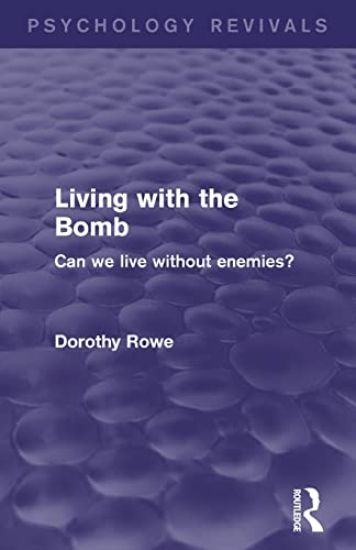
Living with the Bomb

Living with the Bomb

Dorothy Rowe

Routledge
2013
sidottu
Originally published in 1985, Living with the Bomb was written as a sequel to the best seller Depression: The Way Out of Your Prison. The human species is facing extinction, not merely from nuclear war but also, and perhaps more likely, from the destruction of the resources of the planet. Is it possible for us to change? To organise a peaceful, sharing society? To live in a world without enemies – and so to avoid extinction as a species? Dorothy Rowe outlines the painful process of change which all of us, all nations, races, creeds, will have to undertake to establish the forgiveness and reconciliation necessary to secure the continuation of the human race.Many people know about the peril threatening us – but many deny it. Dorothy Rowe describes the forms this denial takes and the effects such denial has on those defending themselves in this way. She shows how certain basic beliefs about human nature and the purpose of life, beliefs held by many people, undermine our determination to protect ourselves. She argues that to become and remain a person we must be a member of a group, and that we create ourselves and our world out of structures which, when threatened, we defend with aggression. We perceive and define only in terms of contrast, and the contrast to our group, the Stranger becomes the Dangerous Stranger as a necessary repository for aspects of ourselves we have been taught to reject and deny.Although the world’s focus may have changed since 1985, the themes that run through this book are still very relevant for society today.
Living with the Bomb

Living with the Bomb

Dorothy Rowe

Routledge
2014
nidottu
Originally published in 1985, Living with the Bomb was written as a sequel to the best seller Depression: The Way Out of Your Prison. The human species is facing extinction, not merely from nuclear war but also, and perhaps more likely, from the destruction of the resources of the planet. Is it possible for us to change? To organise a peaceful, sharing society? To live in a world without enemies – and so to avoid extinction as a species? Dorothy Rowe outlines the painful process of change which all of us, all nations, races, creeds, will have to undertake to establish the forgiveness and reconciliation necessary to secure the continuation of the human race.Many people know about the peril threatening us – but many deny it. Dorothy Rowe describes the forms this denial takes and the effects such denial has on those defending themselves in this way. She shows how certain basic beliefs about human nature and the purpose of life, beliefs held by many people, undermine our determination to protect ourselves. She argues that to become and remain a person we must be a member of a group, and that we create ourselves and our world out of structures which, when threatened, we defend with aggression. We perceive and define only in terms of contrast, and the contrast to our group, the Stranger becomes the Dangerous Stranger as a necessary repository for aspects of ourselves we have been taught to reject and deny.Although the world’s focus may have changed since 1985, the themes that run through this book are still very relevant for society today.
Representing Berlin

Representing Berlin

Dorothy Rowe

Ashgate Publishing Limited
2003
sidottu
Berlin, city of Bertolt Brecht, Marlene Dietrich, cabaret and German Expressionism, a city identified with a female sexuality - at first alluring but then dangerous. In this fascinating study, Dorothy Rowe turns our attention to Berlin as a sexual landscape. She investigates the processes by which women and femininity played a prominent role in depictions of the city at the end of the nineteenth and into the early twentieth centuries. She explores how in the aftermath of the horrors of World War I, increasing anxieties about the liberation of women and the supposed increase of female prostitution contributed to the demonization of the city not as a focus of desire and pleasure but rather as one of alienation and anxiety.
My Dearest Enemy, My Dangerous Friend
Stories about siblings abound in literature, drama, comedy, biography, and history. We rarely talk about our own siblings without emotion, whether with love and gratitude, or exasperation, bitterness, anger and hate. Nevertheless, the subject of what it is to be and to have a sibling is one that has been ignored by psychiatrists, psychologists and therapists.In My Dearest Enemy, My Dangerous Friend, Dorothy Rowe presents a radically new way of thinking about siblings that unites the many apparently contradictory aspects of these complex relationships. This helps us to recognise the various experiences involved in sibling relationships as a result of the fundamental drive for survival and validation, enabling us to reach a deeper understanding of our siblings and ourselves.If you have a sibling, or you are bringing up siblings, or, as an only child, you want to know what you’re missing, this is the book for you.
What Should I Believe?

What Should I Believe?

Dorothy Rowe

Routledge
2016
sidottu
Suddenly, in the twenty-first century, religion has become a political power. It affects us all, whether we’re religious or not. If we’re not in danger of being blown up by a suicide bomber we’ve got leaders to whom God speaks, ordering them to start a war. We’re beset by people who demand that we give ourselves to Jesus while they smugly assure us of their own superiority and inherent goodness. We’re surrounded by those who noisily reject science while making full use of the benefits science brings; by the ‘spiritual’ ones; the ones who believe in magic; and there’s the militant atheists berating us all for our stupidity. We wouldn’t object to what people believed if only they’d keep it to themselves. We want to make up our own minds about what we believe, but it’s difficult to do this. Everyone has to face the dilemma that we all die but no one knows for certain what death actually is. Is it the end of our identity or a doorway to another life? Whichever we choose, our choice is a fantasy that determines the purpose of our life. If death is the end of our identity, we have to make this life satisfactory, whatever ‘satisfactory’ might mean to us. If it is a doorway to another life, what are the standards we have to reach to go to that better life? All religions promise to overcome death, but there’s no set of religious or philosophical beliefs that ensures that our life is always happy and secure. Moreover, for many of us, what we were taught about a religion severely diminished our self-confidence and left us with a constant debilitating feeling of guilt and shame. Through all this turmoil comes the calm, clear voice of eminent psychologist Dorothy Rowe. She separates the political from the personal, the power-seeking from the compassionate. She shows how, if we use our beliefs as a defence against our feelings of worthlessness, we feel compelled to force our beliefs on to other people by coercion or aggression. However, it is possible to create a set of beliefs, expressed in the religious or philosophical metaphors most meaningful to us, which allow us to live at peace with ourselves and other people, to feel strong in ourselves without having to remain a child forever dependent on some supernatural power, and to face life with courage and optimism.
Representing Berlin

Representing Berlin

Dorothy Rowe

Routledge
2017
nidottu
Berlin, city of Bertolt Brecht, Marlene Dietrich, cabaret and German Expressionism, a city identified with a female sexuality - at first alluring but then dangerous. In this fascinating study, Dorothy Rowe turns our attention to Berlin as a sexual landscape. She investigates the processes by which women and femininity played a prominent role in depictions of the city at the end of the nineteenth and into the early twentieth centuries. She explores how in the aftermath of the horrors of World War I, increasing anxieties about the liberation of women and the supposed increase of female prostitution contributed to the demonization of the city not as a focus of desire and pleasure but rather as one of alienation and anxiety.
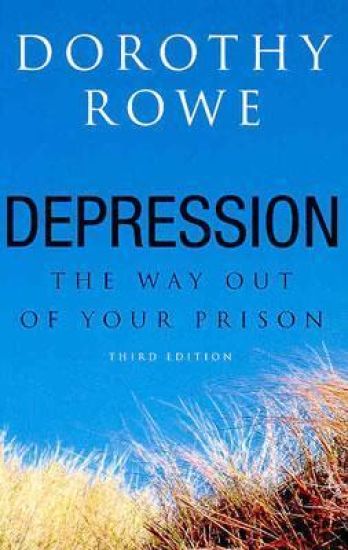
Depression

Depression

Dorothy Rowe

Brunner-Routledge
2003
nidottu
Depression: The Way Out of Your Prison gives us a way of understanding our depression which matches our experience and which enables us to take charge of our life and change it. Dorothy Rowe shows us that depression is not an illness or a mental disorder but a defence against pain and fear, which we can use whenever we suffer a disaster and discover that our life is not what we thought it was.Depression is an unwanted consequence of how we see ourselves and the world. By understanding how we have interpreted events in our life we can choose to change our interpretations and thus create for ourselves a happier, more fulfilling life.Depression: The Way Out of Your Prison is for depressed people, their family and friends, and for all professionals and non-professionals who work with depressed people.