Kirjojen hintavertailu. Mukana 11 699 587 kirjaa ja 12 kauppaa.

Kirjahaku

Etsi kirjoja tekijän nimen, kirjan nimen tai ISBN:n perusteella.

24 kirjaa tekijältä Doug West

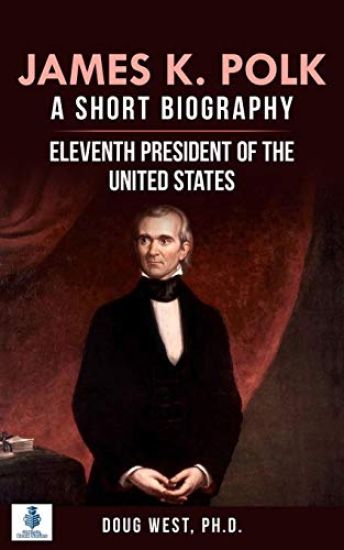
James K. Polk: A Short Biography: Eleventh President of the United States
A "long-shot" or "underdog" would best describe the former governor of Tennessee, James Knox Polk, who had lost two reelection bids and now sought his party's vice-presidential nomination. Events unfolded rapidly at the Democratic convention in the warm summer of 1844. James Polk had hoped to be his party's choice as front runner Martin Van Buren's vice presidential nominee going into the fall general election. Seven ballots into the nomination process the convention was hopelessly deadlocked, then Polk's friends began spreading the word that "Young Hickory" was Andrew Jackson's choice and that he could bring harmony to the party. On the ninth ballot of the delegates vote, Polk became the presidential nominee of the party to run against the veteran Whig candidate Henry Clay. A third-party candidate would syphon off just enough votes from Clay to throw the general election to Polk.Polk was no stranger to Washington; having been a seven-term congressman and eventually holding the powerful position of Speaker of the House of Representatives. Polk was brought into the nation's highest office through a wave of expansionist fervor. Many believed it was the providence of God or "Manifest Destiny" that America should possess the land from "sea to shining sea," and James Polk was just the man to push this dream into reality.Polk would turn out to be one of the exceptional presidents of the nineteenth century. A hundred years later, President Harry Truman would extol Polk, writing, "James K. Polk was] a great president. Said what he intended to do and did it." Polk did fulfill the desires of the country to expand. When he entered the office of the president, Missouri was the western border of the nation; upon leaving the office four short years later, the Pacific Ocean bordered the growing nation to the west. "James K. Polk: A Short Biography" crisply reveals the life and times of the eleventh president of the United States. 30-Minute Book SeriesThis is the 39th book in the 30-Minute Book Series. Books in this series are fast-paced, accurate, and cover the story in as much detail as a short book possibly can. Most people complete each book in less than an hour, which makes the books in the series a perfect companion for your lunch hour or a little down time. About the AuthorDoug West is a retired engineer and an experienced non-fiction writer with several books to his credit. His writing interests are general, with special expertise in history, science, biographies, and "How To" topics. Doug has a Ph.D. in General Engineering from Oklahoma State University.

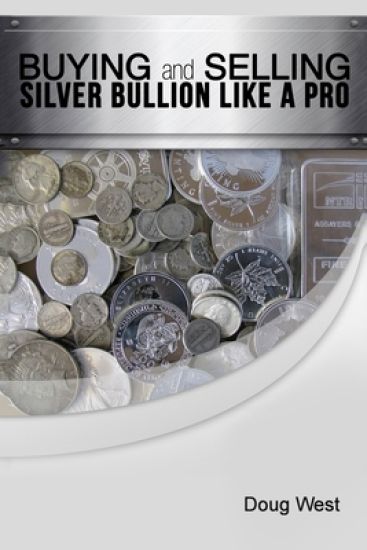
Buying and Selling Silver Bullion Like a Pro

Buying and Selling Silver Bullion Like a Pro

Doug West

Createspace Independent Publishing Platform
2014
pokkari
This definitive book on silver bullion investing written by Doug West is for investors who want to enter the world of silver investing armed with all the information they need in order to succeed. The book discusses the buying power of silver. It is written in a way that easily convinces anyone who is still on the fence with regard to investing in silver bullion to make the decision by presenting facts and figures.The definitive resource on silver investing. The point that is stressed in this book is that silver is a commodity that enjoys an increasing demand while having a limited supply. Because the world's remaining silver deposits are lying deep in the earth silver is becoming more expensive to process and remove. Nevertheless, silver is still a very useful commodity and definitely worth a serious investor's attention.
The American Revolutionary War - A Short History

The American Revolutionary War - A Short History

Doug West

Createspace Independent Publishing Platform
2015
pokkari
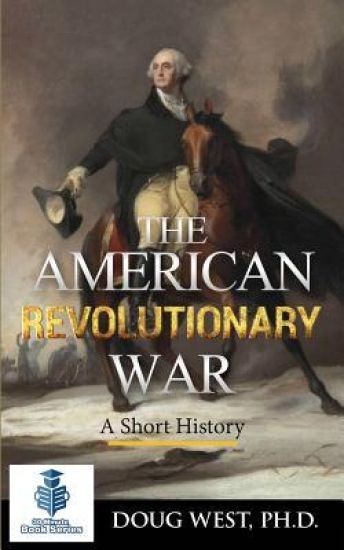
The American Revolutionary War was an event that changed the path of nations.The birth of the United States of America signaled a deadly struggle that cost the lives of thousands of American and British soldiers.The conflict between the mother country, Britain, and the colonist was series of events over a decade that finally led to the first shots being fired at the battle of Lexington and Concord.This bitter war would drag on for years with battlegrounds scattered up and down the eastern seaboard of the now United States.* Men such as George Washington, Thomas Jefferson, John Adams, and Benjamin Franklin would prove to be key individuals that helped turn the war into a victory over the most powerful military force in the world.The French were key allies in the war and helped to turn the tide in the favor of the beleaguered Continental Army.It would take more than eight long years from the first shot being fired to the final peace treaty.Buy the book "The American Revolutionary War - A Short History" and learn about the traumatic events that formed the most powerful and important nation in the history of the world.30 Minute Book SeriesWelcome to the fifth book in the 30 Minute Book Series. Each book in the series is fast paced, well written, accurate, and covers the story in as much detail as a short book allows. In less than an hour, you can read or listen to the book; it is a perfect companion for a lunch hour or a nice distraction for a train ride home from work. About the AuthorDoug West is a retired engineer, small business owner, and an experienced non-fiction writer with several books to his credit. His writing interests are general, with special expertise in science, biographies, numismatics, and "How To" topics. Doug has a Ph.D. in General Engineering from Oklahoma State University.
The Astronomer Cecilia Payne-Gaposchkin - A Short Biography

The Astronomer Cecilia Payne-Gaposchkin - A Short Biography

Doug West

Createspace Independent Publishing Platform
2015
nidottu
Maybe you have never heard of Cecilia Payne-Gaposchkin ; if not, now is your chance to find out about the interesting woman that had a huge impact on the world of science and advanced the cause of women. ** Her discovery of hydrogen as the most abundant element in the universe was a fundamental breakthrough. ** Early astronomer who combined the power of physics and chemistry in order to unlock the mysteries of the stars. ** After graduation from Cambridge University, Cecilia Payne-Gaposchkin came to America to study at Harvard College Observatory under Harlow Shapley. ** She would rise through the ranks at Harvard becoming the first female full professor at the prestigious school. ** At the peak of her career, she was one of the world's foremost experts on variable stars. A dedicated wife, mother, and world class scholar, Cecilia broke the glass ceiling in the academic world and opened the door for women to advance in many different fields. Spend some time with this distinguished astronomer and buy the book "The Astronomer Cecilia Payne-Gaposchkin - A Short Biography."30 Minute Book SeriesWelcome to the sixth book in the 30 Minute Book Series. Each book in the series is fast paced, well written, accurate, and covers the story in as much detail as a short book allows. In less than an hour, you can read or listen to the book; it is a perfect companion for a lunch hour or a nice distraction for a train ride home from work.About the AuthorDoug West is a retired engineer, small business owner, and an experienced non-fiction writer with several books to his credit. His writing interests are general, with special expertise in science, biographies, numismatics, and "How To" topics. Doug has a Ph.D. in General Engineering from Oklahoma State University.
Coinage of the United States ? A Short History

Coinage of the United States ? A Short History

Doug West

Createspace Independent Publishing Platform
2015
nidottu
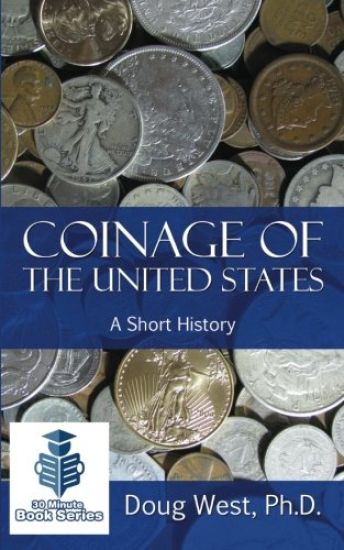
The history of United States coinage is a story that parallels the rise of America. Starting from a humble beginning in a basement in Philadelphia in the first few years of the country, it grew to a large highly sophisticated system that produces millions of coins per year. Due to a lack of silver, the first silver coins produced by the Mint came from silverware contributed by George and Martha Washington. It wasn't until after the Civil War that coinage became widely used for all types of transactions. Until that time, barter and money substitutes, such as tokens, script, and foreign coins, were used as a mediums of exchange. During the 1830's, and then again during the Civil War, coins were in such short supply that merchants and private individuals began producing cent-sized coins, just to make change for daily transactions. In America, it was legal until 1857 to use foreign money in transactions. The Spanish dollars and their fractional parts, called "bits," were quite common during colonial times until the mid-1800s.President Theodore Roosevelt sparked a change in the coin designs fom a standardized institutional theme to more artistic and attractive designs. The President enlisted the help of one of the country's most prominent sculptors to create some of the most beautiful coins in the history of the country. Until recent times, the value of the silver and gold coins depended on their intrinsic metal value. This was a constant headache for the Mint, as the value of gold and silver would rise, and the coins would disappear from circulation to be melted and sold for their bullion value. It wasn't until 1964 that the Mint totally abandoned precious metals for the day-to-day coinage and changed the composition to what we see today as modern copper-nickel clad coinage.Come and take the journey into what seems so ubiquitous today and learn the fascinating history of these small metal objects in our pockets and purses.About the AuthorDoug West is a retired engineer, small business owner, and an experienced non-fiction writer with several books to his credit. His writing interests are general, with special expertise in science, biographies, numismatics, and "How to" topics. Doug has a Ph.D. in General Engineering from Oklahoma State University.
John Adams - A Short Biography

John Adams - A Short Biography

Doug West

Createspace Independent Publishing Platform
2015
nidottu
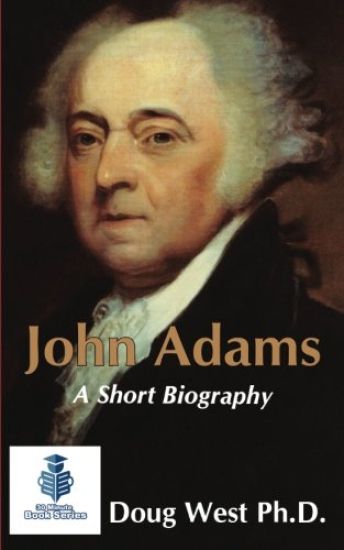
John Adams was in some form of service to America for most of his adult life - serving as a representative to the Continental Congress, envoy to European nations, vice president and, finally, ending his political career as the second President of the United States. At only five foot seven, nearly bald, a little overweight, occasionally cranky, and without most of his teeth, John Adams was not an Adonis, but through his intellect, force of will, and dogged determination, he would become one of the founding fathers of America.-- The years leading to the Revolutionary War and independence from Great Britain pushed John Adams into fighting for the cause of liberty. -- As a delegate to the Continental Congress, he was a member of the team in 1776 that drafted one of America's most important documents, the Declaration of Independence. -- His service to the country was not limited to roles within the borders of the country; for ten years, he represented America as a diplomat to France, the Netherlands, and Great Britain. -- He helped draft the State of Massachusetts Constitution and served under George Washington as the first Vice President of the United States. -- After Washington's retirement, Adams ran for president, and in a close presidential election with Thomas Jefferson, he narrowly won the presidency. -- His one term as president was marked by considerable strife within the country. America was engaged in a quasi-war with the country's oldest ally, France.Spend some time with this distinguished American and buy the book, John Adams - A Short Biography.30 Minute Book SeriesWelcome to the ninth book in the 30 Minute Book Series. Each book in the series is fast-paced, well-written, accurate, and covers the story in as much detail as a short book allows. In less than an hour, you can read or listen to the book; it is a perfect companion for a lunch hour or a nice distraction for a train ride home from work. About the AuthorDoug West is a retired engineer, small business owner, and an experienced non-fiction writer with several books to his credit. His writing interests are general, with special expertise in science, biographies, and "How To" topics. Doug has a Ph.D. in General Engineering from Oklahoma State University.

The Great Depression - A Short History

The Great Depression - A Short History

Doug West

Createspace Independent Publishing Platform
2016
nidottu
There are many theories about what caused the Great Depression, and the truth is that there is no simple answer. Rather, a perfect storm of events came together and changed the lives of millions of people. One of the first signs of this dark period was the stock market crash in October 1929. In the aftermath, the country fell into the Great Depression, the longest and most significant economic depression since the Civil War. Through most of the 1920s, the United States economy was growing, and the stock market had reached new highs. People were making money in the stock market and having a grand time, so much so that few noticed the dark clouds forming on the horizon. By the end of the decade, industrial production had begun to decline, while unemployment was steadily rising. Stock market prices were plummeting from their peak in September 1929, and sales reached a crescendo in late October. On October 29, over sixteen million shares were traded in just one day. Billions of dollars were lost, with thousands of investors wiped out, and stock tickers were running hours behind because they were simply unequipped to manage this unprecedented amount of trading. The crash was not the only cause of the Great Depression, but it was certainly a symptom of a larger set of problems. Earlier in 1929, Herbert Hoover won the presidency under a wealth and prosperity platform. He made several unsuccessful attempts to prevent the economy from weakening during his administration. Despite his best efforts, banks continued to fail, and more Americans entered the ranks of unemployment. No one understood the extent of this economic downturn. But the election of 1932 brought Democrat Franklin D. Roosevelt into the White House by a landslide. Roosevelt wasted no time, proposing extensive legislation called the New Deal to create new jobs, revitalize the banks, and give hope to the American people. Some of the New Deal programs were successful, while other fell short; but by the end of the 1930s, things had finally begun to improve. However, it would take the massive spending required during World War II for the economy to return to where it was a decade before. Read about this tumultuous period in American history by purchasing the book The Great Depression - A Short History. 30-Minute Book SeriesWelcome to the eleventh book in the 30-Minute Book Series. Books in this series are fast-paced, accurate, and cover the story in as much detail as a short book possibly can. You can complete each work in less than an hour, which makes our books a perfect companion for your lunch hour or your commute home from work.About the AuthorDoug West is a retired engineer, small business owner, and an experienced non-fiction writer with several books to his credit. His writing interests are general, with special expertise in science, biographies, and "How To" topics. Doug has a Ph.D. in General Engineering from Oklahoma State University
Jesse Owens, Adolf Hitler and the 1936 Summer Olympics

Jesse Owens, Adolf Hitler and the 1936 Summer Olympics

Doug West

Createspace Independent Publishing Platform
2016
nidottu
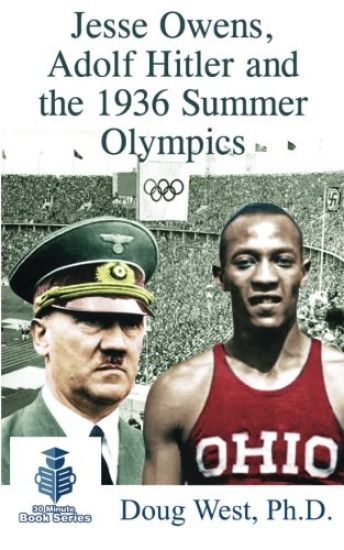
Both Jesse Owens and Adolf Hitler grew up in poverty, and each of the two men struggled to find their footing later in life. Owens represented the United States in the 1936 Olympics, after which he found it difficult to sustain a well-paying job. In turn, Adolf Hitler moved to Vienna as a teenager, following his parents' death, but he never found the financial success he so desperately craved as an artist. He spent most of his time in the city a penniless, unemployed young man.The similarities between the two men end there. While Adolf Hitler became angered and enraged by his circumstances, and by the fate of Germany following the First World War, Jesse Owens went out of his way to help people. Even when he faced the cruelty of racism in the United States, Owens saw the best in others. He spent most of his days working with children and teenagers, making a conscious effort to give them the guidance and support they needed to enact positive change in the world. In contrast, Hitler turned to hatred, divisiveness, and conflict in his attempts to change the world in his image.Owens was an open-minded man who spent his life bettering the lives of his family and the community at large. Even when others asked him to denounce the racist tendencies of Adolf Hitler, he chose to grudgingly respect the German leader. Meanwhile, Hitler's experiences only fuelled his hatred of anyone who was not Aryan and German.In this book, we will explore the lives of both men leading up to the 1936 Berlin Olympics. Then, we will take a closer look at the effects of that summer on the rest of their years.30 Minute Book SeriesWelcome to the ninth book in the 30-Minute Book Series. Each book in the series is fast-paced, well-written and accurate, covering the story in as much detail as a short book allows. In less than an hour, you can read or listen to the full book. The text is a perfect companion for your lunch hour, or perhaps a nice distraction on your train ride home from work.About the AuthorDoug West is a retired engineer, small business owner, and an experienced non-fiction writer with several books to his credit. His writing interests are general, with special expertise in science, biographies, and "How-To" topics. Doug has a Ph.D. in General Engineering from Oklahoma State University.
The French and Indian War - A Short History

The French and Indian War - A Short History

Doug West

Createspace Independent Publishing Platform
2016
nidottu
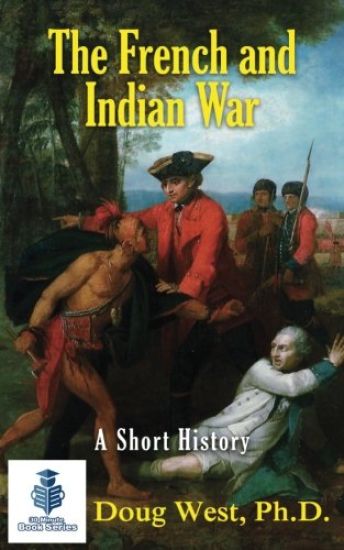
Beginning with a skirmish involving inexperienced British officer George Washington, the Iroquois chief, and the ill-fated French emissary in the backwoods of Pennsylvania, a chain of events culminated in what would effectively become the First World War. The French and Indian War, as it is known in North America, was part of a larger conflict called the "Seven Years' War," which involved nations on three continents. The French and Indian War was fought in the forests, plains, and forts of the North American frontier. Initially, the French army, supported by North American Indian tribes, was more successful than the British Army, who lacked experience in guerilla fighting tactics. Massive British spending bolstered their forces in North America and ultimately won them a victory over the French. The conflict that occurred between 1755 and 1763, and that led to the downfall of the French Empire in North America, ultimately overturned the balance of power on two continents, eroded Indian nations' ability to gain independence from European rule, and lit the fuse of the American Revolution.
The Mexican-American War: A Short History: America's Fulfillment of Manifest Destiny
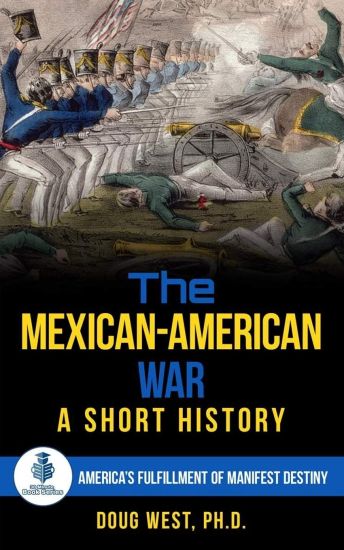
When Texas was annexed by the United States in 1845 Mexico's foreign minister in Washington, D.C. angrily left the country and returned to Mexico. Mexico had warned the United States that if Texas became a U.S. state it would be cause for war. By April of the next year a shooting skirmish had broken out along the contested border between Mexico and the state of Texas. -- General Zachary Taylor, who was in charge of the U.S. forces along the border alerted President James K. Polk with the message "Hostilities may now be considered as commenced." President Polk wasted no time, alerting Congress in protest that the Mexican soldiers had "...shed American blood upon American soil." --Congress quickly brought the United States to a war footing. Both nations were ill prepared for war. --Mexico with a much larger army seemingly had the advantage, however, the Americans were better trained, had state-of-the-art artillery, and possessed a navy that could move troops quickly as well as shell a coastal city into submission.--For nearly two years the Americans pushed deeper into Mexico, winning every major battle. -- General Scott, or "old fuss and feathers" as he was known, was a master tactician and with a much smaller army was able to defeat the Mexican soldiers led by General Santa Anna. --It was not until February 1848 when the treaty of Guadalupe Hidalgo was signed that the war came to an official end. The Americans gained much from the treaty, including the modern-day states of California, New Mexico, Arizona, Nevada, Utah, and parts of Colorado and Wyoming. For this vast territory the U.S. compensated Mexico with a little over $18 million. Though this war is seldom mentioned today, the Mexican-American War had a profound and lasting impact on both nations. The book "The Mexican-American War: A Short History" gives a concise look at the factors leading up to the war, the details of the battles, and reveals the impact the war had on both countries. To illustrate the story there are over a dozen pictures of the people, places, and events that were part of the war. In addition, a list of reference books for further reading is included. A timeline of the war puts the events in sequence and there is a section that contains short biographical sketches of the key individuals in the book. 30-Minute Book SeriesThis is the 41st book in the 30-Minute Book Series. Books in this series are fast-paced, accurate, and cover the story in as much detail as a short book possibly can. Most people complete each book in less than an hour, which makes the books in the series a perfect companion for your lunch hour or a little down time. About the AuthorDoug West is a retired engineer and an experienced non-fiction writer with several books to his credit. His writing interests are general, with special expertise in history, science, and biographies. Doug has a Ph.D. in General Engineering from Oklahoma State University.
America's Second War of Independence

America's Second War of Independence

Doug West

Createspace Independent Publishing Platform
2018
pokkari
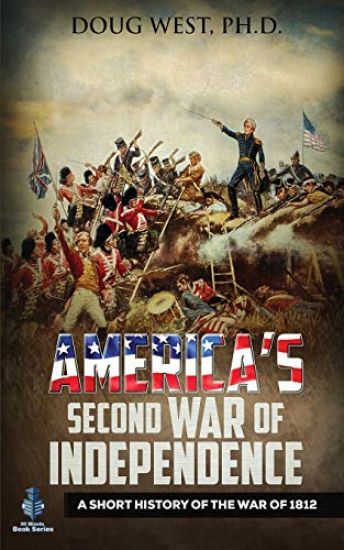
During the War of 1812, or the "second war of independence," the United States, which consisted of eighteen loosely joined states, took on Great Britain, the greatest naval power in the world, in a conflict that would have a lasting impact on the nation's future. The causes of the war, which have been debated for more than two centuries, include the British attempts to restrict U.S. trade, the Royal Navy's impressment of American seamen, and the United States' desire to expand her territory. Over the course of the war, the U.S. suffered many costly defeats at the hands of British, Canadian, and Native American forces, including the burning of the nation's capital, Washington, D.C. Nonetheless, American troops managed to thwart British invasions in Baltimore, New York, and New Orleans, boosting national confidence and fostering a new spirit of patriotism as a result. Though the War of 1812 resulted in no exchange of territory between nations, there was no longer any doubt that the United States was now a nation to be reckoned with on the world stage.Read about this tumultuous period in American history by purchasing the book "America's Second War of Independence." 30-Minute Book SeriesWelcome to the 29th book in the 30-Minute Book Series. Books in this series are fast-paced, accurate, and cover the story in as much detail as a short book possibly can. Most people complete each book in less than an hour, which makes the books in the series a perfect companion for your lunch hour or a little down time.About the AuthorDoug West is a retired engineer and an experienced non-fiction writer with several books to his credit. His writing interests are general, with special expertise in history, science, biographies, and "How To" topics. Doug has a Ph.D. in General Engineering from Oklahoma State University.
Sir William Crookes: A Short Biography: Nineteenth-Century British Chemist and Spiritualist
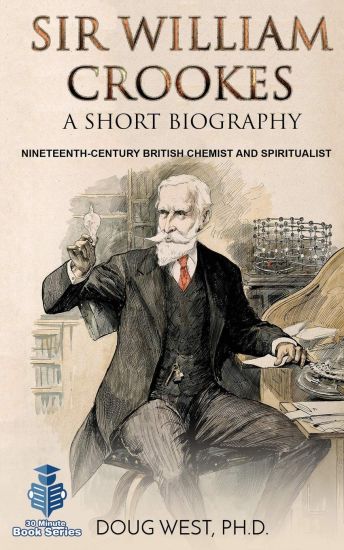
During his long career, the English chemist and entrepreneur, Sir William Crookes, was able to make significant contributions to photography, chemistry, physics, agricultural science, public health, and scientific journalism. Historians of science have recognized Crookes for his brilliance as an experimental researcher and his controversial investigations into spiritualistic phenomena; however, he made his living primarily as a science journalist and editor. His interests were eclectic, ranging from pure and applied science, economic and practical problems, and psychic research. He is credited with the discovery of the element thallium, investigations of cathode rays, and invention of the radiometer. He held patents on early light bulbs and his improvements in vacuum pump technology were key to the development of electric lighting and the discovery of the X-ray. His wide range of interests and prolific publication of his and others' works made him a well-known personality within the late Victorian era scientific community. By the turn of the twentieth-century he was regarded as Britain's leading scientist."Sir William Crookes: A Short Biography" reveals the life and times of one of the great scientific minds of the nineteenth-century.30-Minute Book SeriesThis is the 35th book in the 30-Minute Book Series. Books in this series are fast-paced, accurate, and cover the story in as much detail as a short book possibly can. Most people complete each book in less than an hour, which makes the books in the series a perfect companion for your lunch hour or a little down time.About the AuthorDoug West is a retired engineer and an experienced non-fiction writer with several books to his credit. His writing interests are general, with special expertise in history, science, biographies, and "How To" topics. Doug has a Ph.D. in General Engineering from Oklahoma State University.