Kirjojen hintavertailu. Mukana 11 627 630 kirjaa ja 12 kauppaa.

Kirjahaku

Etsi kirjoja tekijän nimen, kirjan nimen tai ISBN:n perusteella.

10 kirjaa tekijältä Douglas Anderson

A House Undivided

A House Undivided

Douglas Anderson

Cambridge University Press
2009
pokkari
A whole range of major American writers have focused on images of the household, of domestic virtue, and the feminine or feminized hero. This important 1990 book examines the persistence and flexibility of such themes in the work of a tradition of classic writers from Ann Bradstreet through Jefferson and Franklin to Hawthorne, Melville, Whitman and Emily Dickinson. Without minimizing the differences that divide these figures, Anderson shows the extent to which, in their various circumstances, they were all committed to a common enterprise - a social and cultural reconstruction based on the domestic values of the ideal private household.

A House Undivided

A House Undivided

Douglas Anderson

Cambridge University Press
1990
sidottu
A whole range of major American writers have focused on images of the household, of domestic virtue, and the feminine or feminized hero. This important 1990 book examines the persistence and flexibility of such themes in the work of a tradition of classic writers from Ann Bradstreet through Jefferson and Franklin to Hawthorne, Melville, Whitman and Emily Dickinson. Without minimizing the differences that divide these figures, Anderson shows the extent to which, in their various circumstances, they were all committed to a common enterprise - a social and cultural reconstruction based on the domestic values of the ideal private household.
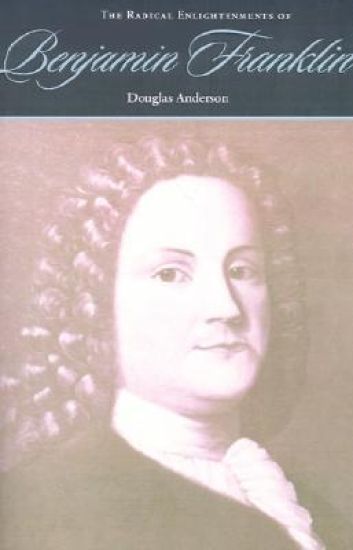
The Radical Enlightenments of Benjamin Franklin

The Radical Enlightenments of Benjamin Franklin

Douglas Anderson

Johns Hopkins University Press
2001
pokkari
Benjamin Franklin, writes Douglas Anderson in his preface, is "no one's contemporary...Blending elements of the fifteenth-century spiritual discipline of Thomas a Kempis with the journalistic energy of Daniel Defoe, the urbane reason of Lord Shaftesbury with the scientific initiative of Thomas Edison, Franklin places exceptional demands on the historical imagination of his readers-demands that are inevitably slighted by writers who emphasize only one set of interests or one facet of a complex temperament." In The Radical Enlightenments of Benjamin Franklin Anderson takes a fresh look at the intellectual roots of one of the most engaging and multifaceted of America's founders. Anderson begins by tracing the evolution of young Franklin's theology of works between the letters of Silence Dogood (1722) and his impassioned defense of the heterodox Irish clergyman Samuel Hemphill in 1735. He places the twenty-five-year production of Poor Richard's Almanac in the context of early eighteenth-century moral and educational psychology. He examines the broad intellectual continuities uniting Franklin's 1726 journal of his return voyage to Philadelphia with successive editions of his Experiments and Observations on Electricity, first published in 1751. And he offers a careful examination of Franklin's seminal, and controversial, 1751 essay "Observations Concerning the Increase of Mankind." The Radical Enlightenments of Benjamin Franklin brings us a much fuller understanding of Franklin's intellectual and literary roots and his later influence among common readers.
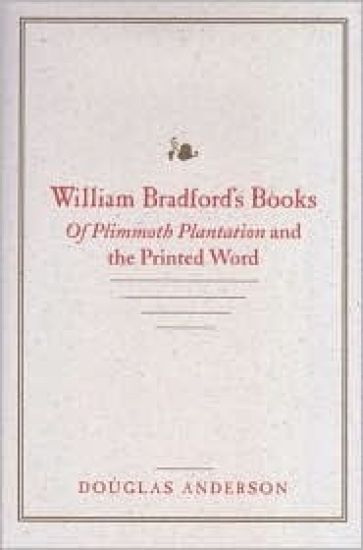
William Bradford's Books

William Bradford's Books

Douglas Anderson

Johns Hopkins University Press
2003
sidottu
Widely regarded as the most important narrative of seventeenth-century New England, William Bradford's Of Plimmoth Plantation is one of the founding documents of American literature and history. In William Bradford's Books this portrait of the religious dissenters who emigrated from the Netherlands to New England in 1620 receives perhaps its sharpest textual analysis to date-and the first since that of Samuel Eliot Morison two generations ago. Far from the gloomy elegy that many readers find, Bradford's history, argues Douglas Anderson, demonstrates remarkable ambition and subtle grace, as it contemplates the adaptive success of a small community of religious exiles. Anderson offers fresh literary and historical accounts of Bradford's accomplishment, exploring the context and the form in which the author intended his book to be read.
The Unfinished Life of Benjamin Franklin

The Unfinished Life of Benjamin Franklin

Douglas Anderson

Johns Hopkins University Press
2012
sidottu
Benjamin Franklin wrote his posthumously published memoir - a model of the genre - in several pieces and in different temporal and physical places. Douglas Anderson's study of this work reveals the famed inventor as a literary adept whose approach to autobiographical narrative was as innovative and radical as the inventions and political thought for which he is renowned. Franklin never completed his autobiography, choosing instead to immerse his reader in the formal and textual atmosphere of a deliberately "unfinished" life. Taking this decision on Franklin's part as a starting point, Anderson treats the memoir as a subtle and rewarding reading lesson, independent of the famous life that it dramatizes but closely linked to the work of predecessors and successors like John Bunyan and Alexis de Tocqueville, whose books help illuminate Franklin's complex imagination. Anderson shows that Franklin's incomplete story exploits the disorderly and disruptive state of a lived life, as opposed to striving for the meticulous finish of standard memoirs, biographies, and histories. In presenting Franklin's autobiography as an exemplary formal experiment in an era that its author once called the Age of Experiments, "The Unfinished Life of Benjamin Franklin" veers away from the familiar practices of traditional biographers, viewing history through the lens of literary imagination rather than the other way around. Anderson's carefully considered work makes a persuasive case for revisiting this celebrated book with a keener appreciation for the subtlety and beauty of Franklin's performance.
The Introspective Art of Mark Twain

The Introspective Art of Mark Twain

Douglas Anderson

Bloomsbury Academic USA
2017
nidottu
The Introspective Art of Mark Twain is a major new assessment of a towering American writer. Seeking to trace the development of Mark Twain’s imagination, Douglas Anderson begins near the end of Twain’s life, with the long dialogue What Is Man? that Twain published anonymously in 1906. In Twain’s view, the little-read What Is Man? lies at the heart of his creative life. It is the central aesthetic testament that he employed to tell the story of his artistic evolution. Anderson follows the contours of that story as it unfolds over Twain’s career. The portrait that emerges addresses the full scope of Twain’s achievement, drawing on his autobiographical and travel writings, as well as the published and unpublished works of fiction that are by now deeply embedded in the world literary canon. “Steer by the river in your head,” Mark Twain’s master pilot, Horace Bixby, once advised him, when the opaque atmosphere of the outer world made it impossible to see the actual Mississippi through which Twain was trying to guide his steamboat. For the purposes of this book, the river in one’s head is not a mental construct of the physical world but the riverine networks of consciousness itself: the river that is the mind. The detailed discussions of individual books that structure each chapter direct the attention of Mark Twain’s students and admirers, through inward rather than outward channels, toward a fuller appreciation for his legacy.
The Introspective Art of Mark Twain

The Introspective Art of Mark Twain

Douglas Anderson

Bloomsbury Academic USA
2017
sidottu
The Introspective Art of Mark Twain is a major new assessment of a towering American writer. Seeking to trace the development of Mark Twain’s imagination, Douglas Anderson begins near the end of Twain’s life, with the long dialogue What Is Man? that Twain published anonymously in 1906. In Twain’s view, the little-read What Is Man? lies at the heart of his creative life. It is the central aesthetic testament that he employed to tell the story of his artistic evolution. Anderson follows the contours of that story as it unfolds over Twain’s career. The portrait that emerges addresses the full scope of Twain’s achievement, drawing on his autobiographical and travel writings, as well as the published and unpublished works of fiction that are by now deeply embedded in the world literary canon. “Steer by the river in your head,” Mark Twain’s master pilot, Horace Bixby, once advised him, when the opaque atmosphere of the outer world made it impossible to see the actual Mississippi through which Twain was trying to guide his steamboat. For the purposes of this book, the river in one’s head is not a mental construct of the physical world but the riverine networks of consciousness itself: the river that is the mind. The detailed discussions of individual books that structure each chapter direct the attention of Mark Twain’s students and admirers, through inward rather than outward channels, toward a fuller appreciation for his legacy.
In Madison's Cave

In Madison's Cave

Douglas Anderson

Frayed Edge Press
2021
pokkari
"We two ought not to die before we have explained ourselves to one another." John Adams wrote those words to Thomas Jefferson early in the long series of letters they exchanged near the end of their lives. In Madison's Cave is Jefferson's imaginary explanation, organized around four drawings that he hopes will map the route to a complete emancipation of human nature. The souls of men are demons, Jefferson begins, but he is convinced that he has built a verbal machine to exorcise them, a mechanism hidden in the pages of his notorious Notes on the State of Virginia. The key to the machine is the outline of a limestone cave in the Shenandoah Valley that Jefferson made not long after the death of his wife and that captures, for him, the essence of the human underworld, its monsters and its redemptive lessons. In a series of chapters that mimic those of his infamous book, he ushers Adams into that underworld. This experimental epistolary novel considers early American history, government & politics, education, race relations, and other themes that still resonate in modern American life.