Kirjojen hintavertailu. Mukana 11 244 527 kirjaa ja 12 kauppaa.

Kirjahaku

Etsi kirjoja tekijän nimen, kirjan nimen tai ISBN:n perusteella.

24 kirjaa tekijältä Douglas Brode

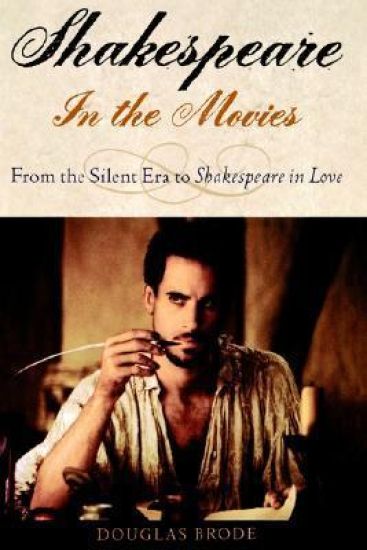
Shakespeare in the Movies

Shakespeare in the Movies

Douglas Brode

Oxford University Press Inc
2000
sidottu
A comprehensive overview of the many cinematic versions of Shakespeare's plays, this chronological volume ranges from the silent era to recent screen adaptations, including such films as Kenneth Branagh's "Henry V," Laurence Olivier's "Hamlet," and "Shakespeare in Love."
From Walt to Woodstock

From Walt to Woodstock

Douglas Brode

University of Texas Press
2004
pokkari
With his thumbprint on the most ubiquitous films of childhood, Walt Disney is widely considered to be the most conventional of all major American moviemakers. The adjective "Disneyfied" has become shorthand for a creative work that has abandoned any controversial or substantial content to find commercial success. But does Disney deserve that reputation? Douglas Brode overturns the idea of Disney as a middlebrow filmmaker by detailing how Disney movies played a key role in transforming children of the Eisenhower era into the radical youth of the Age of Aquarius. Using close readings of Disney projects, Brode shows that Disney's films were frequently ahead of their time thematically. Long before the cultural tumult of the sixties, Disney films preached pacifism, introduced a generation to the notion of feminism, offered the screen's first drug-trip imagery, encouraged young people to become runaways, insisted on the need for integration, advanced the notion of a sexual revolution, created the concept of multiculturalism, called for a return to nature, nourished the cult of the righteous outlaw, justified violent radicalism in defense of individual rights, argued in favor of communal living, and encouraged antiauthoritarian attitudes. Brode argues that Disney, more than any other influence in popular culture, should be considered the primary creator of the sixties counterculture-a reality that couldn't be further from his "conventional" reputation.
Multiculturalism and the Mouse

Multiculturalism and the Mouse

Douglas Brode

University of Texas Press
2006
pokkari
In his latest iconoclastic work, Douglas Brode-the only academic author/scholar who dares to defend Disney entertainment-argues that "Uncle Walt's" output of films, television shows, theme parks, and spin-off items promoted diversity decades before such a concept gained popular currency in the 1990s. Fully understood, It's a Small World-one of the most popular attractions at the Disney theme parks-encapsulates Disney's prophetic vision of an appealingly varied world, each race respecting the uniqueness of all the others while simultaneously celebrating a common human core. In this pioneering volume, Brode makes a compelling case that Disney's consistently positive presentation of "difference"-whether it be race, gender, sexual orientation, ideology, or spirituality-provided the key paradigm for an eventual emergence of multiculturalism in our society. Using examples from dozens of films and TV programs, Brode demonstrates that Disney entertainment has consistently portrayed Native Americans, African Americans, women, gays, individual acceptance of one's sexual orientation, and alternatives to Judeo-Christian religious values in a highly positive light. Assuming a contrarian stance, Brode refutes the overwhelming body of "serious" criticism that dismisses Disney entertainment as racist and sexist. Instead, he reveals through close textual analysis how Disney introduced audiences to such politically correct principles as mainstream feminism. In so doing, Brode challenges the popular perception of Disney fare as a bland diet of programming that people around the world either uncritically deem acceptable for their children or angrily revile as reactionary pabulum for the masses. Providing a long overdue and thoroughly detailed alternative, Brode makes a highly convincing argument that with an unwavering commitment to racial diversity and sexual difference, coupled with a vast global popularity, Disney entertainment enabled those successive generations of impressionable youth who experienced it to create today's aura of multiculturalism and our politically correct value system.
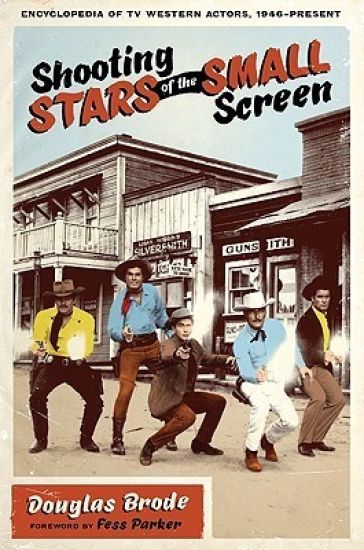
Shooting Stars of the Small Screen

Shooting Stars of the Small Screen

Douglas Brode

University of Texas Press
2009
pokkari
Since the beginning of television, Westerns have been playing on the small screen. From the mid-1950s until the early 1960s, they were one of TV's most popular genres, with millions of viewers tuning in to such popular shows as Rawhide, Gunsmoke, and Disney's Davy Crockett. Though the cultural revolution of the later 1960s contributed to the demise of traditional Western programs, the Western never actually disappeared from TV. Instead, it took on new forms, such as the highly popular Lonesome Dove and Deadwood, while exploring the lives of characters who never before had a starring role, including anti-heroes, mountain men, farmers, Native and African Americans, Latinos, and women.Shooting Stars of the Small Screen is a comprehensive encyclopedia of more than 450 actors who received star billing or played a recurring character role in a TV Western series or a made-for-TV Western movie or miniseries from the late 1940s up to 2008. Douglas Brode covers the highlights of each actor's career, including Western movie work, if significant, to give a full sense of the actor's screen persona(s). Within the entries are discussions of scores of popular Western TV shows that explore how these programs both reflected and impacted the social world in which they aired. Brode opens the encyclopedia with a fascinating history of the TV Western that traces its roots in B Western movies, while also showing how TV Westerns developed their own unique storytelling conventions.
Fantastic Planets, Forbidden Zones, and Lost Continents

Fantastic Planets, Forbidden Zones, and Lost Continents

Douglas Brode

University of Texas Press
2015
sidottu
Whether you judge by box office receipts, industry awards, or critical accolades, science fiction films are the most popular movies now being produced and distributed around the world. Nor is this phenomenon new. Sci-fi filmmakers and audiences have been exploring fantastic planets, forbidden zones, and lost continents ever since George MÉliÈs’ 1902 film A Trip to the Moon. In this highly entertaining and knowledgeable book, film historian and pop culture expert Douglas Brode picks the one hundred greatest sci-fi films of all time.Brode’s list ranges from today’s blockbusters to forgotten gems, with surprises for even the most informed fans and scholars. He presents the movies in chronological order, which effectively makes this book a concise history of the sci-fi film genre. A striking (and in many cases rare) photograph accompanies each entry, for which Brode provides a numerical rating, key credits and cast members, brief plot summary, background on the film’s creation, elements of the moviemaking process, analysis of the major theme(s), and trivia. He also includes fun outtakes, including his top ten lists of Fifties sci-fi movies, cult sci-fi, least necessary movie remakes, and “so bad they’re great” classics-as well as the ten worst sci-fi movies (“those highly ambitious films that promised much and delivered nil”). So climb aboard spaceship Brode and journey to strange new worlds from Metropolis (1927) to Guardians of the Galaxy (2014).
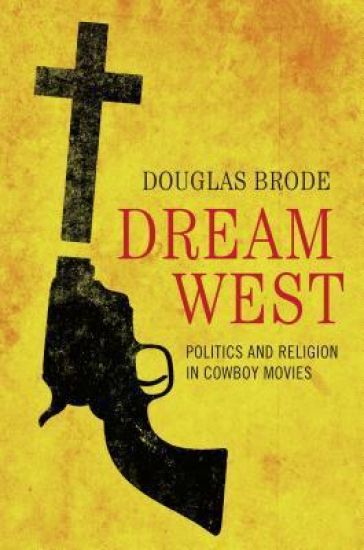
Dream West

Dream West

Douglas Brode

University of Texas Press
2013
nidottu
While political liberals celebrated the end of “cowboy politics” with the election of Barack Obama to the presidency, political conservatives in the Tea Party and other like-minded groups still vociferously support “cowboy” values such as small government, low taxes, free-market capitalism, and the right to bear arms. Yet, as Douglas Brode argues in this paradigm-shifting book, these supposedly cowboy or “Old West” values hail not so much from the actual American frontier of the nineteenth century as from Hollywood’s portrayal of it in the twentieth century. And a close reading of Western films and TV shows reveals a much more complex picture than the romanticized, simplistic vision espoused by the conservative right.Examining dozens of Westerns, including Gunfight at the O.K. Corral, Red River, 3:10 to Yuma (old and new), The Wild Ones, High Noon, My Darling Clementine, The Alamo, and No Country for Old Men, Brode demonstrates that the genre (with notable exceptions that he fully covers) was the product of Hollywood liberals who used it to project a progressive agenda on issues such as gun control, environmental protection, respect for non-Christian belief systems, and community cohesion versus rugged individualism. Challenging us to rethink everything we thought we knew about the genre, Brode argues that the Western stands for precisely the opposite of what most people today-whether they love it or hate it-believe to be the essential premise of “the only truly, authentically, and uniquely American narrative form.”
Elvis Cinema and Popular Culture

Elvis Cinema and Popular Culture

Douglas Brode

McFarland Co Inc
2006
pokkari
"This work demonstrates how Elvis, through his films, reflected a shifting social, cultural and political landscape in America. Encompassing all 31 movies and two 1970s documentaries, it provides a film-by-film study of Elvis Presley and America, and argues that each film reflects the society for which it was made"--Provided by publisher.
Yellow Rose of Texas

Yellow Rose of Texas

Douglas Brode

McFarland Co Inc
2010
pokkari
Yellow Rose of Texas: The Myth of Emily Morgan tells the fact based story of the African-American woman who inspired the world famous folk song. In this graphic novel the adventures of Emily Morgan reveal the Texas war for independence through the eyes of a black woman who survived the Alamo and played an important part in winning the war. While the story of Texas is told with attention to historical detail, the story of Emily is elevated to a romantic myth.
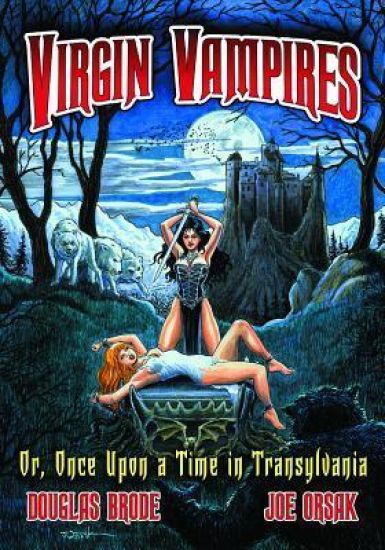
Virgin Vampires

Virgin Vampires

Douglas Brode

McFarland Co Inc
2012
pokkari
This blend of history and dark fantasy feasts upon vampire lore, reinventing the manner in which real-life monsters were transformed into pop culture icons by two of Ireland's great writers. Dubliners Sheridan Le Fanu and Bram Stoker travel to Transylvania where they race to save the women they love from the Countess Elizabeth Bathory. After the blood bath, Le Fanu and Stoker pose as doctors John Seward and Abraham Van Helsing to confront Vlad the Impaler and Count Dracula himself. Together for the first time, this immortal cast offers a highly erotic exploration of the vampire's eternal allure.
Sex, Drugs & Rock ‘n’ Roll

Sex, Drugs & Rock ‘n’ Roll

Douglas Brode

Peter Lang Publishing Inc
2015
nidottu
Sex, Drugs, & Rock ‘n’ Roll analyzes the cultural, political, and social revolution that took place in the U.S. (and in time the world) after World War II, crystalizing between 1955 and 1970. During this era, the concept of the American teenager first came into being, significantly altering the relationship between young people and adults.As the entertainment industries came to realize that a youth market existed, providers of music and movies began to create products specifically for them. While Big Beat music and exploitation films may have initially been targeted for a marginalized audience, during the following decade and a half, such offerings gradually become mainstream, even as the first generation of American teenagers came of age. As a result the so-called youth culture overtook and consumed the primary American culture, as records and films once considered revolutionary transformed into a nostalgia movement, and much of what had been thought of as radical came to be perceived as conservative in a drastically altered social context.In this book Douglas Brode offers the first full analysis of how an American youth culture evolved.
Sex, Drugs & Rock ‘n’ Roll

Sex, Drugs & Rock ‘n’ Roll

Douglas Brode

Peter Lang Publishing Inc
2015
sidottu
Sex, Drugs, & Rock ‘n’ Roll analyzes the cultural, political, and social revolution that took place in the U.S. (and in time the world) after World War II, crystalizing between 1955 and 1970. During this era, the concept of the American teenager first came into being, significantly altering the relationship between young people and adults.As the entertainment industries came to realize that a youth market existed, providers of music and movies began to create products specifically for them. While Big Beat music and exploitation films may have initially been targeted for a marginalized audience, during the following decade and a half, such offerings gradually become mainstream, even as the first generation of American teenagers came of age. As a result the so-called youth culture overtook and consumed the primary American culture, as records and films once considered revolutionary transformed into a nostalgia movement, and much of what had been thought of as radical came to be perceived as conservative in a drastically altered social context.In this book Douglas Brode offers the first full analysis of how an American youth culture evolved.
Fantastic Planets, Forbidden Zones, and Lost Continents

Fantastic Planets, Forbidden Zones, and Lost Continents

Douglas Brode

UNIVERSITY OF TEXAS PRESS
2024
nidottu
Whether you judge by box office receipts, industry awards, or critical accolades, science fiction films are the most popular movies now being produced and distributed around the world. Nor is this phenomenon new. Sci-fi filmmakers and audiences have been exploring fantastic planets, forbidden zones, and lost continents ever since George MÉliÈs’ 1902 film A Trip to the Moon. In this highly entertaining and knowledgeable book, film historian and pop culture expert Douglas Brode picks the one hundred greatest sci-fi films of all time.Brode’s list ranges from today’s blockbusters to forgotten gems, with surprises for even the most informed fans and scholars. He presents the movies in chronological order, which effectively makes this book a concise history of the sci-fi film genre. A striking (and in many cases rare) photograph accompanies each entry, for which Brode provides a numerical rating, key credits and cast members, brief plot summary, background on the film’s creation, elements of the moviemaking process, analysis of the major theme(s), and trivia. He also includes fun outtakes, including his top ten lists of Fifties sci-fi movies, cult sci-fi, least necessary movie remakes, and “so bad they’re great” classics-as well as the ten worst sci-fi movies (“those highly ambitious films that promised much and delivered nil”). So climb aboard spaceship Brode and journey to strange new worlds from Metropolis (1927) to Guardians of the Galaxy (2014).
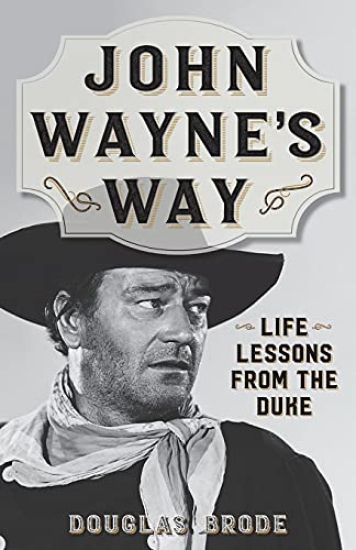
John Wayne's Way

John Wayne's Way

Douglas Brode

TwoDot Books
2019
pokkari
As John Wayne’s character said in The Alamo: “There’s right and there’s wrong. You got to do one or the other.” The ultimate measure of a man is how he chooses to act. From the pithy to the humorous to the profound, the film career of the man known as The Duke is full of life lessons for today. In John Wayne's Way, author Doug Brode explores the film legacy of the Duke and provides commentary on the lessons learned from the archetypes of the West and American manhood Wayne displayed on the silver screen. Complete with quotes and photographs from the movies, these pithy lessons will be appealing to John Wayne fans and Western film buffs.
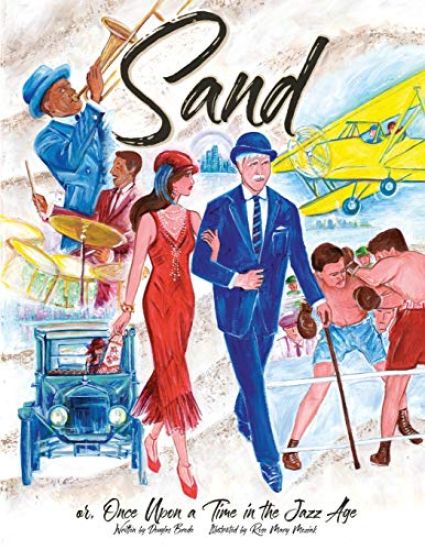
Sand

Sand

Douglas Brode

Agency Books
2021
pokkari
Young gossip columnist Louella Parsons and aged sportswriter Bat Masterson meet to cover the fight in which contender Jack Dempsey hopes to become the next heavyweight champion of the world.
From Hell To Hollywood

From Hell To Hollywood

Douglas Brode

BearManor Media
2020
pokkari
FROM HELL TO HOLLYWOOD: An Encyclopedia of Warld War II Films offers the most comprehensive illustrated guide ever assembled for theatrical motion-pictures, English-language and international, dealing with the conflict that consumed America and the globe during the mid-20th century. Though United States official involvement did not begin until December, 1941, following the bombing of Pearl Harbor by Japan's imperial air force, early battles and other precipitous moments, which led to legendary conflicts in Europe and the Pacific, can be traced back through the better part of a decade, many deriving from the unsatisfactory treaties that ended the initial Great War. This book also addresses WWII's aftermath in America, Asia, and Europe, as varied filmmakers have portrayed that difficult period.In a unique approach to this complex, broad subject, specific films are grouped according to unifying themes that involve varied aspects of 'The Big Picture.' These range from training of civilians for a new, updated state-of-the-art armed forces to the impact of warfare on the development of commercial flight, also the unique roles played by spies, People's Armies, and other misunderstood aspects of the war as writers and directors perceived them then, as well as more recent Revisionist portrayals.Included are hundreds of vivid photos, many never before printed in book form. This work is so immense that it had to be presented in two inter-dependent volumes--a first for Bear Manor Media This is Volume One. DOUGLAS BRODE is a screenwriter, novelist, graphic novelist, produced playwright, multi-award winning journalist, and multi-award winning educator. He created and taught the Film Classics program for The Newhouse School of Public Communications at Syracuse University until his retirement. Now Brode concentrates on turning out further books, both fiction and non-fiction. These include Deadlier Than the Male: Femme Fatales in 1960s and 1970s Cinema for Bear Manor Media.
From Hell To Hollywood

From Hell To Hollywood

Douglas Brode

BearManor Media
2020
sidottu
FROM HELL TO HOLLYWOOD: An Encyclopedia of Warld War II Films offers the most comprehensive illustrated guide ever assembled for theatrical motion-pictures, English-language and international, dealing with the conflict that consumed America and the globe during the mid-20th century. Though United States official involvement did not begin until December, 1941, following the bombing of Pearl Harbor by Japan's imperial air force, early battles and other precipitous moments, which led to legendary conflicts in Europe and the Pacific, can be traced back through the better part of a decade, many deriving from the unsatisfactory treaties that ended the initial Great War. This book also addresses WWII's aftermath in America, Asia, and Europe, as varied filmmakers have portrayed that difficult period.In a unique approach to this complex, broad subject, specific films are grouped according to unifying themes that involve varied aspects of 'The Big Picture.' These range from training of civilians for a new, updated state-of-the-art armed forces to the impact of warfare on the development of commercial flight, also the unique roles played by spies, People's Armies, and other misunderstood aspects of the war as writers and directors perceived them then, as well as more recent Revisionist portrayals.Included are hundreds of vivid photos, many never before printed in book form. This work is so immense that it had to be presented in two inter-dependent volumes--a first for Bear Manor Media This is Volume One. DOUGLAS BRODE is a screenwriter, novelist, graphic novelist, produced playwright, multi-award winning journalist, and multi-award winning educator. He created and taught the Film Classics program for The Newhouse School of Public Communications at Syracuse University until his retirement. Now Brode concentrates on turning out further books, both fiction and non-fiction. These include Deadlier Than the Male: Femme Fatales in 1960s and 1970s Cinema for Bear Manor Media.
From Hell To Hollywood

From Hell To Hollywood

Douglas Brode

BearManor Media
2020
pokkari
FROM HELL TO HOLLYWOOD: An Encyclopedia of Warld War II Films offers the most comprehensive illustrated guide ever assembled for theatrical motion-pictures, English-language and international, dealing with the conflict that consumed America and the globe during the mid-20th century. Though United States official involvement did not begin until December, 1941, following the bombing of Pearl Harbor by Japan's imperial air force, early battles and other precipitous moments, which led to legendary conflicts in Europe and the Pacific, can be traced back through the better part of a decade, many deriving from the unsatisfactory treaties that ended the initial Great War. This book also addresses WWII's aftermath in America, Asia, and Europe, as varied filmmakers have portrayed that difficult period.In a unique approach to this complex, broad subject, specific films are grouped according to unifying themes that involve varied aspects of 'The Big Picture.' These range from training of civilians for a new, updated state-of-the-art armed forces to the impact of warfare on the development of commercial flight, also the unique roles played by spies, People's Armies, and other misunderstood aspects of the war as writers and directors perceived them then, as well as more recent Revisionist portrayals.Included are hundreds of vivid photos, many never before printed in book form. This work is so immense that it had to be presented in two inter-dependent volumes--a first for Bear Manor Media This is volume 2 of 2. DOUGLAS BRODE is a screenwriter, novelist, graphic novelist, produced playwright, multi-award winning journalist, and multi-award winning educator. He created and taught the Film Classics program for The Newhouse School of Public Communications at Syracuse University until his retirement. Now Brode concentrates on turning out further books, both fiction and non-fiction. These include Deadlier Than the Male: Femme Fatales in 1960s and 1970s Cinema for Bear Manor Media.

From Hell To Hollywood

From Hell To Hollywood

Douglas Brode

BearManor Media
2020
sidottu
FROM HELL TO HOLLYWOOD: An Encyclopedia of Warld War II Films offers the most comprehensive illustrated guide ever assembled for theatrical motion-pictures, English-language and international, dealing with the conflict that consumed America and the globe during the mid-20th century. Though United States official involvement did not begin until December, 1941, following the bombing of Pearl Harbor by Japan's imperial air force, early battles and other precipitous moments, which led to legendary conflicts in Europe and the Pacific, can be traced back through the better part of a decade, many deriving from the unsatisfactory treaties that ended the initial Great War. This book also addresses WWII's aftermath in America, Asia, and Europe, as varied filmmakers have portrayed that difficult period.In a unique approach to this complex, broad subject, specific films are grouped according to unifying themes that involve varied aspects of 'The Big Picture.' These range from training of civilians for a new, updated state-of-the-art armed forces to the impact of warfare on the development of commercial flight, also the unique roles played by spies, People's Armies, and other misunderstood aspects of the war as writers and directors perceived them then, as well as more recent Revisionist portrayals.Included are hundreds of vivid photos, many never before printed in book form. This work is so immense that it had to be presented in two inter-dependent volumes--a first for Bear Manor Media This is volume 2 of 2. DOUGLAS BRODE is a screenwriter, novelist, graphic novelist, produced playwright, multi-award winning journalist, and multi-award winning educator. He created and taught the Film Classics program for The Newhouse School of Public Communications at Syracuse University until his retirement. Now Brode concentrates on turning out further books, both fiction and non-fiction. These include Deadlier Than the Male: Femme Fatales in 1960s and 1970s Cinema for Bear Manor Media.