Kirjojen hintavertailu. Mukana 11 627 362 kirjaa ja 12 kauppaa.

Kirjahaku

Etsi kirjoja tekijän nimen, kirjan nimen tai ISBN:n perusteella.

5 kirjaa tekijältä Drew A. Swanson

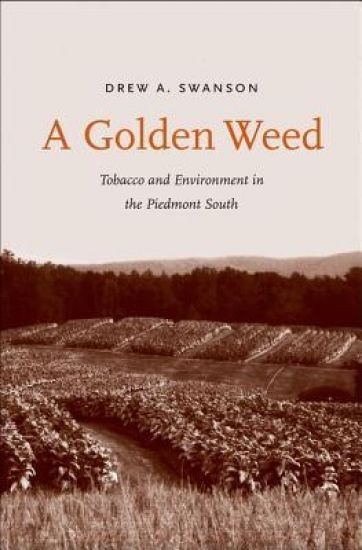
A Golden Weed

A Golden Weed

Drew A. Swanson

Yale University Press
2014
sidottu
An exploration of the rise of the crop strain that came to dominate the American tobacco industry and its toll on the Southern landscape that produced it Drew A. Swanson has written an “environmental” history about a crop of great historical and economic significance: American tobacco. A preferred agricultural product for much of the South, the tobacco plant would ultimately degrade the land that nurtured it, but as the author provocatively argues, the choice of crop initially made perfect agrarian as well as financial sense for southern planters. Swanson, who brings to his narrative the experience of having grown up on a working Virginia tobacco farm, explores how one attempt at agricultural permanence went seriously awry. He weaves together social, agricultural, and cultural history of the Piedmont region and illustrates how ideas about race and landscape management became entangled under slavery and afterward. Challenging long-held perceptions, this innovative study examines not only the material relationships that connected crop, land, and people but also the justifications that encouraged tobacco farming in the region.
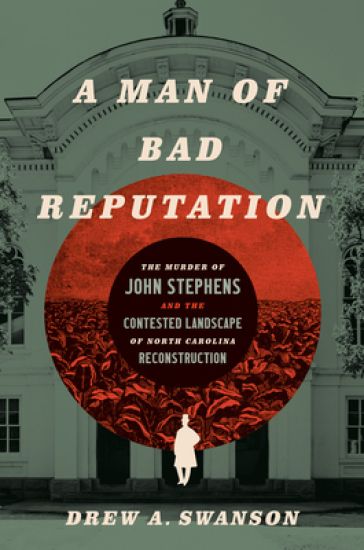
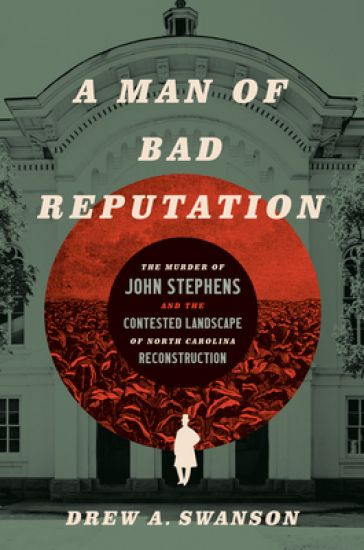
A Man of Bad Reputation

A Man of Bad Reputation

Drew A. Swanson

THE UNIVERSITY OF NORTH CAROLINA PRESS
2023
sidottu
Five years after the Civil War, North Carolina Republican state senator John W. Stephens was found murdered inside the Caswell County Courthouse. Stephens fought for the rights of freedpeople, and his killing by the Ku Klux Klan ultimately led to insurrection, Governor William W. Holden's impeachment, and the early unwinding of Reconstruction in North Carolina. In recounting Stephens's murder, the subsequent investigation and court proceedings, and the long-delayed confessions that revealed what actually happened at the courthouse in 1870, Drew A. Swanson tells a story of race, politics, and social power shaped by violence and profit. The struggle for dominance in Reconstruction-era rural North Carolina, Swanson argues, was an economic and ecological transformation. Arson, beating, and murder became tools to control people and landscapes, and the ramifications of this violence continued long afterward. The failure to prosecute anyone for decades after John Stephens's assassination left behind a vacuum, as each side shaped its own memory of Stephens and his murder. The malleability of and contested storytelling around Stephens's legacy presents a window into the struggle to control the future of the South.
A Man of Bad Reputation

A Man of Bad Reputation

Drew A. Swanson

THE UNIVERSITY OF NORTH CAROLINA PRESS
2023
pokkari
Five years after the Civil War, North Carolina Republican state senator John W. Stephens was found murdered inside the Caswell County Courthouse. Stephens fought for the rights of freedpeople, and his killing by the Ku Klux Klan ultimately led to insurrection, Governor William W. Holden's impeachment, and the early unwinding of Reconstruction in North Carolina. In recounting Stephens's murder, the subsequent investigation and court proceedings, and the long-delayed confessions that revealed what actually happened at the courthouse in 1870, Drew A. Swanson tells a story of race, politics, and social power shaped by violence and profit. The struggle for dominance in Reconstruction-era rural North Carolina, Swanson argues, was an economic and ecological transformation. Arson, beating, and murder became tools to control people and landscapes, and the ramifications of this violence continued long afterward. The failure to prosecute anyone for decades after John Stephens's assassination left behind a vacuum, as each side shaped its own memory of Stephens and his murder. The malleability of and contested storytelling around Stephens's legacy presents a window into the struggle to control the future of the South.
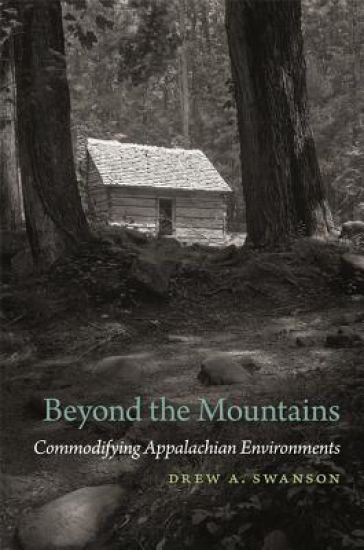
Beyond the Mountains

Beyond the Mountains

Drew A. Swanson

University of Georgia Press
2018
sidottu
Beyond the Mountains explores the ways in which Appalachia often served as a laboratory for the exploration and practice of American conceptions of nature. The region operated alternately as frontier, wilderness, rural hinterland, region of subsistence agriculture, bastion of yeoman farmers, and place to experiment with modernization. In these various takes on the southern mountains, scattered across time and space, both mountain residents and outsiders consistently believed that the region’s environment made Appalachia distinctive, for better or worse.With chapters dedicated to microhistories focused on particular commodities, Drew A. Swanson builds upon recent Appalachian studies scholarship, emphasizing the diversity of a region so long considered a homogenous backwater. While Appalachia has a recognizable and real coherence rooted in folkways, agriculture, and politics (among other things), it is also a region of varied environments, people, and histories. These discrete stories are, however, linked through the power of conceptualizing nature and work together to reveal the ways in which ideas and uses of nature often created a sense of identity in Appalachia. Delving into the environmental history of the region reveals that Appalachian environments, rather than separating the mountains from the broader world, often served to connect the region to outside places.
Beyond the Mountains

Beyond the Mountains

Drew A. Swanson

University of Georgia Press
2018
pokkari
Beyond the Mountains explores the ways in which Appalachia often served as a laboratory for the exploration and practice of American conceptions of nature. The region operated alternately as frontier, wilderness, rural hinterland, region of subsistence agriculture, bastion of yeoman farmers, and place to experiment with modernization. In these various takes on the southern mountains, scattered across time and space, both mountain residents and outsiders consistently believed that the region’s environment made Appalachia distinctive, for better or worse.With chapters dedicated to microhistories focused on particular commodities, Drew A. Swanson builds upon recent Appalachian studies scholarship, emphasizing the diversity of a region so long considered a homogenous backwater. While Appalachia has a recognizable and real coherence rooted in folkways, agriculture, and politics (among other things), it is also a region of varied environments, people, and histories. These discrete stories are, however, linked through the power of conceptualizing nature and work together to reveal the ways in which ideas and uses of nature often created a sense of identity in Appalachia. Delving into the environmental history of the region reveals that Appalachian environments, rather than separating the mountains from the broader world, often served to connect the region to outside places.