Kirjojen hintavertailu. Mukana 11 349 155 kirjaa ja 12 kauppaa.

Kirjahaku

Etsi kirjoja tekijän nimen, kirjan nimen tai ISBN:n perusteella.

14 kirjaa tekijältä Duane W. Roller

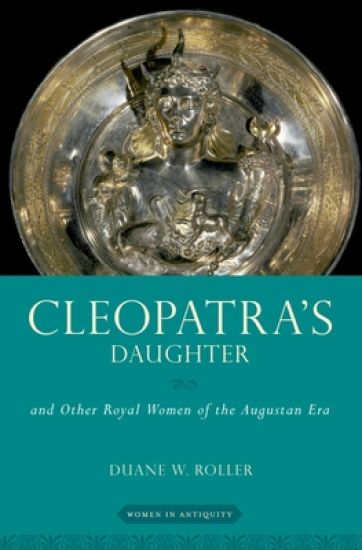
Cleopatra's Daughter

Cleopatra's Daughter

Duane W. Roller

Oxford University Press Inc
2018
sidottu
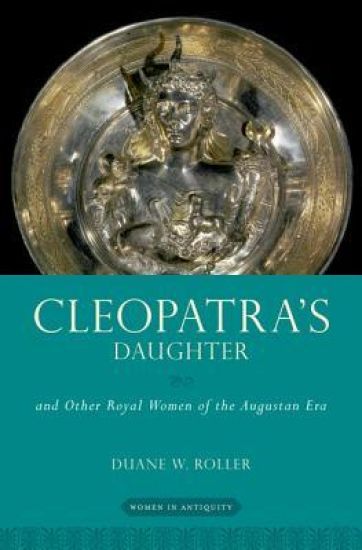
The Roman emperor Augustus gave his name to the age he dominated, from the latter half of the first century BC until the second decade of the following century. Yet he shared the age with several royal women who ruled parts of the Mediterranean world, in a symbiotic relationship with Rome. This book is the first detailed portrait of these remarkable women. Previous accounts of the period have centered on Augustus or Rome's allied kings, with scant attention to the women who ruled as their partners or on their own. The most famous of these is Cleopatra Selene, the daughter of the great Cleopatra VII of Egypt and her partner, the Roman magistrate Marcus Antonius. Her very survival following Roman victory over her mother's forces is itself noteworthy but she went on to rule Mauretania (northwest Africa) with her husband for more than twenty years. She even attempted to reconstitute her mother's legacy in this remote region and, like her mother, was an ardent patron of the arts and scholarship. Other women of note included in this book are Pythodoris of Pontos, who ruled northern Asia Minor for forty years, and Salome of Judaea, the sister of Herod the Great, who, while never queen, exercised significant power for nearly half a century. These and others -- Glaphyra of Cappadocia, Dynamis of Bosporos, Abe of Olbe, and Mousa of Parthia -- were all part of the interrelated dynasties of the Augustan Age. Their values and attitudes toward rule directly affected the emergent Roman imperial system, and their legacy survived for centuries through their descendants and the goals of the royal women of Rome, such as Livia and Octavia, the wife and sister of Augustus. Assimilating all of the historical and archaeological evidence, Cleopatra's Daughter recovers these extraordinary women from the dim shadows of the ancient past.
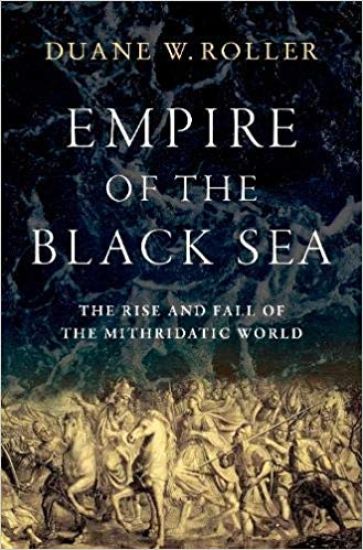
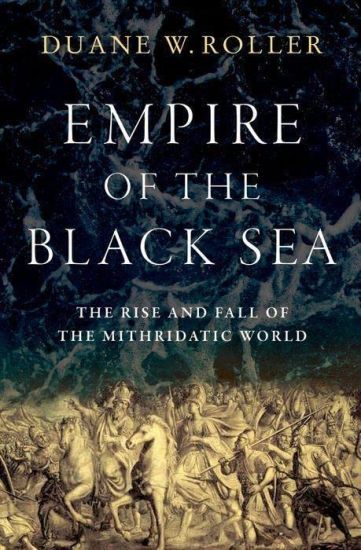
Empire of the Black Sea

Empire of the Black Sea

Duane W. Roller

Oxford University Press Inc
2020
sidottu
What is commonly called the kingdom of Pontos flourished for over two hundred years in the coastal regions of the Black Sea. At its peak in the early first century BC, it included much of the southern, eastern, and northern littoral, becoming one of the most important Hellenistic dynasties not founded by a successor of Alexander the Great. It also posed one of the greatest challenges to Roman imperial expansion in the east. Not until 63 BC, after many violent clashes, was Rome able to subjugate the kingdom and its last charismatic ruler Mithridates VI. This book provides the first general history, in English, of this important kingdom from its mythic origins in Greek literature (e.g., Jason and the Golden Fleece) to its entanglements with the late Roman Republic. Duane Roller presents its rulers and their complex relationships with the powers of the eastern Mediterranean and Near East, most notably Rome. In addition, he includes detailed discussions of Pontos' cultural achievements--a rich blend of Greek and Persian influences — as well as its political and military successes, especially under Mithridates VI, who proved to be as formidable a foe to Rome as Hannibal. Previous histories of Pontos have focused almost exclusively on the career of its last ruler. Setting that famous reign in its wide historical context, Empire of the Black Sea is an engaging and definitive account of a powerful yet little-known ancient dynasty.
Cleopatra's Daughter

Cleopatra's Daughter

Duane W. Roller

OXFORD UNIVERSITY PRESS INC
2021
nidottu
The Roman emperor Augustus gave his name to the age he dominated, from the latter half of the first century BC until the second decade of the following century. Yet he shared the age with several royal women who ruled parts of the Mediterranean world, in a symbiotic relationship with Rome. This book is the first detailed portrait of these remarkable women. Previous accounts of the period have centered on Augustus or Rome's allied kings, with scant attention to the women who ruled as their partners or on their own. The most famous of these is Cleopatra Selene, the daughter of the great Cleopatra VII of Egypt and her partner, the Roman magistrate Marcus Antonius. Her very survival following Roman victory over her mother's forces is itself noteworthy but she went on to rule Mauretania (northwest Africa) with her husband for more than twenty years. She even attempted to reconstitute her mother's legacy in this remote region and, like her mother, was an ardent patron of the arts and scholarship. Other women of note included in this book are Pythodoris of Pontos, who ruled northern Asia Minor for forty years, and Salome of Judaea, the sister of Herod the Great, who, while never queen, exercised significant power for nearly half a century. These and others--Glaphyra of Cappadocia, Dynamis of Bosporos, Abe of Olbe, and Mousa of Parthia-were all part of the interrelated dynasties of the Augustan Age. Their values and attitudes toward rule directly affected the emergent Roman imperial system, and their legacy survived for centuries through their descendants and the goals of the royal women of Rome, such as Livia and Octavia, the wife and sister of Augustus. Assimilating all of the historical and archaeological evidence, Cleopatra's Daughter recovers these extraordinary women from the dim shadows of the ancient past.
The Empire of the Black Sea

The Empire of the Black Sea

Duane W. Roller

OXFORD UNIVERSITY PRESS INC
2023
nidottu
What is commonly called the kingdom of Pontos flourished for over two hundred years in the coastal regions of the Black Sea. At its peak in the early first century BC, it included much of the southern, eastern, and northern littoral, becoming one of the most important Hellenistic dynasties not founded by a successor of Alexander the Great. It also posed one of the greatest challenges to Roman imperial expansion in the east. Not until 63 BC, after many violent clashes, was Rome able to subjugate the kingdom and its last charismatic ruler Mithridates VI. This book provides the first general history, in English, of this important kingdom from its mythic origins in Greek literature (e.g., Jason and the Golden Fleece) to its entanglements with the late Roman Republic. Duane Roller presents its rulers and their complex relationships with the powers of the eastern Mediterranean and Near East, most notably Rome. In addition, he includes detailed discussions of Pontos' cultural achievements--a rich blend of Greek and Persian influences — as well as its political and military successes, especially under Mithridates VI, who proved to be as formidable a foe to Rome as Hannibal. Previous histories of Pontos have focused almost exclusively on the career of its last ruler. Setting that famous reign in its wide historical context, Empire of the Black Sea is an engaging and definitive account of a powerful yet little-known ancient dynasty.
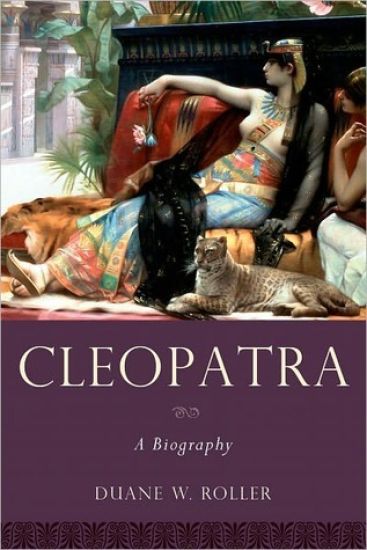
Cleopatra

Cleopatra

Duane W. Roller

Oxford University Press Inc
2012
nidottu
Few personalities from classical antiquity are more famous--yet more poorly understood--than Cleopatra VII, queen of Egypt. In this major biography, Duane Roller reveals that Cleopatra was in fact a learned and visionary leader whose overarching goal was always the preservation of her dynasty and kingdom. Roller's authoritative account is the first to be based solely on primary materials from the Greco-Roman period: literary sources, Egyptian documents (Cleopatra's own writings), and representations in art and coinage produced while she was alive. His compelling portrait of the queen illuminates her prowess as a royal administrator who managed a large and diverse kingdom extending from Asia Minor to the interior of Egypt, as a naval commander who led her own fleet in battle, and as a scholar and supporter of the arts. Even her love affairs with Julius Caesar and Marcus Antonius--the source of her reputation as a supreme seductress who drove men to their doom--were carefully crafted state policies: she chose these partners to insure the procreation of successors who would be worthy of her distinguished dynasty. That Cleopatra ultimately lost to her Roman opponents, Roller contends, in no way diminishes her abilities. "Roller tells his tale smoothly and accessibly....The resulting portrait is that of a complex, many-sided figure, a potent Hellenistic ruler who could move the tillers of power as skillfully as any man, and one far and nobly removed from the 'constructed icon' of popular imagination." --The New York Times Book Review "A rich account of late Ptolemaic culture." --The New Yorker "Offers a superb panorama of the society and culture of late Ptolemaic Egypt, with vivid sketches of the (remarkably vigorous) intellectual life of Cleopatra's Alexandria and the structural instabilities of the late Ptolemaic state." --Times Literary Supplement "Besides providing a compelling story and breathing fresh air into a heretofore two-dimensional caricature from history, Roller's 'Cleopatra' provides an interesting commentary on the attitudes still prevalent towards women who rule." --Christian Science Monitor
Three Ancient Geographical Treatises in Translation
This volume is a translation and commentary on the works of three geographers from Greco-Roman antiquity: Hanno of Carthage, from around 500 BC; the author of the Periodos Dedicated to King Nikomedes, from the last half of the second century BC; and Avienus, from the fourth century AD.The modern translations of texts in this book represent 1,000 years of Greco-Roman geographical scholarship, and thus provide an overview of the discipline from its beginnings to late antiquity. Readers will learn about the development of Greek geography, and the earliest adventures outside the Mediterranean into the Atlantic, as far south as the tropics and north toward the Arctic. These explorations make for fascinating stories about early human endeavors into an unknown world.Three Ancient Geographical Treatises in Translation offers specialists new information about Greek exploration and a modern translation of significant ancient texts, while non-specialist scholars and undergraduate students with an interest in Greco-Roman literature and ancient geography will also find the volume useful and accessible.
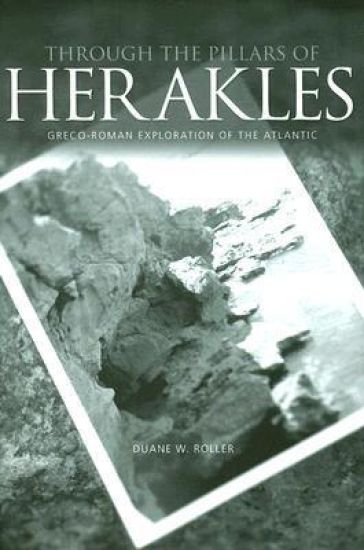
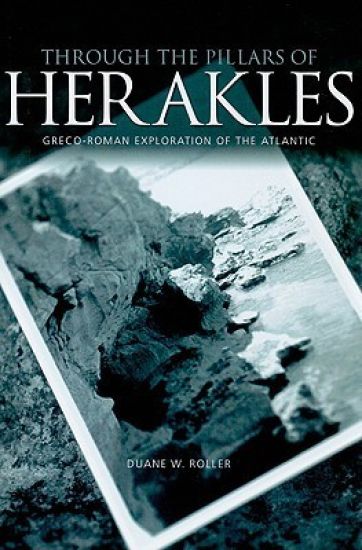
Through the Pillars of Herakles

Through the Pillars of Herakles

Duane W. Roller

Routledge
2005
sidottu
In this first study of the Greek and Roman exploration for over half a century, Duane W. Roller presents an important examination of the impact of the Greeks and Romans on the world through the Pillars of Herakles and beyond the Mediterranean.Roller chronicles a detailed account of the series of explorers who were to discover the entire Atlantic coast; north to Iceland, Scandinavia and the Baltic, and south into the Africa tropics. His account examines these early pioneers and their discoveries, and contributes a brand new chapter to the history of exploration. Based not only on the literary evidence, but also personal knowledge of the areas from the Arctic to west Africa, the book looks at the people, from the earliest Greeks, through the Carthaginians to the Romans, and examines their exploration of this vast and largely unfamiliar territory.Discussing for the first time the relevance of Iceland and the Arctic to Greco-Roman culture, this groundbreaking work is an enthralling and informative read that will be an invaluable study resource for Greek and Roman history courses
Through the Pillars of Herakles

Through the Pillars of Herakles

Duane W. Roller

Routledge
2008
nidottu
In this first study of the Greek and Roman exploration for over half a century, Duane W. Roller presents an important examination of the impact of the Greeks and Romans on the world through the Pillars of Herakles and beyond the Mediterranean.Roller chronicles a detailed account of the series of explorers who were to discover the entire Atlantic coast; north to Iceland, Scandinavia and the Baltic, and south into the Africa tropics. His account examines these early pioneers and their discoveries, and contributes a brand new chapter to the history of exploration. Based not only on the literary evidence, but also personal knowledge of the areas from the Arctic to west Africa, the book looks at the people, from the earliest Greeks, through the Carthaginians to the Romans, and examines their exploration of this vast and largely unfamiliar territory.Discussing for the first time the relevance of Iceland and the Arctic to Greco-Roman culture, this groundbreaking work is an enthralling and informative read that will be an invaluable study resource for Greek and Roman history courses
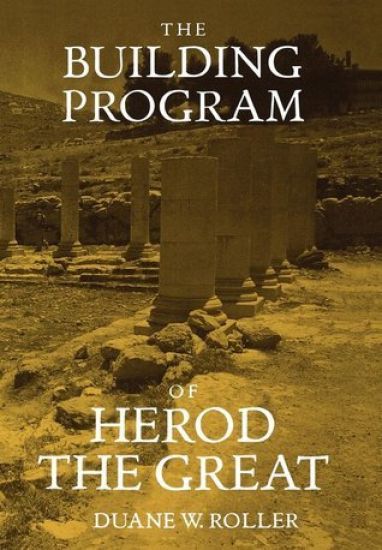
The Building Program of Herod the Great

The Building Program of Herod the Great

Duane W. Roller

University of California Press
1998
sidottu
Herod the Great, King of Judaea from 444 B.C., is known as one of the world's great villains. This notoriety has overshadowed his actual achievements, particularly his role as a client king of Rome during Augustus's reign as emperor. An essential aspect of Herod's responsibilities as king of Judaea was his role as a builder. Remarkably innovative, he created an astonishing record of architectural achievement, not only in Judaea but also throughout Greece and the Roman east. Duane W. Roller systematically presents and discusses all the building projects known to have been initiated by Herod, and locates this material in a broad historical and cultural context. Bringing together previously inaccessible material, Roller enriches our understanding of the enigmatic Herod and provides new insights into Roman architecture. Herod was instrumental in the diffusion of the Augustan architectural revolution into the provinces and was the first to build outside Italy such Italian architectural forms as the basilica, amphitheater, villa, and Italian temple. Herod's legacy provided a groundwork for the architectural Romanization of the east, influencing the construction of the great temple complexes and palaces so familiar from later Roman architecture. Herod, like Augustus himself, was not only interested in architecture but also in diplomatic and financial contacts among cities of the region. In addition to providing a repertorium of the building projects, this study is also an exploration of international relations in the eastern Mediterranean at the beginning of the Roman imperial period.
Three Ancient Geographical Treatises in Translation
This volume is a translation and commentary on the works of three geographers from Greco-Roman antiquity: Hanno of Carthage, from around 500 BC; the author of the Periodos Dedicated to King Nikomedes, from the last half of the second century BC; and Avienus, from the fourth century AD.The modern translations of texts in this book represent 1,000 years of Greco-Roman geographical scholarship, and thus provide an overview of the discipline from its beginnings to late antiquity. Readers will learn about the development of Greek geography, and the earliest adventures outside the Mediterranean into the Atlantic, as far south as the tropics and north toward the Arctic. These explorations make for fascinating stories about early human endeavors into an unknown world.Three Ancient Geographical Treatises in Translation offers specialists new information about Greek exploration and a modern translation of significant ancient texts, while non-specialist scholars and undergraduate students with an interest in Greco-Roman literature and ancient geography will also find the volume useful and accessible.
The Geographical Guide of Ptolemy of Alexandria

The Geographical Guide of Ptolemy of Alexandria

Duane W. Roller

TAYLOR FRANCIS LTD
2023
sidottu
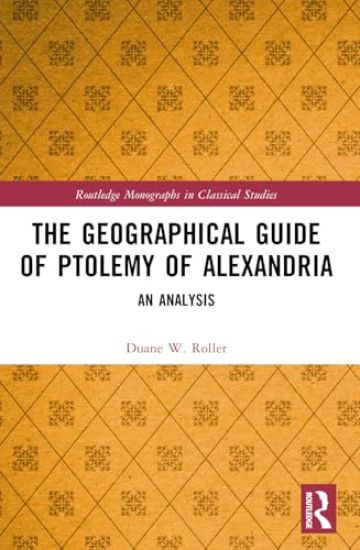
This volume offers a detailed study of Ptolemy of Alexandria’s Geographical Guide, whose eight books contain a wealth of geographical information unavailable elsewhere and represent the culmination of the Greco-Roman discipline of geography.Written near the middle of the second century ad, the Geographical Guide is the most anomalous of the surviving works of ancient geographical scholarship but offers a vivid record of the expansion of geographical knowledge in antiquity. Roller examines this peculiar text, which offers unique data about explorations in the far reaches of the inhabited world, from Thoule and Hibernia in the northwest to Kattigara in the southeast, and from Serike in northeastern Asia southwest into central Africa. He positions the Guide within the tradition of ancient geography and gives close attention to the reason why Ptolemy wrote the guide and how it contributes to the genre of geographical scholarship. There is also an emphasis on the topographic and ethnic material within the Guide that is new or unique, especially explorations in sub-Saharan Africa and knowledge of the world beyond India. Because the Guide was written over half a century after the previous extant geographical work—the first books of Pliny’s Natural History—the book also assesses how knowledge of geography changed during this period.This work is an essential text for students and scholars of ancient geography, and is also of interest to anyone working on the cultural history of the Roman Empire during this period.
The Geographical Guide of Ptolemy of Alexandria

The Geographical Guide of Ptolemy of Alexandria

Duane W. Roller

TAYLOR FRANCIS LTD
2025
nidottu
This volume offers a detailed study of Ptolemy of Alexandria’s Geographical Guide, whose eight books contain a wealth of geographical information unavailable elsewhere and represent the culmination of the Greco-Roman discipline of geography.Written near the middle of the second century ad, the Geographical Guide is the most anomalous of the surviving works of ancient geographical scholarship but offers a vivid record of the expansion of geographical knowledge in antiquity. Roller examines this peculiar text, which offers unique data about explorations in the far reaches of the inhabited world, from Thoule and Hibernia in the northwest to Kattigara in the southeast, and from Serike in northeastern Asia southwest into central Africa. He positions the Guide within the tradition of ancient geography and gives close attention to the reason why Ptolemy wrote the guide and how it contributes to the genre of geographical scholarship. There is also an emphasis on the topographic and ethnic material within the Guide that is new or unique, especially explorations in sub-Saharan Africa and knowledge of the world beyond India. Because the Guide was written over half a century after the previous extant geographical work—the first books of Pliny’s Natural History—the book also assesses how knowledge of geography changed during this period.This work is an essential text for students and scholars of ancient geography, and is also of interest to anyone working on the cultural history of the Roman Empire during this period.
A Historical and Topographical Guide to the Geography of Strabo
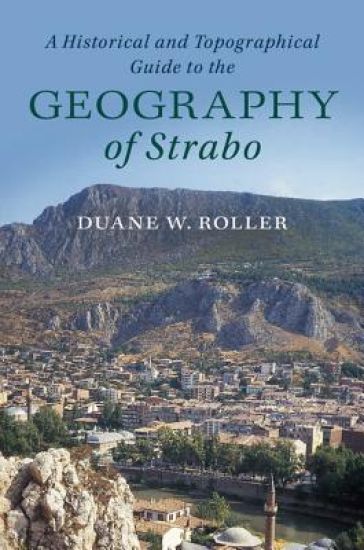
Strabo's Geography, completed in the early first century AD, is the primary source for the history of Greek geography. This Guide provides the first English analysis of and commentary on this long and difficult text, and serves as a companion to the author's The Geography of Strabo, the first English translation of the work in many years. It thoroughly analyzes each of the seventeen books and provides perhaps the most thorough bibliography as yet created for Strabo's work. Careful attention is paid to the historical and cultural data, the thousands of toponyms, and the many lost historical sources that are preserved only in the Geography. This volume guides readers through the challenges and complexities of the text, allowing an enhanced understanding of the numerous topics that Strabo covers, from the travels of Alexander and the history of the Mediterranean to science, religion, and cult.
A Historical and Topographical Guide to the Geography of Strabo
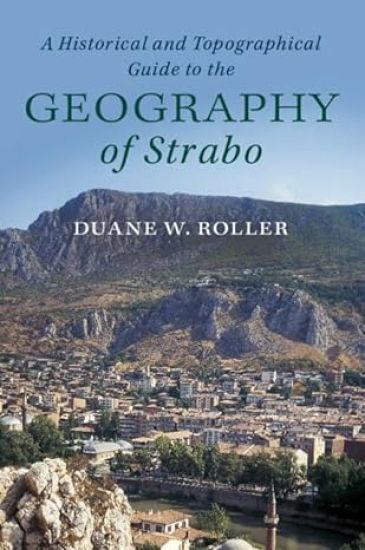
Strabo's Geography, completed in the early first century AD, is the primary source for the history of Greek geography. This Guide provides the first English analysis of and commentary on this long and difficult text, and serves as a companion to the author's The Geography of Strabo, the first English translation of the work in many years. It thoroughly analyzes each of the seventeen books and provides perhaps the most thorough bibliography as yet created for Strabo's work. Careful attention is paid to the historical and cultural data, the thousands of toponyms, and the many lost historical sources that are preserved only in the Geography. This volume guides readers through the challenges and complexities of the text, allowing an enhanced understanding of the numerous topics that Strabo covers, from the travels of Alexander and the history of the Mediterranean to science, religion, and cult.