Kirjojen hintavertailu. Mukana 11 244 527 kirjaa ja 12 kauppaa.

Kirjahaku

Etsi kirjoja tekijän nimen, kirjan nimen tai ISBN:n perusteella.

4 kirjaa tekijältä Dudley Andrew

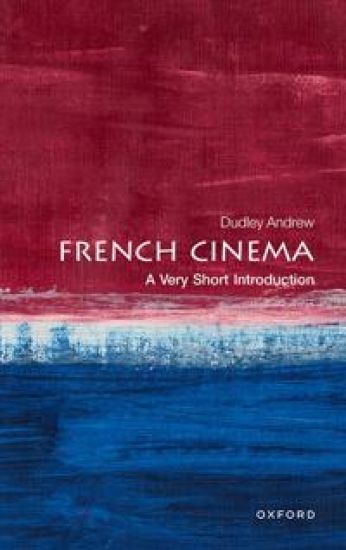
French Cinema

French Cinema

Dudley Andrew

Oxford University Press
2023
nidottu
It is often claimed that the French invented cinema. Dominating the production and distribution of cinema until World War 1, when they were supplanted by Hollywood, the French cinema industry encompassed all genres, from popular entertainment to avant-garde practice. The French invented the "auteur" and the "ciné-club"; they incubated criticism from the 1920s to our own day that is unrivalled; and they boast more film journals, fan magazines, TV shows, and festivals devoted to film than anywhere else. This Very Short Introduction opens up French cinema through focusing on some of its most notable works, using the lens of the New Wave decade (1958-1968) that changed cinema worldwide. Exploring the entire French cinematic oeuvre, Dudley Andrew teases out distinguishing themes, tendencies, and lineages, to bring what is most crucial about French Cinema into alignment. He discusses how style has shaped the look of female stars and film form alike, analysing the "made up" aesthetic of many films, and the paradoxical penchant for French cinema to cruelly unmask surface beauty in quests for authenticity. Discussing how French cinema as a whole pits strong-willed characters against auteurs with high-minded ideas of film art, funded by French cinema's close rapport to literature, painting, and music, Dudley considers how the New Wave emerged from these struggles, becoming an emblem of ambition for cinema that persists today. He goes on to show how the values promulgated by the New Wave directors brought the three decades that preceded it into focus, and explores the deep resonance of those values today, fifty years later. ABOUT THE SERIES: The Very Short Introductions series from Oxford University Press contains hundreds of titles in almost every subject area. These pocket-sized books are the perfect way to get ahead in a new subject quickly. Our expert authors combine facts, analysis, perspective, new ideas, and enthusiasm to make interesting and challenging topics highly readable.
André Bazin

André Bazin

Dudley Andrew

Oxford University Press Inc
2013
nidottu
André Bazin, often dubbed the father of the French New Wave, has had an immense impact on film art. He is credited with almost single-handedly establishing the study of film as an accepted intellectual pursuit. The journal that he founded in 1951, Cahiers du Cinéma, remains the most influential archive of cinema criticism. He remains one of the most read, most studied, and most engaging figures ever to have written about film. The last few years have witnessed a massive resurgence of interest in Bazin among critics, scholars, and students of every persuasion. His writings, a mainstay of film theory courses, are now finding a place on the syllabi of core courses in film history, criticism, and appreciation. Andrew's intellectual biography is a landmark in film scholarship.
Mists of Regret

Mists of Regret

Dudley Andrew

Princeton University Press
1995
pokkari
Just before World War II, French cinema reached a high point that has been dubbed the style of "poetic realism." Working with unforgettable actors like Jean Gabin and Arletty, directors such as Renoir, Carne, Gremillon, Duvivier, and Chenal routinely captured the prizes for best film at every festival and in every country, and their accomplishments led to general agreement that the French were the first to give maturity to the sound cinema. Here the distinguished film scholar Dudley Andrew examines the motivations and consequences of these remarkable films by looking at the cultural web in which they were made. Beyond giving a rich view of the life and worth of cinema in France, Andrew contributes substantially to our knowledge of how films are dealt with in history. Where earlier studies have treated the masterpieces of this era either in themselves or as part of the vision of their creators, and where certain recent scholars have reacted to this by dissolving the masterpieces back into the system of entertainment that made them possible, Andrew stresses the dialogue of culture and cinema. In his view, the films open questions that take us into the culture, while our understanding of the culture gives energy, direction, and consequence to our reading of the films. The book demonstrates the value of this hermeneutic approach for one set of texts and one period, but it should very much interest film theorists and film historians of all sorts.
What Cinema Is!

What Cinema Is!

Dudley Andrew

Wiley-Blackwell (an imprint of John Wiley Sons Ltd)
2010
nidottu
What Cinema Is! offers an engaging answer to Andre Bazin's famous question, exploring his 'idea of cinema' with a sweeping look back at the near century of Cinema's phenomenal ascendancy. Written by one of the foremost film scholars of our timeEstablishes cinema's distinction from the current enthusiasm over audio-visual entertainment, without relegating cinema to a single, older modeExamines cinema's institutions and its social force through the qualities of key filmsTraces the history of an idea that has made cinema supremely alive to (and in) our times