Kirjojen hintavertailu. Mukana 12 016 292 kirjaa ja 12 kauppaa.

Kirjahaku

Etsi kirjoja tekijän nimen, kirjan nimen tai ISBN:n perusteella.

13 kirjaa tekijältä Duncan Green

How Change Happens

How Change Happens

Duncan Green

Oxford University Press
2016
sidottu
Human society is full of would-be 'change agents', a restless mix of campaigners, lobbyists, and officials, both individuals and organizations, set on transforming the world. They want to improve public services, reform laws and regulations, guarantee human rights, get a fairer deal for those on the sharp end, achieve greater recognition for any number of issues, or simply be treated with respect. Striking then, that not many universities have a Department of Change Studies, to which social activists can turn for advice and inspiration. Instead, scholarly discussions of change are fragmented with few conversations crossing disciplinary boundaries, rarely making it onto the radars of those actively seeking change. This book bridges the gap between academia and practice, bringing together the best research from a range of academic disciplines and the evolving practical understanding of activists to explore the topic of social and political change. Drawing on many first-hand examples from the global experience of Oxfam, one of the world's largest social justice NGOs, as well as the author's insights from studying and working on international development, it tests ideas on How Change Happens and offers the latest thinking on what works to achieve progressive change. This is an open access title available under the terms of a CC BY-NC-ND 4.0 International licence. It is available as a free PDF download from OUP and selected open access locations.
How Change Happens

How Change Happens

Duncan Green

Oxford University Press
2018
nidottu
Society is full of would-be 'change agents'-campaigners, government officials, enlightened business people, engaged intellectuals-set on improving public services, reforming laws and regulations, guaranteeing human rights, achieving a fairer deal for those on the sharp end, and greater recognition for any number of issues. Drawing on many first-hand examples and numerous new case studies and interviews with grassroots activists and organizations around the world, as well as Oxfam's unrivalled global experience, this important book answers the question: how does change happen and how can we-governments, organizations, businesses, leaders, campaigners, employees, and ordinary citizens-make a difference?
How Change Happens

How Change Happens

Duncan Green

Oxford University Press
2024
nidottu
Human society is full of would-be 'change agents', a restless mix of campaigners, lobbyists and officials, both individuals and organizations, set on transforming the world. They want to improve public services, reform laws and regulations, guarantee human rights, get a fairer deal for those on the sharp end, and achieve greater recognition for any number of issues or simply be treated with respect. It is striking then, that universities have no Department of Change Studies, to which social activists can turn for advice and inspiration. Instead, scholarly discussions of change are fragmented with few conversations crossing disciplinary boundaries, or making it onto the radars of those actively seeking change. How Change Happens bridges the gap between academia and practice, bringing together the best research from a range of academic disciplines and the evolving practical understanding of activists to explore the topic of social and political change. Drawing on many first-hand examples from the global experience of Oxfam, one of the world's largest social justice NGOs, as well as the author's 40 years of studying and working on international development, it tests ideas and sets out the latest thinking on what works to achieve progressive change. This second edition adds a chapter by the LSE's Dr Tom Kirk on the rising importance of digital technology in activism, and analyses the implications of some of the darker currents of populism and shrinking civic space for those trying to bring about positive change. This is an open access title available under the terms of a [CC BY-NC-ND 4.0 International] licence. It is free to read at Oxford Scholarship Online and offered as a free PDF download from OUP and selected open access locations.
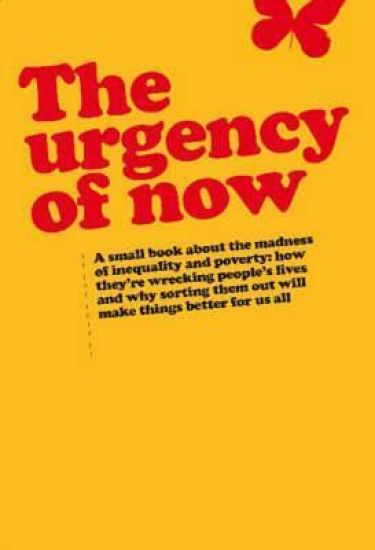
Urgency of Now

Urgency of Now

Duncan Green

Oxfam
2008
nidottu
We are confronted with the fierce urgency of now. Human progress is neither automatic nor inevitable...Over the bleached bones and jumbled residues of numerous civilizations are written the pathetic words: too late; Martin Luther King Jr It;s time to take a new look at how to change the world. Many people taking individual actions; signing a petition, giving to charity, recycling,; is important. But can it really make the difference needed to combat injustice and control a rapidly changing climate? Who really has the power to change the world? And what can you really do to help? This little book sets out some of the biggest challenges facing the world today and shows you how to use the power you have in the fight for positive change. It invites you to become part of a movement of people who believe that inequality can and should be challenged. Before its too late. The urgency of now is essential reading for development, international politics, economics, and business students, activists and campaigners, and anyone interested in globalisation or development issues. In fact it's for anyone with a questioning mind.The urgency of now is based on analysis and arguments presented in Oxfam Internationals flagship publication,
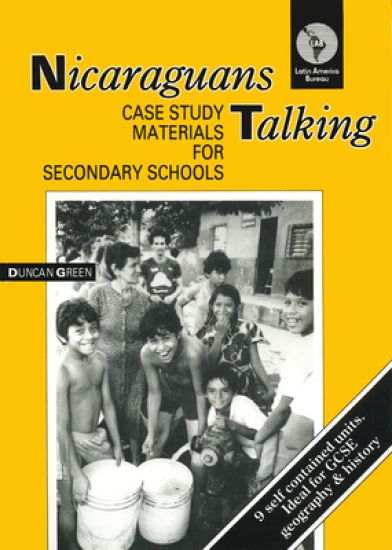
Nicaraguans Talking

Nicaraguans Talking

Duncan Green

Latin America Bureau
1990
nidottu
After the 1979 revolution, many Nicaraguans became involved in the search for a way out of underdevelopment and the Somoza dictatorship's legacy. Designed for GCSE and Standard Grade, this work explores these issues through the eyes of ordinary people of all ages.
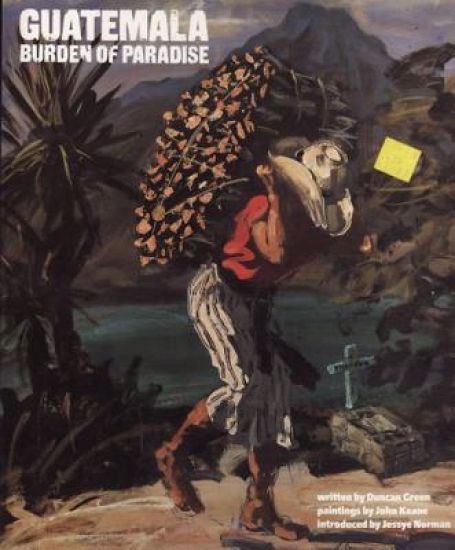
Guatemala: Burden of Paradise

Guatemala: Burden of Paradise

Duncan Green

Latin America Bureau
1992
nidottu
Interweaving reportage, interview and analysis, this work provides an overview of Guatemala, its resilience and its suffering. It explores poverty and inequality, the guerilla war and the role of the military, and human rights abuses, especially under the curent government. It also examines the impact of political violence on Guatemala's writers, artists and indigenous culture.
The Gospal Of Narada

The Gospal Of Narada

Duncan Green

Hassell Street Press
2021
sidottu
This work has been selected by scholars as being culturally important and is part of the knowledge base of civilization as we know it.This work is in the public domain in the United States of America, and possibly other nations. Within the United States, you may freely copy and distribute this work, as no entity (individual or corporate) has a copyright on the body of the work.Scholars believe, and we concur, that this work is important enough to be preserved, reproduced, and made generally available to the public. To ensure a quality reading experience, this work has been proofread and republished using a format that seamlessly blends the original graphical elements with text in an easy-to-read typeface.We appreciate your support of the preservation process, and thank you for being an important part of keeping this knowledge alive and relevant.
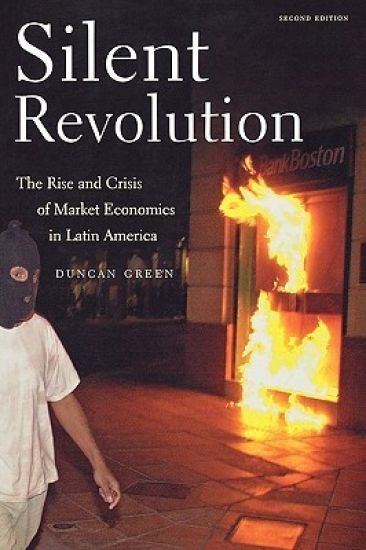
Silent Revolution

Silent Revolution

Duncan Green

New York University Press
2003
pokkari
Throughout the 1990s Latin America was seen as the poster child of neoliberalism, as governments opened their economies to imports, slashed social spending, and gave priority to attracting foreign investment. In the process, runaway inflation was held in check and currencies stabilized. But this was done at huge environmental and human cost. Global corporations and small elite in Latin America grew rich, but the bulk of the population suffered. The first edition of Green's Silent Revolution, published in 1995, described the imposition of neoliberal economic models in Latin America, the role of the IMF and World Bank in enforcing them, and their consequences. This second, revised and updated edition makes clear that the "miracle" of the 1990s has come to an end. Green extends his analysis into the present, showing how the economic meltdown that is now taking place in Latin America was prepared by an economic strategy that could never live up to its own claims. This new edition was completed in a moment when the Argentinian economy is in ruins, Brazil is on the brink of collapse, riots are taking place in Uruguay, Peru, and Paraguay, a U.S. supported coup has just been averted in Venezuela. It will be an essential work for understanding ongoing developments in the region.
From Poverty to Power

From Poverty to Power

Duncan Green

Practical Action Publishing
2012
sidottu
Seismic events have convulsed global markets since 2008, when this book was first published, and world news has been full of stories reflecting a profound sense of uncertainty about global futures. In response, this new edition of From Poverty to Power has been fully revised and now includes a new chapter with an in-depth analysis of the human impact of the global financial and food crises. From Poverty to Power argues that a radical redistribution of power, opportunities, and assets rather than traditional models of charitable or government aid is required to break the cycle of poverty and inequality. The forces driving this transformation are active citizens and effective states. Why active citizens? Because people living in poverty must have a voice in deciding their own destiny and holding the state and the private sector to account. Why effective states? Because history shows that no country has prospered without a state structure that can actively manage the development process. There is now an added urgency: climate change. We need to build a secure, fair, and sustainable world within the limits set by scarce resources and ecological realities.Published in association with Oxfam GB.
From Poverty to Power

From Poverty to Power

Duncan Green

Practical Action Publishing
2012
nidottu
Seismic events have convulsed global markets since 2008, when this book was first published, and world news has been full of stories reflecting a profound sense of uncertainty about global futures. In response, this new edition of From Poverty to Power has been fully revised and now includes a new chapter with an in-depth analysis of the human impact of the global financial and food crises. From Poverty to Power argues that a radical redistribution of power, opportunities, and assets rather than traditional models of charitable or government aid is required to break the cycle of poverty and inequality. The forces driving this transformation are active citizens and effective states. Why active citizens? Because people living in poverty must have a voice in deciding their own destiny and holding the state and the private sector to account. Why effective states? Because history shows that no country has prospered without a state structure than can actively manage the development process. There is now an added urgency: climate change. We need to build a secure, fair, and sustainable world within the limits set by scarce resources and ecological realities.
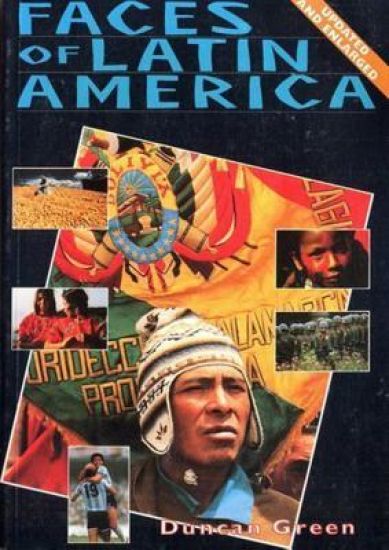
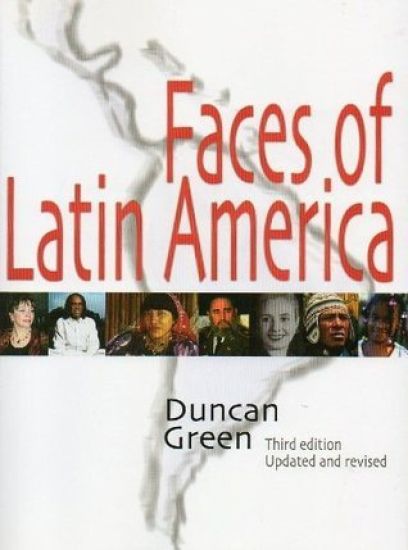
Faces of Latin America 3rd Edition

Faces of Latin America 3rd Edition

Duncan Green

Latin America Bureau
2005
nidottu
A timely update of the most authoritative and popular textbook currently available on the region in the UK, this third edition of our bestselling title outlines the recent exciting developments of the most dynamic region in the developing world. The resurgence of left-wing politics, the continuing struggle between indigenous peoples and the interests of global capital, on-going environmental struggles which have major implications for the rest of the world - all described in Green's accessible and authoritative style. This third edition has been extensively updated and enlarged, with new sections on indigenous protest and social movements, the environment, democratisation, corruption, and the rise of the new left.