Kirjahaku
Etsi kirjoja tekijän nimen, kirjan nimen tai ISBN:n perusteella.
5 kirjaa tekijältä Duncan Lunan
A collection of short science-fiction tales by the great Duncan Lunan, collected for the first time.Born in 1945, Duncan Lunan has been a full time author, researcher, lecturer, broadcaster, editor, critic and tutor since 1970, specialising in astronomy, spaceflight and science fiction. He has published 9 books to date and contributed to 36 more, with 36 previously published stories and over 1500 articles. He was science fiction critic of the Glasgow Herald from 1971 to 1985, and ran the paper's SF and fantasy short story competition from 1986 to 1992. As Manager of the Glasgow Parks Department's Astronomy Project in 1978-79, he built the first astronomically aligned stone circle in Britain for over 3000 years (recreated at a new site in 2019); he was on the management committee of Airdrie Public Observatory from 1977 to 2008, serving as a curator for 181/2 years, and ran the North Lanarkshire Astronomy Project 2006-2009. Currently he is Treasurer of the educational charity ACTA SCIO, co-editor of its magazine Space and Scotland, and Past Chair of the Astronomers of the Future Club in his home town of Troon, to which he returned with his wife Linda in 2012. His monthly astronomy column 'The Sky Above You' appears in various newspapers and magazines.Illustrations by Sydney Jordan, creator of Jeff Hawke for the Daily Express and Lance McLane for the Daily Record. Lance McLane was syndicated overseas as a new version of Jeff Hawke, making Hawke the world's longest-running science fiction comic strip, 1954-1988, with 10 stories written fully, in part or suggested by Duncan Lunan. Sydney provided the covers for Duncan's books Children from the Sky, Starfield and The Elements of Time, illustrated all the stories in The Elements of Time and contributed illustrations to Children from the Sky, Duncan's most recent nonfiction book, Incoming Asteroid What Could We Do About It?, as well to From the Moon to the Stars, the predecessor to this book.
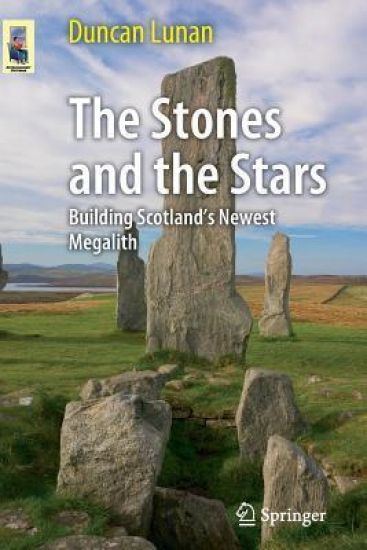
There are at least 48 identified prehistoric stone circles in Scotland. In truth, very little is known about the people who erected them, and ultimately about what the stone circles were for. Most stone circles are astronomically aligned, which has led to the modern debate about why the alignment was significant. The megaliths certainly represented an enormous co-operative effort, would at the very least have demonstrated power and wealth, and being set away from any dwellings probably served a ceremonial, or perhaps religious, purpose. Observations at the site of the stone circles, of solar, lunar, and stellar events, have already cast light on some of the questions about the construction and use of ancient megalithic observatories. In his capacity as manager of the Parks Department Astronomy Project, author Duncan Lunan designed and built the first astronomically aligned stone circle in Britain in over 3,000 years. 'The Stones and the Stars' examines the case for astronomical alignments of stone circles, and charts the development of a fascinating project with a strong scientific and historical background. The work was documented in detail by the artist and photographer Gavin Roberts, and this archive has been added to since - so an appropriate selection of illustrations will bring the project vividly to life.
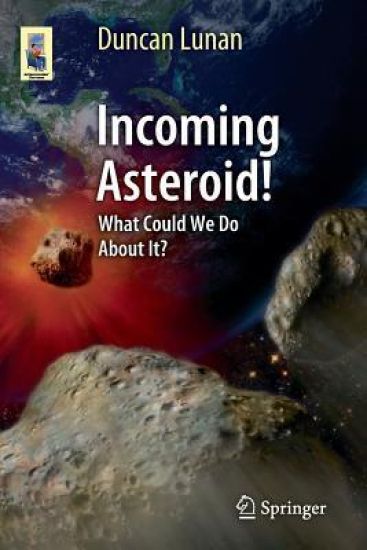
‘Incoming Asteroid!’ is based on a project within ASTRA (the Association in Scotland to Research into Astronautics) to provide scientific answers to the question – what would we do if we knew there was going to be an asteroid impact in ten years’ time or less? Clearly there are many things humanity can do nothing about, for example an unseen object traveling towards us so fast that we have no time to prepare, or an object so large it may be unstoppable. A realistic hazard model was decided upon, and the scenario developed from that: an incoming object about 1 kilometer in diameter, in an orbit ranging from the outer rim of the Asteroid Belt to within that of Earth’s. Three basic possibilities are considered in this book. The first is the deflection of the asteroid, using remote probes along with a number of possible technologies to change the asteroid’s course. Second is the attempt of a manned mission, in order to plant a propulsion system on the asteroid to push it into a different orbit. Third is the nuclear option, a last-ditch attempt to break up and then disperse the asteroid using nuclear weapons. (A rather impractical combination of these second and third options were used as the plot of the popular 1998 Bruce Willis feature film, Armageddon.) Although the cost of developing the technology needed to protect the Earth would be substantial, there would certainly be spin-off benefits. These could eventually result in practical small-scale atomic energy sources, new propulsion systems that could make extraterrestrial mining within the solar system a possibility, and other as-yet unforeseen benefits.And finally, Incoming Asteroid! considers the political implications - how governments across the world should best react to the threat with a view to minimizing loss of life, and in the weeks running up to the possible impact, preventing panic in the population.