Kirjojen hintavertailu. Mukana 12 016 292 kirjaa ja 12 kauppaa.

Kirjahaku

Etsi kirjoja tekijän nimen, kirjan nimen tai ISBN:n perusteella.

12 kirjaa tekijältä Duncan McCargo

Contemporary Japan

Contemporary Japan

Duncan McCargo

Red Globe Press
2012
sidottu
Japan is one of the world's most important societies, yet remains one of the least understood. This book is designed to fill the gap for a concise but thought-provoking introduction to all aspects of the country's political, economic and social life set in a clear historical context.The author's starting-point is that the study of Japan is 'contested territory' where even such apparently simple questions such as 'Who is in charge?' spark considerable disagreement and controversy among experts. To understand contemporary Japan, Duncan McCargo argues, it is necessary to get to grips with a range of different perspectives on Japanese political and social structures. Integrating contrasting perspectives throughout, the core chapters of the book focus on the changing economy, government and politics, society and culture, and Japan's place in the wider world.The new third edition of this popular text has been fully revised and updated throughout to cover key developments such as the historic end of LDP rule in 2009. This accessible and lively book will be essential reading both for students and general readers who want to know more about this important country.
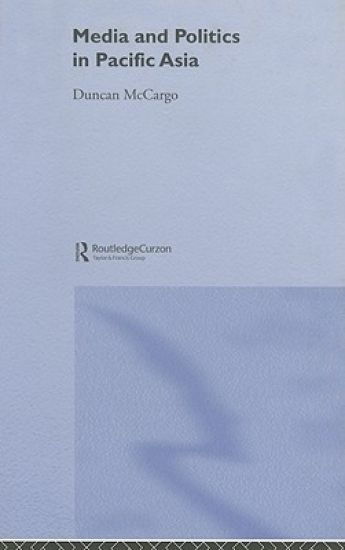
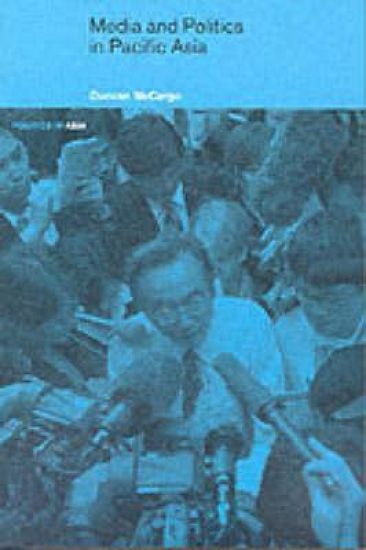
Media and Politics in Pacific Asia

Media and Politics in Pacific Asia

Duncan McCargo

Routledge
2002
sidottu
Media and Politics in Pacific Asia is the first book to provide a detailed account of the political influences exerted by both domestic and international media in Pacific Asia. Duncan McCargo argues that the media are political actors and institutions in their own right, and that as such they can play a variety of political roles, some of which support processes of demographic transition and consolidation, and some which do just the opposite.Drawing on first-hand research in Hong Kong, Indonesia, Japan and Thailand - and employing comparative examples that include Burma, Malaysia and the Phillipines - Duncan McCargo examines the various influences of the Media as agents of stability, restraint and change. He also analyses pressures on the media from a range of state, non-state and market forces, and sets out to problematize simplistic readings of issues such as media freedom, ownership, partisanship, profitability, regulation and public interest. The result is an in-depth and fascinating study of the interplay between the media and the political process.Written in a clear and accessible style with numerous examples, this highly original book will be useful to academics, students, journalists, and general readers interested in Asian studies, media and politics.
Media and Politics in Pacific Asia

Media and Politics in Pacific Asia

Duncan McCargo

Routledge
2002
nidottu
Media and Politics in Pacific Asia is the first book to provide a detailed account of the political influences exerted by both domestic and international media in Pacific Asia. Duncan McCargo argues that the media are political actors and institutions in their own right, and that as such they can play a variety of political roles, some of which support processes of demographic transition and consolidation, and some which do just the opposite.Drawing on first-hand research in Hong Kong, Indonesia, Japan and Thailand - and employing comparative examples that include Burma, Malaysia and the Phillipines - Duncan McCargo examines the various influences of the Media as agents of stability, restraint and change. He also analyses pressures on the media from a range of state, non-state and market forces, and sets out to problematize simplistic readings of issues such as media freedom, ownership, partisanship, profitability, regulation and public interest. The result is an in-depth and fascinating study of the interplay between the media and the political process.Written in a clear and accessible style with numerous examples, this highly original book will be useful to academics, students, journalists, and general readers interested in Asian studies, media and politics.
Politics and the Press in Thailand

Politics and the Press in Thailand

Duncan McCargo

Routledge
2000
sidottu
This is the first book in the English language to examine the tangled web of relationships linking newspaper owners, editors and reporters, with leading politicians and power-holders. Duncan McCargo has been granted unique access to the editorial meetings of Thailand's leading newspapers, and drawing on this, the book uncovers the contradictions and dichotomies which underlie political coverage in the Thai press.
Rethinking Vietnam

Rethinking Vietnam

Duncan McCargo

Routledge
2004
sidottu
A uniquely comprehensive overview of a fascinating and rapidly changing country, dealing with the politics, economics, society and foreign policy of Vietnam from the Doi Moi reforms of market socialism in 1986 to the present day. Drawing on fieldwork and analysis by an international team of specialists this book covers all aspects of contemporary Vietnam including recent history, the political economy, the reform process, education, health, labour market, foreign direct investment and foreign policy. The contributors show how the blurring of old and new pressures and traditions within Vietnam requires a more complex analysis of the country than might initially be assumed.
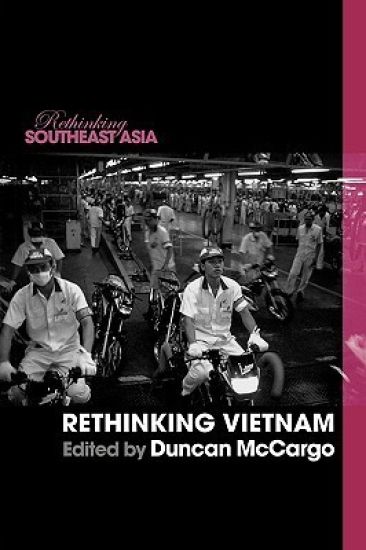
Rethinking Vietnam

Rethinking Vietnam

Duncan McCargo

Routledge
2004
nidottu
A uniquely comprehensive overview of a fascinating and rapidly changing country, dealing with the politics, economics, society and foreign policy of Vietnam from the Doi Moi reforms of market socialism in 1986 to the present day. Drawing on fieldwork and analysis by an international team of specialists this book covers all aspects of contemporary Vietnam including recent history, the political economy, the reform process, education, health, labour market, foreign direct investment and foreign policy. The contributors show how the blurring of old and new pressures and traditions within Vietnam requires a more complex analysis of the country than might initially be assumed.
Tearing Apart the Land

Tearing Apart the Land

Duncan McCargo

Cornell University Press
2008
sidottu
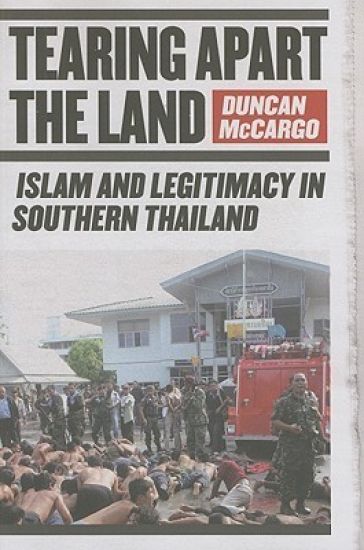
Since January 2004, a violent separatist insurgency has raged in southern Thailand, resulting in more than three thousand deaths. Though largely unnoticed outside Southeast Asia, the rebellion in Pattani and neighboring provinces and the Thai government's harsh crackdown have resulted in a full-scale crisis. Tearing Apart the Land by Duncan McCargo, one of the world's leading scholars of contemporary Thai politics, is the first fieldwork-based book about this conflict. Drawing on his extensive knowledge of the region, hundreds of interviews conducted during a year's research in the troubled area, and unpublished Thai- language sources that range from anonymous leaflets to confessions extracted by Thai security forces, McCargo locates the roots of the conflict in the context of the troubled power relations between Bangkok and the Muslim-majority "deep South." McCargo describes how Bangkok tried to establish legitimacy by co-opting local religious and political elites. This successful strategy was upset when Thaksin Shinawatra became prime minister in 2001 and set out to reorganize power in the region. Before Thaksin was overthrown in a 2006 military coup, his repressive policies had exposed the precariousness of the Bangkok government's influence. A rejuvenated militant movement had emerged, invoking Islamic rhetoric to challenge the authority of local leaders obedient to Bangkok. For readers interested in contemporary Southeast Asia, insurgency and counterinsurgency, Islam, politics, and questions of political violence, Tearing Apart the Land is a powerful account of the changing nature of Islam on the Malay peninsula, the legitimacy of the central Thai government and the failures of its security policy, the composition of the militant movement, and the conflict's disastrous impact on daily life in the deep South. Carefully distinguishing the uprising in southern Thailand from other Muslim rebellions, McCargo suggests that the conflict can be ended only if a more participatory mode of governance is adopted in the region.
Fighting for Virtue

Fighting for Virtue

Duncan McCargo

Cornell University Press
2020
sidottu
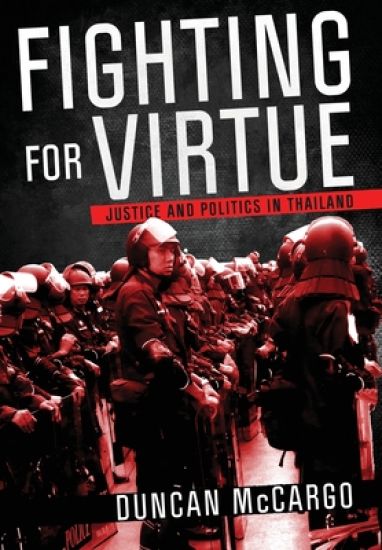
Fighting for Virtue investigates how Thailand's judges were tasked by the late King Bhumibol Adulyadej (Rama IX) in 2006 with helping to solve the country's intractable political problems—and what happened next. Across the last decade of Rama IX's rule, Duncan McCargo examines the world of Thai judges: how they were recruited, trained, and promoted, and how they were socialized into a conservative world view that emphasized the proximity between the judiciary and the monarchy. McCargo delves into three pivotal freedom of expression cases that illuminate Thai legal and cultural understandings of sedition and treason, before examining the ways in which accusations of disloyalty made against controversial former prime minister Thaksin Shinawatra came to occupy a central place in the political life of a deeply polarized nation. The author navigates the highly contentious role of the Constitutional Court as a key player in overseeing and regulating Thailand's political order before concluding with reflections on the significance of the Bhumibol era of "judicialization" in Thailand. In the end, posits McCargo, under a new king, who appears far less reluctant to assert his own power and authority, the Thai courts may now assume somewhat less significance as a tool of the monarchical network.
Tearing Apart the Land

Tearing Apart the Land

Duncan McCargo

Cornell University Press
2008
pokkari
Since January 2004, a violent separatist insurgency has raged in southern Thailand, resulting in more than three thousand deaths. Though largely unnoticed outside Southeast Asia, the rebellion in Pattani and neighboring provinces and the Thai government's harsh crackdown have resulted in a full-scale crisis. Tearing Apart the Land by Duncan McCargo, one of the world's leading scholars of contemporary Thai politics, is the first fieldwork-based book about this conflict. Drawing on his extensive knowledge of the region, hundreds of interviews conducted during a year's research in the troubled area, and unpublished Thai- language sources that range from anonymous leaflets to confessions extracted by Thai security forces, McCargo locates the roots of the conflict in the context of the troubled power relations between Bangkok and the Muslim-majority "deep South." McCargo describes how Bangkok tried to establish legitimacy by co-opting local religious and political elites. This successful strategy was upset when Thaksin Shinawatra became prime minister in 2001 and set out to reorganize power in the region. Before Thaksin was overthrown in a 2006 military coup, his repressive policies had exposed the precariousness of the Bangkok government's influence. A rejuvenated militant movement had emerged, invoking Islamic rhetoric to challenge the authority of local leaders obedient to Bangkok. For readers interested in contemporary Southeast Asia, insurgency and counterinsurgency, Islam, politics, and questions of political violence, Tearing Apart the Land is a powerful account of the changing nature of Islam on the Malay peninsula, the legitimacy of the central Thai government and the failures of its security policy, the composition of the militant movement, and the conflict's disastrous impact on daily life in the deep South. Carefully distinguishing the uprising in southern Thailand from other Muslim rebellions, McCargo suggests that the conflict can be ended only if a more participatory mode of governance is adopted in the region.
Politics and the Press in Thailand

Politics and the Press in Thailand

Duncan McCargo

Routledge
2015
nidottu
This is the first book in the English language to examine the tangled web of relationships linking newspaper owners, editors and reporters, with leading politicians and power-holders. Duncan McCargo has been granted unique access to the editorial meetings of Thailand's leading newspapers, and drawing on this, the book uncovers the contradictions and dichotomies which underlie political coverage in the Thai press.
Mapping National Anxieties

Mapping National Anxieties

Duncan McCargo

NIAS Press
2011
sidottu
This latest book by award-winning researcher Duncan McCargo, one of the world's leading specialists on contemporary Thailand, builds on previous projects to elucidate new aspects of the intractable Southern conflict that has claimed more than 4500 lives since 2004.Mapping National Anxieties locates the insurgency in the context of Thailand's wider political conflicts, exploring the ambiguous relationships between the Thai state and organised religion, along with the recent resurgence of Buddhist chauvinism and nationalism.McCargo examines the way Islamic provincial councils have been drawn into the conflict, and scrutinises the special challenges the conflict has created for Thailand's media. Journalists have struggled to communicate a confusing story to an increasingly indifferent wider public. The book then moves beyond the crisis itself to look at ways forward, starting with the controversial National Reconciliation Commission that was established by the Thaksin Shinawatra government to propose peaceful options for reducing the violence. Another chapter explores how far Malay Muslims in Thailand's southern border provinces think of themselves as 'Thai', arguing that there is an important distinction between legal citizenship and informal understandings of what citizenship means and entails. Finally, McCargo invites readers to 'think the unthinkable' by imagining the possibility of autonomy for Thailand's deep South, and the implications for the country as a whole.
Mapping National Anxieties

Mapping National Anxieties

Duncan McCargo

NIAS Press
2011
nidottu
This latest book by award-winning researcher Duncan McCargo, one of the world's leading specialists on contemporary Thailand, builds on previous projects to elucidate new aspects of the intractable Southern conflict that has claimed more than 4500 lives since 2004.Mapping National Anxieties locates the insurgency in the context of Thailand's wider political conflicts, exploring the ambiguous relationships between the Thai state and organised religion, along with the recent resurgence of Buddhist chauvinism and nationalism.McCargo examines the way Islamic provincial councils have been drawn into the conflict, and scrutinises the special challenges the conflict has created for Thailand's media. Journalists have struggled to communicate a confusing story to an increasingly indifferent wider public. The book then moves beyond the crisis itself to look at ways forward, starting with the controversial National Reconciliation Commission that was established by the Thaksin Shinawatra government to propose peaceful options for reducing the violence. Another chapter explores how far Malay Muslims in Thailand's southern border provinces think of themselves as 'Thai', arguing that there is an important distinction between legal citizenship and informal understandings of what citizenship means and entails. Finally, McCargo invites readers to 'think the unthinkable' by imagining the possibility of autonomy for Thailand's deep South, and the implications for the country as a whole.