Kirjojen hintavertailu. Mukana 12 083 983 kirjaa ja 12 kauppaa.

Kirjahaku

Etsi kirjoja tekijän nimen, kirjan nimen tai ISBN:n perusteella.

13 kirjaa tekijältä Duncan Wu

William Hazlitt

William Hazlitt

Duncan Wu

Oxford University Press
2008
sidottu
Romanticism is where the modern age begins, and Hazlitt was its most articulate spokesman. No one else had the ability to see it whole; no one else knew so many of its politicians, poets, and philosophers. By interpreting it for his contemporaries, he speaks to us of ourselves - of the culture and world we now inhabit. Perhaps the most important development of his time, the creation of a mass media, is one that now dominates our lives. Hazlitt's livelihoo was dependent on it. As the biography argues, he took political sketch-writing to a new level, invented sports commentary as we know it, and created the essay-form as practised by Clive James, Gore Vidal, and Michael Foot. Duncan Wu's profile of one of the greatest journalists in the language draws on over a decade of archival research in libraries across Britain and North America, to reveal for the first time such matters as why Godwin broke with Hazlitt; how Hazlitt came to know Sir John Soane and J. M. W. Turner; the true nature of Hazlitt's dealings with Thomas Medwin, and what the likes of Joseph Farington and Sir Thomas Lawrence thought of him. In addition, it sheds new light on Hazlitt's dealings with such figures as Francis Jeffrey, Robert Stodart, John M'Creery, Henry Crabb Robinson, Joseph Parkes, John Cam Hobhouse, and Stendhal. It benefits also from Wu's New Writings of William Hazlitt, many of which make their appearance here, illuminating hitherto obscure passages of Hazlitt's life.
William Hazlitt

William Hazlitt

Duncan Wu

Oxford University Press
2010
nidottu
Romanticism is where the modern age begins, and Hazlitt was its most articulate spokesman. No one else had the ability to see it whole; no one else knew so many of its politicians, poets, and philosophers. By interpreting it for his contemporaries, he speaks to us of ourselves - of the culture and world we now inhabit. Perhaps the most important development of his time, the creation of a mass media, is one that now dominates our lives. Hazlitt's livelihood was dependent on it. As the biography argues, he took political sketch-writing to a new level, invented sports commentary as we know it, and created the essay-form as practised by Clive James, Gore Vidal, and Michael Foot. Duncan Wu's profile of one of the greatest journalists in the language draws on over a decade of archival research in libraries across Britain and North America, to reveal for the first time such matters as why Godwin broke with Hazlitt; how Hazlitt came to know Sir John Soane and J. M. W. Turner; the true nature of Hazlitt's dealings with Thomas Medwin, and what the likes of Joseph Farington and Sir Thomas Lawrence thought of him. In addition, it sheds new light on Hazlitt's dealings with such figures as Francis Jeffrey, Robert Stodart, John M'Creery, Henry Crabb Robinson, Joseph Parkes, John Cam Hobhouse, and Stendhal. It benefits also from Wu's New Writings of William Hazlitt, many of which make their appearance here, illuminating hitherto obscure passages of Hazlitt's life.
Six Contemporary Dramatists

Six Contemporary Dramatists

Duncan Wu

Palgrave Macmillan
1996
nidottu
`A most illuminating study.' - John Bayley Six Contemporary Dramatists explores, in a straightforward manner, the central concerns of six of the most important contemporary dramatists. It demonstrates how the work of Alan Bennett, Dennis Potter, Simon Gray, Howard Brenton, David Hare and Alan Ayckbourn is essentially moral, and relates their aspirations to the British romantic tradition of the last century. At the same time, Duncan Wu explores how each writer has responded to the changes that took place in personal and public ethics during the 1980s as a result of Thatcherism. He also includes an interview with Alan Ayckbourn, published here for the first time, in which the volume's themes are focused and summarised. For the paperback edition, a substantial preface discussing Tom Stoppard's Arcadia, David Hare's Skylight and David Edgar's Pentecost has been added. This is an essential and readable guide to televised and theatrical drama for students and theatregoers alike.
Wordsworth's Reading 1770–1799

Wordsworth's Reading 1770–1799

Duncan Wu

Cambridge University Press
2007
pokkari
Wordsworth's Reading 1770–1799 lists all of the authors and (where possible) books known to have been read by William Wordsworth from his childhood until his move to Dove Cottage in 1799 at the age of twenty-nine. This information is presented in an easy-to-use form - in alphabetical order by author - and includes dates of reading and full discussions of the evidence. It draws on analyses of Wordsworth's manuscripts contained in current or forthcoming scholarly editions of his works, and incorporates a great deal of original research into the poet's intellectual development, including studies of the libraries of John Wordsworth Sr. (the poet's father), Hawkshead Grammar School, Racedown Lodge, and the Bristol Library Society. Where possible, surviving copies of Wordsworth's books are examined and described. This is a most complete study of Wordsworth's reading, and will be an essential reference tool for all scholars and students of his work.
Wordsworth's Reading 1800–1815

Wordsworth's Reading 1800–1815

Duncan Wu

Cambridge University Press
2007
pokkari
Wordsworth's Reading 1800–1815, first published in 1996, lists all of the authors and (where possible) books known to have been read by William Wordsworth during the years which saw the composition of some of his greatest poetry, including Poems, in Two Volumes, The Thirteen-Book Prelude, The White Doe of Rylstone and The Excursion. The information is presented in an easy-to-use form, and includes dates of reading and full discussions of evidence. It draws on analyses of Wordsworth's manuscripts contained in current and forthcoming scholarly editions of his works, and incorporates hitherto unpublished research into the poet's intellectual development, including a thorough survey of manuscript materials. Together with Duncan Wu's companion-volume, Wordsworth's Reading 1770–1799, this is a most complete study of Wordsworth's reading, and it will be an essential reference tool for all scholars and students of his work.
Romanticism

Romanticism

Duncan Wu

Blackwell Publishers
1995
nidottu
Romanticism: A Critical Reader is designed both as a companion and a supplement to Blackwell's Romanticism: An Anthology . It deals for the most part with works included in that volume while affording coverage to key elements, including fiction, beyond the anthologist's scope to include. Most of the movements and schools of thought active during the last fifteen years are represented, including feminism, new historicism, genre theory, psychoanalysis, and deconstructionalism. The reader provides thus a progress report, useful to anyone interested in the application of theoretical ideas to literary texts, giving a unique overview of Romantic studies since 1980.
Wordsworth

Wordsworth

Duncan Wu

Blackwell Publishing Ltd
2001
sidottu
This original study is the first fully to acknowledge the impact of early grief on Wordsworth's poetry and to integrate it into a critical account of how his art developed from 1787 to 1813. Looks at the impact of grief on Wordsworth's great poetry. Explains the importance of the poet's great, unfinished epic 'The Recluse' to his work as a whole. Includes 20 illustrations from original notebooks. Contains the first annotated text of 'The White Doe of Rylstone'.
30 Great Myths about the Romantics

30 Great Myths about the Romantics

Duncan Wu

John Wiley Sons Inc
2015
nidottu
Brimming with the fascinating eccentricities of a complex and confusing movement whose influences continue to resonate deeply, 30 Great Myths About the Romantics adds great clarity to what we know – or think we know – about one of the most important periods in literary history. Explores the various misconceptions commonly associated with Romanticism, offering provocative insights that correct and clarify several of the commonly-held myths about the key figures of this era Corrects some of the biases and beliefs about the Romantics that have crept into the 21st-century zeitgeist – for example that they were a bunch of drug-addled atheists who believed in free love; that Blake was a madman; and that Wordsworth slept with his sister Celebrates several of the mythic objects, characters, and ideas that have passed down from the Romantics into contemporary culture – from Blake’s Jerusalem and Keats’s Ode on a Grecian Urn to the literary genre of the vampire Engagingly written to provide readers with a fun yet scholarly introduction to Romanticism and key writers of the period, applying the most up-to-date scholarship to the series of myths that continue to shape our appreciation of their work
Six Contemporary Dramatists

Six Contemporary Dramatists

Duncan Wu

Palgrave Macmillan
1995
nidottu
`A most illuminating study.' - John Bayley Six Contemporary Dramatists explores, in a straightforward manner, the central concerns of six of the most important contemporary dramatists. It demonstrates how the work of Alan Bennett, Dennis Potter, Simon Gray, Howard Brenton, David Hare and Alan Ayckbourn is essentially moral, and relates their aspirations to the British romantic tradition of the last century. At the same time, Duncan Wu explores how each writer has responded to the changes that took place in personal and public ethics during the 1980s as a result of Thatcherism. He also includes an interview with Alan Ayckbourn, published here for the first time, in which the volume's themes are focused and summarised. For the paperback edition, a substantial preface discussing Tom Stoppard's Arcadia, David Hare's Skylight and David Edgar's Pentecost has been added. This is an essential and readable guide to televised and theatrical drama for students and theatregoers alike.
Wordsworth

Wordsworth

Duncan Wu

Wiley-Blackwell (an imprint of John Wiley Sons Ltd)
2003
nidottu
This original study is the first fully to acknowledge the impact of early grief on Wordsworth's poetry and to integrate it into a critical account of how his art developed from 1787 to 1813. Looks at the impact of grief on Wordsworth's great poetry. Explains the importance of the poet's great, unfinished epic 'The Recluse' to his work as a whole. Includes 20 illustrations from original notebooks. Contains the first annotated text of 'The White Doe of Rylstone'.
Dog-eared

Dog-eared

Duncan Wu

Basic Books
2020
sidottu
Dogs are at once among the most ordinary of animals and the most beloved by mankind. But what we may not realize is that for as long as we have loved dogs, our poets have been seriously engaged with them.In this collection, English professor Duncan Wu digs into the wealth of poetry about our furry friends -- who have been domesticated longer than any other species -- to show not only how attitudes toward dogs have changed over the centuries, but how those changes have been refracted through the prism of literature. While it's natural for dog lovers to understand their canine companions as whimsical, and to sentimentalize them, the greatest poets have transcended that impulse, and written about dogs in a way that engages with the more serious aspects of their lives -- and ours.Dogs have, in short, insinuated themselves into nearly every facet of human thought. And to see them as anything less than of central significance in our cultural perceptions is to underestimate them. Rich and inviting, Dog-eared is a definitive, spellbinding collection of poetic musings about humans and dogs.
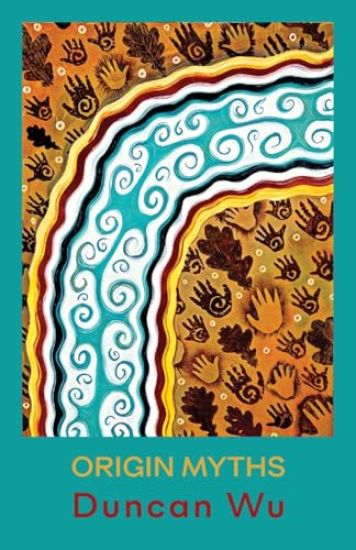
Origin Myths

Origin Myths

Duncan Wu

Shearsman Books
2024
nidottu
In 2011 Duncan Wu moved into the forests of northern Virginia in a place largely unchanged since the Civil War. Here, he learnt, indigenous people had once lived in considerable numbers but at some point after the War all had disappeared. Contemporary documents held in local archives provided no explanation although they confirmed all indigenous settlements had gone from the area by 1778. He would learn a good deal more by walking through the wilds of northern Virginia with his dog Dakota, who would guide him to the places that witnessed the end of Powhatan and his people.