Kirjojen hintavertailu. Mukana 11 460 487 kirjaa ja 12 kauppaa.

Kirjahaku

Etsi kirjoja tekijän nimen, kirjan nimen tai ISBN:n perusteella.

12 kirjaa tekijältä Dustin Griffin

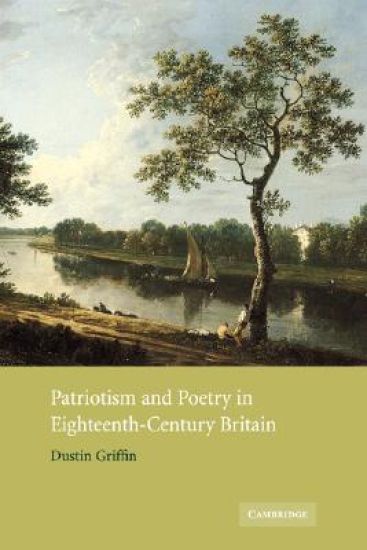
Patriotism and Poetry in Eighteenth-Century Britain

Patriotism and Poetry in Eighteenth-Century Britain

Dustin Griffin

Cambridge University Press
2005
pokkari
The poetry of the mid - and late eighteenth century has long been regarded as primarily private and apolitical; in this wide-ranging study Dustin Griffin argues that in fact the poets of the period were addressing the great issues of national life - rebellion at home, imperial wars abroad, an expanding commercial empire, an emerging new 'British' national identity. Taking up the topic of patriotic verse, Griffin shows that the poets, like many contemporary essayists, sermon writers, and political journalists, were engaged in the century-long debate about the nature of 'true patriotism'. Griffin argues that canonical figures - James Thomson, William Collins, Thomas Gray, Christopher Smart, Oliver Goldsmith, William Cowper - along with less canonical writers such as Mark Akenside, John Dyer, and Ann Yearsley ask how poets might serve and even save their country, and take their place in a broader tradition of patriotic verse.
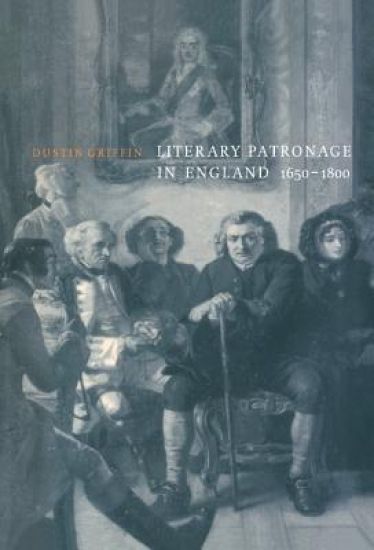
Literary Patronage in England, 1650–1800

Literary Patronage in England, 1650–1800

Dustin Griffin

Cambridge University Press
2006
pokkari
This is the first comprehensive study of the system of literary patronage in early modern England and it demonstrates that far from declining by 1750 - as many commentators have suggested - the system persisted, albeit in altered forms, throughout the eighteenth century. Combining the perspectives of literary, social and political history, Dustin Griffin lays out the workings of the patronage system and shows how authors wrote within that system, manipulating it to their advantage or resisting the claims of patrons by advancing counterclaims of their own. Professor Griffin describes the cultural economics of patronage and argues that literary patronage was in effect always 'political'. Chapters on individual authors, including Dryden, Swift, Pope and Johnson, as well as Edward Young, Richard Savage, Mary Leapor and Charlotte Lennox, address the author's role in the system, the rhetoric of dedications and the larger poetics of patronage.
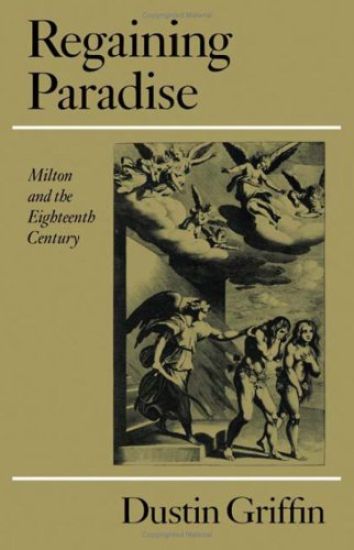
Regaining Paradise

Regaining Paradise

Dustin Griffin

Cambridge University Press
2009
pokkari
This book explores the way in which Milton's poems served as a rich and fruitful resource for the English poets of the eighteenth century. It refutes the old argument about Milton's allegedly 'bad influence' and challenges suggestions that great writers generally inhibit or oppress their successors. Regaining Paradise argues that what interested eighteenth-century poets was primarily Milton's garden myth and that the best writers typically found Milton, not a burden, but an inspiring resources available for their appropriation. Regaining Paradise cuts across some of the boundaries that traditionally divide English studies. It looks at Milton not in a Renaissance but an eighteenth-century context and it combines the perspectives of literary history and literary theory.
Regaining Paradise

Regaining Paradise

Dustin Griffin

Cambridge University Press
1986
sidottu
This book explores the way in which Milton's poems served as a rich and fruitful resource for the English poets of the following century. It refutes the old argument about Milton's allegedly 'bad influence', and challenges more recent suggestions that great writers generally inhibit or oppress their successors. Professor Griffin examines the responses to Milton by major writers - Dryden, Pope, Thomson, Johnson, and Cowper - as well as by underrated minor figures such as Dennis, Watts, Akenside, Dyer, and John Philips, and indicates how central the inspiration of Milton was to their own work.
Literary Patronage in England, 1650–1800

Literary Patronage in England, 1650–1800

Dustin Griffin

Cambridge University Press
1996
sidottu
This is the first comprehensive study of the system of literary patronage in early modern England and it demonstrates that far from declining by 1750 - as many commentators have suggested - the system persisted, albeit in altered forms, throughout the eighteenth century. Combining the perspectives of literary, social and political history, Dustin Griffin lays out the workings of the patronage system and shows how authors wrote within that system, manipulating it to their advantage or resisting the claims of patrons by advancing counterclaims of their own. Professor Griffin describes the cultural economics of patronage and argues that literary patronage was in effect always 'political'. Chapters on individual authors, including Dryden, Swift, Pope and Johnson, as well as Edward Young, Richard Savage, Mary Leapor and Charlotte Lennox, address the author's role in the system, the rhetoric of dedications and the larger poetics of patronage.
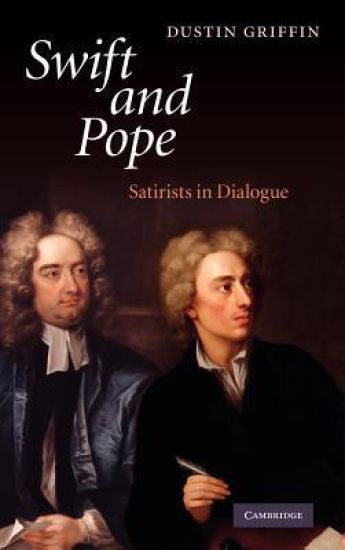
Swift and Pope

Swift and Pope

Dustin Griffin

Cambridge University Press
2010
sidottu
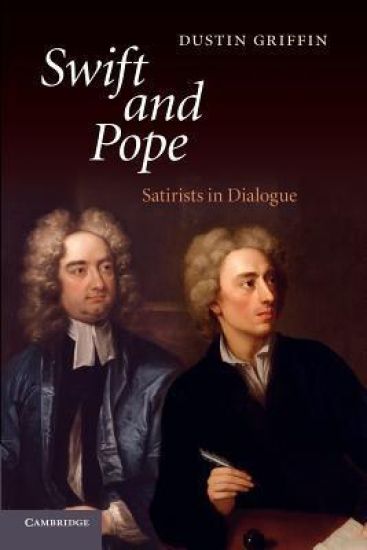
Swift and Pope were lifelong friends and fellow satirists with shared literary sensibilities. But there were significant differences - demographic, psychological, and literary - between them: an Anglican and a Roman Catholic, an Irishman and an Englishman, one deeply committed to politically engaged poetry, and the other reluctant to engage in partisanship and inclined to distinguish poetry from politics. In this book, Dustin Griffin argues that we need to pay more attention to those differences, which both authors recognised and discussed. Their letters, poems, and satires can be read as stages in an ongoing conversation or satiric dialogue: each often wrote for the other, sometimes addressing him directly, sometimes emulating or imitating. In some sense, each was constantly replying to the other. From their lifelong dialogue emerges not only the extraordinary affection and admiration they felt for each other, but also the occasional irritation and resentment that kept them both together and apart.
Patriotism and Poetry in Eighteenth-Century Britain

Patriotism and Poetry in Eighteenth-Century Britain

Dustin Griffin

Cambridge University Press
2002
sidottu
The poetry of the mid - and late eighteenth century has long been regarded as primarily private and apolitical; in this wide-ranging study Dustin Griffin argues that in fact the poets of the period were addressing the great issues of national life - rebellion at home, imperial wars abroad, an expanding commercial empire, an emerging new 'British' national identity. Taking up the topic of patriotic verse, Griffin shows that the poets, like many contemporary essayists, sermon writers, and political journalists, were engaged in the century-long debate about the nature of 'true patriotism'. Griffin argues that canonical figures - James Thomson, William Collins, Thomas Gray, Christopher Smart, Oliver Goldsmith, William Cowper - along with less canonical writers such as Mark Akenside, John Dyer, and Ann Yearsley ask how poets might serve and even save their country, and take their place in a broader tradition of patriotic verse.
Williamstown and Williams College
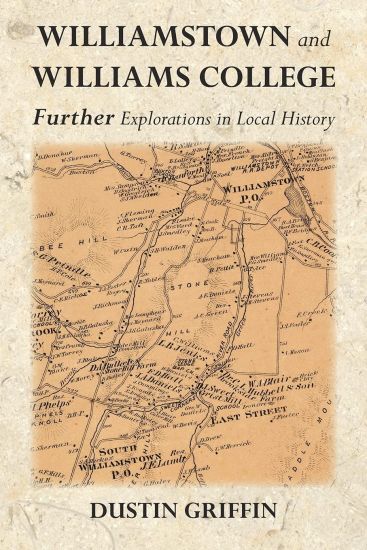
This book is a sequel to Williamstown and Williams College: Explorations in Local History (2018). It is a collection of microstudies, or microhistories, each of them focused on a single narrowly-defined topic in the local history of Williamstown and its most notable local institution, Williams College. Griffin writes clearly and engagingly about places, events of the town and college from the 18th century through the 60s, and remarkable people. The essays are arranged in three sections: the history of the town; topics that involve both town and college; and episodes in the history of the college. Within each section the essays are arranged in rough chronological order. Readers with a particular interest are invited to dive in anywhere.
Swift and Pope

Swift and Pope

Dustin Griffin

Cambridge University Press
2014
pokkari
Swift and Pope were lifelong friends and fellow satirists with shared literary sensibilities. But there were significant differences - demographic, psychological, and literary - between them: an Anglican and a Roman Catholic, an Irishman and an Englishman, one deeply committed to politically engaged poetry, and the other reluctant to engage in partisanship and inclined to distinguish poetry from politics. In this book, Dustin Griffin argues that we need to pay more attention to those differences, which both authors recognised and discussed. Their letters, poems, and satires can be read as stages in an ongoing conversation or satiric dialogue: each often wrote for the other, sometimes addressing him directly, sometimes emulating or imitating. In some sense, each was constantly replying to the other. From their lifelong dialogue emerges not only the extraordinary affection and admiration they felt for each other, but also the occasional irritation and resentment that kept them both together and apart.
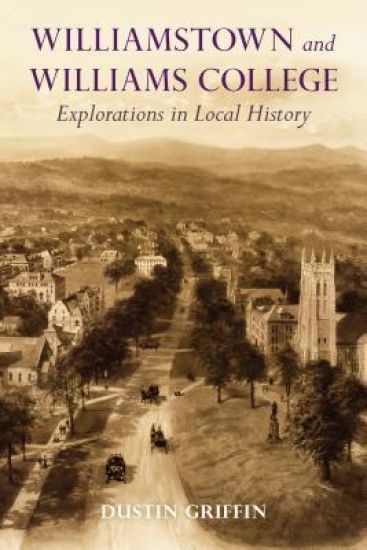
Williamstown and Williams College

Williamstown and Williams College

Dustin Griffin

University of Massachusetts Press
2018
nidottu
Nestled in the Berkshires of western Massachusetts, Williamstown is home to one of the most prestigious liberal arts colleges in the country, Williams College. In this engrossing and entertaining book, Dustin Griffin offers fourteen vignettes that detail the local history of this ideal New England college town. Each chapter focuses on the stories behind a single feature that visitors to present-day Williamstown and Williams College might encounter, including a Civil War statue on Main Street, town-wide holidays, a popular hiking trail, a stained-glass window in the college chapel, and a song that alumni sing at reunions.Well researched and written in an accessible style, Williamstown and Williams College is a must-have resource for anyone connected with Williams College - from students and parents to alumni - as well as visitors who want to understand what makes this town unique.
Authorship in the Long Eighteenth Century

Authorship in the Long Eighteenth Century

Dustin Griffin

University of Delaware Press
2013
sidottu
Explores the changing conditions and conceptions of authorship in the long eighteenth century, a period often said to have witnessed the birth of the modern author. This study focuses not on authorial self-presentation or self-revelation but on an author's interactions with booksellers, collaborators, rivals, correspondents, patrons, and audiences.
Authorship in the Long Eighteenth Century

Authorship in the Long Eighteenth Century

Dustin Griffin

University of Delaware Press
2013
nidottu
This book deals with changing conditions and conceptions of authorship in the long eighteenth century, a period often said to have witnessed the birth of the modern author. It focuses not on authorial self-presentation or self-revelation but on an author’s interactions with booksellers, collaborators, rivals, correspondents, patrons, and audiences. Challenging older accounts of the development of authorship in the period as well as newer claims about the “public sphere” and the “professional writer,” it engages with recent work on print culture and the history of the book. Methodologically eclectic, it moves from close readings to strategic contextualization. The book is organized both chronologically and topically. Early chapters deal with writers – notably Milton and Dryden – at the beginning of the long eighteenth century, and later chapters focus more on writers — among them Johnson, Gray, and Gibbon — toward its end. Looking beyond the traditional canon, it considers a number of little-known or little-studied writers, including Richard Bentley, Thomas Birch, William Oldys, James Ralph, and Thomas Ruddiman. Some of the essays are organized around a single writer, but most deal with a broad topic – literary collaboration, literary careers, the republic of letters, the alleged rise of the “professional writer,” and the rather different figure of the “author by profession.” Published by University of Delaware Press. Distributed worldwide by Rutgers University Press.