Kirjojen hintavertailu. Mukana 11 699 587 kirjaa ja 12 kauppaa.

Kirjahaku

Etsi kirjoja tekijän nimen, kirjan nimen tai ISBN:n perusteella.

11 kirjaa tekijältä E C Coleman

No Pyrrhic Victories

No Pyrrhic Victories

E C Coleman

The History Press Ltd
2014
nidottu
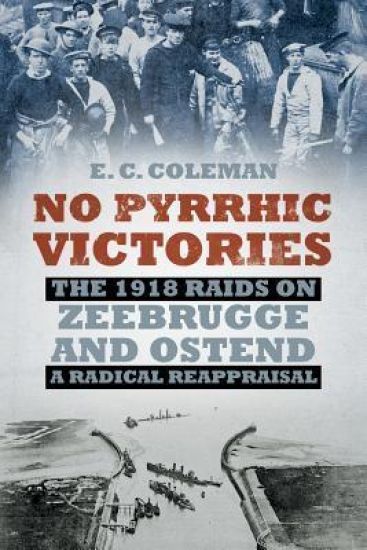
In early 1918, it seemed to many that the British people and the Allies were close to defeat. At home, the chief culprit was the German U-boat. Sailing almost unopposed from the North Sea ports of Zeebrugge and Ostend, the submarines were taking a heavy toll on Allied shipping, and no one seemed to be doing anything about it. The job eventually went to Vice Admiral Roger Keyes, ‘The Modern Nelson’, who had a long record of close action with enemies from China to the Heligoland Bight. Equally, he was unafraid of those senior to him whom he considered to be incompetent. Within days of his appointment Keyes had put together an audacious plan to sink blockships in the enemy-held ports. However, his success, along with the eleven VCs won in the battles, led his detractors to play down his achievement, even by using German propaganda against him. This entirely new account, containing groundbreaking research and rare illustrations throughout, at last sets the record straight about these important engagements.
The Pig War

The Pig War

E C Coleman

The History Press Ltd
2018
nidottu
With a plot to grace any comic opera, the 1859-72 'Pig War' broke out when an American living on a quietly disputed small island in the Gulf of Georgia shot a British pig he found rooting up his garden produce. The authorities on nearby Vancouver Island and the military leadership of the adjacent Washington Territory both felt they had good reasons to escalate a trivial incident into a full-blown war between the United States and Great Britain. Soon, American soldiers found themselves looking down the barrels of the Royal Navy cannon.Whilst both the British and the Americans continued to threaten and bluster, Royal Marines and US soldiers settled down on the island to a round of social events, including sports days, combined dinners and even summer balls. Despite the outbreak of the American Civil War, and British intervention on the Confederate side, the hot-heads were restrained and, eventually, it was decided that the problem should become one of the earliest examples of international arbitration. The German Kaiser was brought in and - from the British point of view - came to the wrong decision.Set against the framework of US attempts to gain control of the whole North American continent, The Pig War is a highly readable account of a little-known episode in Anglo-American history.
The Royal Navy in Polar Exploration Vol 1

The Royal Navy in Polar Exploration Vol 1

E C Coleman

The History Press Ltd
2006
nidottu
This first volume in the history of the Royal Navy in Polar exploration covers the period from the sixteenth century up to 1842 and Ross’s explorations of the Polar regions. The Royal Navy has always been used as an arm of national policy with the purpose of gaining new territories and opening new passages in regions far beyond the usual seafarer's voyages. The people who undertook such expeditions have left their names scattered through the Polar regions: Frobisher, Rankin, Cook, Vancouver, Franklin, Ross, Parry and Scott are just a few of the well-known examples. This illustrated and informative book will be of interest to both the general reader and the expert and researcher.
The Royal Navy and Polar Exploration

The Royal Navy and Polar Exploration

E C Coleman

The History Press Ltd
2007
nidottu
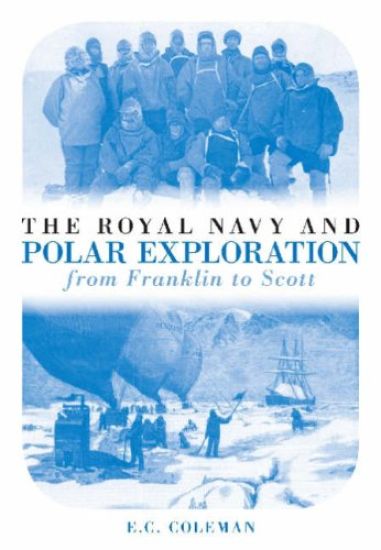
The search for the North West Passage, the fabled northern route to the Orient, took many lives, not least the entire crews of Franklin's Erebus and Terror, and some of the men sent to find out what happened to the ill-fated expedition. Ernest Coleman's book tells the story of not just Franklin and his ill-fated expedition but also tells the story of the involvement of the Royal Navy in Polar exploration until Scott's Antarctic expedition of 1912.
Captain Vancouver

Captain Vancouver

E C Coleman

The History Press Ltd
2006
nidottu
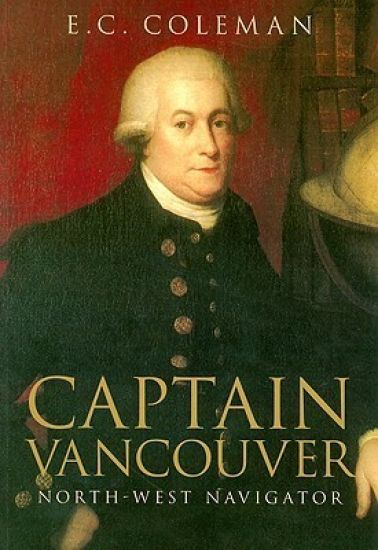
When Captain Cook set out to seek a western entrance to the fabled North West Passage, his instructions allowed him no more than the briefest contact with the coast of north-west America. The burden of that survey was to fall on George Vancouver, one of his midshipmen. Vancouver was sent, with two ships, to explore the coast and to claim land for Britain.His remarkably accurate survey of the coast was to set a standard that lasted over a century. There was much more to his journey than the tracing of the coast. Extraordinarily young crews, inexperienced officers and a doctor set on Vancouver's downfall, all combined to test Vancouver's leadership to the limit.For five years, he kept his men together and returned with few casualties, itself a rare occurrence. He also returned with new lands discovered and the sovereignty of Hawaii in his pocket. He returned to a land at war and was soon forgotten in all but his native Kings Lynn. But his name has been immortalised on shores far from home.
The Royal Navy and Polar Exploration Vol 2

The Royal Navy and Polar Exploration Vol 2

E C Coleman

The History Press Ltd
2007
nidottu
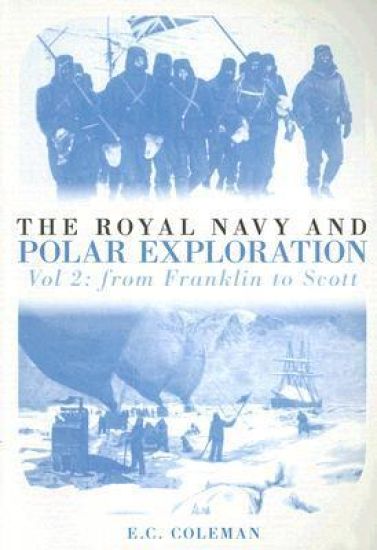
The search for the North West Passage took many lives, not least the entire crews of Franklin's Erebus and Terror. This book tells the story of not just Franklin and his ill-fated expedition but also tells the story of the involvement of the Royal Navy in Polar exploration until Scott's Antarctic expedition of 1912.
Scraps

Scraps

E C Coleman

The History Press Ltd
2008
nidottu
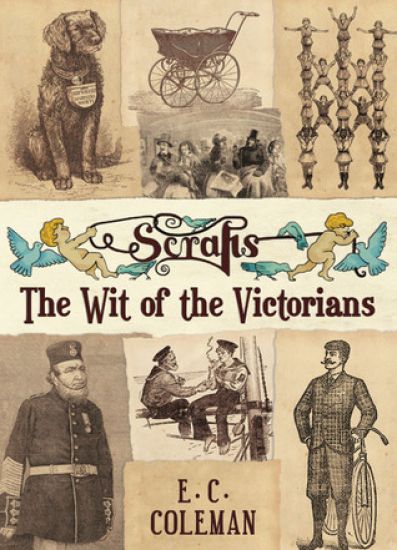
An "official beggar" has been established in the Hungarian village of Szent-Marton, in order to keep off vagrants and gypsies. At Sheffield the other day, at an inquest on the body of a crippled dwarf, who while drunk had received fatal injuries by falling down stairs, it was stated that he had been in the infirmary with broken limbs no fewer than 33 times. These and other interesting snippets are contained within the pages of this irreverent look at Victorian life from the newspapers of the day.
The Grail Chronicles

The Grail Chronicles

E C Coleman

The History Press Ltd
2010
nidottu
This is the story of a plain silver chalice from the first century AD that now rests in the heart of England. From its momentous beginnings as the cup used by Christ at the Last Supper, and as the vessel used to catch His blood at the Crucifixion, to its unrecognised discovery in the late nineteenth century, the chalice has passed through the hands of saints, crusaders, kings, queens, Templar knights and ‘Guardians.’ This account revisits the beginnings of the Knights Templar and their rise to incredible wealth and power; it introduces a completely new version of the origins of the Arthurian legends; and it disputes the supposed loss of the Crown Jewels in the Wash and the cause of King John’s subsequent death. It re-examines the murder of Thomas Becket and resurrects the forgotten story of a knight who went from disregarded son and child hostage to Regent of England and Guardian of the Grail. The story reveals the reason behind one of England’s greatest church mysteries: an early thirteenth-century clue that has taken over 700 years to be deciphered. Most importantly of all, however, it establishes where the Holy Grail is now.
Rank and Rate

Rank and Rate

E C Coleman

The Crowood Press Ltd
2009
sidottu
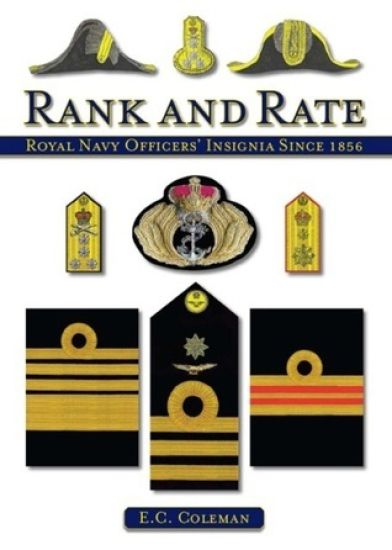
For over a century and a half, since the Uniform Regulations of 1856 were introduced, identification of rank amongst officers in the Royal Navy, its branches and its reserves has not been restricted to a single, or even small number, of insignia. Rank may be seen on jacket cuffs, on shoulder badges, on shoulder boards and on epaulettes. It may be seen on swords and buttons, and in the manner in which buttons are worn. Cap peaks indicate rank, as do collars, cocked hat ornaments and cuff slashes.
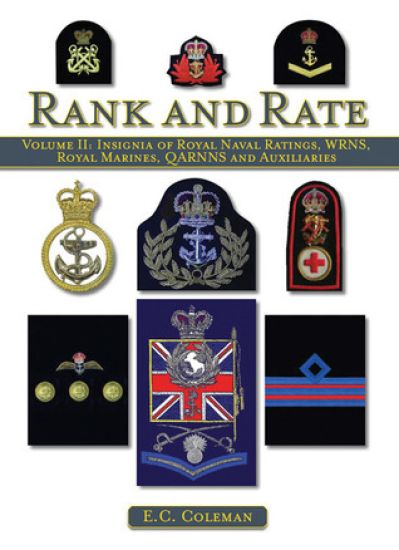
Volume II: Insignia of Royal Naval Ratings, WRNS, Royal Marines, QARNNS and Auxiliaries Rank and Rate
With the exception of the royal marines, who adopted light infantry rank insignia from their earliest days, the Royal Navy was slow to introduce distinguishing rate badges for those serving on the 'lower deck'. Even when they were introduced, in 1853, the corresponding introduction of a uniform was still four years away. As for officers, the design and arrangement of buttons also played a part in distinguishing one rating from another.