Kirjojen hintavertailu. Mukana 12 390 323 kirjaa ja 12 kauppaa.

Kirjahaku

Etsi kirjoja tekijän nimen, kirjan nimen tai ISBN:n perusteella.

6 kirjaa tekijältä E. Brian Davies

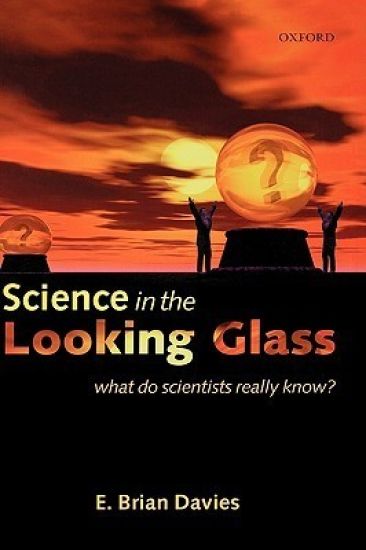
Science in the Looking Glass

Science in the Looking Glass

E. Brian Davies

Oxford University Press
2003
sidottu
In this wide-ranging book, Brian Davies discusses the basis for scientists' claims to knowledge about the world. He looks at science historically, emphasizing not only the achievements of scientists from Galileo onwards, but also their mistakes. He rejects the claim that all scientific knowledge is provisional, by citing examples from chemistry, biology and geology. A major feature of the book is its defence of the view that mathematics was invented rather than discovered. A large number of examples are used to illustrate these points, and many of the deep issues in today's world discussed - from psychology and evolution to quantum theory, consciousness and even religious belief. Disentangling knowledge from opinion and aspiration is a hard task, but this book provides a clear guide to the difficulties.
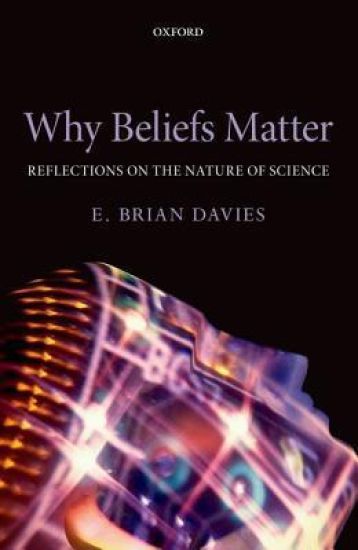
Why Beliefs Matter

Why Beliefs Matter

E. Brian Davies

Oxford University Press
2014
nidottu
In the follow-up to his acclaimed Science in the Looking Glass, Brian Davies discusses deep problems about our place in the world, using a minimum of technical jargon. The book argues that 'absolutist' ideas of the objectivity of science, dating back to Plato, continue to mislead generations of both theoretical physicists and theologians. It explains that the multi-layered nature of our present descriptions of the world is unavoidable, not because of anything about the world, but because of our own human natures. It tries to rescue mathematics from the singular and exceptional status that it has been assigned, as much by those who understand it as by those who do not. Working throughout from direct quotations from many of the important contributors to its subject, it concludes with a penetrating criticism of many of the recent contributions to the often acrimonious debates about science and religions.
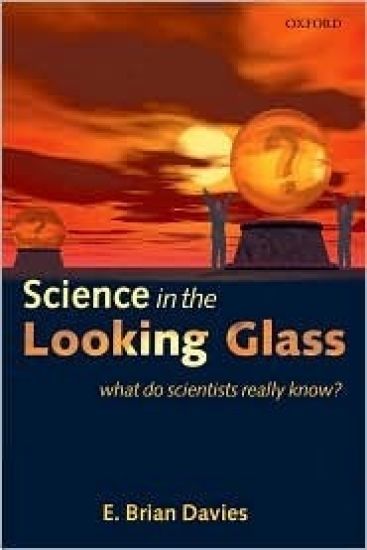
Science in the Looking Glass

Science in the Looking Glass

E. Brian Davies

Oxford University Press
2007
nidottu
How do scientific conjectures become laws? Why does proof mean different things in different sciences? Do numbers exist, or were they invented? Why do some laws turn out to be wrong? In this wide-ranging book, Brian Davies discusses the basis for scientists' claims to knowledge about the world. He looks at science historically, emphasizing not only the achievements of scientists from Galileo onwards, but also their mistakes. He rejects the claim that all scientific knowledge is provisional, by citing examples from chemistry, biology and geology. A major feature of the book is its defence of the view that mathematics was invented rather than discovered. While experience has shown that disentangling knowledge from opinion and aspiration is a hard task, this book provides a clear guide to the difficulties. Full of illuminating examples and quotations, and with a scope ranging from psychology and evolution to quantum theory and mathematics, this book brings alive issues at the heart of all science.
Why Beliefs Matter

Why Beliefs Matter

E. Brian Davies

Oxford University Press
2010
sidottu
This book discusses deep problems about our place in the world with a minimum of technical jargon. It argues that 'absolutist' ideas dating back to Plato continue to mislead generations of theoretical physicists and theologians. It explains that the multi-layered nature of our present descriptions of the world is unavoidable, not because of anything about the world but because of our own human natures. It tries to rescue mathematics from the singular and exceptional status that it has been assigned, as much by those who understand it as by those who do not. It provides direct quotations from many of the important contributors to its subject, and concludes with a penetrating criticism of many of the recent contributions to the often acrimonious debates about science and religions.
Spectral Theory and Differential Operators

Spectral Theory and Differential Operators

E. Brian Davies

Cambridge University Press
1996
pokkari
This book is an introduction to the theory of partial differential operators. It assumes that the reader has a knowledge of introductory functional analysis, up to the spectral theorem for bounded linear operators on Banach spaces. However, it describes the theory of Fourier transforms and distributions as far as is needed to analyse the spectrum of any constant coefficient partial differential operator. A completely new proof of the spectral theorem for unbounded self-adjoint operators is followed by its application to a variety of second-order elliptic differential operators, from those with discrete spectrum to Schrödinger operators acting on L2(RN). The book contains a detailed account of the application of variational methods to estimate the eigenvalues of operators with measurable coefficients defined by the use of quadratic form techniques. This book could be used either for self-study or as a course text, and aims to lead the reader to the more advanced literature on the subject.
Linear Operators and their Spectra

Linear Operators and their Spectra

E. Brian Davies

Cambridge University Press
2007
sidottu
This wide ranging but self-contained account of the spectral theory of non-self-adjoint linear operators is ideal for postgraduate students and researchers, and contains many illustrative examples and exercises. Fredholm theory, Hilbert-Schmidt and trace class operators are discussed, as are one-parameter semigroups and perturbations of their generators. Two chapters are devoted to using these tools to analyze Markov semigroups. The text also provides a thorough account of the new theory of pseudospectra, and presents the recent analysis by the author and Barry Simon of the form of the pseudospectra at the boundary of the numerical range. This was a key ingredient in the determination of properties of the zeros of certain orthogonal polynomials on the unit circle. Finally, two methods, both very recent, for obtaining bounds on the eigenvalues of non-self-adjoint Schrodinger operators are described. The text concludes with a description of the surprising spectral properties of the non-self-adjoint harmonic oscillator.