Kirjojen hintavertailu. Mukana 11 717 486 kirjaa ja 12 kauppaa.

Kirjahaku

Etsi kirjoja tekijän nimen, kirjan nimen tai ISBN:n perusteella.

9 kirjaa tekijältä E. C. Pielou

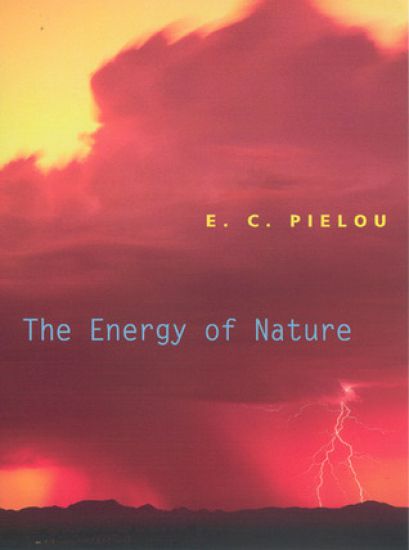
The Energy of Nature

The Energy of Nature

E. C. Pielou

University of Chicago Press
2001
sidottu
Without energy, nothing would ever happen. There would be no life. The sun wouldn't shine, winds wouldn't blow, rivers wouldn't flow, trees wouldn't grow, birds wouldn't sing and fish wouldn't swim. Nothing could exist without enegry. Yet inspite of all that, energy is seldom considered a part of what we call "nature". This text explores energy's role in nature, how and where it originates, what it does, and what becomes of it. Using a wide range of scientific disciplines, Pielou looks at the myriad of ways in which energy and its transfers affect the earth and its inhabitants. Learn how energy is delivered to earth from the sun, how it causes the weather, how it shapes the world through building and erosion, how it is captured and used by living things, how it is harnessed to fuel human society , and much more. This book should delight scientists of all ages.
The Energy of Nature

The Energy of Nature

E. C. Pielou

University of Chicago Press
2007
nidottu
Energy is crucial for events of every kind, in this world or any other. Without energy, nothing would ever happen. Nothing would move and there would be no life. The sun wouldn't shine, winds wouldn't blow, rivers wouldn't flow, trees wouldn't grow, birds wouldn't fly, and fish wouldn't swim; indeed no material object, living or dead, could even exist. In spite of all this, energy is seldom considered a part of what we call "nature."In The Energy of Nature, E. C. Pielou explores energy's role in nature—how and where it originates, what it does, and what becomes of it. Drawing on a wide range of scientific disciplines, from physics, chemistry, and biology to all the earth sciences, as well as on her own lifelong experience as a naturalist, Pielou opens our eyes to the myriad ways energy and its transfer affect the earth and its inhabitants. Along the way we learn how energy is delivered to the earth from the sun; how it causes weather, winds, and tides; how it shapes the earth through mountain building and erosion; how it is captured and used by living things; how it is stored in chemical bonds; how nuclear energy is released; how it heats the unseen depths of the planet and is explosively revealed in the turmoil of earthquakes and volcanoes; how energy manifests itself in magnetism and electromagnetic waves; how we harness it to fuel human societies; and much more.Filled with fascinating information and and helpful illustrations (hand drawn by the author), The Energy of Nature is fun, readable, and instructive. Science buffs of all ages will be delighted.“A luminous, inquiring, and thoughtful exploration of Earth’s energetics.”—Jocylyn McDowell, Discovery
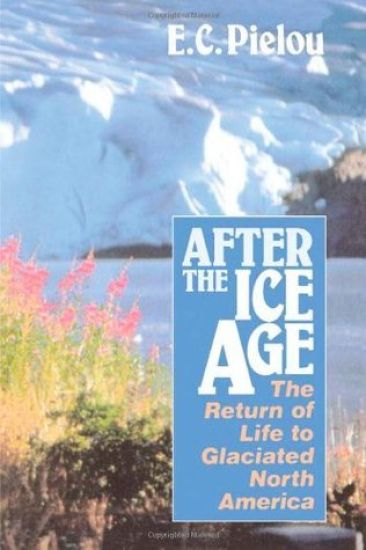
After the Ice Age

After the Ice Age

E. C. Pielou

University of Chicago Press
1992
nidottu
The fascinating story of how a harsh terrain that resembled modern Antarctica has been transformed gradually into the forests, grasslands, and wetlands we know today."One of the best scientific books published in the last ten years."—Ottowa Journal"A valuable new synthesis of facts and ideas about climate, geography, and life during the past 20,000 years. More important, the book conveys an intimate appreciation of the rich variety of nature through time."—S. David Webb,Science
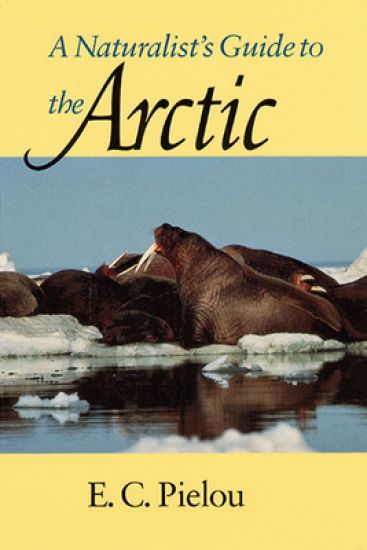
A Naturalist's Guide to the Arctic

A Naturalist's Guide to the Arctic

E. C. Pielou

University of Chicago Press
1995
sidottu
This book is a practical, portable guide to all of the Arctic's natural history--sky, atmosphere, terrain, ice, the sea, plants, birds, mammals, fish, and insects--for those who will experience the Arctic firsthand and for armchair travelers who would just as soon read about its splendors and surprises. It is packed with answers to naturalists' questions and with questions--some of them answered--that naturalists may not even have thought of.
A Naturalist's Guide to the Arctic

A Naturalist's Guide to the Arctic

E. C. Pielou

University of Chicago Press
1995
nidottu
This book is a practical, portable guide to all of the Arctic's natural history—sky, atmosphere, terrain, ice, the sea, plants, birds, mammals, fish, and insects—for those who will experience the Arctic firsthand and for armchair travelers who would just as soon read about its splendors and surprises. It is packed with answers to naturalists' questions and with questions—some of them answered—that naturalists may not even have thought of.
Fresh Water

Fresh Water

E. C. Pielou

University of Chicago Press
1998
sidottu
This text describes the natural history of this vital ingredient of the natural world, capable of shaping the land where it flows, carving canyons in the rock and dissolving caverns deep underground. Fresh water is an agent of nature, always at work, and seldom thought of as having a natural history. Here, the remarkable ways of water are examined; where it comes from and where it goes; how it moves over and under the earth and into the atmosphere; how it affects the land. Also considered is the connection between water and life in a time when the world's supply of clean, fresh water continues to dwindle.
Fresh Water

Fresh Water

E. C. Pielou

University of Chicago Press
2000
nidottu
With the eye of a professional scientist and the passion of a dedicated amateur, E. C. Pielou conducts a guided tour of fresh water on its course through the natural world. As the world's supply of clean, fresh water continues to dwindle, it becomes increasingly important to understand the close connection between water and all forms of life. Pielou's fascination with fresh water gives us a "natural history" that is remarkable and surprising. "[A] keen and detailed look at the life and history of fresh water. . . . Dip into Fresh Water. It will both stimulate and satisfy as only good natural history can."—Toronto Globe and Mail"Pielou's ease with her subject and her no-nonsense style of writing will satisfy and inspire the poet as well as the naturalist."—Denize Springer, Express Books"[Pielou's] writing is didactic and definitive, in places even charming, and is buttressed by clear illustrations. . . . A welcome addition to the genre of literature designed to bridge the gap between scientists . . . and the intelligent and concerned lay public."—Daniel Hillel, Nature"A wonderful natural history of one of life's necessities, a refreshing break from the grand theory and special pleading of many a science book. . . . Read it."—Fred Pearce, New Scientist
The Interpretation of Ecological Data

The Interpretation of Ecological Data

E. C. Pielou

John Wiley Sons Inc
1984
sidottu
A detailed introduction to the methods used by ecologists--classification and ordination--to clarify and interpret large, unwieldy masses of multivariate field data. Permits ecologists to understand, not just mechanically use, pre-packaged programs for multivariate analysis. Demonstrates these techniques using artificial data simple enough for every analytical step to be understood.
The World of Northern Evergreens

The World of Northern Evergreens

E. C. Pielou

Comstock Publishing Associates
2011
pokkari
Praise for the first edition— "This book is guaranteed to enrich the reader's next forest visit."—Library Journal "Pielou's book brings forest ecology to naturalists, bird lovers, hikers, cyclists, canoeists, skiers, mountaineers, and back-country campers."—Seattle Post-Intelligencer "It is E. C. Pielou's contention that evergreen forests... are taken for granted and rarely well understood. To remedy this, the distinguished biogeographer has written a book focusing on the northern evergreen forests. This is a book that many naturalists, both novice and experienced, will read with pleasure and interest."—Canadian Field-Naturalist "Pielou makes a strong, irrefutable, case for the preservation of old-growth forests and wilderness. Anyone who appreciates the outdoors should have this book and take its message to heart."—Forest Planning Canada Global warming and human-driven impacts from logging, natural gas drilling, mining of oil sands, and the development of hydropower increasingly threaten North America's northern forests. These forests are far from being a uniform environment; close inspection reveals that the conifers that thrive there—pines, larches, spruces, hemlocks, firs, Douglas-firs, arborvitaes, false-cypresses, junipers, and yews—support a varied and complex ecosystem. In The World of Northern Evergreens, the noted ecologist E. C. Pielou introduces the biology of the northern forests and provides a unique invitation to naturalists, ecologists, foresters, and everyone living in northern North America who wants to learn about this unique and threatened northern world and the species that make it their home. Through identification keys, descriptions, and life histories of the conifer tree species, the author emphasizes how different these plants are both biologically and evolutionarily from the hardwoods we also call "trees." Following this introduction to the essential conifers, the author's perceptive insights expand to include the interactions of conifers with other plants, fungi, mammals, birds, and amphibians. The second edition, enriched by new illustrations by the author of woodland features and creatures, updates the text to include new topics including mycorrhizal fungi, soil, woodlice, bats, and invasive insects such as the hemlock woolly adelgid. Emphasis is given to the very real human-driven impacts that threaten the species that live in and depend on the vital and complex forest ecosystem. Pielou provides us with a rich understanding of the northern forests in this work praised for its nontechnical presentation, scientific objectivity, and original illustrations.