Kirjojen hintavertailu. Mukana 11 510 143 kirjaa ja 12 kauppaa.

Kirjahaku

Etsi kirjoja tekijän nimen, kirjan nimen tai ISBN:n perusteella.

7 kirjaa tekijältä E. Dawson Varughese

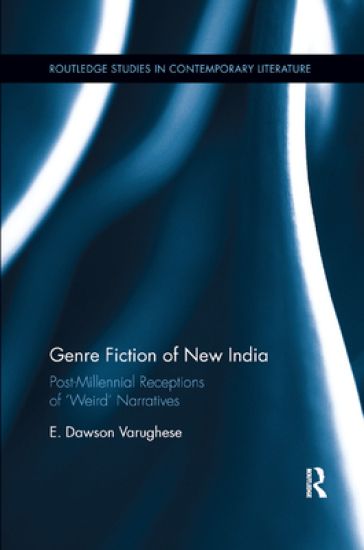
Genre Fiction of New India

Genre Fiction of New India

E. Dawson Varughese

Routledge
2019
nidottu
This book investigates fiction in English, written within, and published from India since 2000 in the genre of mythology-inspired fiction in doing so it introduces the term ‘Bharati Fantasy’. This volume is anchored in notions of the ‘weird’ and thus some time is spent understanding this term linguistically, historically (‘wyrd’) as well as philosophically and most significantly socio-culturally because ‘reception’ is a key theme to this book’s thesis. The book studies the interface of science, Hinduism and itihasa (a term often translated as ‘history’) within mythology-inspired fiction in English from India and these are specifically examined through the lens of two overarching interests: reader reception and the genre of weird fiction. The book considers Indian and non-Indian receptions to the body of mythology-inspired fiction, highlighting how English fiction from India has moved away from being identified as the traditional Indian postcolonial text. Furthermore, the book reveals broader findings in relation to identity and Indianness and India’s post-millennial society’s interest in portraying and projecting ideas of India through its ancient cultures, epic narratives and cultural (Hindu) figures.
Genre Fiction of New India

Genre Fiction of New India

E. Dawson Varughese

Routledge
2016
sidottu
This book investigates fiction in English, written within, and published from India since 2000 in the genre of mythology-inspired fiction in doing so it introduces the term ‘Bharati Fantasy’. This volume is anchored in notions of the ‘weird’ and thus some time is spent understanding this term linguistically, historically (‘wyrd’) as well as philosophically and most significantly socio-culturally because ‘reception’ is a key theme to this book’s thesis. The book studies the interface of science, Hinduism and itihasa (a term often translated as ‘history’) within mythology-inspired fiction in English from India and these are specifically examined through the lens of two overarching interests: reader reception and the genre of weird fiction. The book considers Indian and non-Indian receptions to the body of mythology-inspired fiction, highlighting how English fiction from India has moved away from being identified as the traditional Indian postcolonial text. Furthermore, the book reveals broader findings in relation to identity and Indianness and India’s post-millennial society’s interest in portraying and projecting ideas of India through its ancient cultures, epic narratives and cultural (Hindu) figures.
Post-Millennial Indian Speculative Fiction in English

Post-Millennial Indian Speculative Fiction in English

E. Dawson Varughese

BLOOMSBURY PUBLISHING PLC
2025
sidottu
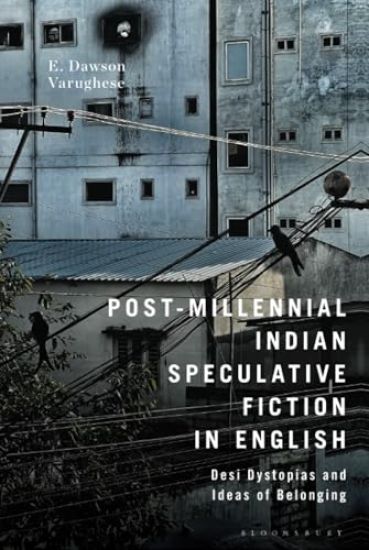
Exploring expressions of ‘Indianness’ buried within and scattered across post-millennial Indian speculative fiction in English, this book asks questions around what it means to ‘belong’ to an India of ‘now’ and what it might mean to belong to multiple Indias of the (near) future.With dystopia, near-future, apocalyptic Indias and fantastical metropolises all imagined across this body of writing, Post-Millennial Indian Speculative Fiction in English traces economic, social and political transformations in post-2000 ‘New India’ across these various narratives. Drawing on established notions of the speculative, Dawson Varughese argues for a recognized, post-millennial canon of Indian speculative writing in English which moves beyond Western-centric frames of reference, centring instead on Indian sensibilities, expressions of belonging to India and speculative ‘Indian’ futures.Organized around key tropes and characteristics of post-millennial Indian speculative fiction in English to date - urban infrastructures, citizenship, bodies and biotech, future (Indian) histories and climate catastrophes – it takes stock of a range of science fiction, fantasy, near-future and dystopian novels and short stories and offers critical insights into the writings of Samit Basu, Varun Thomas Mathew, Gautam Bhatia, Rimi B. Chatterjee, Prayaag Akbar and Anil Menon, alongside many others. Post-millennial Indian Speculative Fiction in English examines shifting ideas of what it means to belong to India and conceptions of India as a nation and pulls these ideas together, creating a workable framework of understanding for this nascent field as we move into the third decade of the millennium.
Reading New India

Reading New India

E. Dawson Varughese

Bloomsbury Academic USA
2013
nidottu
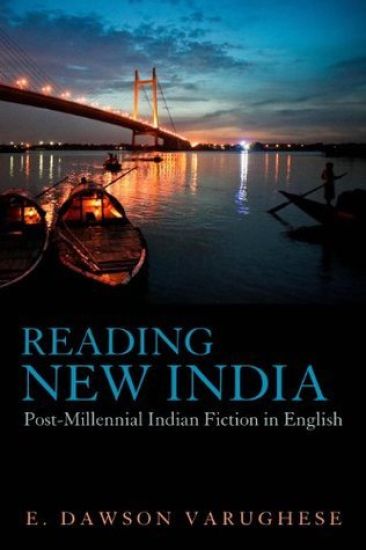
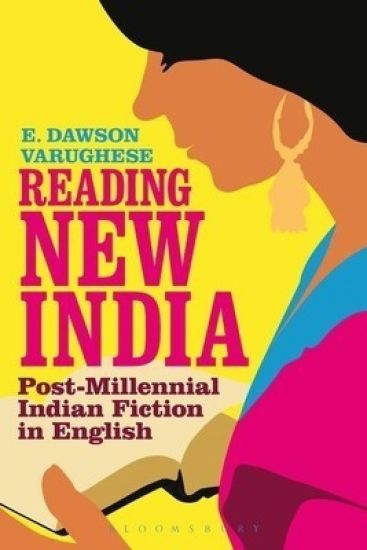
Reading New India is an insightful exploration of contemporary Indian writing in English. Exploring the work of such writers as Aravind Adiga (author of the Man-Booker Prize winning White Tiger), Usha K.R. and Taseer, the book looks at how the 'new' India has been recreated and defined in an English Language literature that is now reaching a global audience. The book describes how Indian fiction has moved beyond notions of 'postcolonial' writing to reflect an increasingly confident and diverse cultures.Reading New India covers such topics as:- Representation of the city: Mumbai and Bangalore- Chick Lit to Crick Lit - Call centre dramas and corporate lives - Crime novels and Bharati narratives - Graphic novelsIncluding a chronological time-line of major social, cultural and political reforms, biographies of the major authors covered, further reading and a glossary of Hindi terms, this book is an essential guide for students of contemporary world literature and postcolonial writing.
Reading New India

Reading New India

E. Dawson Varughese

Bloomsbury Academic USA
2013
sidottu
Reading New India is an insightful exploration of contemporary Indian writing in English. Exploring the work of such writers as Aravind Adiga (author of the Man-Booker Prize winning White Tiger), Usha K.R. and Taseer, the book looks at how the 'new' India has been recreated and defined in an English Language literature that is now reaching a global audience. The book describes how Indian fiction has moved beyond notions of 'postcolonial' writing to reflect an increasingly confident and diverse cultures.Reading New India covers such topics as: •Representations of the city - from Mumbai to Calcutta •Young India - from Chick Lit to Blog Novels •Genre fiction - crime novels, science fiction and fantasy •Bollywood adaptations and Graphic Novels. Including a chronological time-line of major social, cultural and political reforms, biographies of the major authors covered, further reading and a glossary of Hindi terms, this book is an essential guide for students of contemporary world literature and postcolonial writing.
Visuality and Identity in Post-millennial Indian Graphic Narratives

Visuality and Identity in Post-millennial Indian Graphic Narratives

E. Dawson Varughese

Springer International Publishing AG
2017
sidottu
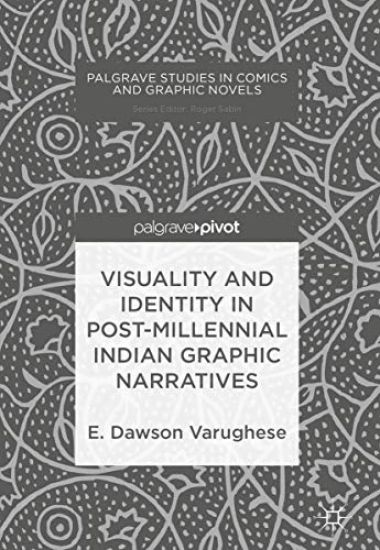
This book investigates the intersection of Indian society, the encoding of post-millennial modernity and ‘ways of seeing’ through the medium of Indian graphic narratives. If seeing in Indian cultures is a mode of knowing then what might we decode and know from the Indian graphic narratives examined here? The book posits that the ‘seeing’ of post-millennial Indian graphic narratives revolves around a visuality of the inauspicious, complemented by narratives of the same. Examining both form and content across nine Indian, post-millennial graphic narratives, this book will appeal to those working in South Asian visual studies, cultural studies and comics-graphic novel studies more broadly.
Visuality and Identity in Post-millennial Indian Graphic Narratives

Visuality and Identity in Post-millennial Indian Graphic Narratives

E. Dawson Varughese

Springer International Publishing AG
2018
nidottu
This book investigates the intersection of Indian society, the encoding of post-millennial modernity and ‘ways of seeing’ through the medium of Indian graphic narratives. If seeing in Indian cultures is a mode of knowing then what might we decode and know from the Indian graphic narratives examined here? The book posits that the ‘seeing’ of post-millennial Indian graphic narratives revolves around a visuality of the inauspicious, complemented by narratives of the same. Examining both form and content across nine Indian, post-millennial graphic narratives, this book will appeal to those working in South Asian visual studies, cultural studies and comics-graphic novel studies more broadly.