

Kirjahaku
Etsi kirjoja tekijän nimen, kirjan nimen tai ISBN:n perusteella.
47 kirjaa tekijältä E. E. Cummings


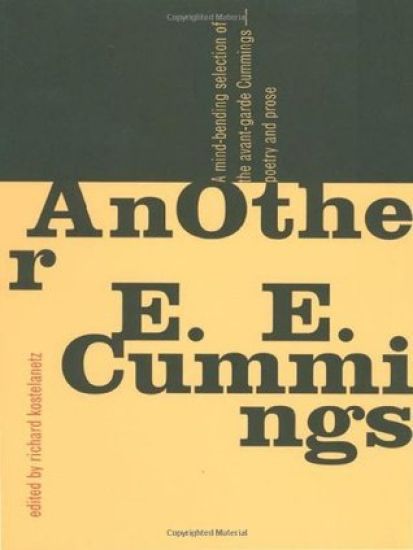
AnOther E.E. Cummings
E. E. Cummings; Richard Kostelanetz
Liveright Publishing Corporation
2000
nidottu
As a poet, Cummings was a pioneer not only in linguistic and typographic inventions, but also in sound and concrete poetry. But his prose is no less experimental; he wrote memoirs, essays, and fiction that are constantly provocative and often radically experimental. To read the avant-garde Cummings is to read a writer who consistently broke with established norms, "never to rest and never to have: only to grow." To not read the avant-garde Cummings is to not read Cummings.
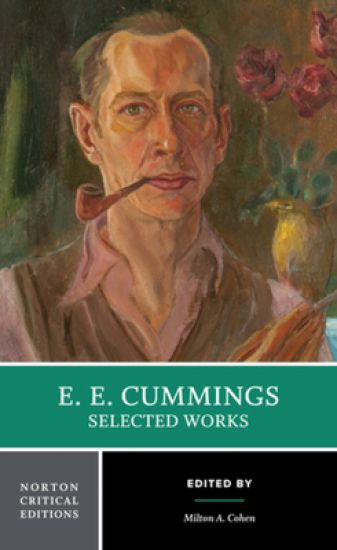
This Norton Critical Edition includes: 166 poems spanning the range of Cummings’s career, selections of his prose and dramatic writing, twelve paintings and sketches, and three facsimiles of his drafts—the first ever annotated and cross-genre collection of his work aimed at student readers.Annotations, headnotes and a thorough introduction by Milton A. Cohen, along with an essay by Cohen chronicling the development of Cummings’s idiosyncratic style.Four contemporary reviews and six critical essays—by Randall Jarrell, Edmund Wilson, Isabelle Alfandary and Michael Webster, among others—prefaced by an overview.Comparative studies of two poems—featuring five different responses to each—designed to promote classroom discussion.A chronology, a selected bibliography and an index of the poems.

Puella Mea and the Collected Poetry of e.e. cummings - 1910-1926
E. E. Cummings
Ragged Hand
2022
nidottu

With a new introduction by Pulitzer Prize-winning poet Stephen Dunn, this redesigned and fully reset edition of Complete Poems collects and presents all the poems published or designated for publication by E.E. Cummings in his lifetime.

The Theatre of E. E. Cummings
E. E. Cummings; Norman Friedman
Liveright Publishing Corporation
2013
sidottu
The Theatre of E. E. Cummings collects in their entirety Cummings’s long out-of-print theatrical works: the plays HIM (1927), Anthropos (1930), and Santa Claus (1946), and the ballet treatment Tom (1935). In HIM, a creatively blocked artist and his lover, Me, struggle to bridge the impasse in their relationship and in his art. In Anthropos, a Platonic parable, three “infrahumans” brainstorm slogans while a man sketches on a cave wall; and in Santa Claus, Death and Saint Nick exchange identities. Harriet Beecher Stowe’s Uncle Tom’s Cabin is reimagined as dance, transforming the novel into a symbolic attack against Evil itself. Cummings’s prodigious creativity is on display in each of these works, which are ultimately about the place of the artist outside of society. “DON’T TRY TO UNDERSTAND IT, LET IT TRY TO UNDERSTAND YOU,” Cummings famously wrote about his intentions for the stage. Thoughtful and witty, Cummings’s dramas are an integral part of his canon.
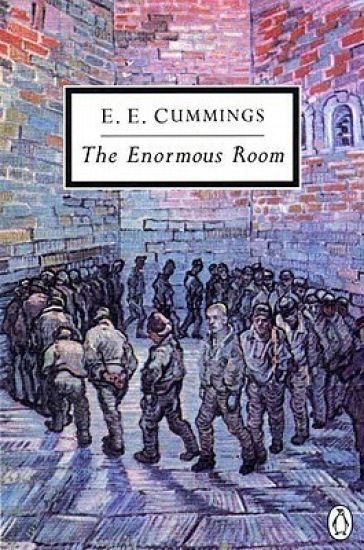
In 1917 young Edward Estlin Cummings went to France as a volunteer with a Red Cross ambulance unit on the western front. But his free-spirited, insubordinate ways soon got him tagged as a possible enemy of La Patrie, and he was summarily tossed into a French concentration camp at La Ferte-Mace in Normandy. Under the vilest conditions, Cummings found fulfillment of his ever elusive quest for freedom. The Enormous Room, his account of his four-month confinement, reads like a latter-day Pilgrim's Progress, a journey into dispossession, to a place among the most debased and deprived of human creatures. Cummings's hopeful tone reflects the essential paradox of his existence: to lose everything is to become free, and so to be saved.For more than seventy years, Penguin has been the leading publisher of classic literature in the English-speaking world. With more than 1,700 titles, Penguin Classics represents a global bookshelf of the best works throughout history and across genres and disciplines. Readers trust the series to provide authoritative texts enhanced by introductions and notes by distinguished scholars and contemporary authors, as well as up-to-date translations by award-winning translators.
The author begins his “nonlectures” with the warning “I haven’t the remotest intention of posing as a lecturer.” Then, at intervals, he proceeds to deliver the following:1. i & my parents2. i & their son3. i & selfdiscovery4. i & you & is5. i & now & him6. i & am & santa clausThese talks contain selections from the poetry of Wordsworth, Donne, Shakespeare, Dante, and others, including e. e. cummings. Together, it forms a good introduction to the work of e. e. cummings.
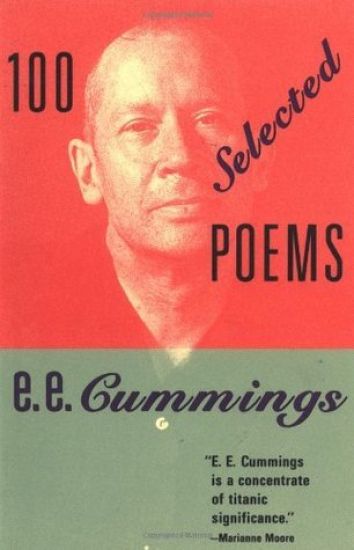
Lyrical verses span the career of a twentieth-century American poet, and illuminate his concern for the future of humanity

One hundred and fifty-six poems, grouped by theme, are accompanied by drawings, oils, and watercolors by the poet
Fresh and candid, by turns earthy, tender, defiant, and romantic, Cummings's poems celebrate the uniqueness of each individual, the need to protest the dehumanizing force of organizations, and the exuberant power of love.
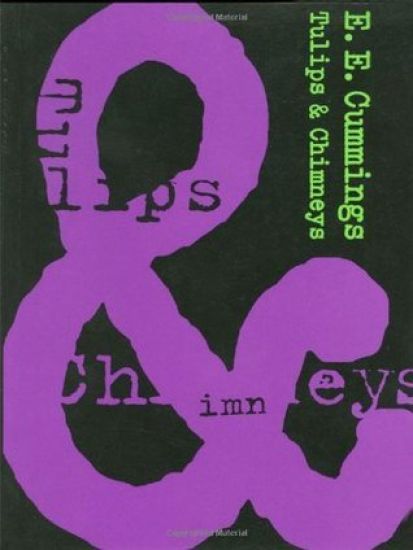
Fresh and candid, by turns earthy, tender, defiant, and romantic, Cummings's poems celebrate the uniqueness of each individual, the need to protest the dehumanizing force of organizations, and the exuberant power of love.
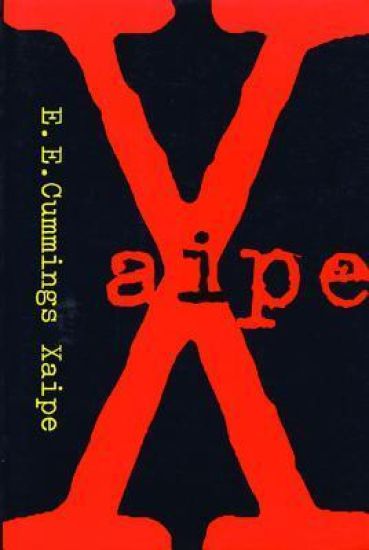
Among many poems can be found "dying is fine)but Death," "so many selves(so many friends and gods," "when serpents bargain for the right to squirm," "no time ago," "I thank You God for most this amazing," and "now all the fingers of this tree(darling)have."
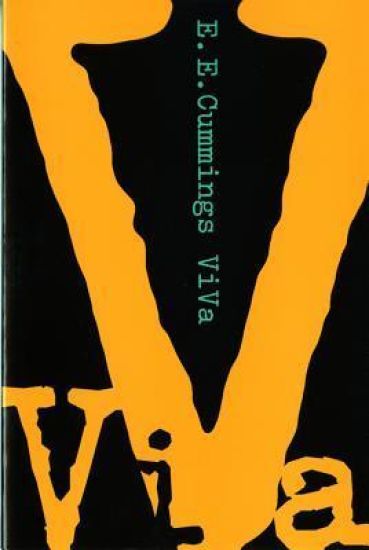
First published in 1931, ViVa contains four of E. E. Cummings' most experimental poems as well as some of his most memorable. The volume includes such no-famous celebrations as "i sing of Olaf glad and big" and "if there are any heavens my mother will (all be herself) have," along with such favorites as "Space being (don't forget to remember) Curved," "a clown's smirk in the skull of a baboon," and "somewhere I have never traveled, gladly beyond."