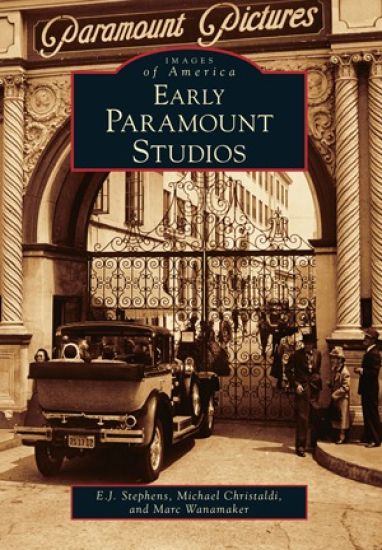
For over 100 years, Paramount Pictures has been captivating movie and television audiences worldwide with its alluring imagery and compelling stories. Arising from the collective genius of Adolph Zukor, Jesse L. Lasky, and Cecil B. DeMille during the 1910s, Paramount Pictures is home to such enduring classics as Wings, Sunset Boulevard, The Ten Commandments, Love Story, The Godfather, the Indiana Jones series, Chinatown, Forrest Gump, Braveheart, Titanic, and Star Trek. Early Paramount Studios chronicles Paramount's origins, culminating in the creation and expansion of the lot at 5555 Melrose Avenue, the last major motion picture studio still in Hollywood.
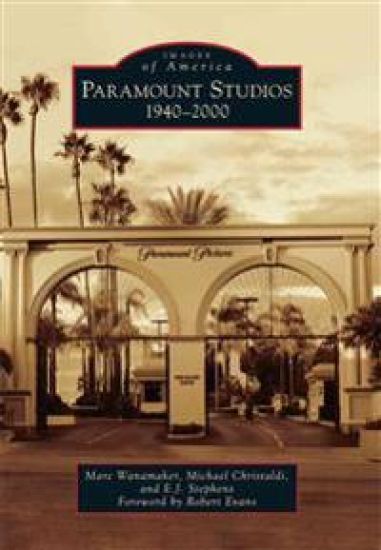
The fascinating tale of Hollywood powerhouse Paramount Pictures--beginning with its birth in the 1910s through the turbulent decade of the 1930s--was told in Early Paramount Studios by Marc Wanamaker, Michael Christaldi, and E.J. Stephens. Now the same authors are back to tell the next 60 years of the studio saga in Paramount Studios: 1940-2000, with a foreword by former Paramount head of production Robert Evans. This book picks up the story during the time of World War II--a successful era for the studio--which was followed by a decade of decline due to the upstart medium of television. By the 1960s, the studio teetered on the brink of bankruptcy before rebounding, thanks to several 1970s blockbusters, such as Love Story, The Godfather, and Chinatown. The tale continues through the final decades of the 20th century when Paramount showcased some of the greatest hits in its history.
The fascinating tale of Hollywood powerhouse Paramount Pictures beginning with its birth in the 1910s through the turbulent decade of the 1930s was told in Early Paramount Studios by Marc Wanamaker, Michael Christaldi, and E.J. Stephens. Now the same authors are back to tell the next 60 years of the studio saga in Paramount Studios: 1940 2000, with a foreword by former Paramount head of production Robert Evans. This book picks up the story during the time of World War II a successful era for the studio which was followed by a decade of decline due to the upstart medium of television. By the 1960s, the studio teetered on the brink of bankruptcy before rebounding, thanks to several 1970s blockbusters, such as Love Story, The Godfather, and Chinatown. The tale continues through the final decades of the 20th century when Paramount showcased some of the greatest hits in its history."
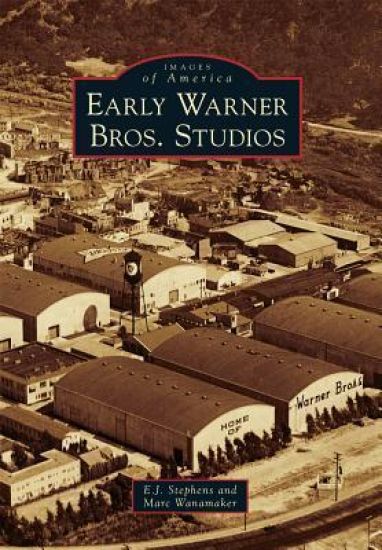
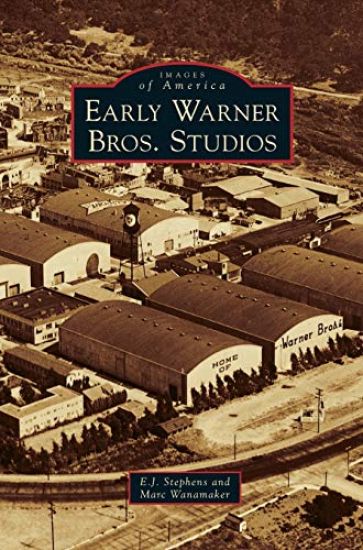
Since 1928, Warner Bros. has produced thousands of beloved films and television shows at the studio's magical 110-acre film factory in Burbank. This collection of evocative images concentrates on the Warner Bros. legacy from the 1920s to the 1950s, when timeless classics such as Casablanca, The Maltese Falcon, and East of Eden came to life. It also looks at WB's earlier homes along Hollywood's "Poverty Row," the birthplace of Looney Tunes, and the site of WB's pioneering marriage between film and sound in the 1920s. Early Warner Bros. Studios also tells the tale of four brothers--Harry, Albert, Sam, and Jack Warner--scions of a Polish Jewish immigrant family who rose from the humblest of origins to become Hollywood moguls of enormous and lasting influence.
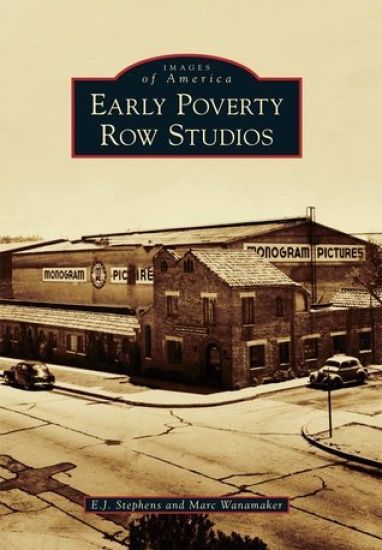
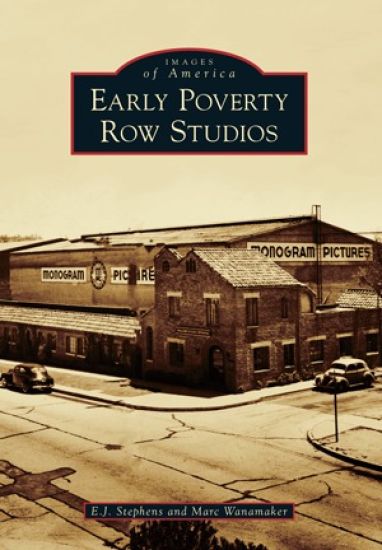
The history of Hollywood is often seen only through the lens of the major studios, forgetting that many of Tinseltown s early creations came from micro-studios stretched along Sunset Boulevard in an area disparagingly known as Poverty Row. Here, the first
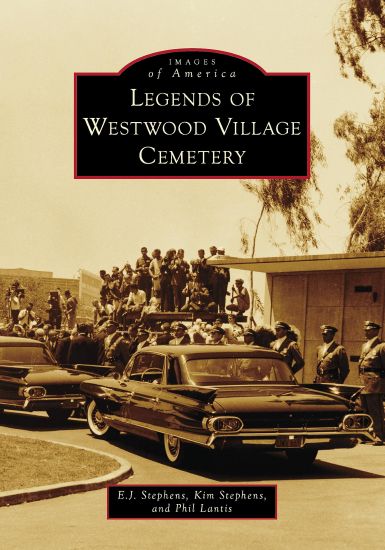
Westwood Memorial Park Cemetery, located on Los Angeles's trendy west side, has been the leading choice for celebrity burials since Marilyn Monroe was interred here in 1962. The cemetery houses the remains of a plethora of household names, including Patty Andrews, Eve Arden, Lew Ayres, Jim Backus, Richard Basehart, Peter Bogdanovich, Ray Bradbury, Fanny Brice, Les Brown, Truman Capote, John Cassavetes, James Coburn, Jackie Collins, Richard Conte, Tim Conway, Bob Crane, Rodney Dangerfield, Richard Dawson, Kirk Douglas, Peter Falk, Farrah Fawcett, June Foray, Stan Freberg, Eva Gabor, Merv Griffin, Jonathan Harris, Hugh Hefner, Florence Henderson, Brian Keith, Stan Kenton, Jack Klugman, Don Knotts, Burt Lancaster, Peggy Lee, Janet Leigh, Jack Lemmon, Karl Malden, Dean Martin, Walter Matthau, Rod McKuen, David Nelson, Lloyd Nolan, Carroll O'Connor, Heather O'Rourke, Bettie Page, Wolfgang Petersen, Gregor Piatigorsky, Donna Reed, Buddy Rich, Minnie Riperton, Doris Roberts, Wayne Rogers, George C. Scott, Sidney Sheldon, Robert Stack, Dorothy Stratten, Alvin Toffler, Mel Torm , Josef von Sternberg, Harry Warren, Cornel Wilde, Billy Wilder, Carl Wilson, Natalie Wood, Darryl F. Zanuck, Frank Zappa, and hundreds more.n Legends of Westwood Village Cemetery, Hollywood film historians husband-and-wife team E.J. and Kim Stephens and Phil Lantis take readers on a fascinating tour of this unique Los Angeles burial ground.
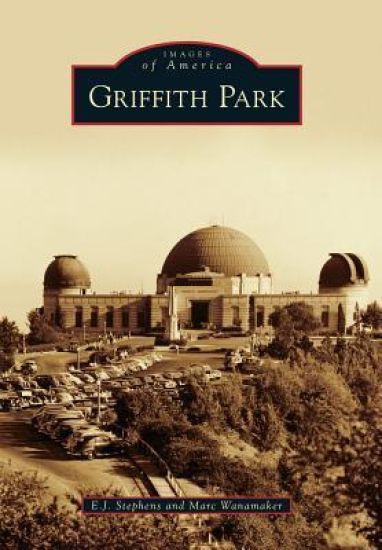
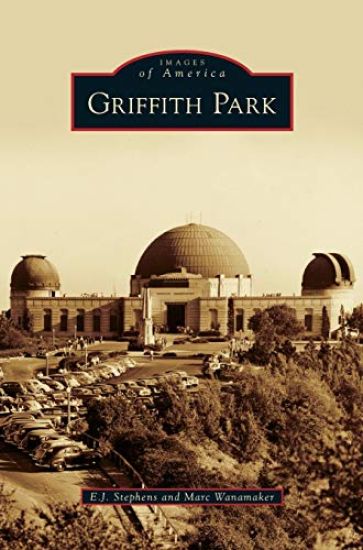
Carved from the former Spanish land grant known as Rancho Los Feliz, Griffith Park, a rugged, 4,300-acre wilderness located in the heart of Los Angeles, has been the principal playground for Angelenos for over a century. Since 1896, when the land was donated to the city by controversial philanthropist Col. Griffith J. Griffith, generations of weekenders have picnicked, camped, golfed, ridden horses, hiked, bicycled, and played ball in the park. To this day, visitors still climb aboard its mini-train and merry-go-round and explore its zoo, museums, amphitheater, and world-famous observatory. The park, which lies in the shadow of the Hollywood sign, has been a frequent filming site for legendary movies like Back to the Future, Birth of a Nation, and Rebel Without a Cause.