Kirjojen hintavertailu. Mukana 11 244 527 kirjaa ja 12 kauppaa.

Kirjahaku

Etsi kirjoja tekijän nimen, kirjan nimen tai ISBN:n perusteella.

10 kirjaa tekijältä E. P. Sanders

Paul

Paul

E. P. Sanders

Oxford University Press
2001
nidottu
Paul is the most powerful human personality in the history of the Church. A missionary, theologian, and religious genius, in his epistles he laid the foundations on which later Christian theology was built. In his highly original introduction to Paul's life and thought, E. P. Sanders, whose research on Paul has substantially influenced recent scholarship, pays equal attention to Paul's fundamental convictions and the sometimes convoluted ways in which they were worked out. ABOUT THE SERIES: The Very Short Introductions series from Oxford University Press contains hundreds of titles in almost every subject area. These pocket-sized books are the perfect way to get ahead in a new subject quickly. Our expert authors combine facts, analysis, perspective, new ideas, and enthusiasm to make interesting and challenging topics highly readable.
Judaism

Judaism

E. P. Sanders

SCM Press
1992
nidottu
In this now-classic work, E. P. Sanders argues against prevailing views regarding the Judaism of the Second Temple period, for example, that the Pharisees dominated Jewish Palestine or that the Mishnah offers a description of general practice. In contrast, Sanders carefully shows that what was important was the "common Judaism" of the people with their observances of regular practices and the beliefs that informed them. Sanders discusses early rabbinic legal material not as rules, but as debates within the context of real life. He sets Pharisees, Sadducees, and Essenes in relation to the Judaism of ordinary priests and people. Here then is a remarkably comprehensive presentation of Judaism as a functioning religion: the temple and its routine and festivals; questions of purity, sacrifices, tithes, and taxes; common theology and hopes for the future; and descriptions of the various parties and groups culminating in an examination of the question "who ran what?" Sanders offers a detailed, clear, and well-argued account of all aspects of Jewish religion of the time.
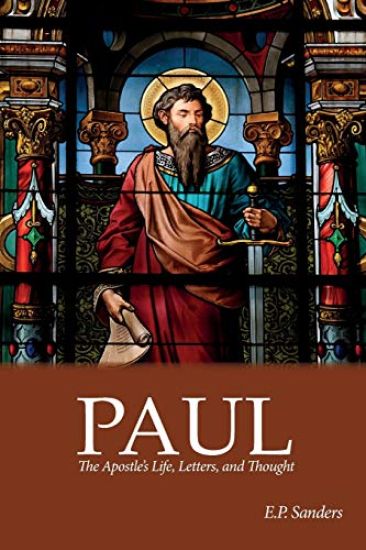
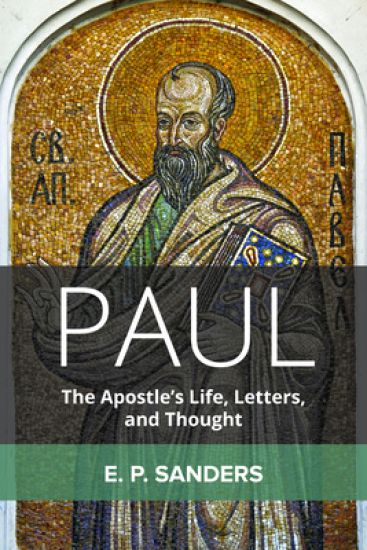
Paul

Paul

E. P. Sanders

SCM PRESS
2015
nidottu
E. P. Sanders offers a comprehensive study of Paul's life and work, drawing on a lifetime of studying Christianity's most controversial apostle, a rabbi who became the apostle to the Gentiles
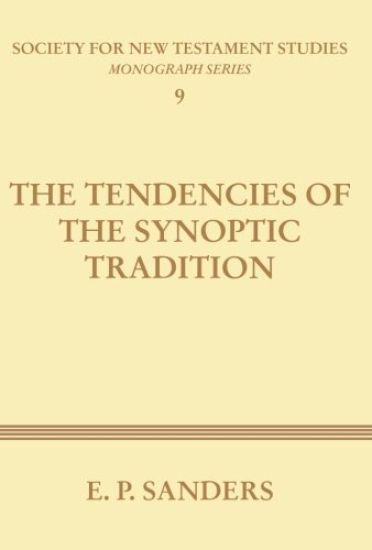
The Tendencies of the Synoptic Tradition

The Tendencies of the Synoptic Tradition

E. P. Sanders

Cambridge University Press
2006
pokkari
The Synoptic Gospels contain traditions about Jesus which differ in some respects from Gospel to Gospel and, it is presumed, from the very earliest Christian traditions. Scholars often seek to establish the earliest form of each tradition and the methods and criteria they use are of the greatest importance. Dr Sanders here provides a reassessment of this whole problem. His study deals directly with the question of determining the reliability of the Synoptic Gospels.
Paul, the Law, and the Jewish People

Paul, the Law, and the Jewish People

E. P. Sanders

Augsburg Fortress
1983
pokkari
This book is devoted both to the problem of Paul's view of the law as a whole, and to his thought about and relation to his fellow Jews. Building upon his previous study, the critically acclaimed Paul and Palestinian Judaism, E.P. Sanders explores Paul's Jewishness by concentrating on his overall relationship to Jewish tradition and thought. Sanders addresses such topics as Paul's use of scripture, the degree to which he was a practicing Jew during his career as apostle to the Gentiles, and his thoughts about his "kin by race" who did not accept Jesus as the messiah. In short, Paul's thoughts about the law and his own people are re-examined with new awareness and great care. Sanders addresses an important chapter in the history of the emergence of Christianity. Paul's role in that development -- specially in light of Galatians and Romans -- is now re-evaluated in a major way. This book is in fact a significant contribution to the study of the emergent normative self-definition in Judaism and Christianity during the first centuries of the common era.
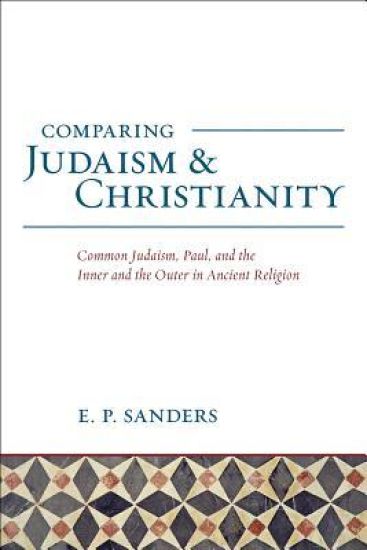
Comparing Judaism and Christianity

Comparing Judaism and Christianity

E. P. Sanders

Fortress Press,U.S.
2016
pokkari
Few scholars have so shaped the contemporary debate on the relation of early Christianity to early Judaism as E. P. Sanders, and no one has produced a clearer or more distinctive vision of that relationship" as it was expressed in the figures of Jesus of Nazareth and Paul the apostle. Gathered for the first time within one cover, here Sanders presents formative essays that show the structure of his approach and the insights it produces into Paul's relationship to Judaism and the Jewish law. Sanders addresses matters of definition ("common Judaism," "covenantal nomism"), diversity (the Judaism of the Dead Sea Scrolls and the Diaspora), and key exegetical and historical questions relative to Jesus, Paul, and Christian origins in relationship to early Judaism. These essays show a leading scholar at his most erudite as he carries forward and elaborates many of the insights that have become touchstones in New Testament interpretation.
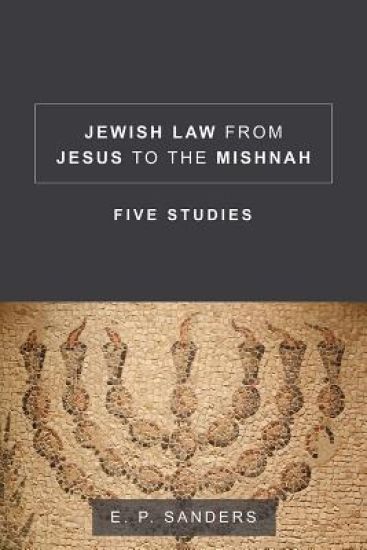
Jewish Law from Jesus to the Mishnah

Jewish Law from Jesus to the Mishnah

E. P. Sanders

Fortress Press,U.S.
2016
pokkari
In this volume E. P. Sanders presents five studies that advance the re-examination of the nature of Jewish law that he began in Jesus and Judaism (Fortress Press, 1985). As usual, he is able to shed new light on old questions and demonstrate that many accepted interpretations are misguided. MPPA chapter on "The Synoptic Jesus and the Law" considers how serious the legal issues discussed between Jesus and his opponents would have been, had they been authentic. Two chapters explore whether the Pharisees had oral law, and whether they ate ordinary food in purity (the thesis of Jacob Neusner). A study of Jewish food and purity laws in the Greek-speaking Diaspora bears on the particular point of law which led to the argument between Peter and Paul at Antioch. At last, Sanders turns to a pointed essay that sets his own approach to rabbinic traditions and the Mishnah in distinct contrast from that of Jacob Neusner. A new preface points to the enduring contribution of these compelling and influential studies.
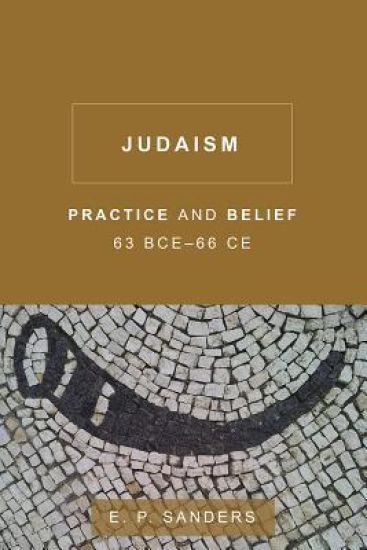
Judaism

Judaism

E. P. Sanders

Fortress Press,U.S.
2016
pokkari
In this now-classic work, E. P. Sanders argued against prevailing views regarding the Judaism of the Second Temple period, for example, that the Pharisees dominated Jewish Palestine or that the Mishnah offers a description of general practice. In contrast, Sanders carefully shows that what was important was the "common Judaism" of the people with their observances of regular practices and the beliefs that informed them. Sanders discusses early rabbinic legal material not as rules, but as debates within the context of real life. He sets Pharisees, Sadducees, and Essenes in relation to the Judaism of ordinary priests and people. Here then is a remarkably comprehensive presentation of Judaism as a functioning religion: the temple and its routine and festivals; questions of purity, sacrifices, tithes, and taxes; common theology and hopes for the future; and descriptions of the various parties and groups culminating in an examination of the question "who ran what?" Sanders offers a detailed, clear, and well-argued account of all aspects of Jewish religion of the time.