Kirjojen hintavertailu. Mukana 11 518 949 kirjaa ja 12 kauppaa.

Kirjahaku

Etsi kirjoja tekijän nimen, kirjan nimen tai ISBN:n perusteella.

16 kirjaa tekijältä Earl E. Fitz

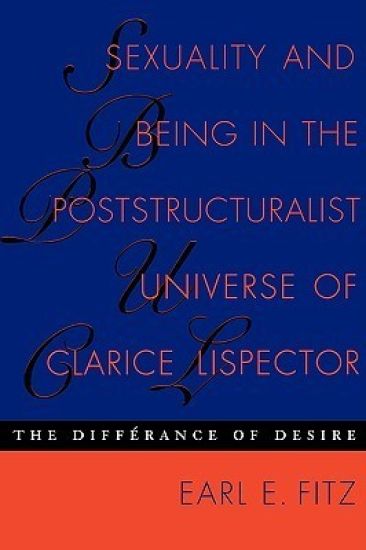
Sexuality and Being in the Poststructuralist Universe of Clarice Lispector
Driven by an unfulfilled desire for the unattainable, ultimately indefinable Other, the protagonists of the novels and stories of acclaimed Brazilian writer Clarice Lispector exemplify and humanize many of the issues central to poststructuralist thought, from the nature of language, truth, and meaning to the unstable relationships between language, being, and reality. In this book, Earl Fitz demonstrates that, in turn, poststructuralism offers important and revealing insights into all aspects of Lispector's writing, including her style, sense of structure, characters, themes, and socio-political conscience. Fitz draws on Lispector's entire oeuvre-novels, stories, crÔnicas, and children's literature-to argue that her writing consistently reflects the basic tenets of poststructuralist theory. He shows how Lispector's characters struggle over and humanize poststructuralist dilemmas and how their essential sense of being is deeply dependent on a shifting, and typically transgressive, sense of desire and sexuality.
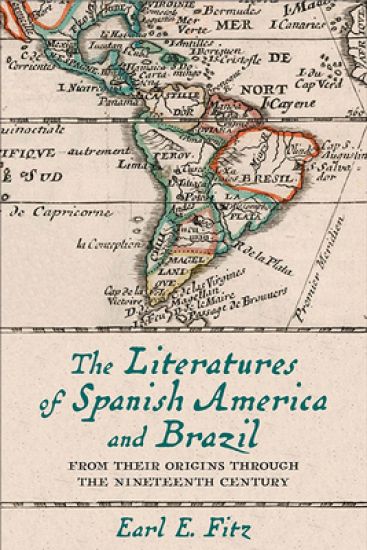
The Literatures of Spanish America and Brazil

The Literatures of Spanish America and Brazil

Earl E. Fitz

UNIVERSITY OF VIRGINIA PRESS
2023
sidottu
In this survey of Central and South American literature, Earl E. Fitz provides the first book in English to analyze the Portuguese- and Spanish-language American canons in conjunction, uncovering valuable insights about both. Fitz works by comparisons and contrasts: the political and cultural situation at the turn of the fifteenth century in Spain and Portugal; the indigenous American cultures encountered by the Spanish and Portuguese and their legacy of influence; the documented discoveries of Colón and Caminha; the colonial poetry of Mexico’s Sor Juana Inés de la Cruz and Brazil’s Gregório de Matos; culminating in a meticulous evaluation of the poetry of Nicaragua’s Rubén Darío and the prose fiction of Brazil’s Machado de Assis. Fitz, an award-winning scholar of comparative literature, contends that at the end of the nineteenth century, Latin America produced two great literary revolutions, both unique in the western hemisphere, and best understood together.
The Literatures of Spanish America and Brazil

The Literatures of Spanish America and Brazil

Earl E. Fitz

UNIVERSITY OF VIRGINIA PRESS
2023
pokkari
In this survey of Central and South American literature, Earl E. Fitz provides the first book in English to analyze the Portuguese- and Spanish-language American canons in conjunction, uncovering valuable insights about both. Fitz works by comparisons and contrasts: the political and cultural situation at the turn of the fifteenth century in Spain and Portugal; the indigenous American cultures encountered by the Spanish and Portuguese and their legacy of influence; the documented discoveries of Colón and Caminha; the colonial poetry of Mexico’s Sor Juana Inés de la Cruz and Brazil’s Gregório de Matos; culminating in a meticulous evaluation of the poetry of Nicaragua’s Rubén Darío and the prose fiction of Brazil’s Machado de Assis. Fitz, an award-winning scholar of comparative literature, contends that at the end of the nineteenth century, Latin America produced two great literary revolutions, both unique in the western hemisphere, and best understood together.
The Literatures of Spanish America and Brazil Volume 2

The Literatures of Spanish America and Brazil Volume 2

Earl E. Fitz

UNIVERSITY OF VIRGINIA PRESS
2025
sidottu
Charting the twentieth-century course of the literature of the Americas The second volume of Earl E. Fitz’ s magisterial survey of the field, The Literatures of Spanish America and Brazil: The Twentieth Century, analyzes Spanish- and Portuguese-language writing throughout South and Central America as well as in the United States and Canada, where it expanded and flourished over the course of the century. Fitz argues that Spanish American and Brazilian literatures should be treated as two sides of the same coin, together forging a hemispheric identity as new literary aesthetics and political crises swept through the Americas. Fitz takes readers on a comparative journey, analyzing writers such as Octavio Paz and Juan Rulfo from Mexico, Julia de Burgos and Luis Palé s Matos from Puerto Rico, Jorge Luis Borges and Victoria Ocampo from Argentina, and Má rio de Andrade and Patrí cia Galvã o from Brazil, among many others, to inspire a more thoroughly integrated understanding of the literature of the Americas.
The Literatures of Spanish America and Brazil Volume 2

The Literatures of Spanish America and Brazil Volume 2

Earl E. Fitz

UNIVERSITY OF VIRGINIA PRESS
2025
pokkari
Charting the twentieth-century course of the literature of the Americas The second volume of Earl E. Fitz's magisterial survey of the field, The Literatures of Spanish America and Brazil: The Twentieth Century, analyzes Spanish- and Portuguese-language writing throughout South and Central America as well as in the United States and Canada, where it expanded and flourished over the course of the century. Fitz argues that Spanish American and Brazilian literatures should be treated as two sides of the same coin, together forging a hemispheric identity as new literary aesthetics and political crises swept through the Americas. Fitz takes readers on a comparative journey, analyzing writers such as Octavio Paz and Juan Rulfo from Mexico, Julia de Burgos and Luis Palé s Matos from Puerto Rico, Jorge Luis Borges and Victoria Ocampo from Argentina, and Má rio de Andrade and Patrí cia Galvã o from Brazil, among many others, to inspire a more thoroughly integrated understanding of the literature of the Americas.
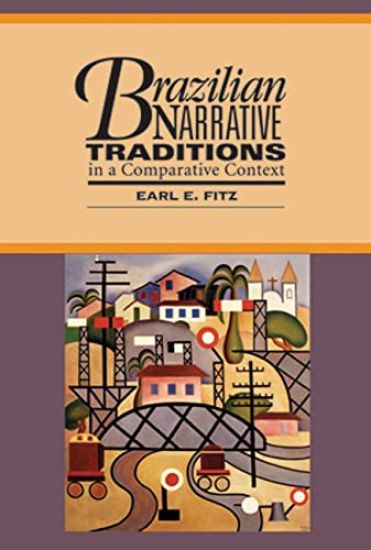
Brazilian Narrative Traditions in a Comparative Text

Brazilian Narrative Traditions in a Comparative Text

Earl E. Fitz

Modern Language Association of America
2005
sidottu
In the first volume of the MLA series World Literatures Reimagined, Earl E. Fitz examines the complex relation between Brazil and the United States: the colonial similarities and differences; the shared issues of slavery and racism; the mutual influences; and the political, economic, and cultural interactions, sometimes troubling, between the two nations. He also provides an extensive overview of Brazilian narrative, tracing its roots in both European and indigenous traditions, and of Brazilian literature in English translation.
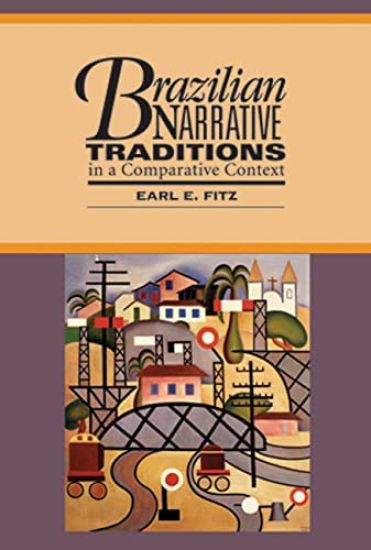
Brazilian Narrative Traditions in a Comparative Text

Brazilian Narrative Traditions in a Comparative Text

Earl E. Fitz

Modern Language Association of America
2005
nidottu
In the first volume of the MLA series World Literatures Reimagined, Earl E. Fitz examines the complex relation between Brazil and the United States: the colonial similarities and differences; the shared issues of slavery and racism; the mutual influences; and the political, economic, and cultural interactions, sometimes troubling, between the two nations. He also provides an extensive overview of Brazilian narrative, tracing its roots in both European and indigenous traditions, and of Brazilian literature in English translation.
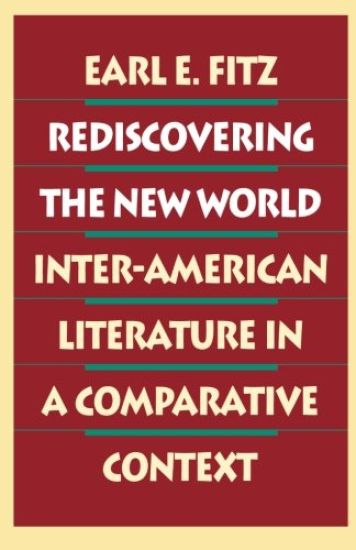
Rediscovering the New World

Rediscovering the New World

Earl E. Fitz

University of Iowa Press
1991
nidottu
The concept of "American" literature is not the exclusive province of any one nation. Thanks to the historical circumstances that governed the European conquest and settlement of the Americas, we can and should approach the writings of English and French Canada, the United States, Spanish America, and Brazil as a cohesive group of American literature, worthy of study without constant reference to European texts. Now, Rediscovering the New World makes a timely addition to this expanding field on Inter-American scholarship that should help lead tothe formation of a new canon. This adventurous and ambitious work begins with an examination of Pre-Columbian literature (and shows that his powerful tradition remains alive and well in the twentieth century), then confronts the narratives of discovery and conquest, the New World epic, identity as the Ur-theme of American literature, miscegenation as another integral theme, and regionalism as a shaping force. Other striking these and juxtapositions include a comparison of Henry James and Machado de Assis as the first two great New World novelists, modernism as both a distinct literary movement and an amorphous body of aesthetic principles, and the conflict between "civilization" and "barbarism." More in the exploratory spirit of the French Canadian voyageur than in the spirit of the conquistador, Rediscovering the New World is the first scholarly work in English to integrate an international set of American literary cultures. It should inspire other explorers as the field of Inter-American literary relations continues to evolve.
The Evolution of Literature in the Americas

The Evolution of Literature in the Americas

Earl E. Fitz

TAYLOR FRANCIS LTD
2025
sidottu
This book offers a systematic and comparative history of the evolution of literature in the Americas, from the beginning to the present day. It begins with an introduction that assesses the development of the field and then proceeds to a chapter on the literature of pre-Columbian and indigenous America. It then moves forward chronologically, from the arrival of the Europeans (beginning in 1492) to the year 2026. Including indigenous literature, the other American literatures represented in the book are those of Canada (both Francophone and Anglophone), the United States, the Caribbean (francophone and Anglophone), Spanish America, and Brazil. Not every book ever written in the Americas is included, of course; only those that, in the author’s estimation, offer some valid point of comparison with other American literary cultures. These points of comparison include issues of theme, genre, literary periods, literature and other disciplines, such as history, art, music, or politics, cases of influence and reception, and translation. The book’s emphasis is on viewing American literature from a hemispheric and comparative lens.
Machado de Assis and Female Characterization

Machado de Assis and Female Characterization

Earl E. Fitz

Bucknell University Press
2014
sidottu
This book examines the nature and function of the main female characters in the nine novels of Machado de Assis. The basic argument is that Machado had a particular interest in female characterization and that his fictional women became increasingly sophisticated and complex as he matured and developed as a writer and social commentator. This book argues that Machado developed, especially after 1880 (and what is usually considered the beginning of his “mature” period), a kind of anti-realistic, “new narrative,” one that presents itself as self-referential fictional artifice but one that also cultivates a keen social consciousness. The book also contends that Machado increasingly uses his female characterizations to convey this social consciousness and to show that the new Brazil that is emerging both before and after the establishment of the Brazilian Republic (1889) requires not only the emancipation of the black slaves but the emancipation of its women as well.
Machado de Assis and Female Characterization

Machado de Assis and Female Characterization

Earl E. Fitz

Bucknell University Press
2016
nidottu
This book examines the nature and function of the main female characters in the nine novels of Machado de Assis. The basic argument is that Machado had a particular interest in female characterization and that his fictional women became increasingly sophisticated and complex as he matured and developed as a writer and social commentator. This book argues that Machado developed, especially after 1880 (and what is usually considered the beginning of his “mature” period), a kind of anti-realistic, “new narrative,” one that presents itself as self-referential fictional artifice but one that also cultivates a keen social consciousness. The book also contends that Machado increasingly uses his female characterizations to convey this social consciousness and to show that the new Brazil that is emerging both before and after the establishment of the Brazilian Republic (1889) requires not only the emancipation of the black slaves but the emancipation of its women as well.
Clarice Lispector

Clarice Lispector

Earl E. Fitz

PURDUE UNIVERSITY PRESS
2024
sidottu
Clarice Lispector: From Brazil to the World explains why the Brazilian master was so transformative of modern Brazilian literature and why she has become such a celebrity in the world literature arena. This book also shows why Lispector is not one writer, as many think, but many writers. By offering close readings of her novels, stories, and nonfiction pieces, Earl E. Fitz shows the diverse sides of her literary world. Chapters cover Lispector's devotion to language and its connection to identity; her political engagement; and her humor, eroticism, and struggle with the concept of God. The last chapter seeks to explain why this most singular of modern Brazilian writers commands such a passionate global following.
Clarice Lispector

Clarice Lispector

Earl E. Fitz

PURDUE UNIVERSITY PRESS
2024
nidottu
Clarice Lispector: From Brazil to the World explains why the Brazilian master was so transformative of modern Brazilian literature and why she has become such a celebrity in the world literature arena. This book also shows why Lispector is not one writer, as many think, but many writers. By offering close readings of her novels, stories, and nonfiction pieces, Earl E. Fitz shows the diverse sides of her literary world. Chapters cover Lispector's devotion to language and its connection to identity; her political engagement; and her humor, eroticism, and struggle with the concept of God. The last chapter seeks to explain why this most singular of modern Brazilian writers commands such a passionate global following.
Machado de Assis and Narrative Theory

Machado de Assis and Narrative Theory

Earl E. Fitz

Rutgers University Press
2019
nidottu
This book makes the argument that Machado de Assis, hailed as one of Latin American literature’s greatest writers, was also a major theoretician of the modern novel form. Steeped in the works of Western literature and an imaginative reader of French Symbolist poetry, Machado creates, between 1880 and 1908, a “new narrative,” one that will presage the groundbreaking theories of Swiss linguist Ferdinand de Saussure by showing how even the language of narrative cannot escape being elusive and ambiguous in terms of meaning. It is from this discovery about the nature of language as a self-referential semiotic system that Machado crafts his “new narrative.” Long celebrated in Brazil as a dazzlingly original writer, Machado has struggled to gain respect and attention outside the Luso-Brazilian ken. He is the epitome of the “outsider” or “marginal,” the iconoclastic and wildly innovative genius who hails from a culture rarely studied in the Western literary hierarchy and so consigned to the status of “eccentric.” Had the Brazilian master written not in Portuguese but English, French, or German, he would today be regarded as one of the true exemplars of the modern novel, in expression as well as in theory. Published by Bucknell University Press. Distributed worldwide by Rutgers University Press.
Machado de Assis and Narrative Theory

Machado de Assis and Narrative Theory

Earl E. Fitz

Rutgers University Press
2019
sidottu
This book makes the argument that Machado de Assis, hailed as one of Latin American literature’s greatest writers, was also a major theoretician of the modern novel form. Steeped in the works of Western literature and an imaginative reader of French Symbolist poetry, Machado creates, between 1880 and 1908, a “new narrative,” one that will presage the groundbreaking theories of Swiss linguist Ferdinand de Saussure by showing how even the language of narrative cannot escape being elusive and ambiguous in terms of meaning. It is from this discovery about the nature of language as a self-referential semiotic system that Machado crafts his “new narrative.” Long celebrated in Brazil as a dazzlingly original writer, Machado has struggled to gain respect and attention outside the Luso-Brazilian ken. He is the epitome of the “outsider” or “marginal,” the iconoclastic and wildly innovative genius who hails from a culture rarely studied in the Western literary hierarchy and so consigned to the status of “eccentric.” Had the Brazilian master written not in Portuguese but English, French, or German, he would today be regarded as one of the true exemplars of the modern novel, in expression as well as in theory. Published by Bucknell University Press. Distributed worldwide by Rutgers University Press.
Inter-American Literary History

Inter-American Literary History

Earl E. Fitz

Peter Lang AG
2017
sidottu
Inter-American literary study is an exciting and fast-growing area of comparative scholarship. The Americas are tied together by a common historical heritage and by a history of social, political, economic, and cultural interaction. As a contribution to this field, this book brings together the literatures and literary histories of English and French Canada, the United States, Spanish America, the Caribbean, and Brazil. The periods focused on include the Colonial Period, the Nineteenth Century, Modernism and Modernity, the 1960s, and the Contemporary Moment. The author contrasts the different European heritages that were brought to the New World. In addition, the literature and culture of Native America is referred to in each of these sections that will be of use to the reader interested in this important topic, which we can rightly think of as the common denominator of all American literature.