Kirjojen hintavertailu. Mukana 11 342 296 kirjaa ja 12 kauppaa.

Kirjahaku

Etsi kirjoja tekijän nimen, kirjan nimen tai ISBN:n perusteella.

6 kirjaa tekijältä Eberhard Wolff

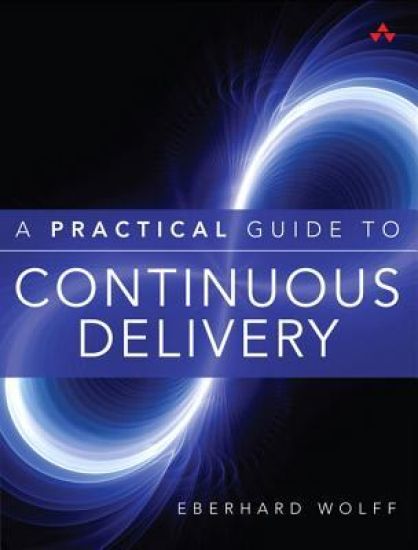
Practical Guide to Continuous Delivery, A

Practical Guide to Continuous Delivery, A

Eberhard Wolff

Addison Wesley
2017
nidottu
Using Continuous Delivery, you can bring software into production more rapidly, with greater reliability. A Practical Guide to Continuous Delivery is a 100% practical guide to building Continuous Delivery pipelines that automate rollouts, improve reproducibility, and dramatically reduce risk. Eberhard Wolff introduces a proven Continuous Delivery technology stack, including Docker, Chef, Vagrant, Jenkins, Graphite, the ELK stack, JBehave, and Gatling. He guides you through applying these technologies throughout build, continuous integration, load testing, acceptance testing, and monitoring. Wolff’s start-to-finish example projects offer the basis for your own experimentation, pilot programs, and full-fledged deployments. A Practical Guide to Continuous Delivery is for everyone who wants to introduce Continuous Delivery, with or without DevOps. For managers, it introduces core processes, requirements, benefits, and technical consequences. Developers, administrators, and architects will gain essential skills for implementing and managing pipelines, and for integrating Continuous Delivery smoothly into software architectures and IT organizations. Understand the problems that Continuous Delivery solves, and how it solves themEstablish an infrastructure for maximum software automationLeverage virtualization and Platform as a Service (PAAS) cloud solutionsImplement build automation and continuous integration with Gradle, Maven, and JenkinsPerform static code reviews with SonarQube and repositories to store build artifactsEstablish automated GUI and textual acceptance testing with behavior-driven designEnsure appropriate performance via capacity testingCheck new features and problems with exploratory testingMinimize risk throughout automated production software rolloutsGather and analyze metrics and logs with Elasticsearch, Logstash, Kibana (ELK), and GraphiteManage the introduction of Continuous Delivery into your enterpriseArchitect software to facilitate Continuous Delivery of new capabilities

Microservices: A Practical Guide

Microservices: A Practical Guide

Eberhard Wolff

Createspace Independent Publishing Platform
2018
nidottu
Microservices have many advantages: Efficiently implementing more features, bringing software into production faster, robustness and easy scalability are among them. But implementing a microservices architecture and selecting the necessary technologies are difficult challenges.This book shows microservices recipes that architects can customize and combine into a microservices menu. In this way, the implementation of microservices can be individually adapted to the requirements of the project.Eberhard Wolff introduces microservices, self-contained systems, micro- and macro-architecture and the migration to microservices. The second part shows the microservices recipes: Basic technologies such as Docker or PaaS, frontend integration with links, JavaScript or ESI (Edge Side Includes). This is followed by asynchronous microservices with Apache Kafka or REST / Atom. In the synchronous approaches, the book discusses REST with the Netflix stack, Consul, PaaS with Cloud Foundry, and Kubernetes. Finally, operations is discussed: Log Analysis with Elasticsearch and Kibana, Monitoring with Prometheus, and tracing with Zipkin.The second edition is based on the feedback about the first edition. All chapters have been clarified, updated and extended. A new chapter discusses services meshes, in particular Istio with an example application. The second edition has about 35 pages more than the first edition.For each recipe there are suggestions for variations and combinations. Readers can experience all technologies hands-on with a demo project on GitHub. The outlook picks up on the operation of microservices and also shows how the reader can start with microservices in concrete terms.The book provides the technical tools to implement a microservices architecture. Demo projects and suggestions for self-study will complete the book.
Medizin Und Arzte Im Deutschen Judentum Der Reformara

Medizin Und Arzte Im Deutschen Judentum Der Reformara

Eberhard Wolff

Vandenhoeck Ruprecht GmbH Co KG
2011
sidottu
English summary: Eberhard Wolff investigates, how a modern Jewish identity from mid 18th to mid 19th century was shaped by German Jewish physicians and through medical reform debates like the ones on early burial and circumcision. German text. German description: Arzte und Medizin waren Brennpunkte des grundlegenden kulturellen Wandels, den die Juden in Deutschland in der Zeit der Haskala (der judischen Aufklarung) und der sich anschliessenden Reformara bis ca. 1850 durchmachten. Eberhard Wolff arbeitet anhand von Detailstudien heraus, dass ein modernes, variables Verstandnis vom Judischsein und eine differenziert konstruierte judische Identitat in dieser Zeit gerade unter judischen Arzten entwickelt und gerade anhand medizinisch relevanter Themen diskutiert wurden. An lokalen Beispielen wie Berlin, Hamburg, Gottingen und Dresden werden Themen wie der Reformeifer und das sakularisierte Berufsverstandnis judischer Arzte untersucht sowie Reformdebatten um die fruhe Beerdigung, die judische Beschneidung oder die Krankenbesuchsgesellschaften einer Analyse unterzogen. Das entwickelte moderne judische Selbstverstandnis hatte eine komplexe Architektur, die weit uber simple Assimilation oder ein einfaches Modell hybrider Verschmelzung mit burgerlichen Werten hinausging. So unterschieden judische Arzte mit einem professionellen Habitus gezielt zwischen ihrer arztlichen und ihrer judischer Identitat. In Reformdebatten etablierten sie sich als weltliche Experten des Judischen und entwickelten ein kulturelleres Verstandnis des Judischseins mit neuen Leitwerten und Legitimationen, das kompatibel war mit den Anforderungen der Moderne, ohne mit den judischen Traditionen generell zu brechen. Ihr judisches Selbstverstandnis mit sektoriellen und situativen Differenzierungen sowie bewussten Asymmetrien war der Versuch einer Stabilisierung judischer Identitat im historischen Wandel. Es war eine eigenstandige kulturelle Leistung aufgrund eines originaren Modernisierungswillens und nicht nur, um Anerkennung in der christlichen Mehrheitsgesellschaft zu finden.