
Kirjahaku
Etsi kirjoja tekijän nimen, kirjan nimen tai ISBN:n perusteella.
19 kirjaa tekijältä Ed Ifkovic



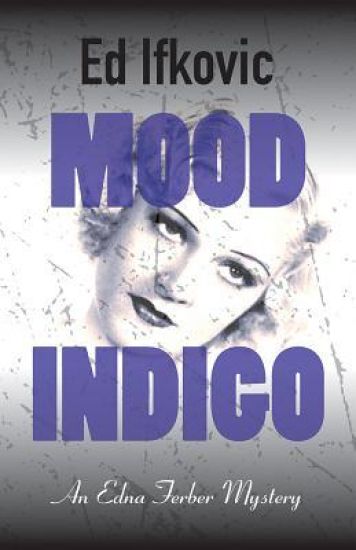
She was 1932 Broadway's newest sensation. Then she was murdered. Three years after the Crash that ushered in the Great Depression, Pulitzer Prize-winning novelist and playwright Edna Ferber finds herself a guest at Noel Coward's lavish birthday party. The British wit, enjoying the Christmas holiday season in New York and bracing for a trip to Cleveland in the new year, has filled his room with rich, famous folks whose lives continue in stark contrast to those being lived out in the city's streets and poorer neighborhoods. Edna is haunted by the dark landscape of Manhattan outside Coward's elegant rooms: the snake-like breadlines, the shanty village in Central Park, the gaunt apple sellers in threadbare suits on freezing sidewalks. She has yet to be introduced to the Automat where a few cents are the difference between nourishment and starvation. Among those who've kept fortune intact is Dougie Maddox, the financially astute but socially na ve only son of a Fifth Avenue dynasty. His widowed mother, known as Lady Maud, has kept the thirty-five-year-old on a short leash, but Dougie has crossed paths with Belinda Ross, the new Broadway songbird. He's mesmerized by her, a woman flagrantly courted by other men. But Belinda seems besotted by Dougie. Gossip flourishes - she has a shadowy past and a producer brother anxious to break onto the Great White Way. When Belinda is found strangled late one night in a Times Square Automat, jealous, hot-tempered Dougie is the prime suspect. But Noel, who had befriended him, and Edna, who likes him, team up to clear Dougie's name. Their investigation inevitably takes them deep into Belinda's circle and her past. As the crowds in Time Square ready for a half-hearted New Year's celebration, are Noel and Edna watching the last act of a New York Othello, or is there some other killer-maybe more than one-afoot on the icy pavements of New York City?

"The Arctic trails have their secret talesThat would make your blood run cold."-Robert W. Service, "The Cremation of Sam McGee" Jack Mabie claims to be the meanest man in Alaska, yet the old sourdough seems to be just one of the crusty geezers in every roadhouse bewildered by how his lawless frontier life has morphed into the pastel 1950s world of martini cocktail bars up and down Fairbanks' Second Avenue. Sonia Petrievich, an editor at The Gold, her father Hank's weekly pro-statehood paper, learns through the mukluk telegraph about Jack's gleeful account of murders and robberies and shell games during the gold rush days. Her breezy March 1957 profile lets Jack revel in newfound notoriety. Edna Ferber, not completely satisfied with her forthcoming novel Ice Palace, has just returned for further research and is fascinated by Jack and his wild tales. Plus the previous summer, young Athabascan lawyer Noah West, a war hero and Sonia's lover, bent on bettering the lives of Alaskan Natives, had sharpened Edna's sense of a corner of the territory she'd ignored: "I felt I'd lost sight of the real Alaska, the heartless icebox in the North, the blank-eyed old-timers still haunted by gold... I'd forgotten Alaska is still frontier...a violent, mysterious world below the glossy skin I'd written about." When Jack is found beaten to death, Noah becomes a suspect. Two violent deaths follow. Edna, Noah's advocate, decides she needs to clear his name, believing the murders are connected. As debates over potential statehood rage, Edna begins unearthing scandals and sordid stories hidden in Fairbanks but also dating back to village life in Fort Yukon and down into the Lower 48. What horrible secrets carried from the Arctic Circle have led to so many murders? And what novelist could stand aside from this story?

The Arctic trails have their secret talesThat would make your blood run cold.-Robert W. Service, The Cremation of Sam McGee Jack Mabie claims to be the meanest man in Alaska, yet the old sourdough seems to be just one of the crusty geezers in every roadhouse bewildered by how his lawless frontier life has morphed into the pastel 1950s world of martini cocktail bars up and down Fairbanks' Second Avenue. Sonia Petrievich, an editor at The Gold, her father Hank's weekly pro-statehood paper, learns through the mukluk telegraph about Jack's gleeful account of murders and robberies and shell games during the gold rush days. Her breezy March 1957 profile lets Jack revel in newfound notoriety. Edna Ferber, not completely satisfied with her forthcoming novel Ice Palace, has just returned for further research and is fascinated by Jack and his wild tales. Plus the previous summer, young Athabascan lawyer Noah West, a war hero and Sonia's lover, bent on bettering the lives of Alaskan Natives, had sharpened Edna's sense of a corner of the territory she'd ignored: I felt I'd lost sight of the real Alaska, the heartless icebox in the North, the blank-eyed old-timers still haunted by gold... I'd forgotten Alaska is still frontier...a violent, mysterious world below the glossy skin I'd written about. When Jack is found beaten to death, Noah becomes a suspect. Two violent deaths follow. Edna, Noah's advocate, decides she needs to clear his name, believing the murders are connected. As debates over potential statehood rage, Edna begins unearthing scandals and sordid stories hidden in Fairbanks but also dating back to village life in Fort Yukon and down into the Lower 48. What horrible secrets carried from the Arctic Circle have led to so many murders? And what novelist could stand aside from this story?

Trespassing in the Garden of Eden: 20 Memories
Ed Ifkovic
Createspace Independent Publishing Platform
2013
nidottu
"Her name was Eve and she spent her long days toiling in the Garden of Eden. Actually her name was Eva, my Hungarian grandmother, and, well, she did spend her days toiling in the Garden of Eden." So begins one of the 20 stories the author relates-a tapestry of memory that moves from the post-war 1940s to the end of the explosive 1960s.Here are accounts that touch on "Frosty the Snowman" and an ill-fated Christmas pageant, First Communion and other harrowing tales of a Catholic boyhood, anti-Commie Joe McCarthy on TV, the sensational death of Marilyn Monroe, the exotic allure of Brigitte Bardot on the movie screen, the KKK in North Carolina, the Kennedy assassination, a wedding at the National Press Club, and even the farewell tour of Diana Ross and the Supremes.Some of these tales are humorous or farcical, some sad and melancholic, some downright satirical, and some-maybe just a bit tragic. Anecdotal, colorful, speckled with contemporary observation, together these recollections depict one man's take on the dynamic world he lived in. Through it all, he knew he was having the time of his life.
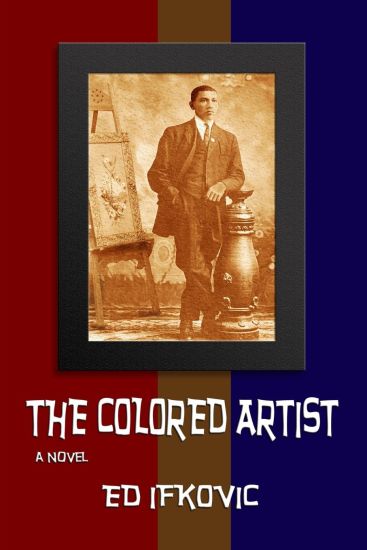
In 1881 Charles Ethan Porter, a black artist from Hartford, Connecticut, traveled to Paris to study art, carrying with him an enthusiastic letter of introduction from Samuel Clemens, Hartford's most famous resident. During the next three years Porter wrote letters to Clemens-but Clemens never replied. The famous author turned his back on the talented painter.What happened? In The Colored Artist the author suggests an answer.Based on the life of the late-nineteenth-century artist, the novel is narrated by his student and lifelong friend, German-American artist Gustave Adolph Hoffman, whose own life was often lived in the shadow of his mentor. As one of the few black painters in America at the time, Porter not only had to deal with horrific racism but also the stigma attached to any artist whose specialty was floral and fruit still lifes, largely categorized as "women's art." Porter cherished his friendship with Hoffman and another painter named Samuel Morley Comstock, a charismatic but troubled young friend. The story of these three men's lives, beginning in the 1890s in Manhattan and ending in rural Connecticut, is a tale of artistic temperament silhouetted against the background of the shifting currents of American society and art at the end of the Victorian Age.

Confessions of Ricky Hitler: 20 Memories
Ed Ifkovic
Createspace Independent Publishing Platform
2014
nidottu
Talking of Michelangelo: 20 Memories
Ed Ifkovic
Createspace Independent Publishing Platform
2014
nidottu
In this third volume of memories, the author depicts some of the people he's met along the way. These anecdotal sketches illuminate some famous folks, to be sure-encounters with writers like Walter Tevis (The Hustler), Robert Penn Warren (All the King's Men), and Richard Yates (Revolutionary Road), even sidelong glances at historical giants like Abe Lincoln and Ulysses S. Grant, as well as a sad tale of ill-fated Manhattan socialite Irene Silverman, who was the victim of notorious grifters Sante and Kenneth Kimes. But mostly we read of ordinary people-like the student who encountered aliens from outer space or the young man lost in a mental hospital on New Year's Eve or the Cuban migr who got lost in a snowstorm. There's even a misguided account of a visit to the Soviet Union back in 1976. Some chronicles are sad stories, while others are funny, but all of them reflect the author's fascination with the people around him.
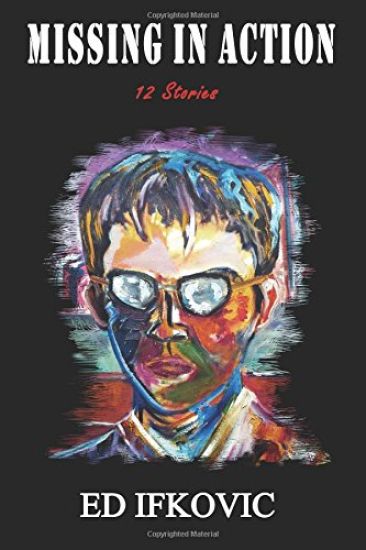
Novelist Richard Yates (Revolutionary Road) once wrote in a celebratory letter to the author: "Your strength as a writer is creating a deceptively quiet chronicle of harsh events." This collection of twelve disparate short stories reinforces Yates' succinct observation, a collection of published and unpublished fiction that explores a wide range of human experience captured through Ifkovic's vision.In such stories as "Miss Connecticut" and "Love," the author probes the life of small-town America and the scandal that lies beneath the serene surface. Others, like "Hedges," "Gaetano," and "Neighbors," are set against a backdrop of dying New England cities in which struggling families grapple with change they cannot understand. Yet others present fanciful plays on celebrity, as in "Dyanna Ross" and "Superstar," characters who live in the shadows of those whose names are up in lights. "Cleopatra" and "Missing in Action" move the reader back to the years following the long and painful Vietnam War-and its devastating legacy. In "Emilie" a troubled woman unearths an unknown letter from Emily Dickinson and it redefines her life. In "Observance" a lost man finds himself grappling with ghosts from his past that continue to haunt him. Finally, "The Marriage Room" explores the intricacies of unconventional lives.Ifkovic chronicles lives at the moment they look into shadowy mirrors-or find themselves on the edge of discovery. Together these stories reflect Yates' added assessment: the author's story lines "bring character to life on the page."
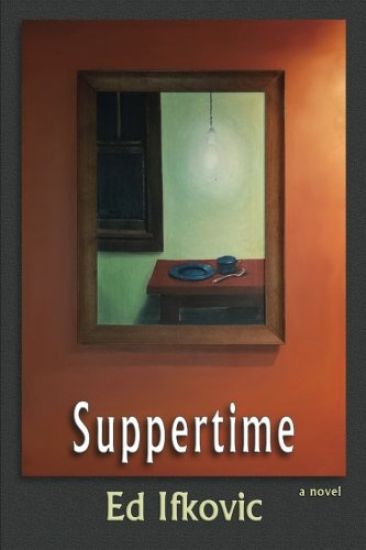
In June of 1953 Mark Antonich celebrates his twelfth birthday-and the beginning of a long summer he hopes will be filled with backyard reading, swimming in the town pool, and hanging out with his next-door cousin Tony Zivich. An ordinary summer in a small Connecticut farming town outside New Haven.But everything changes when his leisurely, dreamy days abruptly turn into what becomes a frightening summer-nightmarish events that will color the rest of his life. He watches, helpless, confused, as his home life starts to crumble: a rebellious, older sister drifting off with dangerous older friends, his quiet mother hospitalized with a mysterious illness, his father laid off from the factory, and on TV the awful specter of the Joseph McCarthy anti-Communist hearings that hit too close to home. Worse, Petar Ivo, his mother's distant cousin from Yugoslavia, one of the wandering Displaced Persons allowed into America after the horror of World War Two, moves in-and the walls of the house echo with fear and panic.As the young Croatian-American family struggles to survive, Mark grapples with a world that confuses and alarms him. As the dead, sticky days of August unfold, Mark begins his most harrowing journey.

On the night of his retirement party from a local factory, Felix Calico is found stabbed to death in his driveway. A notorious womanizer for much of his lifetime, he made a host of enemies in the small town of North Farms, just outside New Haven, Connecticut. As Valentine's Day approaches, some suspect that Felix finally got his comeuppance from an old, vengeful flame, especially because certain clues point to the romantic holiday.Anna Farkas, a sixty-five-year-old housewife, disliked the old letch. Part of a small Hungarian-American community that grew up around the factory, nevertheless, she is bothered by the murder. Her great-nephew Mike is a local cop, a man she and her late husband raised after the death of his parents. Slowly, gathering bits of information, unwitting sleuth Anna grapples with the murder. Surrounded by a cast of opinionated characters, including her eccentric two sisters and gossipy neighbors, Anna navigates the strange waters of the town as she and Mike begin to piece together the events that led to the murder.North Farms has hidden stories no one talks about-pettiness, adultery, corruption, drunkenness, deceit, cruelty, and ultimately murder. An ex-wife and on-again-off-again mistress blame each other, but Anna believes neither is the real murderer. As she cooks daily in her kitchen, Anna reviews the evidence. Then she discovers the motive for murder-and that awareness shatters her world.
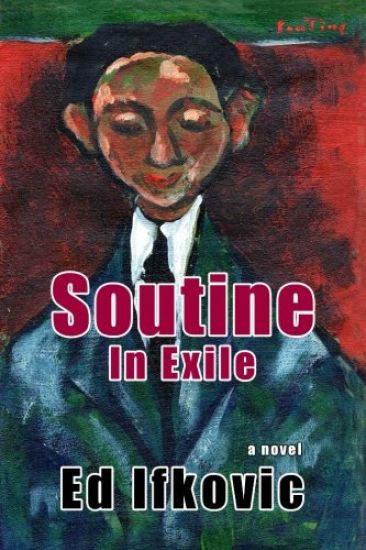
In the summer of 1943, artist Chaim Soutine is living in the small French village of Champigny-sur-Veude with his lover, Marie-Berthe Aurenche. All of France is Nazi-occupied, curfews enforced, Jews rounded up and sent to camps, and the Gestapo has been hunting for the famous Jewish painter who has fled Paris. Chronically ill from ulcers, his condition steadily worsening, Soutine persists in painting landscapes and portraits in the shadow of German authority. One day he meets a curious, crippled young boy, Jean-Pierre Chartier, whose portrait Soutine decides to paint, enthralled by the boy's stark face. During the long, hot summer, as Nazis close in and his illness becomes grievous, Soutine and Jean-Pierre forge an unusual bond, though Jean-Pierre combats opposition from his family who dislike the unkempt Russian painter. Through a series of flashbacks, the author explores crucial moments in Soutine's life-from his early days in an impoverished shtetl to his glory days in Paris-to his flight from the Nazis. In the final months of his life Soutine persists in his beloved craft, but he looks on in horror as a confused Jean-Pierre unwittingly becomes a pawn of the Nazis, and Soutine realizes how dangerous their unusual friendship has suddenly become.