Mission Monuments of New Mexico: Handbooks of Archaeological History is a comprehensive guidebook that explores the history and architecture of the Spanish colonial missions in New Mexico. Written by renowned archaeologist Edgar Lee Hewett, this book provides a detailed account of the missions' construction, their cultural significance, and the role they played in shaping the history of the region.The book is divided into two parts. The first part provides an overview of the missions' history, including their origins, the arrival of the Spanish in the region, and the establishment of the missions. It also explores the impact of the missions on the indigenous populations and the role of the church in colonial New Mexico.The second part of the book is a detailed guide to the individual missions themselves. Each mission is described in detail, including its history, architecture, and cultural significance. The book is illustrated with numerous photographs and illustrations that help bring the missions to life.Overall, Mission Monuments of New Mexico: Handbooks of Archaeological History is an essential resource for anyone interested in the history and architecture of the Spanish colonial missions in New Mexico. It provides a comprehensive overview of the missions' history and cultural significance, and is an invaluable guide to the individual missions themselves.This scarce antiquarian book is a facsimile reprint of the old original and may contain some imperfections such as library marks and notations. Because we believe this work is culturally important, we have made it available as part of our commitment for protecting, preserving, and promoting the world's literature in affordable, high quality, modern editions, that are true to their original work.
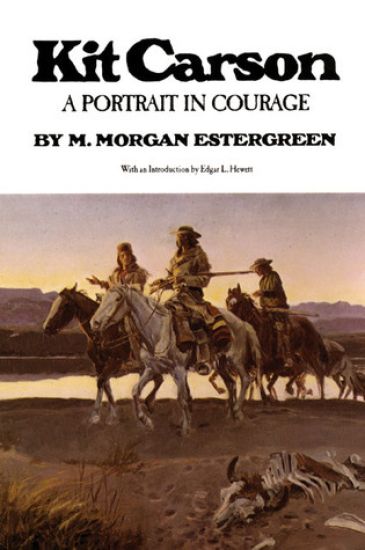
Doctor! Compadre! Adios!"" with these words passed a wiry little man who has become a legend of the Old West.Much has been written about Kit Carson, some of it truth, a great deal of it fiction. The two have been mixed all too often, resulting in an unfaithful and highly distorted picture of the Great Scout. Incorporating as its introduction a paper on the subject by the late Professor Edgar L. Hewett, M. Morgan Estergreen's Kit Carson is the long-awaited corrective to that picture.Born in the wilderness of Iredell County in Western North Carolina on December 24, 1809, Kit grew up on the frontier as it moved ever westward. In Missouri, he ran away from the saddlers to whom he had been apprenticed and joined a Santa Fe-bound caravan at Independence.Trader, interpreter, teamster, scout, trapper, guide, express rider, Indian agent, brevet brigadier general, Indian fighter - Kit Carson was all of these things and more. He was a faithful and devoted husband to Josefa, his second wife, a gentle and loving father to their seven children, and loyal and trusted friend to all who knew him. Modest and soft-spoken, he was a man of quite but fierce courage, a man who could be counted on when the chips were down.Based on the unpublished notes and other primary source materials of the late Blanche C. Grant, including interviews and letters from Kit's family and friends, Kit Carson is the story of Kit' life as he lived it, not as many wishful-thinking writers have imagined it to be.
Indians of the Rio Grande Valley is a book written by Adolph F. Bandelier that provides a comprehensive account of the indigenous people who inhabited the Rio Grande Valley of New Mexico and Texas. The book is a result of the author's extensive research and fieldwork, which he conducted in the late 19th century. The book covers the history, culture, and way of life of the various tribes that lived in the region, including the Pueblo, Apache, and Comanche. It also provides detailed information about their social organization, religious beliefs, and economic activities. Bandelier's work is considered a significant contribution to the field of anthropology and ethnography, as it provides valuable insights into the lives of the indigenous people of the Rio Grande Valley. The book is well-written and easy to read, making it accessible to a wide range of readers, including scholars, students, and general readers interested in Native American history and culture. Overall, Indians of the Rio Grande Valley is a must-read for anyone interested in the history and culture of the indigenous people of the Southwest.This is a new release of the original 1937 edition.This scarce antiquarian book is a facsimile reprint of the old original and may contain some imperfections such as library marks and notations. Because we believe this work is culturally important, we have made it available as part of our commitment for protecting, preserving, and promoting the world's literature in affordable, high quality, modern editions, that are true to their original work.