Kirjojen hintavertailu. Mukana 11 627 220 kirjaa ja 12 kauppaa.

Kirjahaku

Etsi kirjoja tekijän nimen, kirjan nimen tai ISBN:n perusteella.

5 kirjaa tekijältä Edgar Wind

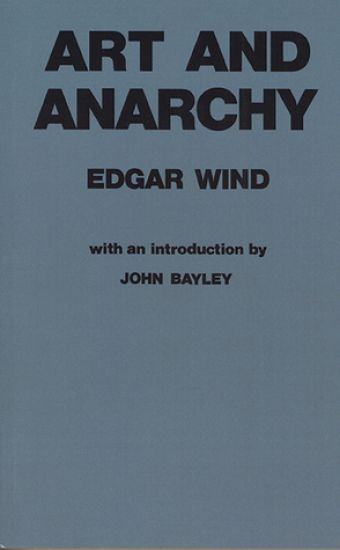
Art and Anarchy

Art and Anarchy

Edgar Wind

Northwestern University Press
1985
nidottu
Will works of the imagination ever regain the power they once had to challenge and mould society and the individual? This was the question posed by Edgar Wind's influential Reith Lectures delivered in 1960 and later expanded into his book Art and Anarchy. The book examines the various forces that have fashioned the modern view of the art, from mechanization and fear of intellect to connoisseurship and--perhaps the fundamental weakness of our age--the dispassionate acceptance of art. In the course of his discussion, Wind surveyed a wide range of topics in the history of painting, literature, music, and the plastic arts from the Renaissance to modern times.
Experiment and Metaphysics

Experiment and Metaphysics

Edgar Wind

Legenda
2001
nidottu
Edgar Wind was one of the most distinguished art historians and philosophers of the twentieth century. He made crucial contributions to debates on aesthetics and on the interdisciplinary nature of cultural history involving such other leading figures as Ernst Cassirer and Erwin Panofsky. It is not always realised, however, that his early thinking was moulded by a concern with the German philosophical tradition, culminating in the analysis of the meaning and function of scientific experimentation and proof. This first edition in English of Edgar Wind's important work Das Experiment und die Metaphysik: Zur Auflosung der kosmologischen Antinomien (1934) also carries a new introduction by Matthew Rampley, placing Wind's philosophical thinking in context. The work is being published to coincide with the opening in 2000 of the Sackler Library at Oxford, which will include a Wind Reading Room.
Die Bildsprache Michelangelos

Die Bildsprache Michelangelos

Edgar Wind

De Gruyter
2016
isokokoinen pokkari
1936 stellte der Kunsthistoriker und Philosoph Edgar Wind sein Manuskript zu Michelangelos Deckenfresken der Sixtinischen Kapelle fertig. Wind begriff den christlichen Erlösungsgedanken als fundamentales Thema des gesamten Raumes und erkannte ein polares Beziehungsgeflecht, welches ihm das Bildprogramm vollständig erschloss. Methodische Ansätze Aby Warburgs aufnehmend, dessen Mitarbeiter Wind in Hamburg war, analysierte er die Themenwahl Michelangelos. Obwohl fertiggestellt, wurde das Werk nie veröffentlicht. Es liegt nun erstmals in gedruckter Fassung vor, begleitet von einem ausführlichen Nachwort des Herausgebers.