Kirjojen hintavertailu. Mukana 11 213 693 kirjaa ja 12 kauppaa.

Kirjahaku

Etsi kirjoja tekijän nimen, kirjan nimen tai ISBN:n perusteella.

23 kirjaa tekijältä Edith Hall

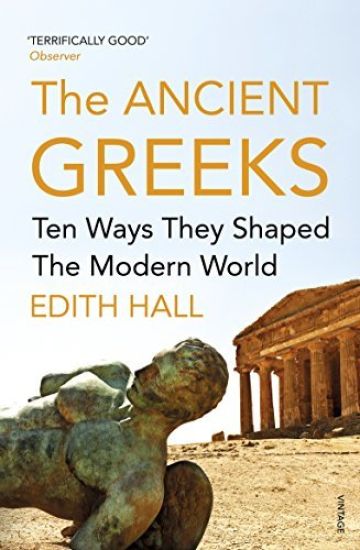
Ancient Greeks

Ancient Greeks

Edith Hall

Vintage Publishing
2016
pokkari
They gave us democracy, philosophy, poetry, rational science, the joke. They built the Parthenon and the Library of Alexandria. But who were the ancient Greeks? And what was it that enabled them to achieve so much? This title offers a revelatory way of viewing this geographically scattered people, and more.
Sophocles

Sophocles

Edith Hall

Oxford University Press
2025
nidottu
Very Short Introductions: Brilliant, Sharp, Inspiring This Very Short Introduction introduces the life, work, and influence of one of the greatest dramatists of all time, Sophocles the Athenian. Placing his plays within their historical context, and explaining the conventions of ancient Greek tragic theatre, Edith Hall spotlights their distinctive features-tight plots, titanic personalities, lucid style, sympathetic women, exquisite poetry, and stagecraft. This analysis is followed by an account of how and why Sophoclean dramas have survived to be read and widely performed into the twenty-first century. ABOUT THE SERIES: The Very Short Introductions series from Oxford University Press contains hundreds of titles in almost every subject area. These pocket-sized books are the perfect way to get ahead in a new subject quickly. Our expert authors combine facts, analysis, perspective, new ideas, and enthusiasm to make interesting and challenging topics highly readable.
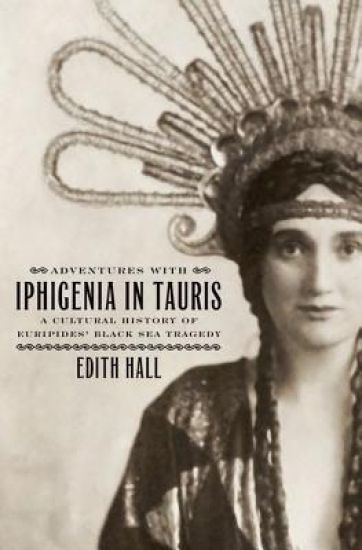
Adventures with Iphigenia in Tauris

Adventures with Iphigenia in Tauris

Edith Hall

Oxford University Press Inc
2013
sidottu
Human sacrifice, a spirited heroine, a quest ending in a hairsbreadth escape, the touching reunion of long-lost siblings, and exquisite poetry--these features have historically made Euripides' Iphigenia in Tauris one of the most influential of Greek tragedies. Yet, despite its influence and popularity in the ancient world, the play remains curiously under-investigated in both mainstream cultural studies and more specialized scholarship. With Adventures with Iphigenia in Tauris, Edith Hall provides a much-needed cultural history of this play, giving as much weight to the impact of the play on subsequent Greek and Roman art and literature as on its manifestations since the discovery of the sole surviving medieval manuscript in the 1500s. The book argues that the reception of the play is bound up with its spectacular setting on the southern coast of the Crimean peninsula in what is now the Ukraine, a territory where world history has often been made. However, it also shows that the play's tragicomic tenor and escape plot have had a tangible influence on popular culture, from romantic fiction to Hollywood action films. The thirteen chapters illustrate how reactions to the play have evolved from the ancient admiration of Aristotle and Ovid, the Christian responses of Milton and Catherine the Great, the anthropological ritualists and theatrical Modernists including James Frazer and Isadora Duncan, to recent feminist and postcolonial dramatists from Mexico to Australia. Individual chapters are devoted to the most significant adaptations of the tragedy, Gluck's opera Iphigénie en Tauride and Goethe's verse drama Iphigenie auf Tauris. Richly illustrated and accessibly written, with all texts translated into English, Adventures with Iphigenia in Tauris argues elegantly for a reappraisal of this Euripidean masterpiece.
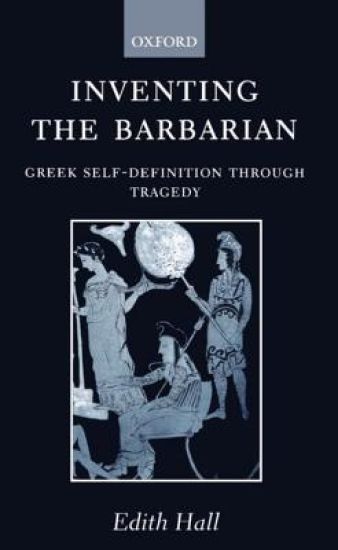
Inventing the Barbarian

Inventing the Barbarian

Edith Hall

Clarendon Press
1991
nidottu
Incest, polygamy, murder, sacrilege, impalement, castration, female power, and despotism: these are some of the images by which the Greek tragedians defined the non-Greek, `barbarian' world. This book explains for the first time the reasons behind their singular fascination with barbarians. It sets the plays against the historical background of the Panhellenic wars against Persia and the establishment of an Athenian empire based on democracy and slavery. Contemporary anthropology and political philosophy is discussed, revealing how the poets conceptualized the barbarian as the negative embodiment of Athenian civic ideals. By comparing the treatment of foreigners in Homer and tragedy, it shows that the new dimension which the idea of the barbarian had brought to the tragic theatre radically affected the past, and enriched the tragedians' repertoire of aural and visual effects. The invented barbarian of the tragic stage was a powerful cultural expression of Greek xenophobia and chauvinism, but, paradoxically, produced an outburst of creative energy and literary innovation. The D.Phil. dissertation out of which this book developed won the Hellenic Foundation's prize for the best doctoral thesis in ancient Greek studies in the UK and Republic of Ireland (1988).
Greek Tragedy

Greek Tragedy

Edith Hall

Oxford University Press
2010
sidottu
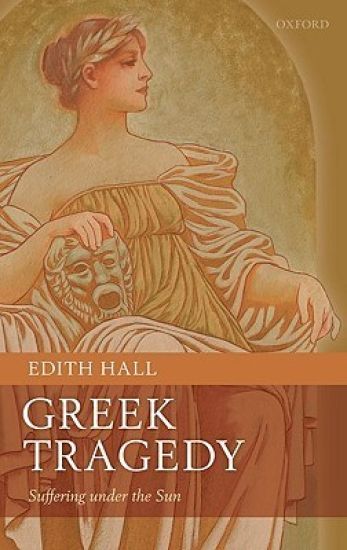
This is an invaluable introduction to ancient Greek tragedy which discusses every surviving play in detail and provides all the background information necessary for understanding the context and content of the plays. Edith Hall argues that the essential feature of the genre is that it always depicts terrible human suffering and death, but in a way that invites philosophical enquiry into their causes and effects, This enquiry was played out in the bright sunlight of open-air theatre, which became a key marker of the boundary between living and dead. The first half of the book is divided into four chapters which address the social and physical contexts in which the plays were performed, the contribution of the poets, actors, funders, and audiences, the poetic composition of the texts, their performance conventions, main themes, and focus on religion, politics, and the family. The second half consists of individual essays on each of the surviving thirty-three plays by the Greek tragedians, and an account of the recent performance of Greek tragic theatre and tragic fragments. An up-to-date 'Suggestions for further reading' is included.
The Theatrical Cast of Athens

The Theatrical Cast of Athens

Edith Hall

Oxford University Press
2006
sidottu
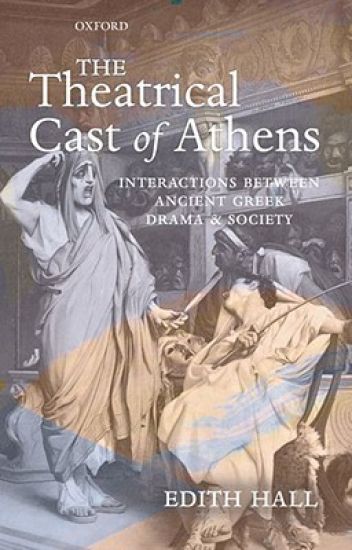
In this pioneering study Edith Hall explores the numerous different ways in which we can understand the relationship between the real, social world in which the Athenians lived and the theatrical roles that they invented. In twelve studies of role types and the theatrical conventions that contributed to their creation - including women in childbirth, drowning barbarians, horny satyrs, allegorical representations of Comedy, peasant farmers, tragic masks, and solo sung arias - she advances the argument that the interface between ancient Greek drama and social reality must be understood as a complicated and incessant process of mutual cross-pollination.
Facing Down the Furies

Facing Down the Furies

Edith Hall

YALE UNIVERSITY PRESS
2024
sidottu
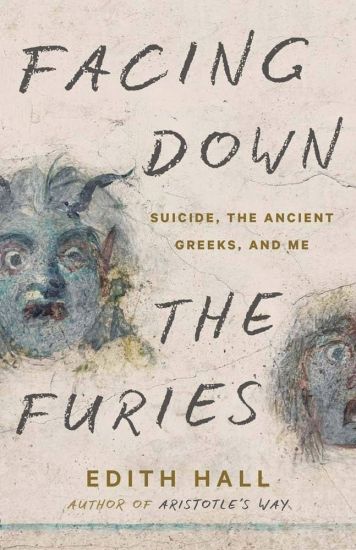
An award-winning classicist turns to Greek tragedies for the wisdom to understand the damage caused by suicide and help those who are contemplating suicide themselves “Remarkable, brave and compassionate.”—Rowan Williams, New Statesman In Sophocles’ tragedy Oedipus the Tyrant, a messenger arrives to report that Jocasta, queen of Thebes, has killed herself. To prepare listeners for this terrible news, he announces, “The tragedies that hurt the most are those that sufferers have chosen for themselves.” Edith Hall, whose own life and psyche have been shaped by such loss—her mother’s grandfather, mother, and first cousin all took their own lives—traces the philosophical arguments on suicide, from Plato and Aristotle to David Hume and Albert Camus. In this deeply personal story, Hall explores the psychological damage that suicide inflicts across generations, relating it to the ancient Greek idea of a family curse. She draws parallels between characters from Greek tragedy and her own relatives, including her great-grandfather, whose life and death bore similar motivations to Sophocles’ Ajax: both men were overwhelmed by shame and humiliation. Hall, haunted by her own periodic suicidal urges, shows how plays by Sophocles and other Greek dramatists helped her work through the loss of her grandmother and namesake Edith and understand her relationship with her own mother. The wisdom and solace found in the ancient tragedies, she argues, can help one choose survival over painful adversity and offer comfort to those who are tragically bereaved.
Epic of the Earth

Epic of the Earth

Edith Hall

YALE UNIVERSITY PRESS
2025
sidottu
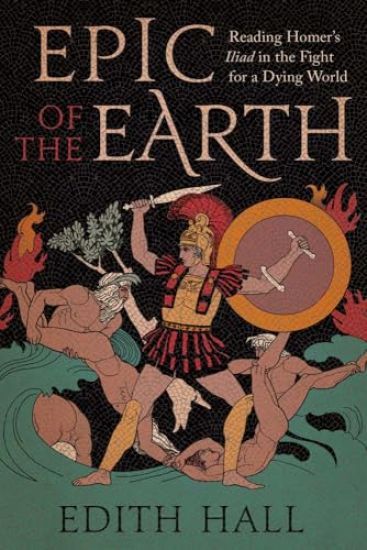
An urgent study of Homer’s Iliad, exposing the beginnings of the ecological disaster we now face and facilitating our understanding of its history The roots of today’s environmental catastrophe run deep into humanity’s past. Through this unprecedented reading of Homer’s Iliad, the award-winning classicist Edith Hall examines how this foundational text both documents the environmental practices of the ancient Greeks and betrays an awareness of the dangers posed by the destruction of the natural landscape. Underlying Homer’s account of brutal military operations, alliances, and cataclysmic struggle is a palpable understanding that the direction in which humanity was headed could create a world that was uninhabitable. Hall provides unparalleled insight into the ancient origins of climate change and argues that the Iliad exposes the deepest contradictions behind the environmental problems we have created. Indeed, it is possible that some of the violence done to the environment throughout history has been authorized, if not exacerbated, by the celebration of the exploitation of nature in Homer’s poem. Drawing compelling analogies to contemporary poetry, literature, and film, Hall demonstrates that the Iliad, as a priceless document of the mindset of early humans, can help us understand the long history of ecological degradation and inspire activism to rescue our planet from disaster.
Facing Down the Furies

Facing Down the Furies

Edith Hall

YALE UNIVERSITY PRESS
2025
pokkari
An award-winning classicist turns to Greek tragedies for the wisdom to understand the damage caused by suicide and help those who are contemplating suicide themselves “Remarkable, brave and compassionate.”—Rowan Williams, New Statesman In Sophocles’ tragedy Oedipus the Tyrant, a messenger arrives to report that Jocasta, queen of Thebes, has killed herself. To prepare listeners for this terrible news, he announces, “The tragedies that hurt the most are those that sufferers have chosen for themselves.” Edith Hall, whose own life and psyche have been shaped by such loss—her mother’s grandfather, mother, and first cousin all took their own lives—traces the philosophical arguments on suicide, from Plato and Aristotle to David Hume and Albert Camus. In this deeply personal story, Hall explores the psychological damage that suicide inflicts across generations, relating it to the ancient Greek idea of a family curse. She draws parallels between characters from Greek tragedy and her own relatives, including her great-grandfather, whose life and death bore similar motivations to Sophocles’ Ajax: both men were overwhelmed by shame and humiliation. Hall, haunted by her own periodic suicidal urges, shows how plays by Sophocles and other Greek dramatists helped her work through the loss of her grandmother and namesake Edith and understand her relationship with her own mother. The wisdom and solace found in the ancient tragedies, she argues, can help one choose survival over painful adversity and offer comfort to those who are tragically bereaved.
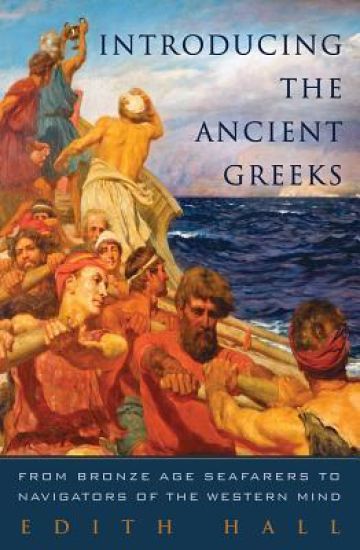
Introducing the Ancient Greeks

Introducing the Ancient Greeks

Edith Hall

WW Norton Co
2014
sidottu
The ancient Greeks invented democracy, theater, rational science, and philosophy. They built the Parthenon and the Library of Alexandria. They wrote down the timeless myths of Odysseus and Oedipus, and the histories of Leonidas s three hundred Spartans and Alexander the Great. But understanding these uniquely influential people has been hampered by their diffusion across the entire Mediterranean. Most ancient Greeks did not live in what is now Greece but in settlements scattered across Turkey, Syria, Egypt, Libya, France, Italy, Bulgaria, Russia, and Ukraine. They never formed a single unified social or political entity. Acclaimed classics scholar Edith Hall s Introducing the Ancient Greeks is the first book to offer a synthesis of the entire ancient Greek experience, from the rise of the Mycenaean kingdoms of the sixteenth century BC to the final victory of Christianity over paganism in AD 391. Each of the ten chapters visits a different Greek community at a different moment during the twenty centuries of ancient Greek history. In the process, the book makes a powerful original argument: A cluster of unique qualities made the Greeks special and made them the right people, at the right time, to take up the baton of human progress. According to Herodotus, the father of history, what made all Greeks identifiably Greek was their common descent from the same heroes, the way they sacrificed to their gods, their rules of decent behavior, and their beautiful language. Edith Hall argues, however, that their mind-set was just as important as their awe-inspiring achievements. They were rebellious, individualistic, inquisitive, open-minded, witty, rivalrous, admiring of excellence, articulate, and addicted to pleasure. But most important was their continuing identity as mariners, the restless seagoing lifestyle that brought them into contact with ethnically diverse peoples in countless new settlements, and the constant stimulus to technological innovation provided by their intense relationship with the sea. Expertly researched and elegantly told, Introducing the Ancient Greeks is an indispensable contribution to our understanding of the Greeks."
Introducing the Ancient Greeks: From Bronze Age Seafarers to Navigators of the Western Mind
The ancient Greeks invented democracy, theater, rational science, and philosophy. They built the Parthenon and the Library of Alexandria. Yet this accomplished people never formed a single unified social or political identity. In Introducing the Ancient Greeks, acclaimed classics scholar Edith Hall offers a bold synthesis of the full 2,000 years of Hellenic history to show how the ancient Greeks were the right people, at the right time, to take up the baton of human progress. Hall portrays a uniquely rebellious, inquisitive, individualistic people whose ideas and creations continue to enthrall thinkers centuries after the Greek world was conquered by Rome. These are the Greeks as you've never seen them before.
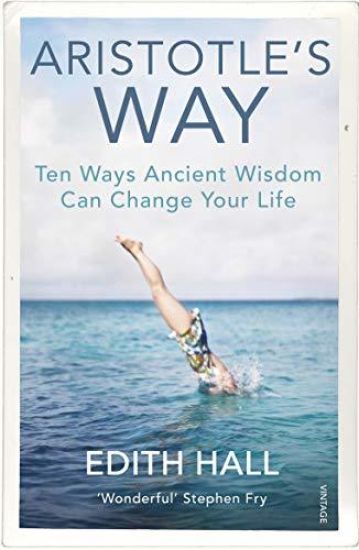
Aristotle's Way: How Ancient Wisdom Can Change Your Life
From renowned classicist Edith Hall, ARISTOTLE'S WAY is an examination of one of history's greatest philosophers, showing us how to lead happy, fulfilled, and meaningful lives Aristotle was the first philosopher to inquire into subjective happiness, and he understood its essence better and more clearly than anyone since. According to Aristotle, happiness is not about well-being, but instead a lasting state of contentment, which should be the ultimate goal of human life. We become happy through finding a purpose, realizing our potential, and modifying our behavior to become the best version of ourselves. With these objectives in mind, Aristotle developed a humane program for becoming a happy person, which has stood the test of time, comprising much of what today we associate with the good life: meaning, creativity, and positivity. Most importantly, Aristotle understood happiness as available to the vast majority us, but only, crucially, if we decide to apply ourselves to its creation--and he led by example. As Hall writes, "If you believe that the goal of human life is to maximize happiness, then you are a budding Aristotelian." In expert yet vibrant modern language, Hall lays out the crux of Aristotle's thinking, mixing affecting autobiographical anecdotes with a deep wealth of classical learning. For Hall, whose own life has been greatly improved by her understanding of Aristotle, this is an intensely personal subject. She distills his ancient wisdom into ten practical and universal lessons to help us confront life's difficult and crucial moments, summarizing a lifetime of the most rarefied and brilliant scholarship.
Tony Harrison

Tony Harrison

Edith Hall

BLOOMSBURY PUBLISHING PLC
2022
nidottu
Longlisted for the 2022 Runciman AwardThis is the first book-length study of the classicism of Tony Harrison, one of the most important contemporary poets in England and the world. It argues that his unique and politically radical classicism is inextricable from his core notion that poetry should be a public property in which communal problems are shared and crystallised, and that the poet has a responsibility to speak in a public voice about collective and political concerns. Enriched by Edith Hall’s longstanding friendship with Harrison and involvement with his most recent drama, inspired by Euripides’ Iphigenia in Tauris, it also asserts that his greatest innovations in both form and style have been direct results of his intense engagements with individual works of ancient literature and his belief that the ancient Greek poetic imagination was inherently radical.Tony Harrison's large body of work, for which he has won several major and international prizes, and which features on the UK National Curriculum, ranges widely across long and short poems, plays, translations and film poems. Having studied Classics at Grammar School and University and having translated ancient poets from Aeschylus to Martial and Palladas, Harrison has been immersed in the myths, history, literary forms and authorial voices of Mediterranean antiquity for his entire working life and his classical interests are reflected in every poetic genre he has essayed, from epigrams and sonnets to original stage plays, translations of Greek drama and Racine, to his experimental and harrowing film poems, where he has pioneered the welding of tightly cut video materials to tightly phrased verse forms. This volume explores the full breadth of his oeuvre, offering an insightful new perspective on a writer who has played an important part in shaping our contemporary literary landscape.
Tony Harrison

Tony Harrison

Edith Hall

Bloomsbury Academic
2021
sidottu
Longlisted for the 2022 Runciman AwardThis is the first book-length study of the classicism of Tony Harrison, one of the most important contemporary poets in England and the world. It argues that his unique and politically radical classicism is inextricable from his core notion that poetry should be a public property in which communal problems are shared and crystallised, and that the poet has a responsibility to speak in a public voice about collective and political concerns. Enriched by Edith Hall’s longstanding friendship with Harrison and involvement with his most recent drama, inspired by Euripides’ Iphigenia in Tauris, it also asserts that his greatest innovations in both form and style have been direct results of his intense engagements with individual works of ancient literature and his belief that the ancient Greek poetic imagination was inherently radical.Tony Harrison's large body of work, for which he has won several major and international prizes, and which features on the UK National Curriculum, ranges widely across long and short poems, plays, translations and film poems. Having studied Classics at Grammar School and University and having translated ancient poets from Aeschylus to Martial and Palladas, Harrison has been immersed in the myths, history, literary forms and authorial voices of Mediterranean antiquity for his entire working life and his classical interests are reflected in every poetic genre he has essayed, from epigrams and sonnets to original stage plays, translations of Greek drama and Racine, to his experimental and harrowing film poems, where he has pioneered the welding of tightly cut video materials to tightly phrased verse forms. This volume explores the full breadth of his oeuvre, offering an insightful new perspective on a writer who has played an important part in shaping our contemporary literary landscape.
Aristotleâ??s Way

Aristotleâ??s Way

Edith Hall

Vintage Books
2019
pokkari
â??Wonderful and timely â?¦ Hugely recommendedâ?? STEPHEN FRYWhat do you and an ancient philosopher have in common? This is advice that wonâ??t go out of fashion. â??A beguiling cross between Mary Beard and Mary Poppinsâ?? Observer
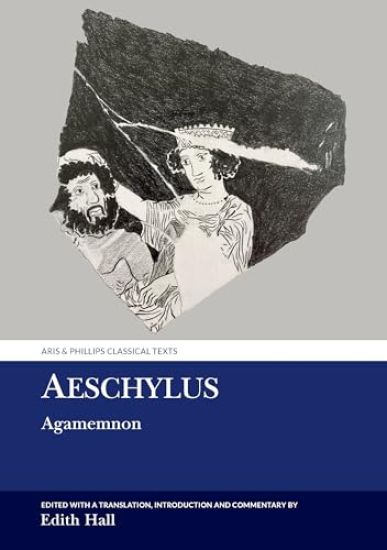
Aeschylus: Agamemnon

Aeschylus: Agamemnon

Edith Hall

LIVERPOOL UNIVERSITY PRESS
2024
sidottu
The first revenge drama, the first great female role, the first tragedy set on the cusp between public space and private household, the first part of the only surviving tragic trilogy—the foundational status of Aeschylus’ monumental Agamemnon cannot be over-estimated. Agamemnon’s entry on a chariot, arrogant passage over purple carpets, death in the bath and display as a corpse, along with the inspired prophetess, his war booty Cassandra, make this tragedy visually electrifying; the poetry, especially in Clytemnestra’s orations and the choral odes, in magniloquence and vivid imagery surpasses anything in classical literature. This new edition, with Greek text, critical introduction, accessible translation and detailed commentary gives consistent support in construing the ancient Greek and appreciating the aural power of Aeschylus’ language and rhythms. It draws on cutting-edge scholarship to provide unprecedented illumination of sociological and performative aspects of his play: the chorus’ struggle to maintain representation for ordinary Argives, the different responses of Clytemnestra and Cassandra to the inequities imposed on them by patriarchy, the sensory experience of poetry imbued with prompts to taste, smell, touch and hearing as well as vision, the challenges and opportunities presented by the text to directors and actors both ancient and modern, and the thrilling control of the tragic medium by its undisputed founding father.
Aeschylus: Agamemnon

Aeschylus: Agamemnon

Edith Hall

LIVERPOOL UNIVERSITY PRESS
2025
nidottu
The first revenge drama, the first great female role, the first tragedy set on the cusp between public space and private household, the first part of the only surviving tragic trilogy—the foundational status of Aeschylus’ monumental Agamemnon cannot be over-estimated. Agamemnon’s entry on a chariot, arrogant passage over purple carpets, death in the bath and display as a corpse, along with the inspired prophetess, his war booty Cassandra, make this tragedy visually electrifying; the poetry, especially in Clytemnestra’s orations and the choral odes, in magniloquence and vivid imagery surpasses anything in classical literature. This new edition, with Greek text, critical introduction, accessible translation and detailed commentary gives consistent support in construing the ancient Greek and appreciating the aural power of Aeschylus’ language and rhythms. It draws on cutting-edge scholarship to provide unprecedented illumination of sociological and performative aspects of his play: the chorus’ struggle to maintain representation for ordinary Argives, the different responses of Clytemnestra and Cassandra to the inequities imposed on them by patriarchy, the sensory experience of poetry imbued with prompts to taste, smell, touch and hearing as well as vision, the challenges and opportunities presented by the text to directors and actors both ancient and modern, and the thrilling control of the tragic medium by its undisputed founding father.
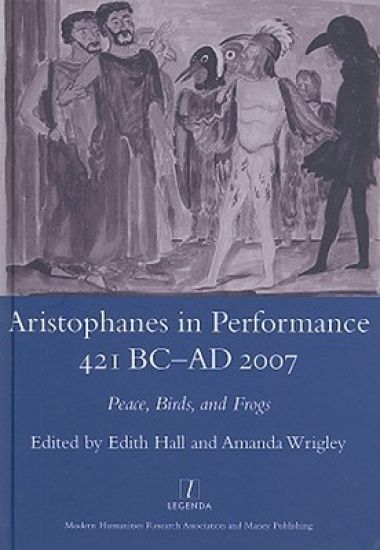
Aristophanes in Performance 421 BC-AD 2007
This book traces the international performance history of Aristophanic comedy, and its implication in aesthetic and political controversies, from 421 BC to AD 2007. It includes Brechtian experiments in East Berlin, and musical theatre from Gilbert and Sullivan to Stephen Sondheim.