Kirjahaku
Etsi kirjoja tekijän nimen, kirjan nimen tai ISBN:n perusteella.
497 kirjaa tekijältä Edith Nesbit
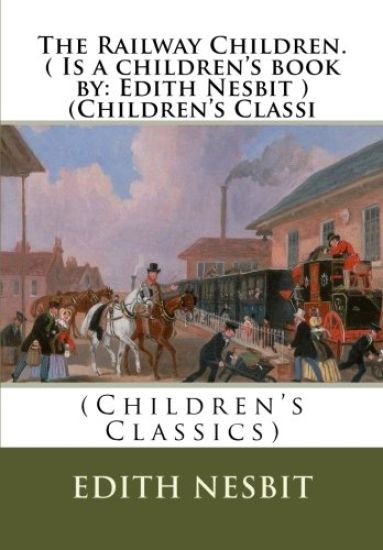
The Railway Children.( Is a children's book by: Edith Nesbit ) (Children's Classi
Edith Nesbit
Createspace Independent Publishing Platform
2016
nidottu
The Railway Children is a children's book by Edith Nesbit, originally serialised in The London Magazine during 1905 and first published in book form in 1906. It has been adapted for the screen several times, of which the 1970 film version is the best known. The Oxford Dictionary of National Biography credits Oswald Barron, who had a deep affection for Nesbit, with having provided the plot.he story concerns a family who move from London to "The Three Chimneys", a house near the railway in Yorkshire, after the father, who works at the Foreign Office, is imprisoned after being falsely accused of spying. The children befriend an Old Gentleman who regularly takes the 9:15 train near their home; he is eventually able to help prove their father's innocence, and the family is reunited. The family take care of a Russian exile, Mr Szczepansky, who came to England looking for his family (later located) and Jim, the grandson of the Old Gentleman, who suffers a broken leg in a tunnel. The theme of an innocent man being falsely imprisoned for espionage and finally vindicated might have been influenced by the Dreyfus Affair, which was a prominent worldwide news item a few years before the book was written. The Russian exile, persecuted by the Tsars for writing "a beautiful book about poor people and how to help them" and subsequently helped by the children, was most likely an amalgam of the real-life dissidents Sergius Stepniak and Peter Kropotkin who were both friends of the author.
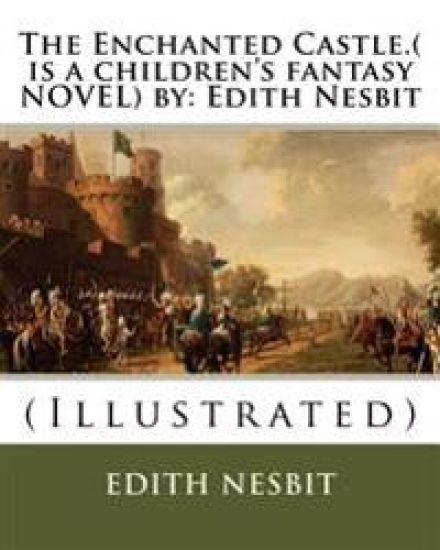
The Enchanted Castle.( is a children's fantasy NOVEL) by: Edith Nesbit: (Illustrated)
Edith Nesbit
Createspace Independent Publishing Platform
2016
nidottu
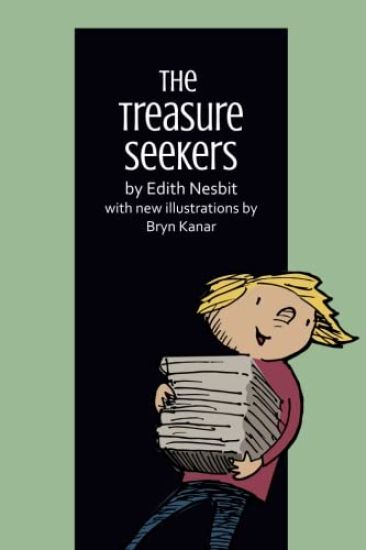
The Treasure Seekers: By Edith Nesbit, with New Illustrations by Bryn Kanar
Edith Nesbit
Createspace Independent Publishing Platform
2016
nidottu
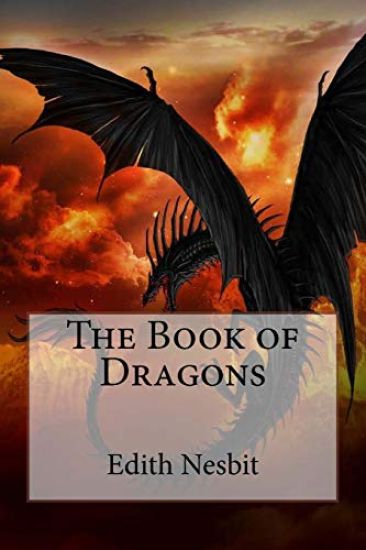
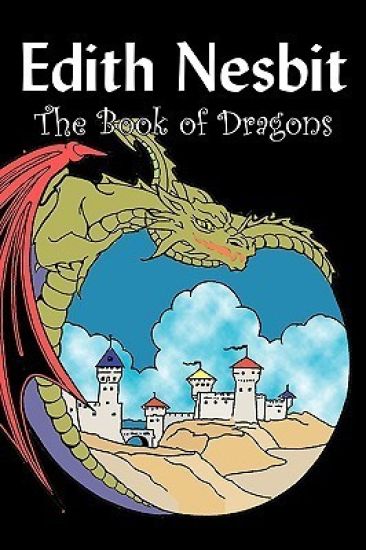
The Book of Dragons Edith Nesbit
Edith Nesbit
Createspace Independent Publishing Platform
2016
nidottu
Eight madcap tales of unpredictable dragons - including one made of ice, another that takes refuge in the General Post Office, and a fire-breathing monster that flies out of an enchanted book and eats an entire soccer team
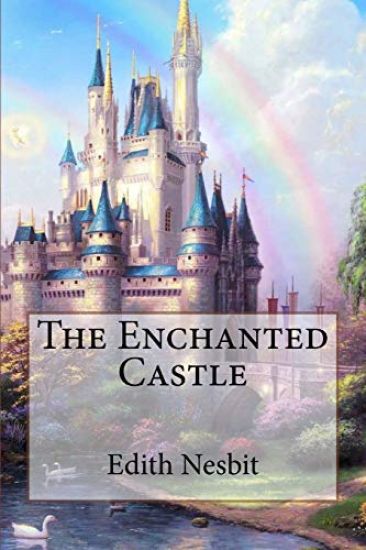
The Enchanted Castle Edith Nesbit
Edith Nesbit
Createspace Independent Publishing Platform
2017
nidottu
An invisible princess, a magic ring, and more adventures than you could dream of. This is what Gerald, Kathleen and Jimmy find when they stumble upon a mysterious castle. At first it all appears to be a lark. But the children soon discover they need all their bravery and ingenuity to contend with the castle's supernatural forces.
Five Children and It (1902) children's NOVEL by: Edith Nesbit (Illustrated)
Edith Nesbit
Createspace Independent Publishing Platform
2017
nidottu
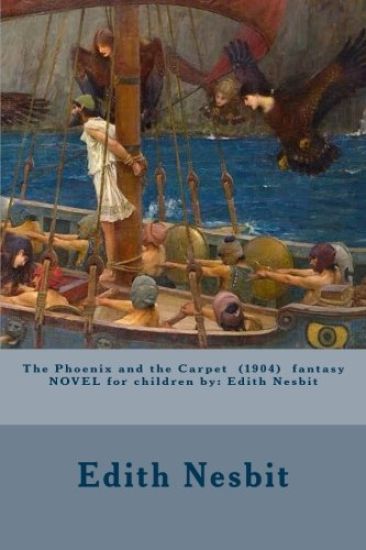
The Phoenix and the Carpet (1904) fantasy NOVEL for children by: Edith Nesbit
Edith Nesbit
Createspace Independent Publishing Platform
2017
nidottu
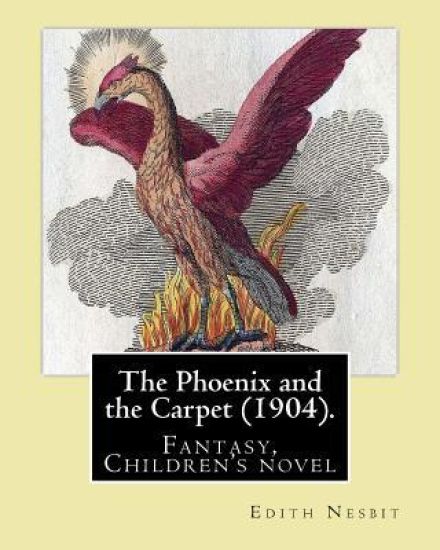
The Phoenix and the Carpet (1904). By: Edith Nesbit: The Phoenix and the Carpet is a fantasy novel for children, written in 1904 by E. Nesbit.
Edith Nesbit
Createspace Independent Publishing Platform
2017
nidottu
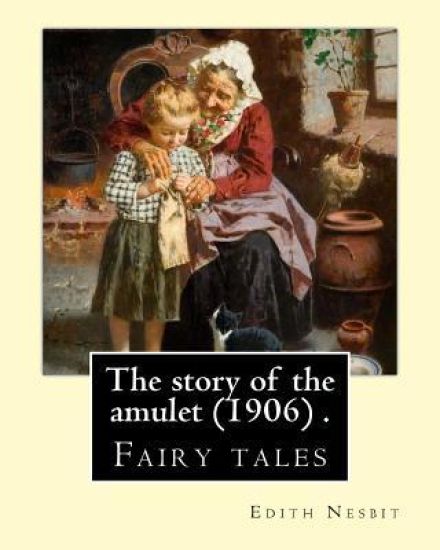
The story of the amulet (1906) . By: Edith Nesbit: Fairy tales
Edith Nesbit
Createspace Independent Publishing Platform
2017
nidottu
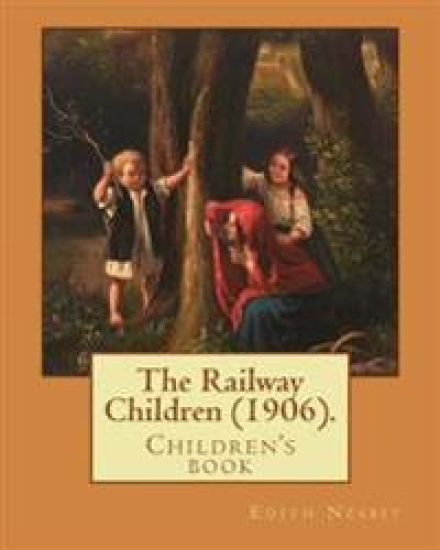
The Railway Children (1906). By: Edith Nesbit: Children's novel;
Edith Nesbit
Createspace Independent Publishing Platform
2017
nidottu
The Railway Children is a children's book by Edith Nesbit, originally serialised in The London Magazine during 1905 and first published in book form in 1906. It has been adapted for the screen several times, of which the 1970 film version is the best known. The Oxford Dictionary of National Biography credits Oswald Barron, who had a deep affection for Nesbit, with having provided the plot. The setting is thought to be inspired by Edith's walks to Chelsfield railway station close to where she lived, and her observance of the construction of the railway cutting and tunnel between Chelsfield and Knockholt. Plot: The story concerns a family who move from London to "The Three Chimneys", a house near the railway in Yorkshire, after the father, who works at the Foreign Office, is imprisoned after being falsely accused of spying. The children befriend an Old Gentleman who regularly takes the 9:15 train near their home; he is eventually able to help prove their father's innocence, and the family is reunited. The family takes care of a Russian exile, Mr Szczepansky, who came to England looking for his family (later located) and Jim, the grandson of the Old Gentleman, who suffers a broken leg in a tunnel. The theme of an innocent man being falsely imprisoned for espionage and finally vindicated might have been influenced by the Dreyfus Affair, which was a prominent worldwide news item a few years before the book was written. The Russian exile, persecuted by the Tsars for writing "a beautiful book about poor people and how to help them" and subsequently helped by the children, was most likely an amalgam of the real-life dissidents Sergius Stepniak and Peter Kropotkin who were both friends of the author.... Edith Nesbit (married name Edith Bland; 15 August 1858 - 4 May 1924) was an English author and poet; she published her books for children under the name of E. Nesbit. She wrote or collaborated on more than 60 books of children's literature. She was also a political activist and co-founded the Fabian Society, a socialist organisation later affiliated to the Labour Party. Nesbit was born in 1858 at 38 Lower Kennington Lane in Kennington, Surrey (now part of Greater London), the daughter of an agricultural chemist, John Collis Nesbit, who died in March 1862, before her fourth birthday. Her sister Mary's ill health meant that the family travelled around for some years, living variously in Brighton, Buckinghamshire, France (Dieppe, Rouen, Paris, Tours, Poitiers, Angoul me, Bordeaux, Arcachon, Pau, Bagn res-de-Bigorre, and Dinan in Brittany), Spain and Germany, before settling for three years at Halstead Hall in Halstead in north-west Kent, a location which later inspired The Railway Children (this distinction has also been claimed by the Derbyshire town of New Mills). At eighteen, Nesbit met the bank clerk Hubert Bland in 1877. Seven months pregnant, she married Bland on 22 April 1880, though she did not immediately live with him, as Bland initially continued to live with his mother. Their marriage was a stormy one. Early on Nesbit discovered that another woman believed she was Hubert's fiancee and had also borne him a child. A more serious blow came later when she discovered that her good friend, Alice Hoatson, was pregnant with Hubert's child. She had previously agreed to adopt Hoatson's child and allow Hoatson to live with her as their housekeeper. After she discovered the truth, they quarrelled violently and she suggested that Hoatson and the baby should leave; her husband threatened to leave Edith if she disowned the baby and its mother. Hoatson remained with them as a housekeeper and secretary and became pregnant by Bland again 13 years later....
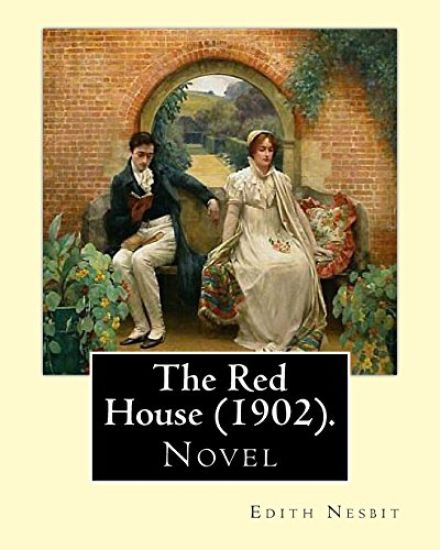
The Red House (1902). By: Edith Nesbit: Novel
Edith Nesbit
Createspace Independent Publishing Platform
2017
nidottu
"Conventionally our life-story ended in a shower of rice at the church door, amid the scent of white flowers, with a flutter of white favors all about us." Thus begins The Red House, Nesbit's charming novel of Chloe and Len, newlyweds adjusting to a new life and a new home. When Len inherits a house in the country from his uncle, Chloe insists they live there, whether the rumors of a ghost be true or not. When mysterious events happen, they are always blamed on the ghost. But the ultimate surprise rests in who that ghost really is. Edith Nesbit (married name Edith Bland; 15 August 1858 - 4 May 1924) was an English author and poet; she published her books for children under the name of E. Nesbit. She wrote or collaborated on more than 60 books of children's literature. She was also a political activist and co-founded the Fabian Society, a socialist organisation later affiliated to the Labour Party. Nesbit was born in 1858 at 38 Lower Kennington Lane in Kennington, Surrey (now part of Greater London), the daughter of an agricultural chemist, John Collis Nesbit, who died in March 1862, before her fourth birthday. Her sister Mary's ill health meant that the family travelled around for some years, living variously in Brighton, Buckinghamshire, France (Dieppe, Rouen, Paris, Tours, Poitiers, Angoul me, Bordeaux, Arcachon, Pau, Bagn res-de-Bigorre, and Dinan in Brittany), Spain and Germany, before settling for three years at Halstead Hall in Halstead in north-west Kent, a location which later inspired The Railway Children (this distinction has also been claimed by the Derbyshire town of New Mills). At eighteen, Nesbit met the bank clerk Hubert Bland in 1877. Seven months pregnant, she married Bland on 22 April 1880, though she did not immediately live with him, as Bland initially continued to live with his mother. Their marriage was a stormy one. Early on Nesbit discovered that another woman believed she was Hubert's fiancee and had also borne him a child. A more serious blow came later when she discovered that her good friend, Alice Hoatson, was pregnant with Hubert's child. She had previously agreed to adopt Hoatson's child and allow Hoatson to live with her as their housekeeper. After she discovered the truth, they quarrelled violently and she suggested that Hoatson and the baby should leave; her husband threatened to leave Edith if she disowned the baby and its mother. Hoatson remained with them as a housekeeper and secretary and became pregnant by Bland again 13 years later. Edith again adopted Hoatson's child. Nesbit's children were Paul Bland (1880-1940), to whom The Railway Children was dedicated; Iris Bland (1881-1950s); Fabian Bland (1885-1900); Rosamund Bland (1886-1950), to whom The Book of Dragons was dedicated; and John Bland (1898-1971) to whom The House of Arden was dedicated. Her son Fabian died aged 15 after a tonsil operation; Nesbit dedicated a number of books to him: Five Children and It and its sequels, as well as The Story of the Treasure Seekers and its sequels. Nesbit's adopted daughter Rosamund collaborated with her on the book Cat Tales....
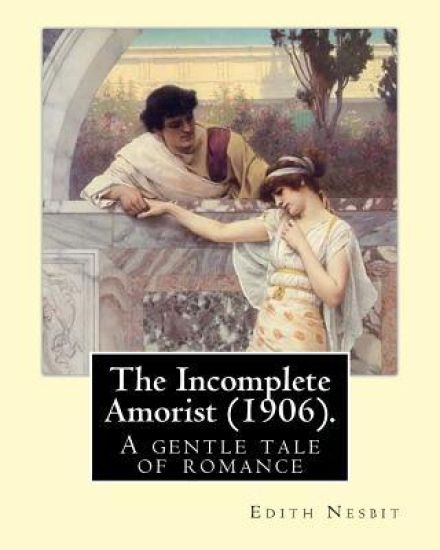
The Incomplete Amorist (1906). By: Edith Nesbit: A gentle tale of romance and art from a noted children's author .
Edith Nesbit
Createspace Independent Publishing Platform
2017
nidottu
Edith Nesbit (married name Edith Bland; 15 August 1858 - 4 May 1924) was an English author and poet; she published her books for children under the name of E. Nesbit. She wrote or collaborated on more than 60 books of children's literature. She was also a political activist and co-founded the Fabian Society, a socialist organisation later affiliated to the Labour Party. Nesbit was born in 1858 at 38 Lower Kennington Lane in Kennington, Surrey (now part of Greater London), the daughter of an agricultural chemist, John Collis Nesbit, who died in March 1862, before her fourth birthday. Her sister Mary's ill health meant that the family travelled around for some years, living variously in Brighton, Buckinghamshire, France (Dieppe, Rouen, Paris, Tours, Poitiers, Angoul me, Bordeaux, Arcachon, Pau, Bagn res-de-Bigorre, and Dinan in Brittany), Spain and Germany, before settling for three years at Halstead Hall in Halstead in north-west Kent, a location which later inspired The Railway Children (this distinction has also been claimed by the Derbyshire town of New Mills). At eighteen, Nesbit met the bank clerk Hubert Bland in 1877. Seven months pregnant, she married Bland on 22 April 1880, though she did not immediately live with him, as Bland initially continued to live with his mother. Their marriage was a stormy one. Early on Nesbit discovered that another woman believed she was Hubert's fiancee and had also borne him a child. A more serious blow came later when she discovered that her good friend, Alice Hoatson, was pregnant with Hubert's child. She had previously agreed to adopt Hoatson's child and allow Hoatson to live with her as their housekeeper. After she discovered the truth, they quarrelled violently and she suggested that Hoatson and the baby should leave; her husband threatened to leave Edith if she disowned the baby and its mother. Hoatson remained with them as a housekeeper and secretary and became pregnant by Bland again 13 years later. Edith again adopted Hoatson's child. Nesbit's children were Paul Bland (1880-1940), to whom The Railway Children was dedicated; Iris Bland (1881-1950s); Fabian Bland (1885-1900); Rosamund Bland (1886-1950), to whom The Book of Dragons was dedicated; and John Bland (1898-1971) to whom The House of Arden was dedicated. Her son Fabian died aged 15 after a tonsil operation; Nesbit dedicated a number of books to him: Five Children and It and its sequels, as well as The Story of the Treasure Seekers and its sequels. Nesbit's adopted daughter Rosamund collaborated with her on the book Cat Tales.... A gentle tale of romance and art from a noted children's author . . . "He asked idle questions: she answered them with a conscientious tremulous truthfulness that showed to him as the most finished art. Betty told him nervously and in words ill-chosen everything that he asked to know, but all the while the undercurrent of questions rang strong within her -- 'When is he to teach me? Where? How' -- so that when at last there was left but the bare fifteen minutes needed to get one home in time for the midday dinner she said abruptly: 'And when shall I see you again'"

The Incomplete Amorist (1906) by: Edith Nesbit
Edith Nesbit
Createspace Independent Publishing Platform
2017
nidottu
Edith Nesbit (married name Edith Bland; 15 August 1858 - 4 May 1924) was an English author and poet; she published her books for children under the name of E. Nesbit. She wrote or collaborated on more than 60 books of children's literature. She was also a political activist and co-founded the Fabian Society, a socialist organisation later affiliated to the Labour Party.Nesbit was born in 1858 at 38 Lower Kennington Lane in Kennington, Surrey (now part of Greater London), the daughter of an agricultural chemist, John Collis Nesbit, who died in March 1862, before her fourth birthday. Her sister Mary's ill health meant that the family travelled around for some years, living variously in Brighton, Buckinghamshire, France (Dieppe, Rouen, Paris, Tours, Poitiers, Angoul me, Bordeaux, Arcachon, Pau, Bagn res-de-Bigorre, and Dinan in Brittany), Spain and Germany, before settling for three years at Halstead Hall in Halstead in north-west Kent, a location which later inspired The Railway Children (this distinction has also been claimed by the Derbyshire town of New Mills
Five Children and It by Edith Nesbit, Fiction, Classics, Fantasy & Magic
Edith Nesbit
Borgo Press
2002
sidottu