Kirjojen hintavertailu. Mukana 11 244 527 kirjaa ja 12 kauppaa.

Kirjahaku

Etsi kirjoja tekijän nimen, kirjan nimen tai ISBN:n perusteella.

4 kirjaa tekijältä Edith Sheffer

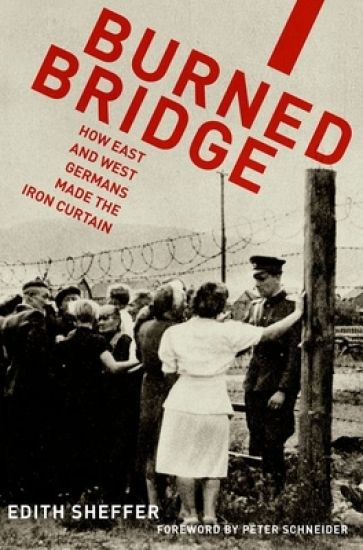
Burned Bridge

Burned Bridge

Edith Sheffer

Oxford University Press Inc
2014
nidottu
The building of the Berlin Wall in 1961 shocked the world. Ever since, the image of this impenetrable barrier between East and West, imposed by communism, has been a central symbol of the Cold War. Based on vast research in untapped archival, oral, and private sources, Burned Bridge reveals the hidden origins of the Iron Curtain, presenting it in a startling new light. Historian Edith Sheffer's unprecedented, in-depth account focuses on Burned Bridge-the intersection between two sister cities, Sonneberg and Neustadt bei Coburg, Germany's largest divided population outside Berlin. Sheffer demonstrates that as Soviet and American forces occupied each city after the Second World War, townspeople who historically had much in common quickly formed opposing interests and identities. The border walled off irreconcilable realities: the differences of freedom and captivity, rich and poor, peace and bloodshed, and past and present. Sheffer describes how smuggling, kidnapping, rape, and killing in the early postwar years led citizens to demand greater border control on both sides--long before East Germany fortified its 1,393 kilometer border with West Germany. It was in fact the American military that built the first barriers at Burned Bridge, which preceded East Germany's borderland crackdown by many years. Indeed, Sheffer shows that the physical border between East and West was not simply imposed by Cold War superpowers, but was in some part an improvised outgrowth of an anxious postwar society. Ultimately, a wall of the mind shaped the wall on the ground. East and West Germans became part of, and helped perpetuate, the barriers that divided them. From the end of World War II through two decades of reunification, Sheffer traces divisions at Burned Bridge with sharp insight and compassion, presenting a stunning portrait of the Cold War on a human scale.
Asperger's Children

Asperger's Children

Edith Sheffer

WW Norton Co
2020
nidottu
In 1930s and 1940s Vienna, child psychiatrist Hans Asperger sought to define autism as a diagnostic category, treating those children he deemed capable of participating fully in society. Depicted as compassionate and devoted, Asperger was in fact deeply influenced by Nazi psychiatry. Although he offered care to children he deemed promising, he prescribed harsh institutionalisation and even transfer to one of the Reich’s killing centres, for children with greater disabilities. With sensitivity and passion, Edith Sheffer reveals the heart-breaking voices and experiences of many of these children, whilst illuminating a Nazi regime obsessed with sorting the population into categories, cataloguing people by race, heredity, politics, religion, sexuality, criminality and biological defects—labels that became the basis of either rehabilitation or persecution and extermination.
Asperger's Children

Asperger's Children

Edith Sheffer

WW Norton Co
2018
sidottu
In 1930s and 1940s Vienna, child psychiatrist Hans Asperger sought to define autism as a diagnostic category, treating those children he deemed capable of participating fully in society. Depicted as compassionate and devoted, Asperger was in fact deeply influenced by Nazi psychiatry. Although he offered care to children he deemed promising, he prescribed harsh institutionalisation and even transfer to one of the Reich’s killing centres, for children with greater disabilities. With sensitivity and passion, Edith Sheffer reveals the heart-breaking voices and experiences of many of these children, whilst illuminating a Nazi regime obsessed with sorting the population into categories, cataloguing people by race, heredity, politics, religion, sexuality, criminality and biological defects—labels that became the basis of either rehabilitation or persecution and extermination.