Kirjojen hintavertailu. Mukana 12 382 455 kirjaa ja 12 kauppaa.

Kirjahaku

Etsi kirjoja tekijän nimen, kirjan nimen tai ISBN:n perusteella.

7 kirjaa tekijältä Edna Amir Coffin

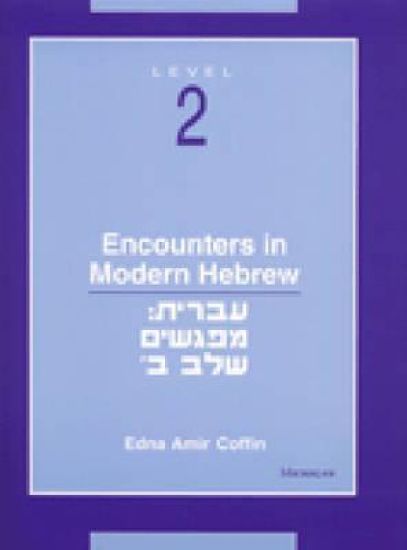
Encounters in Modern Hebrew

Encounters in Modern Hebrew

Edna Amir Coffin

The University of Michigan Press
1993
nidottu
Encounters in Modern Hebrew is designed to fulfill the needs of English-speaking students who want to gain a basic knowledge of modern Hebrew. Extensively classroom-tested at the University of Michigan, the text provides a comprehensive introduction to the reading, writing, and pronunciation of modern Hebrew through an array of interesting exercises and activities reflecting up-to-the-minute language-learning theory.
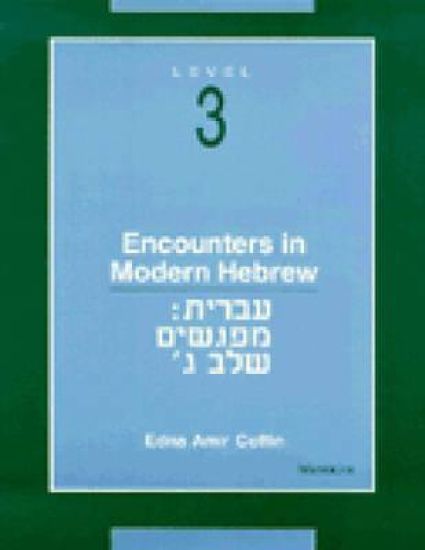
Encounters in Modern Hebrew

Encounters in Modern Hebrew

Edna Amir Coffin

The University of Michigan Press
1997
nidottu
Encounters in Modern Hebrew is designed to fulfill the needs of English-speaking students of Hebrew who seek oral and written communication and reading comprehension. Extensively classroom-tested at the University of Michigan, the text provides the means to acquire a meaningful command of the Hebrew language with an emphasis on an expansive vocabulary and a variety of language domains. Employing interesting exercises and activities, Encounters in Modern Hebrew, Level 3 incorporates many current communicative and culturally-based approaches to mastering a foreign language. Encounters in Modern Hebrew, Level 3 presents a study environment conducive to the speaking, reading, and writing of free and authentic Hebrew. This volume shows students a wider range of Hebrew-speaking cultural activities in a larger human context, from materials about holidays, including a Jewish holiday celebrated only in North Africa, to discussions of the roles of women that raise the issue of gender equality. Other chapters examine ethnic jokes and their problematic qualities, geography, and the differences between popular and literary language registers. Encounters in Modern Hebrew, Level 3 ushers the Hebrew student through a wide domain of the human community. Edna Amir Coffin is Arthur F. Thurnau Professor of Modern Hebrew Language and Literature and Senior Research Scientist, Center for Learning and Teaching, University of Michigan.
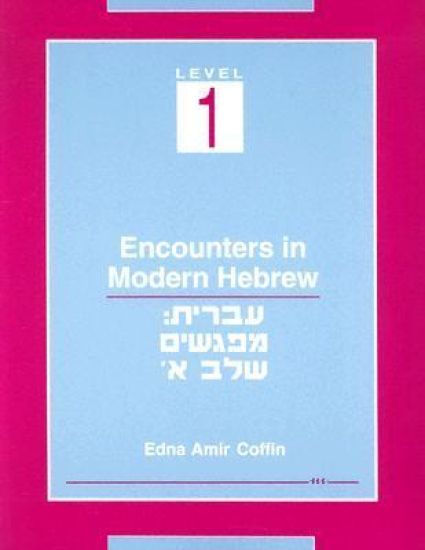
Encounters in Modern Hebrew

Encounters in Modern Hebrew

Edna Amir Coffin

The University of Michigan Press
1992
nidottu
Encounters in Modern Hebrew is designed to fulfill the needs of English-speaking students who want to gain a basic knowledge of modern Hebrew. Extensively classroom-tested at the University of Michigan, the text provides a comprehensive introduction to the reading, writing, and pronunciation of modern Hebrew through an array of interesting exercises and activities reflecting up-to-the-minute language-learning theory.
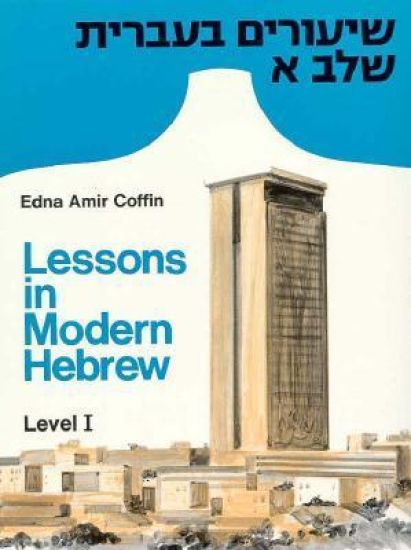
Lessons in Modern Hebrew

Lessons in Modern Hebrew

Edna Amir Coffin

The University of Michigan Press
1977
nidottu
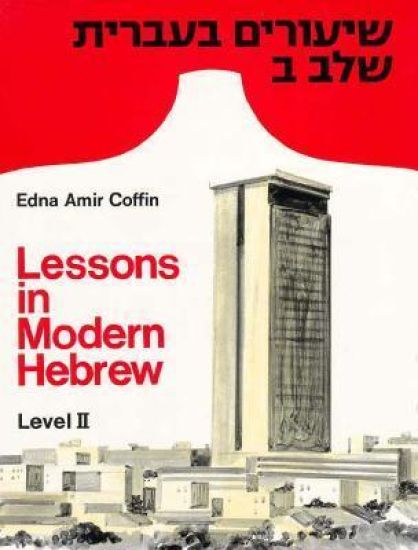
A comprehensive introduction to modern Israeli Hebrew, Lessons in Modern Hebrew: Level I and Level II provide English-speaking students and well-motivated individuals with all the basic classroom tools necessary for mastery of the language. The lessons introduce the student to the core vocabulary which is then included in reading passages, conversational text, and written communication. All grammatical features of modern Hebrew are thoroughly explained and reinforced by drills and exercises. The books have been classroom-tested at the University of Michigan. Both audio-lingual and cognitive approaches are used.
Lessons in Modern Hebrew

Lessons in Modern Hebrew

Edna Amir Coffin

The University of Michigan Press
1978
nidottu
A comprehensive introduction to modern Israeli Hebrew, Lessons in Modern Hebrew: Level I and Level II provide English-speaking students and well-motivated individuals with all the basic classroom tools necessary for mastery of the language. The lessons introduce the student to the core vocabulary which is then included in reading passages, conversational text, and written communication. All grammatical features of modern Hebrew are thoroughly explained and reinforced by drills and exercises. The books have been classroom-tested at the University of Michigan. Both audio-lingual and cognitive approaches are used.Cassettes are available from the University of Michigan Language Resource Center: Phone: (734) 764-0424; Email: [email protected].
A Reference Grammar of Modern Hebrew

A Reference Grammar of Modern Hebrew

Edna Amir Coffin; Shmuel Bolozky

Cambridge University Press
2005
pokkari
A Reference Grammar of Modern Hebrew provides a clearly-structured and accessible guide to all aspects of contemporary Hebrew grammar. Systematically organised, it presents the basic structures of the language, looking at grammatical categories, phrases, expressions, and the construction of clauses and sentences. Drawing on their extensive experience of teaching Hebrew to English-speaking students, the authors also provide a wide range of examples to illustrate each point, and introduce in a clear and accessible way the writing and pronunciation of the language, its punctuation rules, and its use in context. Wherever possible, equivalent Hebrew terminology is given to facilitate students’ use of Hebrew language textbooks. Specialised linguistic terminology is kept to a minimum, and verb and noun tables are provided as well as a comprehensive index of terms, making this both a useful teaching resource and an easy-to-use reference tool for those wishing to look up specific details of the language.
A Reference Grammar of Modern Hebrew

A Reference Grammar of Modern Hebrew

Edna Amir Coffin; Shmuel Bolozky

Cambridge University Press
2005
sidottu
A Reference Grammar of Modern Hebrew provides a clearly-structured and accessible guide to all aspects of contemporary Hebrew grammar. Systematically organised, it presents the basic structures of the language, looking at grammatical categories, phrases, expressions, and the construction of clauses and sentences. Drawing on their extensive experience of teaching Hebrew to English-speaking students, the authors also provide a wide range of examples to illustrate each point, and introduce in a clear and accessible way the writing and pronunciation of the language, its punctuation rules, and its use in context. Wherever possible, equivalent Hebrew terminology is given to facilitate students’ use of Hebrew language textbooks. Specialised linguistic terminology is kept to a minimum, and verb and noun tables are provided as well as a comprehensive index of terms, making this both a useful teaching resource and an easy-to-use reference tool for those wishing to look up specific details of the language.