Kirjojen hintavertailu. Mukana 11 699 587 kirjaa ja 12 kauppaa.

Kirjahaku

Etsi kirjoja tekijän nimen, kirjan nimen tai ISBN:n perusteella.

15 kirjaa tekijältä Edna Chun; Alvin Evans

Leveraging Multigenerational Workforce Strategies in Higher Education
The higher education literature on workplace diversity has overlooked the development of multigenerational workforce strategies as a key component of an inclusive talent proposition. While race, gender, sexual orientation, disability and other demographic attributes have gained considerable attention in diversity strategic planning, scant research pertains to building inclusive, multigenerational approaches within the culture and practices of higher education. Now more than ever, there is an urgent and unmet need to identify actionable strategies and approaches that optimize the contributions of multigenerational talent across the faculty, administrator, and staff ranks. With the goal of enhancing workforce capacity and creating more inclusive workplaces, Leveraging Multigenerational Workforce Strategies in Higher Education offers an in-depth look at multigenerational strategies that enhance institutional capacity and respond to educational needs.This book is the first to address the creation of multigenerational strategies in the higher education workplace based upon substantial empirical studies and qualitative research. Drawing on in-depth interviews with faculty and administrators, the book examines the broad "framing" of generations that consists of stereotypes, narratives, images, and emotions. Through the lens of these narratives, it describes how ageist framing is magnified by other minoritized statuses including race/ethnicity, gender, and sexual orientation, and can result in structural inequality, process-based discrimination, and asymmetrical behavioral interactions in the higher education workplace. A major feature of the book is its focus on best-in-class HR and diversity policies and strategies that institutional leaders can deploy to overcome generational and ageist barriers and build an inclusive culture that values the contributions of all members. Due to its practical and concrete emphasis in sharing leading-edge policies and practices that comprise a holistic multigenerational workforce strategy, the book will serve as a concrete resource to boards of trustees, presidents, provosts, deans, diversity officers, department chairs, faculty, academic and non-academic administrators, diversity and human resource leaders, and diversity taskforces in their efforts to create strategic, evidence-based multigenerational workforce approaches. In addition, the book will be utilized in upper division and graduate courses in higher education administration, diversity, human resource management, educational leadership, intergenerational issues, gerontology, social work, and organizational psychology.

Leveraging Multigenerational Workforce Strategies in Higher Education
The higher education literature on workplace diversity has overlooked the development of multigenerational workforce strategies as a key component of an inclusive talent proposition. While race, gender, sexual orientation, disability and other demographic attributes have gained considerable attention in diversity strategic planning, scant research pertains to building inclusive, multigenerational approaches within the culture and practices of higher education. Now more than ever, there is an urgent and unmet need to identify actionable strategies and approaches that optimize the contributions of multigenerational talent across the faculty, administrator, and staff ranks. With the goal of enhancing workforce capacity and creating more inclusive workplaces, Leveraging Multigenerational Workforce Strategies in Higher Education offers an in-depth look at multigenerational strategies that enhance institutional capacity and respond to educational needs.This book is the first to address the creation of multigenerational strategies in the higher education workplace based upon substantial empirical studies and qualitative research. Drawing on in-depth interviews with faculty and administrators, the book examines the broad "framing" of generations that consists of stereotypes, narratives, images, and emotions. Through the lens of these narratives, it describes how ageist framing is magnified by other minoritized statuses including race/ethnicity, gender, and sexual orientation, and can result in structural inequality, process-based discrimination, and asymmetrical behavioral interactions in the higher education workplace. A major feature of the book is its focus on best-in-class HR and diversity policies and strategies that institutional leaders can deploy to overcome generational and ageist barriers and build an inclusive culture that values the contributions of all members. Due to its practical and concrete emphasis in sharing leading-edge policies and practices that comprise a holistic multigenerational workforce strategy, the book will serve as a concrete resource to boards of trustees, presidents, provosts, deans, diversity officers, department chairs, faculty, academic and non-academic administrators, diversity and human resource leaders, and diversity taskforces in their efforts to create strategic, evidence-based multigenerational workforce approaches. In addition, the book will be utilized in upper division and graduate courses in higher education administration, diversity, human resource management, educational leadership, intergenerational issues, gerontology, social work, and organizational psychology.

The Future of DEI in the Higher Education Workforce

The Future of DEI in the Higher Education Workforce

Edna Chun; Alvin Evans

TAYLOR FRANCIS LTD
2026
nidottu
The Future of DEI in the Higher Education Workforce takes readers through an in-depth and probing analysis of the evolving and contentious landscape surrounding Diversity, Equity, and Inclusion (DEI) initiatives in American higher education over the past two decades. Tracing the origins of DEI as a legal and institutional response to racial desegregation, shaped notably by the Supreme Court’s interpretations of the Fourteenth Amendment, authors Edna Chun and Alvin Evans examine how its core values were interpreted over this period and, later, undermined through a series of court rulings. Situating these legal shifts within broader political and demographic contexts, while also underscoring the way federal and state actions have sought to preserve white, socio-political dominance, the book advocates for a strategic shift of its own: rather than regard these as separate, isolated initiatives, DEI principles should be embedded within broader human resource and talent management framework. For meaningful progress to be made, the authors argue, the values, principles, and practices at the heart of equal opportunity must be woven into workforce processes from hiring to advancing talent. Within higher education, this calls for a recalibration of human resource and diversity strategies that transcend institutional silos and reflect new workforce realities. Extensively researched and illustrated with case studies depicting innovative approaches in support of inclusion, equity, and organizational justice, the book provides a thorough account of the current backlash toward DEI practices and raises compelling responses for researchers of higher education and academic and administrative leaders. It offers compelling strategies for academic and administrative leaders that will continue the progress toward inclusion, equity, and social justice in higher education.
The Future of DEI in the Higher Education Workforce

The Future of DEI in the Higher Education Workforce

Edna Chun; Alvin Evans

TAYLOR FRANCIS LTD
2026
sidottu
The Future of DEI in the Higher Education Workforce takes readers through an in-depth and probing analysis of the evolving and contentious landscape surrounding Diversity, Equity, and Inclusion (DEI) initiatives in American higher education over the past two decades. Tracing the origins of DEI as a legal and institutional response to racial desegregation, shaped notably by the Supreme Court’s interpretations of the Fourteenth Amendment, authors Edna Chun and Alvin Evans examine how its core values were interpreted over this period and, later, undermined through a series of court rulings. Situating these legal shifts within broader political and demographic contexts, while also underscoring the way federal and state actions have sought to preserve white, socio-political dominance, the book advocates for a strategic shift of its own: rather than regard these as separate, isolated initiatives, DEI principles should be embedded within broader human resource and talent management framework. For meaningful progress to be made, the authors argue, the values, principles, and practices at the heart of equal opportunity must be woven into workforce processes from hiring to advancing talent. Within higher education, this calls for a recalibration of human resource and diversity strategies that transcend institutional silos and reflect new workforce realities. Extensively researched and illustrated with case studies depicting innovative approaches in support of inclusion, equity, and organizational justice, the book provides a thorough account of the current backlash toward DEI practices and raises compelling responses for researchers of higher education and academic and administrative leaders. It offers compelling strategies for academic and administrative leaders that will continue the progress toward inclusion, equity, and social justice in higher education.
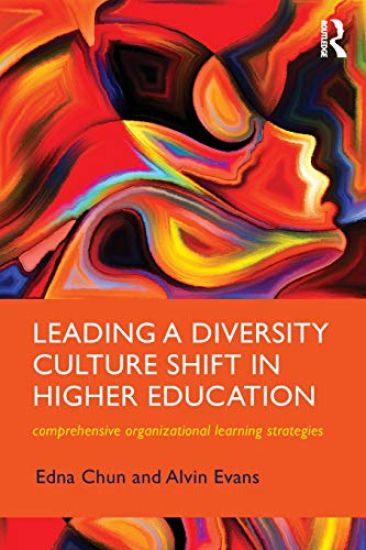
Leading a Diversity Culture Shift in Higher Education
Leading a Diversity Culture Shift in Higher Education offers a practical and timely guide for launching, implementing, and institutionalizing diversity organizational learning. The authors draw from extensive interviews with chief diversity officers and college and university leaders to reveal the prevailing models and best practices for strengthening diversity practices within the higher education community today. They complement this original research with an analysis of key contextual factors that shape the organizational learning process including administrative leadership, institutional mission and goals, historical legacy, geographic location, and campus structures and politics.Given the substantive challenge of engendering a cultural shift for diversity in a university setting, this book will serve as a concrete primer for institutions seeking to develop a systematic and progressive approach to diversity organizational learning. Readers will be able to engage with provocative case studies that grapple with the current pressures emanating from diversity training and learn effective strategies for creating more inclusive environments.This book is a perfect resource for institutional leaders, administrators, faculty members, and key campus constituencies who are seeking transformational change, institutional success, and stability in a rapidly diversifying national and global environment.
Leading a Diversity Culture Shift in Higher Education
Leading a Diversity Culture Shift in Higher Education offers a practical and timely guide for launching, implementing, and institutionalizing diversity organizational learning. The authors draw from extensive interviews with chief diversity officers and college and university leaders to reveal the prevailing models and best practices for strengthening diversity practices within the higher education community today. They complement this original research with an analysis of key contextual factors that shape the organizational learning process including administrative leadership, institutional mission and goals, historical legacy, geographic location, and campus structures and politics.Given the substantive challenge of engendering a cultural shift for diversity in a university setting, this book will serve as a concrete primer for institutions seeking to develop a systematic and progressive approach to diversity organizational learning. Readers will be able to engage with provocative case studies that grapple with the current pressures emanating from diversity training and learn effective strategies for creating more inclusive environments.This book is a perfect resource for institutional leaders, administrators, faculty members, and key campus constituencies who are seeking transformational change, institutional success, and stability in a rapidly diversifying national and global environment.
Diverse Administrators in Peril

Diverse Administrators in Peril

Edna Chun; Alvin Evans

Paradigm
2011
sidottu
Diverse Administrators in Peril is the first in-depth examination of the work experiences of minority, female, and LGBT administrators in higher education. Written by two award-winning practitioners in higher education, this vivid and intensive study of American leadership from the inside out illuminates how the collision between everyday life and systems of power takes place in patterns of subtle discrimination. Based on scores of interviews with diverse administrators, the book examines patterns of racism, sexism, and heterosexism that persist in the highest administrative ranks and provides concrete strategies and models for inclusive leadership practices.
Diverse Administrators in Peril

Diverse Administrators in Peril

Edna Chun; Alvin Evans

Paradigm
2012
nidottu
Diverse Administrators in Peril is the first in-depth examination of the work experiences of minority, female, and LGBT administrators in higher education. Written by two award-winning practitioners in higher education, this vivid and intensive study of American leadership from the inside out illuminates how the collision between everyday life and systems of power takes place in patterns of subtle discrimination. Based on scores of interviews with diverse administrators, the book examines patterns of racism, sexism, and heterosexism that persist in the highest administrative ranks and provides concrete strategies and models for inclusive leadership practices.
The Challenges of Minoritized Contingent Faculty in Higher Education

The Challenges of Minoritized Contingent Faculty in Higher Education

Edna Chun; Alvin Evans

PURDUE UNIVERSITY PRESS
2023
sidottu
The Challenges of Minoritized Faculty in Higher Education offers a probing and unvarnished look at the employment challenges of these faculty members in four-year institutions. With dramatic shifts in the faculty workforce and nearly three-quarters of instructional positions in United States institutions now off the tenure track, contingent faculty have become the essential, frontline workers of higher education. Remarkably little research attention has focused on the experiences of minoritized contingent faculty in this new academic underclass. Based on in-depth interviews coupled with extensive research, the book highlights the double marginalization that can occur due to secondary employment status in the academic hierarchy, and the exclusion resulting from the intersectionality of nondominant social identities including race and ethnicity, gender, sexual orientation, gender identity, and disability. As the first-person narratives reveal, these faculty often struggle for acceptance, recognition, and rewards in the day-to-day academic environment, and they can face devaluation of their contributions. As a pragmatic and concrete resource, this book offers proactive workforce strategies and key structural and policy recommendations that will assist academic and administrative leaders, including presidents, provosts, department chairs, and chief diversity officers, in building more inclusive working conditions for contingent faculty.
The Challenges of Minoritized Contingent Faculty in Higher Education

The Challenges of Minoritized Contingent Faculty in Higher Education

Edna Chun; Alvin Evans

PURDUE UNIVERSITY PRESS
2023
nidottu
The Challenges of Minoritized Faculty in Higher Education offers a probing and unvarnished look at the employment challenges of these faculty members in four-year institutions. With dramatic shifts in the faculty workforce and nearly three-quarters of instructional positions in United States institutions now off the tenure track, contingent faculty have become the essential, frontline workers of higher education. Remarkably little research attention has focused on the experiences of minoritized contingent faculty in this new academic underclass. Based on in-depth interviews coupled with extensive research, the book highlights the double marginalization that can occur due to secondary employment status in the academic hierarchy, and the exclusion resulting from the intersectionality of nondominant social identities including race and ethnicity, gender, sexual orientation, gender identity, and disability. As the first-person narratives reveal, these faculty often struggle for acceptance, recognition, and rewards in the day-to-day academic environment, and they can face devaluation of their contributions. As a pragmatic and concrete resource, this book offers proactive workforce strategies and key structural and policy recommendations that will assist academic and administrative leaders, including presidents, provosts, department chairs, and chief diversity officers, in building more inclusive working conditions for contingent faculty.
The New Talent Acquisition Frontier

The New Talent Acquisition Frontier

Edna Chun; Alvin Evans

Stylus Publishing
2013
sidottu
Awarded a Silver Medal in the category Human Resources and Employee Training from the 2014 Axiom Business Book Awards • Create the inclusive, high performance workforce needed to succeed in an increasing multicultural society and global marketplace• Learn how global organizations and leading professional associations develop integrated HR/diversity talent strategies, and the specific challenges they face• Get practical tools to assess integrated HR/diversity strategic planning, and see why organizations are not making more diversity progress• Develop specific performance indicators to track your progress in implementing synergistic HR/diversity approaches• Case studies of SHRM, federal and state government, global corporations, and higher education illustrate systematic, integrated HR/diversity effortsFor HR professionals and leaders, chief diversity officers, line managers, and executives in the private and public sectors and higher education, this book presents a systematic approach to integrating HR practices and strategic diversity initiatives to create the inclusive, high performance workforce that every enterprise and institution needs to succeed in an increasingly multicultural society and global marketplace.The authors’ point of departure is that talent is the primary strategic asset necessary for organizational survival and success in a demographically diversifying and globally interconnected world. Organizations seeking to attain their full potential in this new talent frontier must optimize their human capital resources by the deliberate development of synergy between human resource (HR) and diversity programs. Failure to integrate and coordinate these two functions will erode organizational competitiveness, whether it is in developing new markets, products, programs, or services.As the first book to provide a concrete roadmap to integrated HR and diversity strategy, the authors identify two critical practices: talent management through the orchestration of HR and diversity programs to enhance organizational capability by unleashing, mobilizing, nurturing, and sustaining the contributions of a diverse and talented workforce; and talent sustainability through the close integration of HR and diversity to continuously develop systems, structures, processes, and a culture that heighten employee commitment, engagement, and inclusion. They further believe that there should be a commonality of practice across all types of organizations, and that each sector can learn from the others to accelerate its adaptation to today’s rapidly shifting national and global realities.Based on the most current research and on interviews with HR and diversity leaders in major organizations, this book provides the reader with concrete strategies and practical tools for implementing a successful and sustainable talent management program. It also addresses common barriers to the development of synergistic HR and diversity strategy, and how to overcome them.Given the evolutionary nature of the integration of HR and diversity, the authors present nine extensive case studies from all organizational sectors, as well as from the two leading Human Resource professional associations – the Society for Human Resource Management (SHRM) and the College and University Professional Association for Human Resources (CUPA-HR) – to illustrate the dynamic intersection between HR and diversity practices.
The Department Chair as Transformative Diversity Leader

The Department Chair as Transformative Diversity Leader

Edna Chun; Alvin Evans

Stylus Publishing
2015
sidottu
With the imminent demographic shifts in our society and the need to prepare students for citizenship in a global, knowledge-based society, the role of the academic department chair in creating diverse and inclusive learning environments is arguably the most pivotal position in higher education today. In the United States, increasing minority student enrollment coupled with the emergence of a minority majority American nation by 2042 demands that academic institutions be responsive to these changing demographics. The isolation of the ivory tower is no longer an option. This is the first book to address the role of the department chair in diversity and addresses an unmet need by providing a research-based, systematic approach to diversity leadership in the academic department based upon survey findings and in-person interviews. The department chair represents the nexus between the faculty and the administration and is positioned uniquely to impact diversity progress. Research indicates that more than 80 percent of academic decisions regarding appointment, curriculum, tenure and promotion, classroom pedagogy, and student outcomes are made by the department chair in consultation with the faculty. This book examines the multidimensional contributions that chairs make in advancing diversity within their departments and institutions in the representation of diverse faculty and staff; in tenure and promotion; curricular change; student learning outcomes; and departmental climate. The scope and content of the book is not limited to institutions in the United States but is applicable to academic institutions globally in their efforts to address the access and success of increasingly diverse student populations. It addresses institutional power structures and the role of the dean in relation to the appointment of chairs and their impact on the success of chairs from non-dominant groups, including female, minority, and lesbian/gay/transgendered individuals who serve in predominantly white male departments. Using qualitative and quantitative research methods, the book analyzes predominant structural and behavioral barriers that can impede diversity progress within the academic department. It then focuses upon the opportunities and challenges chairs face in their collaborative journey with faculty and administration toward inclusive departmental and institutional practices. Each chapter provides concrete strategies that chairs can use to strengthen diversity in the academic department.Addressed to department chairs, deans, faculty, and administrative leaders in higher education in all Western societies facing demographic change and global challenges, this book offers a critical road map to creating the successful academic institutions that will meet the needs of our changing populations.
The Department Chair as Transformative Diversity Leader

The Department Chair as Transformative Diversity Leader

Edna Chun; Alvin Evans

Stylus Publishing
2015
nidottu
With the imminent demographic shifts in our society and the need to prepare students for citizenship in a global, knowledge-based society, the role of the academic department chair in creating diverse and inclusive learning environments is arguably the most pivotal position in higher education today. In the United States, increasing minority student enrollment coupled with the emergence of a minority majority American nation by 2042 demands that academic institutions be responsive to these changing demographics. The isolation of the ivory tower is no longer an option. This is the first book to address the role of the department chair in diversity and addresses an unmet need by providing a research-based, systematic approach to diversity leadership in the academic department based upon survey findings and in-person interviews. The department chair represents the nexus between the faculty and the administration and is positioned uniquely to impact diversity progress. Research indicates that more than 80 percent of academic decisions regarding appointment, curriculum, tenure and promotion, classroom pedagogy, and student outcomes are made by the department chair in consultation with the faculty. This book examines the multidimensional contributions that chairs make in advancing diversity within their departments and institutions in the representation of diverse faculty and staff; in tenure and promotion; curricular change; student learning outcomes; and departmental climate. The scope and content of the book is not limited to institutions in the United States but is applicable to academic institutions globally in their efforts to address the access and success of increasingly diverse student populations. It addresses institutional power structures and the role of the dean in relation to the appointment of chairs and their impact on the success of chairs from non-dominant groups, including female, minority, and lesbian/gay/transgendered individuals who serve in predominantly white male departments. Using qualitative and quantitative research methods, the book analyzes predominant structural and behavioral barriers that can impede diversity progress within the academic department. It then focuses upon the opportunities and challenges chairs face in their collaborative journey with faculty and administration toward inclusive departmental and institutional practices. Each chapter provides concrete strategies that chairs can use to strengthen diversity in the academic department.Addressed to department chairs, deans, faculty, and administrative leaders in higher education in all Western societies facing demographic change and global challenges, this book offers a critical road map to creating the successful academic institutions that will meet the needs of our changing populations.
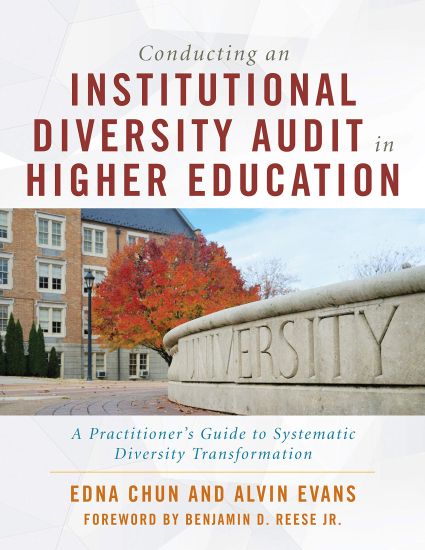
Conducting an Institutional Diversity Audit in Higher Education
Implementing systematic diversity transformation requires embracing all aspects of diversity—gender, sexual orientation, disability, gender identification, and other salient characteristics of difference—as well as race and ethnicity.This book lays out a framework for a systematic and sustained diversity process that first recognizes that too many diversity initiatives have generated more statements of intent than actual change, and that audits conducted by outside bodies frequently fail to achieve buy-in or long-term impact, and are costly endeavors. The authors’ framework identifies nine dimensions that need to be addressed to achieve a comprehensive audit that leads to action, describes the underlying research-based practices, and offers guidance on ensuring that all relevant voices are heard. The process is designed to be implemented by and within the institution, saving the considerable expense of outside consulting and design. In addition, it offers flexibility in the timing and sequence of implementation, and provides the means for each institution to interrogate its unique circumstances, context, and practices. This book provides a concrete process for data gathering, analysis, and evaluation of institution-wide diversity efforts through a progressive, modular approach to diversity transformation. It gives campuses the ability to audit, evaluate, and analyze diversity progress on the nine dimensions and prioritize areas of focus. Its systematic, research-based approach supports continuous improvement and proactively addresses accreditation criteria. The book is designed as a collaborative tool that will enable every constituency on campus—from boards of trustees, presidents, provosts, executive officers, diversity officers, deans, department heads and chairs, administrators, HR officers, faculty senates and staff councils, diversity taskforces, multicultural centers, faculty, and researchers—to identify processes and relationships that need to change and implement practices that value and support the diversity on their campuses, and undertake the transformation necessary for institutional success in a changing world.The questions and guidelines set out in this book will enable all stakeholders to:• Audit the progress on each diversity dimension• Identify gaps between research-based practices and current approaches• Tie diversity benchmarks to accreditation frameworks and strategic plans• Chart the organization’s overall progress in the development of comprehensive diversity initiatives leading toward Inclusive Excellence• Prioritize institutional diversity initiatives based upon a comparison of the current state and the desired state, availability of resources, and the importance of each dimension in relation to institutional diversity goals• Create a long-term strategy for diversity transformation that provides a concrete, research-based method for auditing progress and future planning
Conducting an Institutional Diversity Audit in Higher Education
Implementing systematic diversity transformation requires embracing all aspects of diversity—gender, sexual orientation, disability, gender identification, and other salient characteristics of difference—as well as race and ethnicity.This book lays out a framework for a systematic and sustained diversity process that first recognizes that too many diversity initiatives have generated more statements of intent than actual change, and that audits conducted by outside bodies frequently fail to achieve buy-in or long-term impact, and are costly endeavors. The authors’ framework identifies nine dimensions that need to be addressed to achieve a comprehensive audit that leads to action, describes the underlying research-based practices, and offers guidance on ensuring that all relevant voices are heard. The process is designed to be implemented by and within the institution, saving the considerable expense of outside consulting and design. In addition, it offers flexibility in the timing and sequence of implementation, and provides the means for each institution to interrogate its unique circumstances, context, and practices. This book provides a concrete process for data gathering, analysis, and evaluation of institution-wide diversity efforts through a progressive, modular approach to diversity transformation. It gives campuses the ability to audit, evaluate, and analyze diversity progress on the nine dimensions and prioritize areas of focus. Its systematic, research-based approach supports continuous improvement and proactively addresses accreditation criteria. The book is designed as a collaborative tool that will enable every constituency on campus—from boards of trustees, presidents, provosts, executive officers, diversity officers, deans, department heads and chairs, administrators, HR officers, faculty senates and staff councils, diversity taskforces, multicultural centers, faculty, and researchers—to identify processes and relationships that need to change and implement practices that value and support the diversity on their campuses, and undertake the transformation necessary for institutional success in a changing world.The questions and guidelines set out in this book will enable all stakeholders to:• Audit the progress on each diversity dimension• Identify gaps between research-based practices and current approaches• Tie diversity benchmarks to accreditation frameworks and strategic plans• Chart the organization’s overall progress in the development of comprehensive diversity initiatives leading toward Inclusive Excellence• Prioritize institutional diversity initiatives based upon a comparison of the current state and the desired state, availability of resources, and the importance of each dimension in relation to institutional diversity goals• Create a long-term strategy for diversity transformation that provides a concrete, research-based method for auditing progress and future planning