Kirjahaku
Etsi kirjoja tekijän nimen, kirjan nimen tai ISBN:n perusteella.
24 kirjaa tekijältä Edward Alexander
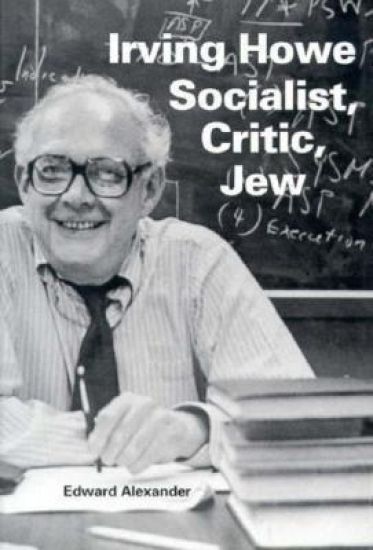
" . . . scrupulous, fair-minded and richly-detailed study . . . the book charts one of the most remarkable intellectual careers of the 20th century's latter half. . . . What is most heartening about Mr. Alexander's biography is its exemplary civility and nuance in discussing ideas across the lines of political difference." —Nathan Glick, Washington Times "Anyone interested in Howe's varied career, and the historical context that has given it its particular shape—American radicalism, the Cold War and anticommunism, the New Left, literary modernism, Jewish life—will profit handsomely from reading Alexander's respectful book." —Wilson Quarterly "Edward Alexander's captivating study of Irving Howe is illuminating and scrupulous; it is also temperate, generous, and deeply fair-minded. If Howe were alive, he would thank the author—and even now, in Paradise, he is surely doing so (while hotly continuing the discussion)." —Cynthia Ozick " . . . a singular achievement." —Jerusalem Post " . . . a masterpiece" —National Jewish Post and Opinion ". . . meticulous scholarship, felicitous writing style and a literate feistiness." —Chicago Jewish Star "An excellent work of insight and criticism, recommended for academic libraries." —Library Journal "An insightful, balanced contribution . . ." —Booklist "Edward Alexander's estimable intellectual biography . . . studiously avoids both undue sentimentality and overly harsh censure." —Sanford Pinsker, Philadelphia Inquirer "Edward Alexander's well-informed and engaging portrait of Irving Howe does full justice to the complexities of mind and the political passions of one of this country's leading intellectuals. This bracing, perceptive study honors Howe's admirable career by treating it with the same high degree of moral seriousness that characterized Howe's own work at its best." —Alvin H. Rosenfeld Irving Howe, author of World of Our Fathers, the prize-winning history of American Jewish immigrant culture, and founding editor of the influential magazine Dissent, was for over 50 years a dominant—and controversial—figure in American intellectual life. Through a clear and eloquent study of Howe's politics, writings, and thought, Edward Alexander constructs a sympathetic yet critical intellectual biography of this complex individual.

Matthew Arnold and John Stuart Mill (Routledge Library Editions: Political Science Volume 15)
Edward Alexander
Routledge
2009
sidottu
This study defines the relationship between humanism and liberalism by comparing the two Victorian figures who were most concerned with the preservation of humanistic values in a free and democratic society: Matthew Arnold and John Stuart Mill. The book sets apart Arnold and Mill from their contemporaries and points out their similarities to one another in discussions of their theories of history, poetry, their celebration of the contemplative life and their willingness to welcome democracy. At the same time it examines the differences between the two men, which he uses to create a dialogue between humanism and liberalism on the question of how a high cultural ideal can be realized in democratic society.

Matthew Arnold and John Stuart Mill (Routledge Library Editions: Political Science Volume 15)
Edward Alexander
Routledge
2014
nidottu
This study defines the relationship between humanism and liberalism by comparing the two Victorian figures who were most concerned with the preservation of humanistic values in a free and democratic society: Matthew Arnold and John Stuart Mill. The book sets apart Arnold and Mill from their contemporaries and points out their similarities to one another in discussions of their theories of history, poetry, their celebration of the contemplative life and their willingness to welcome democracy. At the same time it examines the differences between the two men, which he uses to create a dialogue between humanism and liberalism on the question of how a high cultural ideal can be realized in democratic society.
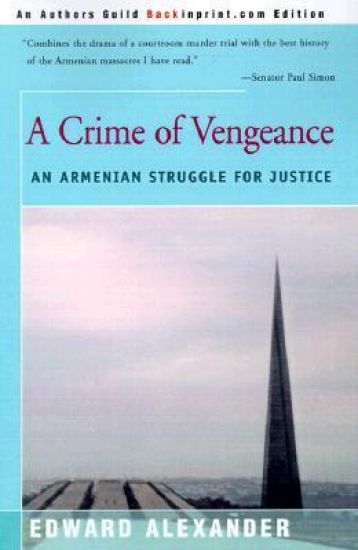


OPUS is a political thriller about the joint search by American and Soviet Cultural Officers for a Beethoven Cello Concerto in Hungary, leading to the involvement of three Intelligence agencies, World War II intrigue, and culminating at KGB HQ.Author Biography: Edward Alexander majored in musicology and journalism at Columbia University and during World War II served in Psychological Warfare in Europe. From 1946 to 1949 he did public relations for Sir Laurence Olivier's "Henry V" and "Hamlet" and then organized "Voice of America" broadcasts to the Soviet Caucasus, and was appointed Armenian Service Chief. In 1959 he joined the Foreign Service with assignments in West and East European Embassies, including Hungary, and as Deputy Director for the Soviet Union and East Europe traveled extensively throughout the area overseeing press and cultural activities. In 1985 the State Department called him back out of retirement to become a member of the U.S. Delegation to three Human Rights Conferences abroad and to be the U.S. spokesman. He is the author of "The Serpent and the Bees" about the KGB and "A Crime of Vengeance" about the Armenian genocide.
The incongruence if not antagonism between modern liberalism and the Jewish sense of the world has been most notably articulated by Lionel Trilling. Certainly the imaginative limitations and intellectual smugness he discerned in his own ideological party found a parallel, in his view, in the embrace of liberalism by the American Jewish community. The consequences of that embrace entail both a superficial intellectual and religious culture and a misunderstanding of the social and political dimensions of Judaism. In Classical Liberalism and the Jewish Tradition, Edward Alexander engages in a wide-ranging exploration of the roots of the fundamental antagonism between liberalism and Jewish tradition from the nineteenth century to the present day.Central to Alexander's arguments is his incisive critique of the distortion of modern Judaism as a child of the Enlightenment and the notion that specifically Jewish concerns, whether with Zionism, the Holocaust, or sacred and secular writings, constitute a narrow and parochial betrayal of liberal interests. The chapters are divided among political, religious, and literary subjects. The opening chapter on Mill's ambivalent attitude toward the Jews establishes terms of conflict between Judaism and liberal secularism and universality as do chapters on the antisemitism of Thomas Arnold and Marx and the more ambiguous Jewish self-identification of Disraeli.Alexander examines such disparate topics as the hostility to the idea of a Jewish state on the part of numerous Israeli intellectuals, the disdain among liberals toward the specifically Jewish dimension of the Holocaust, and the capitulation of the Modern Language Association to the anti-Zionism of Edward Said. Turning to the uneasy status of Jewish religious texts and secular literature as sources of cultural revitalization, Alexander deals with the attempt by the Israeli scholar Adin Steinsaltz to bring the Talmud to the attention of contemporary Jewish readers and includes a chapter on his nineteenth-century precursor Emanuel Deutsch and his relationship to George Eliot. An analysis of Ruth Wisse's efforts to establish a modern Jewish literary canon is rounded out by chapters on two of the major figures of that canon: Isaac Bashevis Singer and Philip Roth.While diverse in subject matter, Classical Liberalism and the Jewish Tradition is consistent in its unapologetic advocacy of a Jewish point of view and in its depth of scholarship in tracing the historical roots of contemporary attitudes and ideologies.

In West Berlin in 1963, while on his first diplomatic assignment, the author was contacted by a Soviet Armenian KGB agent. For fifteen months Alexander and the KGB agent met on both sides of the Berlin Wall. Attempting to play on Alexander's sympathy to his Armenian heritage, the KGB made a series of unsuccessful attempts to lure the author to Soviet Armenia and recruit him to work for the Soviet Union. After Berlin, the KGB's interest in Alexander continued. Over the years he was contacted by many Armenian agentsówhen he traveled on official business to the Soviet Union and spent five days in Soviet Armenia; in Washington, where the KGB agent from Berlin surprisingly appeared and sought to absolve himself of blame for the earlier approach; during later trips to Moscow; again in Washington by KGB agents assigned to the Soviet Embassy and at TASS; and in Greece. Fifteen years after the first contact, Alexander had a dramatic confrontation with the original KGB officer. The story is told against a backdrop of Soviet-American tensions and events ranging from the Kennedy visit to Berlin and his assassination five months later to the murder of the CIA station chief in Athens by Greek terrorists. In describing this ethnic pursuit of the author, this book provides a behind-the-scenes look at U.S.-Soviet relations, foreign service life, and the problems faced by KGB agents and their families, as well as an in-depth portrait of post-Stalin Armenia, where creative spirits are seeking to perpetuate an ancient culture despite the pressures of totalitarian control.
This volume deals with the modern fate of the traditional conception of Jews as a covenanted people chosen to receive the Law, whose ultimate purpose is contributing to the universal salvation of mankind. The author shows how, under the influence of liberalism, rationalism, relativism, and other Enlightenment ideologies, this idea was distorted, denied, inverted, yet never entirely obliterated. In his discussions of modern Jewish thinkers and writers and the ideological and political struggles of Zionism and the state of Israel against enemies from without and from within, Alexander shows that the ancient idea of covenant is still alive today, if only in the assumption that Jewish life can lead somewhere so long as Jews remember that it began somewhere. Ranging from literary criticism and the history of ideas to journalism and politics, the book is unified by a point of view unabashedly espousing the Jewish idea and challenging its enemies.

In the aftermath of a brutal war, the city of Thebes is in chaos. When the new king, Creon, declares that the body of Antigone's traitorous brother must be left unburied to rot in the sun, she boldly defies his order - an act of rebellion which sets in motion the tragic showdown between the daughter of Oedipus and the king. Sophocles' timeless tragedy explores the conflict between individual will and the power of the state, between the gods of the hearth and the polis, between loyalty to family and to fatherland. With themes of morality, justice, and duty at its core, Antigone stands among the crowning achievements of European literature, as compelling today as in the age of Periclean Athens.Edward Alexander's masterful verse translation is accompanied by an extensive essay detailing the themes of Antigone and its relationship to Athenian history, the Homeric epics, and Ancient Greek religion. Also included in this edition is the full play in the original Greek.
In the aftermath of a brutal war, the city of Thebes is in chaos. When the new king, Creon, declares that the body of Antigone's traitorous brother must be left unburied to rot in the sun, she boldly defies his order - an act of rebellion which sets in motion the tragic showdown between the daughter of Oedipus and the king. Sophocles' timeless tragedy explores the conflict between individual will and the power of the state, between the gods of the hearth and the polis, between loyalty to family and to fatherland. With themes of morality, justice, and duty at its core, Antigone stands among the crowning achievements of European literature, as compelling today as in the age of Periclean Athens.Edward Alexander's masterful verse translation is accompanied by an extensive essay detailing the themes of Antigone and its relationship to Athenian history, the Homeric epics, and Ancient Greek religion. Also included in this edition is the full play in the original Greek.
E. Alexander, a life-long student & practitioner of the occult, esoteric, magick and mysticism, member of several secret orders, involved with governmental fractions - now brings you the darkest secret he has discovered, from personal direct experience and observations, and details it for you. This is the Trap System - a spiritual-technological construct keeping humans trapped on Earth through among other things reincarnation and karma, making them forget themselves from life-time to life-time to stop them from progressing and finding the truth. He also explains what he have discovered about subjects such as the chakra system and the Third Eye (Pineal Gland), mind control, external influences, the truth about Aliens, what Ghosts & the After-life are, our multidimensional existence - and finally finish it all off with a chapter filled with exercises and meditations to free oneself, expand consciousness, and move beyond and out of the Trap System and know ones True Self, the Higher Soul.
The incongruence if not antagonism between modern liberalism and the Jewish sense of the world has been most notably articulated by Lionel Trilling. Certainly the imaginative limitations and intellectual smugness he discerned in his own ideological party found a parallel, in his view, in the embrace of liberalism by the American Jewish community. The consequences of that embrace entail both a superficial intellectual and religious culture and a misunderstanding of the social and political dimensions of Judaism. In Classical Liberalism and the Jewish Tradition, Edward Alexander engages in a wide-ranging exploration of the roots of the fundamental antagonism between liberalism and Jewish tradition from the nineteenth century to the present day.Central to Alexander's arguments is his incisive critique of the distortion of modern Judaism as a child of the Enlightenment and the notion that specifically Jewish concerns, whether with Zionism, the Holocaust, or sacred and secular writings, constitute a narrow and parochial betrayal of liberal interests. The chapters are divided among political, religious, and literary subjects. The opening chapter on Mill's ambivalent attitude toward the Jews establishes terms of conflict between Judaism and liberal secularism and universality as do chapters on the antisemitism of Thomas Arnold and Marx and the more ambiguous Jewish self-identification of Disraeli.Alexander examines such disparate topics as the hostility to the idea of a Jewish state on the part of numerous Israeli intellectuals, the disdain among liberals toward the specifically Jewish dimension of the Holocaust, and the capitulation of the Modern Language Association to the anti-Zionism of Edward Said. Turning to the uneasy status of Jewish religious texts and secular literature as sources of cultural revitalization, Alexander deals with the attempt by the Israeli scholar Adin Steinsaltz to bring the Talmud to the attention of contemporary Jewish readers and includes a chapter on his nineteenth-century precursor Emanuel Deutsch and his relationship to George Eliot. An analysis of Ruth Wisse's efforts to establish a modern Jewish literary canon is rounded out by chapters on two of the major figures of that canon: Isaac Bashevis Singer and Philip Roth.While diverse in subject matter, Classical Liberalism and the Jewish Tradition is consistent in its unapologetic advocacy of a Jewish point of view and in its depth of scholarship in tracing the historical roots of contemporary attitudes and ideologies.
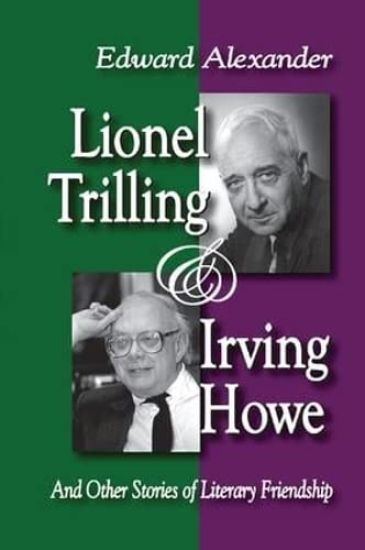
This pioneering effort links history and personality by pairing intellectual friends, most notably Lionel Trilling and Irving Howe, but also Thomas Carlyle and John Stuart Mill, D. H. Lawrence and Bertrand Russell, George Eliot and Emanuel Deutsch, Theodore Roethke and Robert Heilman. Chronologically the essays range from the early 1830s, when Carlyle and Mill discovered each other, to 1975, when Lionel Trilling died.The essay that gives this volume its title is also the most ambitious. Alexander examines Trilling and Howe in relation to one another and to Jewish quandaries, Henry James, politics and fiction, antisemitic writers, literary radicals, 1960s insurrectionists, the state of Israel, the nature of friendship itself.The chapter on the friendships (and ex-friendships) of Carlyle and Mill, Lawrence and Russell, views their stories against the background of the modern conflict between reason and feeling, positivism and imagination. Though some relationships began in adversity, they developed into friendships. This happened with Roethke and Heilman, and with Eliot and Deutsch. As a young woman, Eliot disparaged Jews as candidates for "extermination," but her friendship with the Talmudic scholar Deutsch changed her into one of the major Judeophiles of the Victorian period. The quartet of Carlyle and Mill, Lawrence and Russell shows how quickly-formed literary friendships, especially those based on hunger for disciples, can dissolve into ex-friendships. This volume offers new perspectives on leading literary figures and their relationship, and shows how friendship influences art.
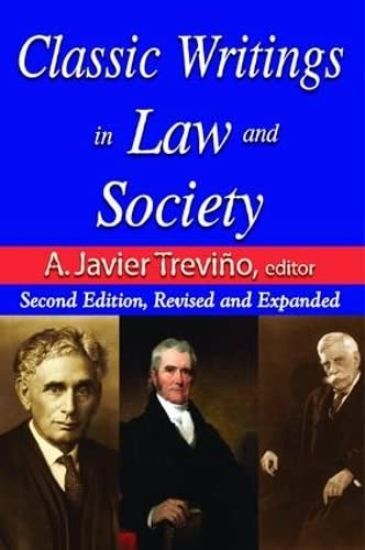
This volume consists of outstanding essays by contemporary scholars and specialists on classic writings in law and society. This second edition expands the previous volume by adding additional statements. Included are commentaries on Edward A. Ross's Social Control: A Survey of the Foundations of Order, Karl N. Llewellyn's Jurisprudence: Realism in Theory and Practice, Jerome Frank's Law and the Modern Mind, Leon Petrazycki's Law and Morality, and Karl Renner's The Institutions of Private Law and their Social Functions.The goal of Classic Writings in Law and Society is to acquaint a new generation of students with classic writings by diverse social and legal scholars ranging from Henry Sumner Maine, Oliver Wendell Holmes, Jr., and Hans Kelsen to Eugen Ehrlich, Nicholas S. Timasheff, and Richard Quinney. This work continues to demonstrate their contemporary theoretical relevance. Accordingly, each chapter speaks of the scholars' work in general, how the particular book under consideration fits into that corpus, and how the book is assessed in a present day context. These essays have a clear relation to the "classic" tradition in sociolegal thought.Reading the classics is useful in gaining a better understanding and appreciation of the essential foundation for a post-classic approach in law and social inquiry an approach that can be found in such orientations as critical legal studies, chaos theory in law, and legal semiotics. Classic Writings in Law and Society includes commentaries that consider early writings that set the standard for the social scientific approach in examining issues of law and punishment, social control, joint stock companies, business firms and nation-states in the study of law and society.

This volume deals with the modern fate of the traditional conception of Jews as a covenanted people chosen to receive the Law, whose ultimate purpose is contributing to the universal salvation of mankind. The author shows how, under the influence of liberalism, rationalism, relativism, and other Enlightenment ideologies, this idea was distorted, denied, inverted, yet never entirely obliterated. In his discussions of modern Jewish thinkers and writers and the ideological and political struggles of Zionism and the state of Israel against enemies from without and from within, Alexander shows that the ancient idea of covenant is still alive today, if only in the assumption that Jewish life can lead somewhere so long as Jews remember that it began somewhere. Ranging from literary criticism and the history of ideas to journalism and politics, the book is unified by a point of view unabashedly espousing the Jewish idea and challenging its enemies.
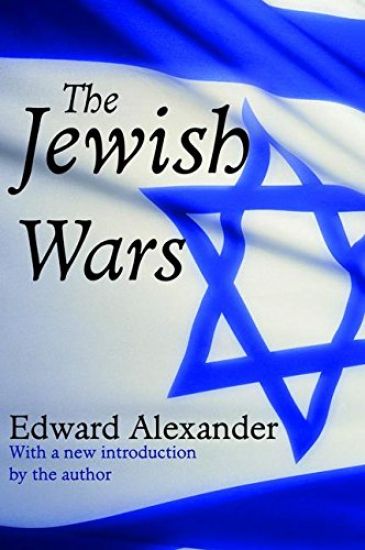
Edward Alexander launches a counterattack in the war of ideas over Zionism, very much a warrior using words and ideas as his weapons. This book begins with a dissection of the first (1987) Intifada and deals with people and events through 1994, when Israel, having embraced the PLO, began their withdrawal from the disputed territories. Alexander shows how the Intifada proved to be a potent propaganda tool for its organizers. The spectacle of young Palestinians facing Israeli soldiers won for Arabs precisely the victory they had sought: it moved liberal, especially Jewish liberal, sympathy decisively to the side of the Palestinians.Alexander criticizes prominent figures in politics, journalism, education, and literature who express hatred of Jews, Judaism, and Israel. He gives special attention to major combatants in the Jewish wars such as the late Edward Said, Desmond Tutu, Patrick Buchanan, Alexander Cockburn, Michael Lerner, Noam Chomsky, and still more to certain personality types: the timorous Jew cloaking his timidity in the robes of the biblical prophet; the treacherous Jew presenting betrayal of his own people as ethical idealism; the Israelophobe parading as a dispassionate "critic of Israeli policies," the journalist exploiting the full public address and public relations systems provided by his profession.The recurring themes in Alexander's essays are the relations between American and Israeli Jews and the incorporation of anti-Zionism into liberalism, multiculturalism, and literary criticism. He analyzes the politically motivated distortion and exploitation of the Holocaust, the strategies of moral and political discrimination used against Israel, the self-deceptions by which prominent American and Israeli Jews evade the implications of such discrimination, and the growing impunity with which antisemitic tropes can be employed at both ends of the political spectrum. The author's new introduction traces these developments into the twenty-first century.