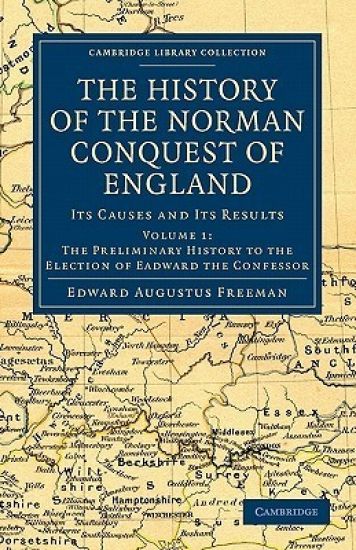
Edward Augustus Freeman (1823–1892) was Regius Professor of Modern History at Oxford, and one of the pre-eminent historians of his generation. Politics was a constant interest for Freeman, who was also a regular contributor to the Saturday Review. While he wrote on a variety of historical topics, from ancient Greece to the German Federation, and had a great interest in architecture, this six-volume work, published between 1867 and 1879, was his magnum opus. Freeman reconsiders how the history of the Conquest is understood and examines its causes and results. Volume 1 provides a preliminary history, and examination of life in England up to the time of the accession of Edward the Confessor, and its preface outlines the differences of approach between Freeman's volumes and preceding histories of the Conquest.
Edward Augustus Freeman (1823–1892) was Regius Professor of Modern History at Oxford, and one of the pre-eminent historians of his generation. Politics was a constant interest for Freeman, who was also a regular contributor to the Saturday Review. While he wrote on a variety of historical topics, from ancient Greece to the German Federation, and had a great interest in architecture, this six-volume work, published between 1867 and 1879, was his magnum opus. Freeman reconsiders how the history of the Conquest is understood and examines its causes and results. Volume 2 examines the reign of Edward the Confessor (1042–1066), which Freeman identifies as the first stage in the Anglo-Norman political struggle. Encompassing an analysis of military events and political characters, this volume also provides a thorough account of William the Conqueror's early years in Normandy.
Edward Augustus Freeman (1823–1892) was Regius Professor of Modern History at Oxford, and one of the pre-eminent historians of his generation. Politics was a constant interest for Freeman, who was also a regular contributor to the Saturday Review. While he wrote on a variety of historical topics, from ancient Greece to the German Federation, and had a great interest in architecture, this six-volume work, published between 1867 and 1879, was his magnum opus. Freeman reconsiders how the history of the Conquest is understood and examines its causes and results. Volume 3 focuses almost exclusively on the tumultuous events of 1066. Freeman analyses Harold's reign, the interregnum, and the later reign of William in Normandy. Additionally, he provides a thorough account of military events in Normandy and England, and detailed descriptions of battles.
Edward Augustus Freeman (1823–1892) was Regius Professor of Modern History at Oxford, and one of the pre-eminent historians of his generation. Politics was a constant interest for Freeman, who was also a regular contributor to the Saturday Review. While he wrote on a variety of historical topics, from ancient Greece to the German Federation, and had a great interest in architecture, this six-volume work, published between 1867 and 1879, was his magnum opus. Freeman reconsiders how the history of the Conquest is understood and examines its causes and results. Volume 4, dedicated to the reign of William (1066–1087), describes his rule, examining it in micro-periods in terms of the political and religious aspects of the conquest of England. William's relationships with his foreign and domestic neighbours are analysed and the realm's stability during this time is assessed.
Edward Augustus Freeman (1823–1892) was Regius Professor of Modern History at Oxford, and one of the pre-eminent historians of his generation. Politics was a constant interest for Freeman, who was also a regular contributor to the Saturday Review. While he wrote on a variety of historical topics, from ancient Greece to the German Federation, and had a great interest in architecture, this six-volume work, published between 1867 and 1879, was his magnum opus. Freeman reconsiders how the history of the Conquest is understood and examines its causes and results. Volume 5 considers the effects of the Conquest, examining the reigns of William Rufus, Henry I, and Stephen in the light of those effects, rather than providing a narrative history of these reigns. Language and architecture also come under analysis in this volume.
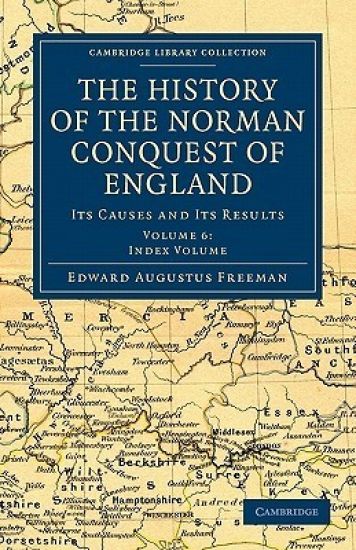
Edward Augustus Freeman (1823–1892) was Regius Professor of Modern History at Oxford, and one of the pre-eminent historians of his generation. Politics was a constant interest for Freeman, who was also a regular contributor to the Saturday Review. While he wrote on a variety of historical topics, from ancient Greece to the German Federation, and had a great interest in architecture, this six-volume work, published between 1867 and 1879, was his magnum opus. Freeman reconsiders how the history of the Conquest is understood and examines its causes and results, examining the history of medieval England from the fifth until the twelfth centuries. Volume 6 provides a comprehensive index for the set. These volumes will interest both scholars of early England and the Conquest and modern historiographers.